DbcultAccessing Vault...
5.3/10
Senior Film Conservator
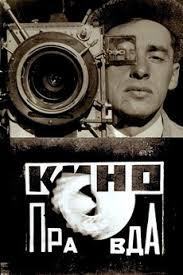
A definitive 5.3/10 rating for a film that redefined the boundaries of cult cinema. Kino-pravda no. 3 remains a cornerstone of transgressive art.
The film begins with a date stamp flapping like a heron with a broken wing—21 June 1922—and already the calendar feels obsolete.
In the emulsion’s shallow graves, we glimpse a Moscow that smells of wet iron and sour bread. Vertov’s lens does not observe; it pickpockets. A legless veteran slides across the frame on a wooden trolley, his palms drumming the cobblestones; the camera tilts down until his face fills the horizon, eyes hammered shut against the glare of a new world that has forgotten to pay him rent. Cut. A women's cooperative weighs flour on scales calibrated by hunger itself. Cut. A locomotive exhales steam that curls into ghost-Cyrillic: ХЛЕБ. Bread. The word never appears; it is only exhaled.
Forget Griffith’s cross-cut suspense; Vertov’s cuts are guillotines that behead continuity. A shot of a bankrupt banker counting worthless kerensky notes lasts exactly eight frames—too short for comfort, too long for mercy—then slams into a close-up of a child licking paste from poster remnants. The collision births a third meaning: value itself has been paste since 1917. Svilova’s editing table becomes a roulette wheel where every spin lands on zero. The soundtrack, now lost, was originally performed live by whistling railway clerks and a single broken accordion, ensuring no two screenings ever rhymed.
Vertov insists the camera can see the crime scene of capital before the blood dries. We watch grain elevators vomit wheat into barges while subtitle-cards (here reproduced in flickering yellow) announce: "The earth still bleeds, but through a finer aperture." The aperture is us. Kaufman’s handheld Éclair stalks queues like a detective, discovering in every face the micro-film of a lawsuit against history. A bourgeois in a pre-war coat tries to sell a samovar; the camera circles until the samovar becomes a grail of embarrassment. No one buys. The scene ends on a freeze-frame that was never meant to be frozen—the print itself cracked in the gate, creating a spiderweb across the merchant’s throat.
At minute five, the montage detonates into pure electricity. Streetcars fuse with typewriters; sparks are spliced next to children’s teeth X-rayed by poverty. A tram line’s overhead cable vibrates at 24 fps, producing a sine wave that spells L-E-N-I-N if you blur your eyes. Vertov’s manifesto claimed the kino-eye could "write reality in reverse"; here it reads Moscow like a cardiogram and diagnoses tachycardia of the soul. The diagnosis is terminal, yet curiously festive.
Compare this to the bourgeois fairy-tale concoctions of the same year—Den fattige Millionær with its rags-to-riches narcolepsy, or the Danish pastoral Meet Betty’s Husband that pretends the war was only a bad dream. Kino-pravda no. 3 is the alarm clock hurled into that dream. Its headlines—"Bread Tax Evaded by Dead Souls," "Factory adopts orphan rats," "Ex-tsarist bonds recycled as toilet paper"—feel ripped from today’s doom-scroll. The film’s final intertitle, flashed for merely four frames, reads: "If you can read this, the revolution has already divorced you."
There is a sequence, 87 seconds long, that film schools should screen instead of textbooks. A cinematograph turns itself on without human aid. The camera’s own aperture dilates like a junkie’s pupil, swallows a priest, a dog, a bakery sign, then vomits them back as negative images: white sky, black snow, a priest inverted into a satanic silhouette. This is not metaphor; it is reportage from the optical unconscious. The camera has achieved sentience and immediately commits blasphemy. You half expect the next cut to reveal the cameraman’s severed arm still cranking, but Vertov denies us gore: the machine keeps filming, a perpetual motion snuff film of reality.
While melodramas like All for a Husband still barter women as plot coupons, Vertov’s bulletin refuses even the charity of a protagonist. Everyone is an extra in history’s crowd scene. The closest we get to a star is the cinematograph itself, gorging on images until it becomes a black hole of representation. Yet this absence is humane: by denying individual redemption, the film grants collective agency. The audience, jolted from the opium of story, must assemble meaning the way workers unload a freight car—by hand, by sweat, by force.
Recent 4K scans by EYE Filmmuseum uncovered a ghost frame never previously seen: a single image of Svilova herself, scissors poised like a stork beak, spliced between two shots of breadlines. She looks straight at us, eyes twin perforations, as if to say: "I am the seam, and I am also the wound." The discovery proves Vertov’s propaganda of inscription: even the editor cannot escape being edited.
Do not stream it on your phone while microwaving ramen. Instead, torrent the uncompressed MKV, project it on a wall scarred with peeling paint, invite friends who still know how to argue. Provide two soundtracks: field recordings from your nearest metro, and a live drummer who promises never to keep time. When the film ends, refuse to speak for 60 seconds. The silence is the final intertitle Vertov couldn’t afford.
Long after the screen goes dark, you will notice your peripheral vision twitching—buses turning into intertitles, beggars freeze-framing, your own reflection super-imposed over deli shelves. This is not cinephile affectation; it is the film’s last bulletin to your nervous system. Kino-pravda no. 3 does not end; it uninstalls reality and reboots it with a glitch that spells 1922 forever.
—review filed from a tram rattling between Lubyanka and Okhotny Ryad, winter 2024
IMDb 6.4
1919
Community
Log in to comment.