DbcultAccessing Vault...
6.5/10
Senior Film Conservator
A definitive 6.5/10 rating for a film that redefined the boundaries of cult cinema. Kitay v ogne (Ruki proch ot Kitaya!) remains a cornerstone of transgressive art.
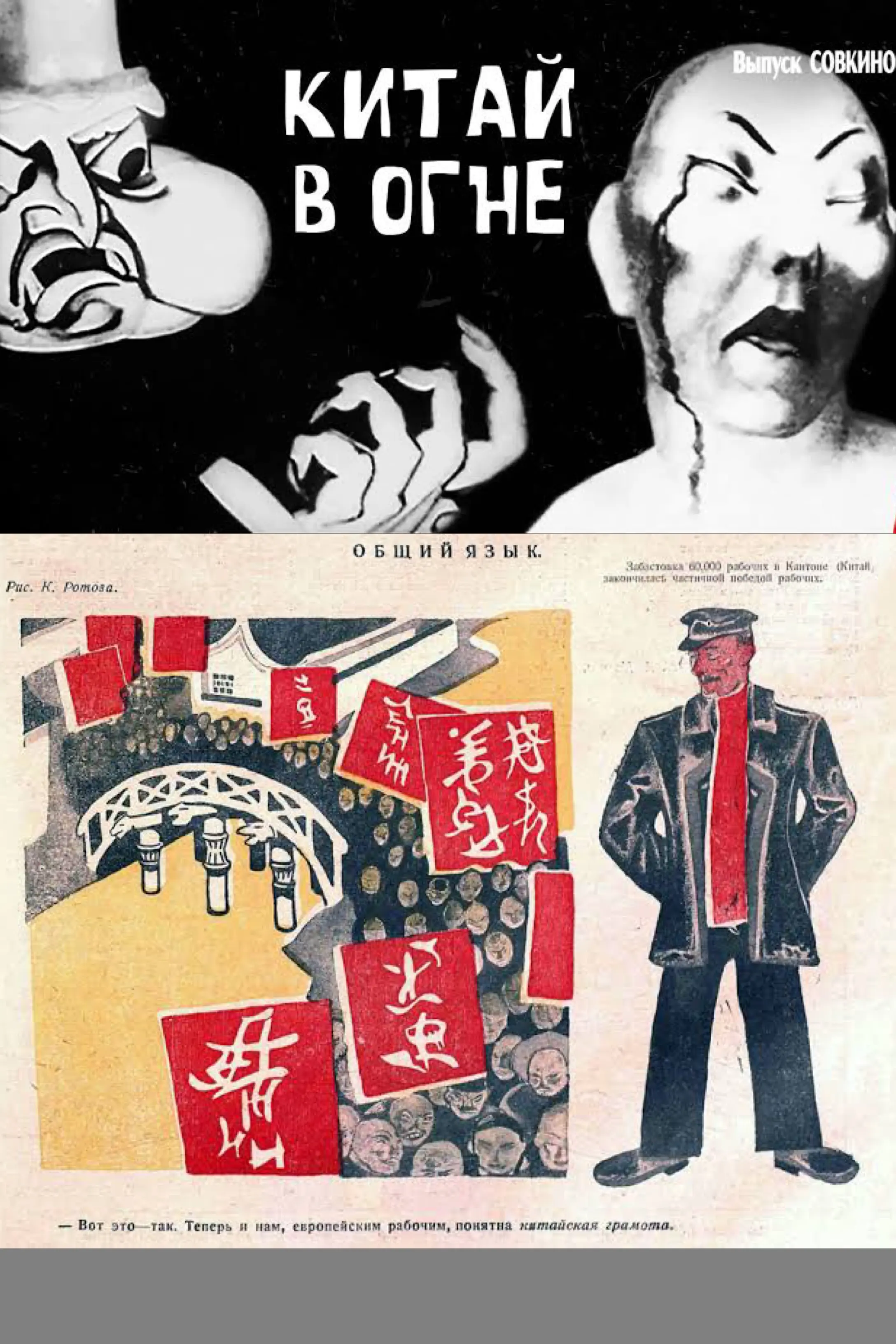
In the realm of cinematic propaganda, few films have achieved the visual and rhetorical sophistication of 'Kitay v ogne (Ruki proch ot Kitaya!)'. This cinematic endeavor, produced in the Soviet era, exemplifies the montage style's capacity for synthesizing complex ideas and emotions through innovative editing and graphic design.
The film's narrative is a tapestry of vignettes, each showcasing a distinct animation technique and artistic approach. The opening sequences, featuring caricatures of imperialists in bold, cut-out designs, establish a tone of incisive critique. These representations of Western powers are grotesquely exaggerated, conveying the filmmakers' disdain for colonialist ambitions.
In contrast, the allegorical story of rice farmers, rendered in the delicate, evocative style of Chinese watercolors, evokes a sense of empathy and solidarity with the Chinese people. This narrative thread, woven throughout the film, serves as a poignant reminder of the shared struggles and aspirations of the Soviet and Chinese nations.
The film's centerpiece is a heroic depiction of a railroad strike, a testament to the indomitable spirit of collective action. This sequence, crafted with a dynamic, rhythmic editing style, mirrors the Soviet montage tradition of juxtaposing disparate images to convey complex ideas and emotions.
The juxtaposition of images and ideas is a hallmark of the Soviet montage style, and 'Kitay v ogne (Ruki proch ot Kitaya!)' exemplifies this approach. The filmmakers' bold, graphic approach to composition and written text heightens the emotional impact of the narrative, yielding a visceral experience that resonates with viewers.
Upon closer examination, it becomes apparent that 'Kitay v ogne (Ruki proch ot Kitaya!)' shares thematic and stylistic affinities with other films of the era, such as 'Algeria' and 'The Common Law'. These works, though disparate in their focus, converge on the notion that cinema can be a potent tool for social commentary and critique.
The cast, comprising Zenon Komissarenko, Youry Merkulov, and Nikolay Khodataev, brings depth and nuance to the film's varied narrative threads. The writers, led by I. Vinogradov, have crafted a compelling narrative that resists simplistic interpretation, instead inviting viewers to engage with the film's complex ideas and emotions.
Ultimately, 'Kitay v ogne (Ruki proch ot Kitaya!)' stands as a seminal work in the history of cinema, a testament to the enduring power of film as a medium for social commentary and critique. Through its innovative animation techniques, rhythmic editing, and striking visual approach, this film continues to captivate audiences, offering a visually stunning and thought-provoking experience that lingers long after the credits roll.

IMDb 6.7
1934
Community
Log in to comment.