DbcultAccessing Vault...
7.2/10
Senior Film Conservator
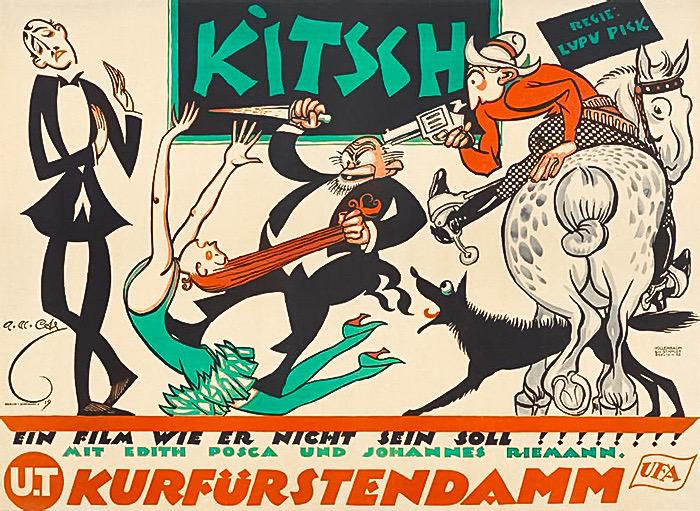
A definitive 7.2/10 rating for a film that redefined the boundaries of cult cinema. Kitsch remains a cornerstone of transgressive art.
In the annals of silent cinema, where grand gestures often spoke louder than words, a film like 'Kitsch' emerges not merely as a narrative but as a profound philosophical inquiry, a searing indictment of an art world perpetually teetering on the precipice of commercial capitulation. This cinematic gem, helmed by the astute vision of Hans Gaus, transcends its era, offering a timeless meditation on authenticity, compromise, and the very soul of artistic creation. It is a work that demands not just viewing, but rigorous contemplation, inviting us to peer beyond the flickering images into the deeper, often uncomfortable truths it so boldly illuminates.
At the heart of 'Kitsch' lies Anton Krell, a character brought to vivid, anguished life by the incomparable Johannes Riemann. Riemann, a titan of the silent screen, imbues Krell with a raw, almost visceral intensity, painting a portrait of an artist whose talent is as undeniable as his integrity is unyielding. Krell is not merely a sculptor; he is a conduit for a deeper truth, his hands shaping clay and stone into forms that speak of human experience with an almost brutal honesty. His early works, depicted with stark realism, possess a primal force, a rejection of the decorative in favor of the profound. Yet, the world, as it often does, remains largely indifferent to such uncompromised genius. Krell's atelier is a sanctuary of genuine expression, but also a crucible of poverty, a stark reminder that artistic purity frequently walks hand-in-hand with deprivation.
It is into this landscape of struggle that Lena, portrayed with luminous grace by Carla Ferra, enters. Ferra's Lena is more than a muse; she is the embodiment of uncorrupted beauty, a dancer whose movements are as fluid and natural as Krell's early sculptures are raw and authentic. Her presence ignites Krell's creativity, pushing him towards works of even greater emotional resonance. The chemistry between Riemann and Ferra is palpable, a silent dialogue of shared artistic spirit that elevates their scenes beyond mere romance into a communion of souls. Their connection forms the film's emotional bedrock, a stark contrast to the superficiality that soon threatens to engulf Krell's world. One might draw a parallel to the earnest, unvarnished human connections explored in The Field of Honor, though 'Kitsch' delves deeper into the corrosive effects of external pressures on such purity.
The antagonist of this artistic drama arrives in the formidable guise of Baroness von Sternberg, a character brought to life with chilling precision by Olga Engl. Engl's Baroness is not overtly villainous; rather, she is the personification of a societal ill, a patron whose influence is as pervasive as her taste is pedestrian. She represents the seductive power of the establishment, offering Krell not just patronage, but a pathway to recognition and wealth – a pathway paved with compromises. The Baroness's salons, depicted with lavish detail, are temples to the decorative, where art serves as mere adornment, a reflection of status rather than a mirror to the soul. Her subtle manipulation of Krell, her gentle nudges towards 'more palatable' forms, are masterstrokes of psychological warfare, slowly eroding his artistic resolve.
The film brilliantly illustrates Krell's descent. His initial resistance, fueled by Lena's unwavering belief in his true vision, gradually weakens under the relentless pressure of financial strain and the intoxicating promise of fame. The transition in his work is subtly but devastatingly portrayed: the raw power gives way to polished sentimentality, the profound to the merely pretty. He begins to create what the Baroness desires – the eponymous 'kitsch' – pieces that are technically proficient, exquisitely rendered, yet utterly devoid of the soul that once defined his art. Johannes Riemann's portrayal of this internal struggle is masterful; we see the light dimming in his eyes, the weariness settling onto his features, even as his public star rises. This narrative arc, reminiscent of the personal compromises explored in Der Eid des Stephan Huller - II, is rendered with a particular poignancy in 'Kitsch' due to its focus on artistic integrity.
'Kitsch' utilizes the full expressive potential of silent cinema, employing striking visual metaphors and evocative cinematography to convey its complex themes. The contrast between Krell's early, dimly lit studio and the opulent, brightly lit salons of the Baroness is not merely a setting change but a symbolic shift from authentic struggle to gilded cage. Gaus's direction meticulously frames these opposing worlds, highlighting the moral and aesthetic chasm between them. The film's use of close-ups, particularly on Riemann's tormented face and Ferra's expressive movements, allows the audience to intimately connect with their inner turmoil and steadfast purity, respectively. The sculptures themselves become characters, evolving from powerful, jagged forms to smooth, saccharine figures, mirroring Krell's artistic and spiritual decline. This visual narrative foresight is something one might appreciate in other visually driven silent films, perhaps even drawing comparisons to the adventurous aesthetic of Filibus, though with a distinct thematic purpose.
The supporting cast also contributes significantly to the film's rich tapestry. Emil Biron, as Krell's opportunistic rival, provides a cynical counterpoint, embodying the ease with which some artists embrace commercialism. Paul Biensfeldt, as the shrewd art dealer, represents the pragmatic, often ruthless, face of the art market, encouraging Krell's compromise with a detached professionalism. Even Grete Weixler, as Lena's naive friend, adds a touch of innocent vulnerability that further underscores Lena's unique, unblemished spirit. Their collective performances create a believable ecosystem within which Krell's tragic journey unfolds.
As Krell achieves the fame and wealth he once craved, the film masterfully portrays the hollowness of his triumph. His public accolades ring false, his luxurious surroundings feel like a gilded prison. The joy of creation, the very essence of his being, has been replaced by a mechanical production of what is expected, what sells. Lena, heartbroken by his transformation, makes the painful decision to leave, her departure serving as a stark visual metaphor for the loss of Krell's artistic soul. Her final, silent farewell is one of the most poignant moments in the film, a testament to Ferra's understated yet powerful acting. This theme of personal sacrifice for societal acceptance, though often explored, finds a particularly resonant voice here, perhaps even more acutely than in narratives focused on social climbing like Stepping Out.
The climax of 'Kitsch' is not a grand, dramatic confrontation, but a deeply personal, almost internal cataclysm. Krell's realization of his profound artistic betrayal is rendered with an agonizing intensity. The film offers a powerful visual of his despair, perhaps through a solitary figure amidst his now-celebrated, yet soulless, creations. The ending, while not offering easy answers, suggests a path towards redemption, not in renewed commercial success, but in a return to the authentic, even if it means artistic obscurity. It's a powerful statement that true art finds its value not in market trends but in its unyielding commitment to truth. The narrative's unflinching look at moral compromise is as compelling as the legal battles in The District Attorney, but focuses on the internal rather than external courtroom.
'Kitsch' stands as a remarkable achievement, not only for its technical prowess and stellar performances but for its audacious thematic depth. In an era often dismissed as primitive, Gaus crafted a film that interrogates the very nature of art and its relationship to society, a discourse that remains as pertinent today as it was nearly a century ago. The film's critique of commercialism, its exploration of the artist's struggle for authenticity, and its poignant portrayal of love and loss resonate with a timeless universality. It dares to ask: what is the true cost of selling one's soul for a fleeting moment in the sun? Is it worth the sacrifice of the very essence that makes one an artist?
For those who appreciate the nuanced storytelling of silent cinema, 'Kitsch' offers a rich, rewarding experience. It is a film that challenges, provokes, and ultimately, inspires a deeper appreciation for the unyielding spirit of true artistic endeavor. While one might find similar themes of societal pressure in films like When False Tongues Speak or the struggle against overwhelming odds in The Count of Monte Cristo, 'Kitsch' distinguishes itself through its specific focus on the internal artistic battle. It is a vital piece of cinematic history, a testament to the power of film to not just entertain, but to critically examine the human condition and the fraught landscape of creative expression. Its message, delivered through the eloquent silence of its performers and the evocative visuals of its director, echoes with an almost prophetic clarity, reminding us that the fight against superficiality is an eternal one, and the pursuit of authenticity, though arduous, is the artist's most sacred calling.
IMDb —
1922
Community
Log in to comment.