DbcultAccessing Vault...
6.8/10
Senior Film Conservator
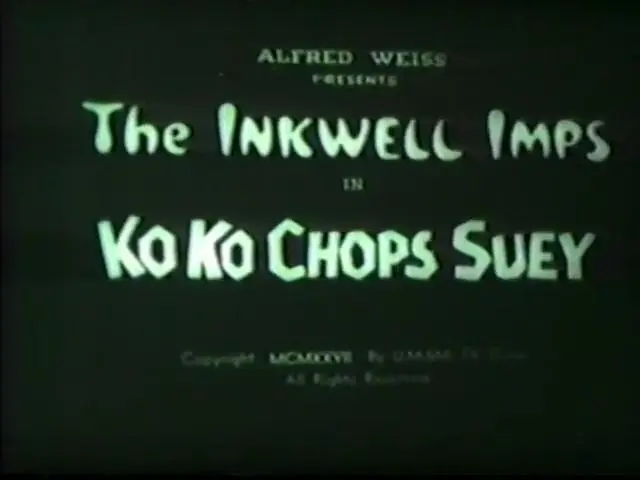
A definitive 6.8/10 rating for a film that redefined the boundaries of cult cinema. Ko-Ko Chops Suey remains a cornerstone of transgressive art.
Should you watch Ko-Ko Chops Suey today? Short answer: Only if you are an animation historian or a student of cultural sociology. For the average viewer, the technical brilliance of the Fleischer brothers is almost entirely overshadowed by the aggressive racial stereotyping that defines its second half. It is a film for those who can separate the history of technology from the history of social failure, and it is most certainly not for anyone looking for light, effortless entertainment.
1) This film works because the rotoscoping technology provides a fluid, uncanny realism to Ko-Ko’s movements that was decades ahead of its time.
2) This film fails because it leans into a 'Yellow Peril' caricature that is so grotesque it stops the comedic momentum dead in its tracks.
3) You should watch it if you want to understand the origins of the 'Out of the Inkwell' style and the evolution of Dave Fleischer’s directorial hand.
Before we address the elephant in the room, we have to talk about the ink. The Fleischers were pioneers, and in 1924, their work was the gold standard for visual effects. The way Ko-Ko emerges from the ink bottle is not just a gimmick; it is a statement of intent. Unlike the static backgrounds seen in So This is Eden, the Fleischer world is tactile and dangerous. When the live-action hand of Dave Fleischer interacts with the animated clown, there is a weight to the interaction that Disney wouldn't master for years.
The rotoscope—a device that allowed animators to trace over live-action footage—is the star here. You see it in the way Ko-Ko walks. There is a weight to his hips, a slight bounce in his step that feels human because, at its core, it was. Dave Fleischer himself donned the clown suit for the reference footage, and that physical performance translates into a character that feels alive. It’s a stark contrast to the more rigid animation styles of the early silent era, such as those found in Soul Mates.
To put it bluntly: Yes, it is. The film features a 'Chinese' character that is a collection of every negative trope available in 1924. From the exaggerated queue (braid) to the slanted eyes and the nonsensical 'gibberish' dialogue, it is a textbook example of how the West viewed the East during the era of the Exclusion Act. This isn't a subtle bias; it is the central visual gag of the film's final third.
However, as a critic, one must look at this within the context of the 1920s. This was an era where films like His Darker Self were exploring (and often failing) to navigate racial identity. The Fleischers were Jewish immigrants who were often outsiders themselves, yet they still participated in the dominant culture's mockery of other 'others.' It is a jarring, painful reminder of how pervasive these images were. The ink doesn't lie. It records the prejudices of its creator just as clearly as it records their talent.
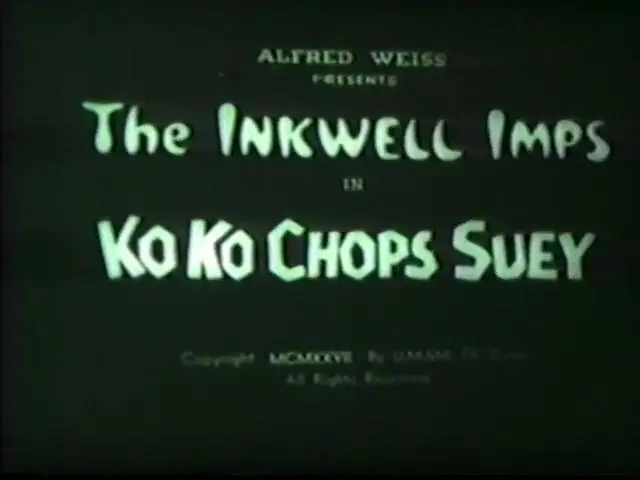
The plot is thin, but the pacing is relentless. Ko-Ko and Fitz the Dog have a chemistry that rivals any live-action comedy duo of the time. There is a specific scene where Fitz reacts to the smell of the kitchen that is a masterclass in squash-and-stretch animation. The dog’s snout elongates, pulling his entire body toward the source of the aroma. It is pure visual storytelling. It’s the kind of kinetic energy you don't always find in more 'serious' films of the period like The Silence of Dean Maitland.
The transition from the artist's studio to the fictional kitchen is handled with a surrealist flair. The Fleischers didn't care about logic; they cared about the gag. When Ko-Ko starts 'learning' how to make chop suey, the kitchen tools become characters themselves. It’s a chaotic, frantic energy that mirrors the urban sprawl of 1920s New York. It’s art. It’s also poison. The mix is what makes it so difficult to digest today.
One unconventional observation is that the kitchen in Ko-Ko Chops Suey isn't actually about food. It’s about the fear of the unknown. The way the 'cook' handles his cleaver is framed almost like a horror film. For a brief moment, the comedy slips away, and you see a genuine sense of threat. This reflects the 'Yellow Peril' hysteria of the time—the idea that the immigrant is inherently dangerous. It’s a darker subtext than you’d expect from a clown cartoon, and it makes the film feel much heavier than its six-minute runtime suggests.
Pros:
- Revolutionary animation fluidity.
- Fascinating look at 1920s studio environments.
- Strong physical comedy from the 'Fitz' character.
Cons:
- Reprehensible racial stereotypes.
- The ending feels rushed and nonsensical.
- Lacks the emotional heart found in later Fleischer works like Betty Boop.
If we are talking about pure entertainment value, the answer is no. The content is too radioactive for a modern casual audience. However, if we are talking about cinematic literacy, it is essential. You cannot understand the history of animation without seeing the Fleischers' work. It’s like looking at a beautiful stained-glass window that has been vandalized; you can still see the artistry, but the damage is part of the story now. It’s a piece of the puzzle that includes films like Disraeli or The Conquest of Canaan—each a brick in the wall of early 20th-century media.
Ko-Ko Chops Suey is a technical landmark buried under a mountain of cultural waste. It showcases a studio at the height of its inventive powers, using the rotoscope to create movements that feel more 'real' than the actors in Training for Husbands. Yet, it serves as a grim reminder that genius does not exempt one from the prejudices of their time. It’s a fascinating, ugly, brilliant, and horrifying relic. It works. But it’s flawed. Watch it with your eyes open and your critical mind engaged.

IMDb —
1922
Community
Log in to comment.