DbcultAccessing Vault...
7.6/10
Senior Film Conservator
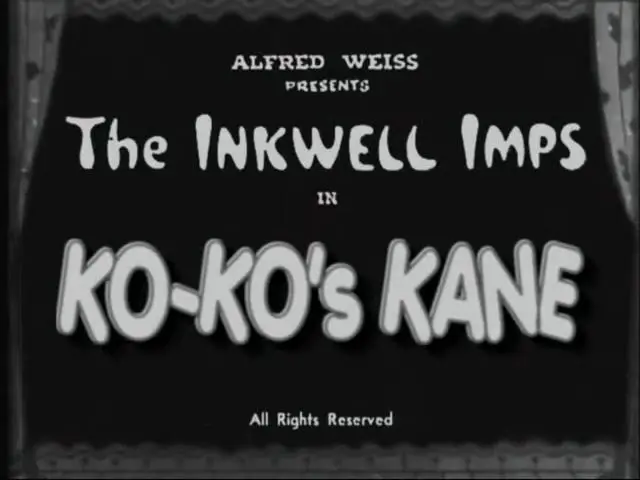
A definitive 7.6/10 rating for a film that redefined the boundaries of cult cinema. Ko-Ko's Kane remains a cornerstone of transgressive art.
Is 'Ko-Ko's Kane' worth watching today? Short answer: absolutely, but with a significant asterisk. This pioneering short is an essential historical document for animation enthusiasts and film scholars, offering an invaluable glimpse into the nascent art form. However, for casual viewers accustomed to modern narrative and pacing, its charms might prove more academic than entertaining, making it a niche delight rather than a universal recommendation.
This film works because of its audacious technical innovation, particularly the seamless integration of live-action and animation that defined Max Fleischer's early work. The sheer ingenuity required to bring Ko-Ko and Fitz into the 'real' world, even if only on paper, is breathtaking for its era. It's a testament to Fleischer’s pioneering spirit, showcasing how he pushed the boundaries of what was thought possible in moving pictures, laying groundwork for countless future animated endeavors.
This film fails because its narrative, by contemporary standards, is almost non-existent. It’s a series of delightful gags rather than a coherent story arc, which can test the patience of viewers accustomed to complex plots and character development. The pacing, while brisk for its time, feels somewhat rudimentary compared to the sophisticated rhythms of later animation, demanding a certain historical empathy from its audience.
You should watch it if you possess a keen interest in animation history, appreciate experimental filmmaking from the early 20th century, or simply want to witness the foundational genius of Max Fleischer. It’s a must-see for anyone studying the evolution of visual effects and the birth of cartoon characters, offering a rare window into the creative process of a true innovator who literally drew characters into existence.
"Ko-Ko's Kane" is more than just a cartoon; it's a declaration of intent from one of animation's most significant figures, Max Fleischer. Released in an era where film itself was still finding its voice, Fleischer's work stood out for its audacious blend of the tangible and the illusory. The film opens in a live-action setting, Max Fleischer himself at his drawing board, meticulously crafting a schematic for a multi-purpose cane. This seemingly mundane setup is crucial, as it grounds the fantastical elements that are about to unfold in a relatable reality. It’s this very grounding that makes Ko-Ko’s subsequent animated manipulation of the cane within the schematic so much more impactful.
The magic truly begins when Ko-Ko the Clown and his canine companion, Fitz, spring to life directly from the pages of Fleischer's blueprint. This isn't merely animation overlaid on live-action; it's an interaction, a dialogue between the creator and his creations. When Ko-Ko snatches the drawn cane, transforming it with a scribbled flourish into a fishing rod or a pogo stick, it’s not just a cartoon gag; it’s a direct commentary on the power of the animator’s pen. Fleischer, through Ko-Ko, literally brings an object to life and alters its function at will, a visual metaphor for the boundless potential of animation itself. This technique, a precursor to more refined rotoscoping methods that Fleischer would later champion, demonstrates an early mastery of illusion that few of his contemporaries could match.
To truly appreciate the technical ambition here, one must consider the limitations of the time. Every frame was a painstaking effort, every interaction between the live-action hand and the animated character a triumph of planning and execution. The seamlessness with which Ko-Ko and Fitz emerge from the paper, play with the drawn objects, and even occasionally seem to acknowledge Fleischer's presence, is astonishing. It speaks to a level of foresight and technical ingenuity that set Fleischer apart, paving the way for the sophisticated mixed-media works that would follow decades later.
At the heart of "Ko-Ko's Kane" are its titular characters, Ko-Ko the Clown and his loyal, if equally mischievous, sidekick, Fitz. These aren't characters burdened by complex backstories or profound emotional arcs; they are pure id, embodiments of playful anarchy. Ko-Ko, with his distinctive black-and-white design, is a force of unadulterated energy. His movements are fluid, almost improvisational, reflecting the nascent freedom of the animated form. He exists to cause delightful trouble, to bend the rules of his two-dimensional world, and to playfully challenge the authority of his creator, Max Fleischer.
The dynamic between Ko-Ko and Fitz is a classic comedic pairing, a precursor to countless animated duos. Fitz, often the instigator or the eager accomplice, adds another layer of chaos. Their interaction with the cane is where their personalities truly shine. They don't just use the cane; they exploit its magical properties, transforming it into whatever suits their immediate whim – a ladder to escape the page, a weapon in a playful duel, or a tool for further mischief. This constant metamorphosis of the cane, driven by Ko-Ko’s imagination, highlights the boundless creativity inherent in animation.
"To truly appreciate 'Ko-Ko's Kane' requires a deliberate recalibration of modern cinematic expectations. It's less a narrative triumph and more a conceptual marvel, a blueprint for the very language of animation."
Their antics are a rebellion against the static nature of the drawing board. They refuse to remain mere sketches; they demand agency, even if that agency is expressed through simple, effective sight gags. This early portrayal of characters 'coming to life' from the page was revolutionary. It laid the groundwork for the meta-narrative possibilities of animation, where the boundaries between the creator's world and the created world are constantly blurred. Ko-Ko and Fitz are not just characters; they are symbols of animation's nascent power to transcend the physical limitations of its medium.
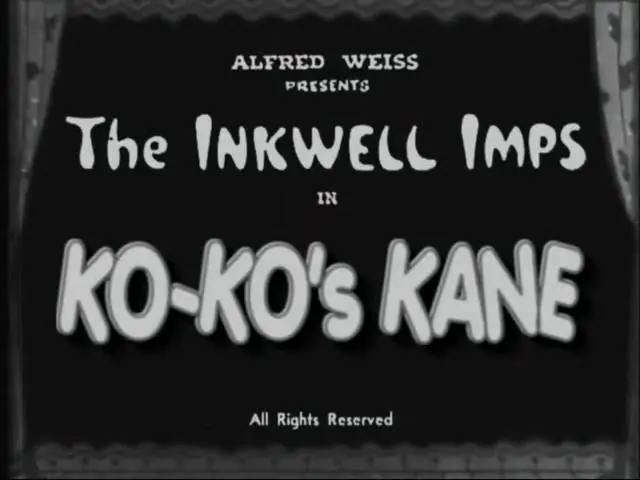
Max Fleischer’s direction in "Ko-Ko's Kane" is a masterclass in economy and illusion. Playing himself, Fleischer’s 'performance' is less about dramatic range and more about understated charm and believable interaction with the unseen. He embodies the archetypal inventor, absorbed in his craft, occasionally startled by the antics of his animated creations. His subtle reactions – a raised eyebrow, a slight nod of exasperation – are crucial to selling the illusion. Without his convincing engagement with the blank page and the emerging Ko-Ko, the film’s central conceit would crumble. It’s a masterclass in silent film pantomime, tailored specifically to facilitate groundbreaking visual effects, making his presence as vital as the animation itself.
The cinematography, while seemingly straightforward, is exquisitely functional. The camera remains largely static, a deliberate choice that foregrounds Fleischer's workshop as a stable canvas for the animated chaos. This fixed perspective allows the audience to fully appreciate the trickery at play, as Ko-Ko and Fitz seamlessly appear and interact with the physical diagram. There's an unpretentious elegance to the framing, focusing on the workbench and Fleischer's hands, which become the stage for the magical transformations. It’s not about sweeping vistas or complex camera movements; it’s about precision, ensuring the animated elements feel truly integrated, a stark contrast to the more dynamic, yet often less integrated, approaches seen in some contemporary shorts like Chickens.
The true genius of Fleischer’s direction lies in his understanding of the audience's suspension of disbelief. He doesn't just show us a cartoon; he invites us into the very process of its creation, making us co-conspirators in the magic trick. The 'Kane' itself is a brilliant MacGuffin, a simple object around which the entire spectacle revolves. Its transformation from a mundane drawing to a dynamic tool in Ko-Ko’s hands is the film’s central visual thesis: that animation can imbue the inanimate with life and purpose. This artistic vision, though presented in a short, whimsical package, profoundly influenced the trajectory of animation, inspiring generations of artists to explore the interplay between drawn worlds and our own.
The pacing of "Ko-Ko's Kane" is characteristic of early animated shorts: brisk, episodic, and driven by a series of distinct gags rather than a continuous narrative flow. There’s little time wasted on exposition or character development beyond the immediate comedic situation. Each transformation of the cane, each mischievous act by Ko-Ko and Fitz, serves as its own mini-climax, quickly resolving before moving on to the next inventive trick. This rapid-fire succession of events keeps the viewer engaged, even if the engagement is more intellectual curiosity than emotional investment.
The tone is overwhelmingly lighthearted and playful. There's no dramatic tension, no real stakes, just the pure joy of visual experimentation. The film revels in its own cleverness, inviting the audience to marvel at the technical prowess on display. It's a testament to the innocence of early cinema, where the novelty of moving pictures and animated characters was often entertainment enough. This unpretentious, almost childlike wonder is infectious, allowing the film to transcend its historical context and still elicit smiles today.
However, this very simplicity can be a double-edged sword for modern audiences. Accustomed to feature-length animated films with intricate plots, complex characters, and sophisticated emotional landscapes, the straightforward hijinks of Ko-Ko might feel slight. The film doesn't aim to tell a grand story; it aims to demonstrate a grand idea – the power of animation to create a living, breathing world from a blank page. One might even argue that the film, in its simplicity, prefigures the meta-narrative experiments of much later works, where characters are acutely aware of their creators or the medium itself. Ko-Ko, in a primitive but undeniable way, breaks the fourth wall, not through dialogue, but through his very existence, stepping out of the schematic and into our imagination, a nascent form of interactive storytelling decades before such a term existed.
Yes, 'Ko-Ko's Kane' is absolutely worth watching, but primarily for those with a specific interest. It's an indispensable piece of film history. It showcases pioneering animation techniques. It highlights Max Fleischer's inventive genius. It offers a direct window into the early days of cartoon creation.
This film is best for animation students, film historians, and fans of early 20th-century cinema. It provides crucial context for understanding the evolution of the art form. It reveals the foundational elements that would later influence iconic characters and studios. It's a short, impactful demonstration of technical skill and creative vision.
However, it is not for casual viewers seeking a modern narrative experience. Those expecting a rich plot or deep character development will likely find it lacking. Its historical significance outweighs its entertainment value for a general audience. It's a technical marvel, not a storytelling epic.
"Ko-Ko's Kane" is a foundational text in the canon of animation, a vibrant testament to Max Fleischer's boundless imagination and technical wizardry. It works. But it’s a historical artifact. It's less a film to be passively consumed for entertainment and more a piece to be studied, admired, and understood within its revolutionary context. Its simple premise belies a profound innovation that reshaped the possibilities of the moving image. For those willing to approach it with an appreciation for its place in history, it offers a delightful, illuminating glimpse into the very birth of cartoon magic.
While it may not captivate a mainstream audience with its narrative, its enduring legacy lies in its sheer audacity – the courage to literally draw characters out of the page and into a shared reality with their creator. This short film is an essential pilgrimage for anyone who cherishes animation, a reminder of the raw, unadulterated genius that laid the groundwork for everything from Disney's early shorts to Pixar's digital epics. It's a film that proves that sometimes, the simplest ideas, executed with groundbreaking vision, can leave the most indelible mark.
IMDb —
1916
Community
Log in to comment.