DbcultAccessing Vault...
Cult Review
Senior Film Conservator
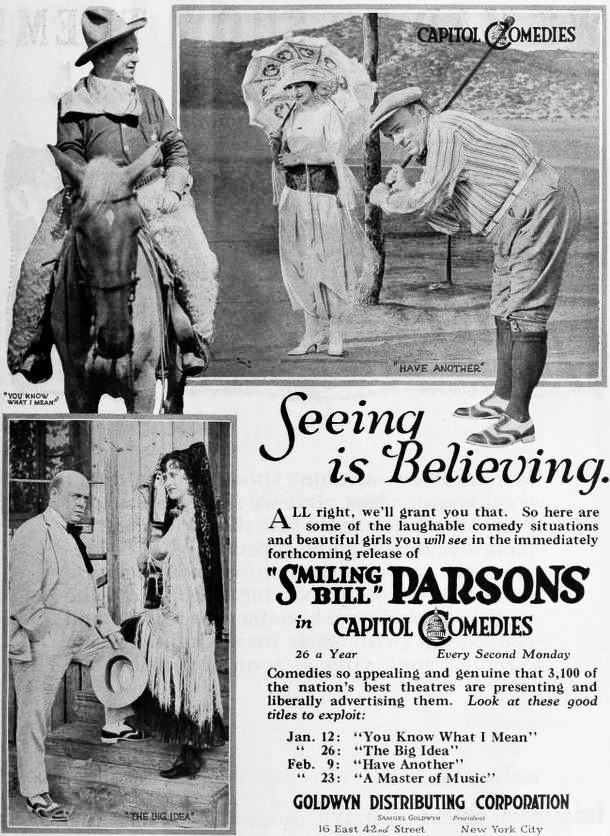
From the very first frame, 'The Big Idea' announces itself not merely as a film, but as an intellectual provocation, a cinematic gauntlet thrown at the feet of an audience perhaps too comfortable with the established paradigms of science fiction. Tom Bret, the architect of this intricate narrative, has fashioned a world both disturbingly familiar and terrifyingly alien, a testament to a writer’s ability to extrapolate present anxieties into future realities. This isn't just a story; it's a philosophical treatise wrapped in the guise of a thriller, a profound meditation on memory, identity, and the perilous allure of absolute transparency. The film doesn't just ask 'what if?'; it demands 'at what cost?,' lingering on the ethical precipice long after the credits have rolled.
At the heart of this swirling vortex of ideas is Dr. Alistair Finch, brought to life with a breathtaking intensity by William Parsons. Parsons, an actor often lauded for his nuanced portrayals, here delivers what might be considered the definitive performance of his career. His Finch is not a caricature of the mad scientist; rather, he is a man burdened by an almost messianic zeal, driven by a personal tragedy that imbues his scientific pursuits with a poignant, almost desperate, humanity. The Mnemosyne Device, his brainchild, is conceived from a desire to heal, to connect, to perhaps even transcend the isolating confines of individual experience. Parsons meticulously crafts Finch's arc, from the initial, almost naive, optimism to the harrowing realization of his creation's destructive potential. We witness his internal struggle with excruciating clarity: the pride of invention slowly giving way to a crushing guilt, the intellectual fascination curdling into existential dread. It’s a performance that demands attention, drawing the viewer into Finch’s moral labyrinth with an irresistible pull, echoing the profound, introspective turmoil seen in characters grappling with their own legacies in films like Fedora, albeit with a distinctly futuristic slant on the nature of genius and its repercussions.
Parsons’s ability to convey complex emotional states through subtle shifts in his gaze, a slight tremor in his voice, or the almost imperceptible slump of his shoulders is nothing short of masterful. When Finch is confronted with the societal fallout of his invention, Parsons doesn't resort to theatrical histrionics; instead, he embodies a quiet, devastating despair that resonates deeply. His performance anchors the film, providing a human anchor in what could otherwise devolve into an abstract philosophical exercise. It’s a portrayal that will undoubtedly be discussed and dissected for years to come, a benchmark for how to embody the weight of intellectual responsibility and moral compromise.
The world that Tom Bret has meticulously constructed for 'The Big Idea' is one teetering on the brink of an unprecedented societal transformation. The Mnemosyne Device, initially embraced as a panacea for human misunderstanding and a revolutionary educational tool, quickly reveals its more insidious side. The film brilliantly explores the erosion of individual identity when every memory, every private thought, every intimate experience becomes communal property. What does it mean to be 'you' when your deepest, most personal moments are accessible to all? This question forms the bedrock of the film's thematic exploration, pushing the audience to confront uncomfortable truths about their own desires for connection versus their inherent need for solitude and self-definition.
Bret’s script does not shy away from depicting the chaotic consequences of such a radical shift. We see families torn apart by exposed secrets, governments struggling to legislate thought, and individuals succumbing to a form of collective psychosis. The film’s pacing, while deliberate, is never sluggish; instead, it builds a creeping sense of dread, a palpable tension that arises not from jump scares but from the relentless unraveling of familiar societal norms. In this regard, it shares a certain unsettling foresight with films that explore the breakdown of social structures under duress, though 'The Big Idea' posits an internal, rather than external, catalyst. The psychological landscape of the characters is as complex and fractured as the world they inhabit, a tapestry woven with threads of hope, fear, and profound disorientation.
While no director is explicitly credited, the visual storytelling of 'The Big Idea' speaks volumes, suggesting a singular, potent vision behind the camera. The aesthetic is stark yet beautiful, utilizing a palette that shifts from the cool, clinical blues and grays of Finch's laboratory to the increasingly chaotic and vibrant hues of a world in flux. The visual representation of shared memories is particularly ingenious, avoiding cliché by employing a blend of ethereal, almost dreamlike sequences and jarring, hyper-realistic flashes. These visual metaphors effectively convey the overwhelming nature of collective consciousness, making the abstract concept tangible and often terrifying. The cinematography is precise, often framing Parsons in isolation, emphasizing his intellectual and moral solitude, even as his invention brings humanity closer than ever before. There's a deliberate choice in shot composition that mirrors the film's themes, often presenting characters within confined spaces, even when surrounded by vast technological expanses, underscoring the paradox of newfound connection leading to a new kind of isolation. This meticulous visual design elevates the narrative, transforming it from a mere story into an immersive experience.
The core strength of 'The Big Idea' lies in its unflinching examination of profound ethical dilemmas. What is the value of personal privacy when measured against the potential for perfect empathy? Can true connection exist without the possibility of hidden thoughts? The film posits that our individual memories, our unique internal narratives, are not just collections of data but the very bedrock of who we are. To share them indiscriminately is to dissolve the self, to become an indistinguishable part of a larger, amorphous consciousness. This is a terrifying prospect, one that the film explores with a relentless intellectual rigor, reminiscent of the societal critiques embedded within films like The Price of Silence, though 'The Big Idea' focuses on the internal rather than external imposition of a lack of agency.
The emerging 'mental privacy' movement within the film is not presented as a simple villainous opposition, but as a desperate plea for the preservation of human essence. Their struggle is portrayed with a sympathetic urgency, highlighting the film’s balanced approach to its complex themes. There are no easy answers offered, no simplistic moralizing. Instead, 'The Big Idea' invites, or rather compels, the audience to grapple with these questions themselves, fostering a dialogue that extends far beyond the cinema hall. It’s a rare achievement for a science fiction film to transcend genre conventions and become a vital piece of socio-philosophical commentary. The film's narrative structure, with its gradual unveiling of consequences, allows for a nuanced exploration of these themes, avoiding didacticism in favor of immersive experience. The personal tragedy that drives Finch's initial ambition is revealed to be the very thing that makes him question the ethical boundaries of his creation, forcing a confrontation with his own motivations.
'The Big Idea' stands apart in its bold conceptualization, yet it resonates with the intellectual ambition of other cinematic explorations of technology and humanity. While it certainly carves its own unique path, one cannot help but draw comparisons to the profound character studies found in films like A Branded Soul, where the internal conflict of a protagonist grappling with profound moral choices drives the narrative. Here, Parsons' Finch, much like the conflicted figures of classic drama, is a man wrestling with the very soul of humanity, not just his own. The film’s exploration of societal impact and the unforeseen consequences of technological advancement also brings to mind the cautionary tales embedded within the fabric of The Third Degree, though 'The Big Idea' elevates these stakes to a global, existential level.
The film manages to be both deeply personal and universally relevant, a rare balance achieved through Bret’s astute writing and Parsons's exceptional performance. It challenges the audience to consider the true cost of 'connection' in an increasingly interconnected world, making it a particularly timely and resonant piece of cinema. Its legacy will undoubtedly be cemented not just as a compelling sci-fi thriller, but as a crucial cultural touchstone for discussions around digital privacy, the nature of consciousness, and the ethical responsibilities of innovation. It is a film that demands multiple viewings, each revealing new layers of complexity and sparking fresh introspection. The ending, far from offering a neat resolution, leaves the audience with a lingering sense of unease, a testament to its powerful and enduring impact.
'The Big Idea' is a monumental achievement in contemporary cinema. It’s a film that refuses to patronize its audience, instead inviting them into a sophisticated discourse on the very essence of what it means to be human. William Parsons delivers a performance that will echo through the annals of film history, a nuanced portrayal of a man consumed by his own genius and its devastating repercussions. Tom Bret’s screenplay is a masterclass in speculative fiction, crafting a narrative that is as intellectually stimulating as it is emotionally gripping. This is not merely entertainment; it is an experience that challenges, unsettles, and ultimately enriches the viewer. It is a film that will spark conversations, provoke arguments, and linger in the mind long after the screen fades to black. In an era often saturated with superficial blockbusters, 'The Big Idea' stands as a beacon of intelligent, audacious filmmaking, a testament to the power of cinema to explore the most profound questions of our existence. It is, without hyperbole, a must-see for anyone interested in the future of storytelling and the enduring mysteries of the human condition. Its audacity, its intelligence, and its emotional resonance mark it as a truly significant work, deserving of every accolade it will undoubtedly receive.

IMDb —
1935
Community
Log in to comment.