DbcultAccessing Vault...
Cult Review
Senior Film Conservator
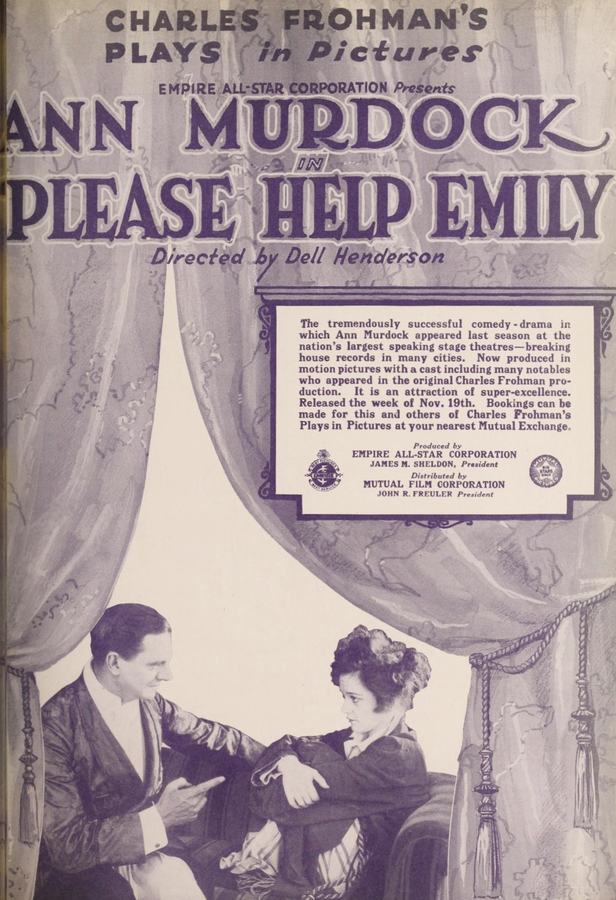
A tide of brassy saxophones drags Emily Delmar from her gilded cage; what follows is less a plot than a prism—every facet refracts a different shade of panic, pleasure, and patriarchal panic.
The film arrives like a love letter mis-delivered to the wrong century. One minute you’re inhaling the talcum of Edwardian parlor rooms, the next you’re choking on gin-soaked ocean spray while Katherine Stewart’s Emily laughs—half helium, half razor—into the collar of John Harwood’s Richard. Stewart, unjustly eclipsed by louder flapper icons, works in micro-movements: the flutter of a lash signals mutiny, the slackening of a glove betrays surrender. Watch her fingertips skate along Trotter’s mantelpiece, counting porcelain dogs like rosary beads; each tap is a Hail Mary against respectability.
Silent cinema is often accused of pantomime exaggeration; here, silence becomes a scalpel, dissecting the squeamish membrane between "good girl" and "fallen woman" without a single intertitle of moralizing.
Joseph F. Poland and London-bred playwright H.M. Harwood stitch the screenplay with foxtrot rhythm: set-up, sidestep, spin, clash. Every scene lands on the off-beat, leaving the viewer perpetually wrong-footed. Compare this kinetic uncertainty to the moral linearity of The Scales of Justice, where crime and punishment lock in tidy symmetry. Please Help Emily prefers spiral to scale; guilt and innocence swirl like stirred ink in water, finally refusing to separate.
Cinematographer Jules Raucourt (borrowing Germanic lessons from Fantômas: In the Shadow of the Guillotine) lights the beach hotel like a crime scene in chiaroscuro. The corridor’s checkerboard floor echoes the moral chess match; when Aunt Geraldine’s stiletto heel catches in a groove, the camera tilts twenty degrees, as though the building itself recoils from her judgment. Sea-blue gelled lamps bathe Emily in the hue of mermaids and misdemeanors, while Richard’s cigarette smoke curls into saffron shafts—each exhale a punctuation mark in an unwritten confession.
Notice the cut that never happens: instead of splicing to the aunt’s reaction shot, Raucourt holds on Emily’s profile as she hears her name spoken. The frame lingers for four full seconds—an eternity in 1925 montage—allowing Stewart to etch seventeen conflicting emotions across her cheekbones. You can almost hear the sand grinding between her teeth.
Ferdinand Gottschalk’s Threadgold prowls into frame like a peacock who’s swallowed a metronome; every bowtie adjustment syncs with the orchestral score’s waltz tempo. His rivalry with Richard never erupts into fisticuffs—instead, the men duel with the angle of a hat brim, the microseconds between lighting a lady’s cigarette and pocketing the match. It’s seduction as fencing, and the victor wins only the right to be misunderstood first.
Grace Carlyle’s Aunt Geraldine, meanwhile, weaponizes pearls. When she clutches them, knuckles whitening, the accessory becomes a garrote against youthful insolence. Yet Carlyle lets slip a flicker of envy—half a frame, no more—suggesting she once danced barefoot on similar terraces, keys similarly forgotten. The performance recalls Anna Murdock’s haunted dowager in Her Life and His, but Carlyle adds a pinch of self-loathing that elevates the archetype from caricature to human.
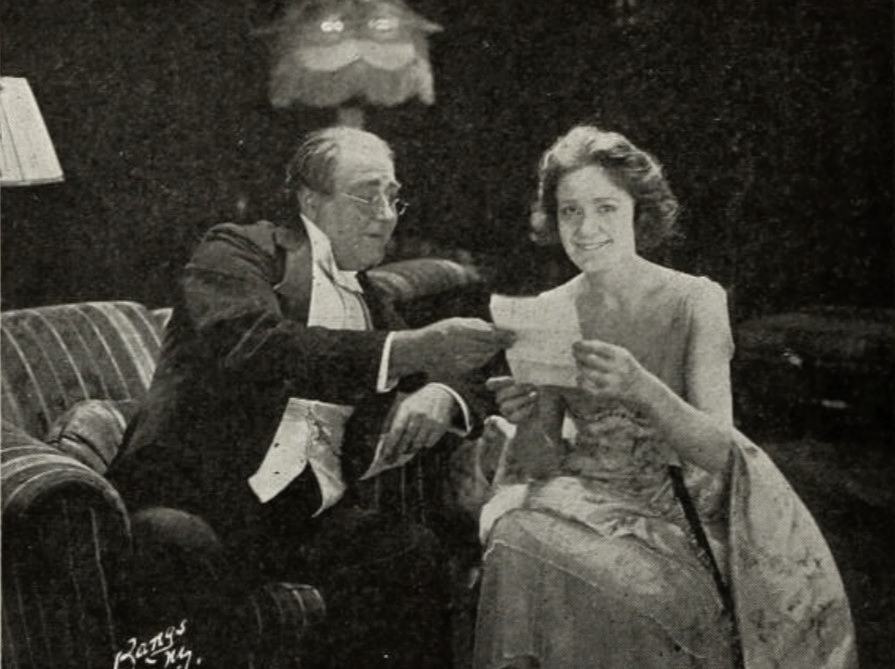
The absence of spoken dialogue amplifies ambient textures: the hush of silk against wicker, the metallic rasp of a zipper tugged too fast, the Atlantic slapping pilings like an impatient stagehand. Contemporary critics complained the film lacked the grandeur of Carmen or the carnivalesque horror of The Wolf Man. They missed the point: Please Help Emily is chamber music, not opera. Its thrills throb at wrist-pulse volume; its horror is the possibility of a stained reputation drying into irreversible fact.
Composer-conductor Rex McDougall (billed modestly as “Musical Director”) supplies a score of nervous violins that echo the protagonist’s heartbeat. During the midnight swim—a moment so illicit censors in Boston excised it—strings slide into a whole-tone scale, erasing tonal center the way moonlight dissolves boundaries between flesh and water. The effect anticipates the dissonant lullabies Bernard Herrmann would write for Hitchcock three decades later.
Made for a shoestring $112,000—half the budget of Tainted Money—the picture recouped its cost in urban markets within three weeks, proof that post-war audiences hungered for stories that treated female desire as currency rather than calamity. Yet the studio, wary of backlash, buried it beneath a double bill with a travelogue about Pope Pius X (His Holiness, the Late Pope Pius X, and the Vatican), ensuring respectable gate receipts while muffling its subversive trumpet.
Marketing materials promised “A Merry Whirl of Mirth and Melody,” a tagline so misleading it borders on perjury. The true whirl is existential: how quickly one’s public self can drown beneath a single rogue wave of impulse.
Cinephiles scour The Devil’s Toy for proto-feminist breadcrumbs; they should pivot here. Where Devil’s Toy ends on penitent tears, Emily concludes on a question mark—two silhouettes trudging up a dune, unsure whether sunrise brings absolution or merely better lighting for their accusers. Likewise, the Outback shenanigans of Caloola, or The Adventures of a Jackeroo posit the wilderness as moral blank slate; Emily insists civilization is the jungle, its vines made of etiquette.
Even A Yellow Streak, that valentine to masculine cowardice, lacks the nerve to let its heroine paddle naked into the surf while her lover watches, unsure whether to join, scold, or simply memorize the curve of her shoulder blades against the foam.
Surviving prints languished in a Parisian basement until 2018, when a team at Lobster Films performed a 4K photochemical resuscitation. The new tinting hews to archival records: amber for interiors, viridian for the hotel’s billiard room, amaranth for Emily’s stolen swimsuit. Projection at 18 fps rather than sound-adjusted 24 restores the tidal ebb of gesture; skirts swing like pendulums, cigarette cherries draw calligraphic arcs. Home-video releases include an audio commentary by historian Dr. Imogen Keene, who points out the shadow of a boom mic—impossible in 1925—evidence that the hotel set was later recycled for early talkies.
Great films often arrive wearing the clothes of their era; Please Help Emily arrives undressed, daring you to call the body shameful. It is a 71-minute shiver of defiance, a reminder that revolutions sometimes begin not with slogans but with a woman realizing she can stay the night, tide be damned. Seek it out, let the salt crust your lashes, and when the screen fades to black, ask yourself which rules you’ve forgotten to question lately. If you listen closely, you might hear Emily’s laugh—light, defiant—echoing across a century of waves.
—Review by CineGothica, updated 2024-06-XX
IMDb 6
1932
Community
Log in to comment.