DbcultAccessing Vault...
Cult Review
Senior Film Conservator
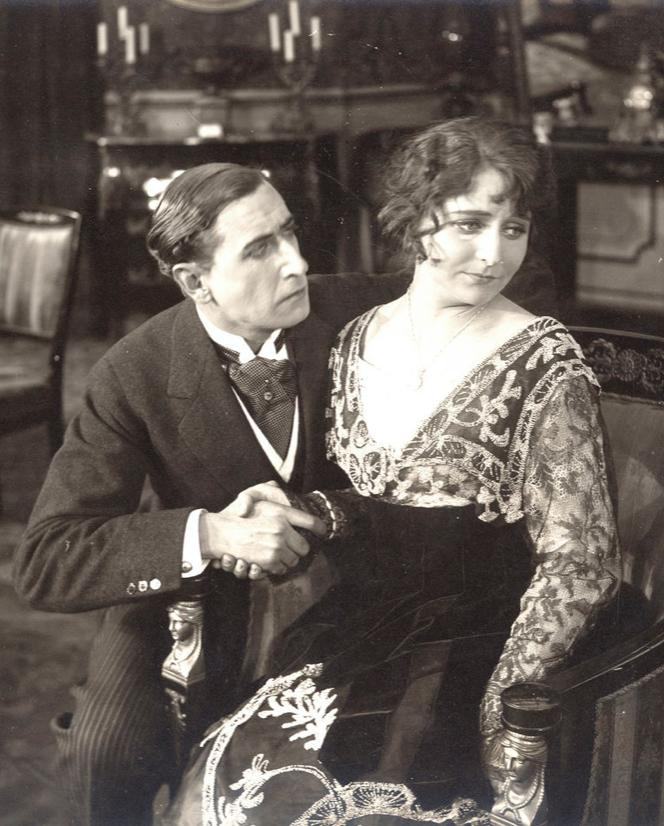
Stepping back into the cinematic annals of 1919, one encounters a fascinating artifact from Danish filmmaking: Konkurrencen. This silent era gem, penned by the talented Agnete von Prangen, who also graces the screen, offers a window into the societal mores and romantic machinations of a bygone age. It's a film that, despite its century-plus vintage, resonates with timeless observations on human nature, particularly the often-fraught interplay between wealth, love, and ambition. My recent re-discovery of this picture was nothing short of an immersive journey, a reminder of the profound storytelling capabilities that transcended spoken dialogue, relying instead on the evocative power of gesture, expression, and meticulously crafted mise-en-scène.
At the heart of Konkurrencen lies Inga Friis, portrayed with nuanced elegance by an ensemble cast led by the striking Agnete von Prangen. Inga is not merely a young woman; she is an heiress, a millionaire whose very existence is a beacon for a flock of eager suitors. This isn't a simple love story; it's a social commentary, thinly veiled beneath the trappings of romance. The film's title, 'The Competition,' is not an exaggeration but a precise descriptor of the gauntlet Inga's hand represents. Each man who enters her orbit views her not just as a potential partner, but as a prize, a gateway to a life of unparalleled ease and prestige. The screenplay, rich in its unspoken implications, meticulously details the various strategies employed by these aspirants, from the grand gesture to the subtle manipulation, all designed to capture the attention of the woman who holds the keys to their future.
The central premise — a woman's hand sought by many, her wealth a significant, if unspoken, factor — is a narrative trope that has graced screens for decades, yet Konkurrencen manages to infuse it with a particular early 20th-century charm and cynicism. We see the suitors engage in a veritable performance art, their manners polished to a blinding sheen, their love letters overflowing with florid prose, and their sartorial choices impeccable. It’s a delicate dance of deception and genuine, if often misguided, affection. The film cleverly juxtaposes these superficial displays against the underlying hunger for status, forcing the audience to ponder the true motivations behind such fervent courtship. It’s a compelling exploration of how societal structures can complicate, or even corrupt, the pursuit of authentic connection.
The cast of Konkurrencen delivers performances that are, by necessity, highly expressive and physically articulate. Agnete von Prangen, as the writer, undoubtedly understood the nuances required for silent film acting, and her presence on screen is captivating. She embodies Inga with a blend of youthful innocence and a growing weariness from the constant attention. One can almost feel the weight of expectation on her shoulders, the burden of discerning genuine sentiment from calculated flattery. Her subtle shifts in expression, a slight downturn of the mouth, a fleeting glance, convey a depth of character that transcends the lack of dialogue. It's a masterclass in silent film acting, where every gesture, every tilt of the head, carries immense narrative weight.
The supporting cast, including Ebba Lorentzen, Peter Jørgensen, Axel Boesen, Robert Dinesen, Franz Skondrup, Carl Lauritzen, Alma Hinding, Frederik Jacobsen, Aage Hertel, and Erik Holberg, each contribute to the rich tapestry of Inga's world. Their portrayals of the various suitors and societal figures are distinct, offering a spectrum of human ambition and desire. Some are overtly avaricious, their intentions transparent, while others mask their motives with a more convincing veneer of charm. The interplay between these characters creates a dynamic tension that propels the narrative forward, even in the absence of spoken words. The film's strength lies in its ability to delineate these individual personalities through their physical presence and interaction, painting a vivid picture of a society obsessed with appearances.
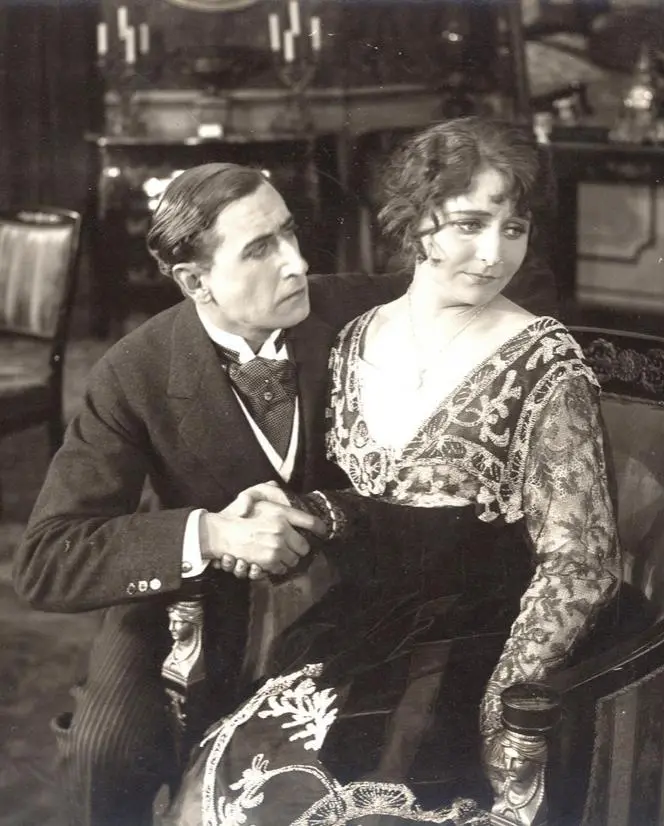
Cinematically, Konkurrencen is a testament to the sophistication of early Danish cinema. The visual language is paramount, with careful attention paid to composition, lighting, and set design. The lavish interiors, the elegant costumes, and the carefully staged social gatherings all contribute to the film's immersive atmosphere. These elements are not just decorative; they are integral to the storytelling, underscoring the opulence that defines Inga's world and, by extension, the stakes of the 'competition.' The use of intertitles is judicious, providing essential dialogue and narrative bridges without overwhelming the visual flow. This balance between text and image is crucial for maintaining audience engagement in a silent feature, and Konkurrencen executes it with commendable finesse.
The film's pacing, a common challenge in silent cinema, is handled with a discerning eye. There are moments of drawn-out tension, allowing the audience to fully absorb the emotional weight of a scene, contrasted with quicker cuts that propel the plot through social gatherings or dramatic confrontations. This varied rhythm prevents the film from feeling sluggish, a pitfall many silent films sometimes succumb to. The visual metaphors, though subtle, are potent. A lingering shot on a jewel, a closed door, or a solitary figure in a grand hall, all contribute to the film’s underlying themes of isolation, desire, and the material aspects of love. It reminds me of the intricate social dances depicted in films like Let's Get a Divorce, where personal desires often clash with rigid societal expectations, or even the grand romantic gestures, albeit often tragic, found in Camille, albeit with a less overt dramatic flair.
What truly elevates Konkurrencen beyond a mere historical curiosity is its trenchant exploration of universal themes. The film delves deep into the nature of love itself: can it truly flourish when one party's fortune is so immense as to overshadow all other considerations? It's a question as relevant today as it was a century ago. The suitors' elaborate attempts to 'romance' Inga – through impeccable manners, flowery love letters, and sophisticated style – are not just acts of affection, but carefully calculated maneuvers in a high-stakes game. This echoes the transactional aspects of romance seen in other period pieces, where marriage often served as a means of social or financial advancement rather than purely a union of hearts.
The societal critique is sharp, though delivered with a quiet elegance. The film highlights how wealth can distort human relationships, creating an environment where sincerity is suspect and every overture is scrutinized for ulterior motives. Inga's predicament is a poignant illustration of the isolation that can accompany great fortune; she is admired, pursued, and praised, yet constantly aware that her intrinsic worth might be secondary to her material assets. This struggle for authenticity in a world of artifice is a powerful undercurrent. One might draw parallels to the complexities of female agency and societal pressures seen in films like The Seven Sisters, which also explored women navigating a world with defined social roles, or even the romantic dilemmas in Cupid's Hold-Up, though perhaps with a less cynical lens on the motivations involved.
Agnete von Prangen's writing is particularly insightful in depicting the psychological toll of this 'competition' on Inga. She is not a passive recipient of attention, but a discerning observer, albeit one caught in a web of expectations. The narrative subtly questions the very definition of 'romance' when it is so heavily influenced by external factors. Is it truly love when it is 'wormed' out of a person, or is it a more pragmatic arrangement? The film leaves these questions lingering, inviting the audience to reflect on the nature of desire and its myriad expressions, both noble and self-serving. It’s a compelling character study, reminiscent of how The Dream Lady might explore idealized femininity and the aspirations projected onto women.
In conclusion, Konkurrencen is far more than a historical curiosity; it is a meticulously crafted silent film that offers a profound and engaging narrative. Its exploration of wealth, courtship, and the human desire for both love and status remains remarkably relevant. The film’s ability to convey such complex themes through purely visual means, supported by strong performances and thoughtful direction (guided by von Prangen's vision as writer), solidifies its place as a significant work of early Danish cinema. It’s a film that demands close attention, rewarding the viewer with a rich tapestry of social observation and emotional depth. For aficionados of silent film, or anyone interested in the evolution of cinematic storytelling, Konkurrencen is an absolute must-see, a testament to the enduring power of visual narrative. It’s a quiet masterpiece that speaks volumes without uttering a single word, leaving a lasting impression long after the final frame fades to black.

IMDb 6
1921
Community
Log in to comment.