DbcultAccessing Vault...
5.8/10
Senior Film Conservator
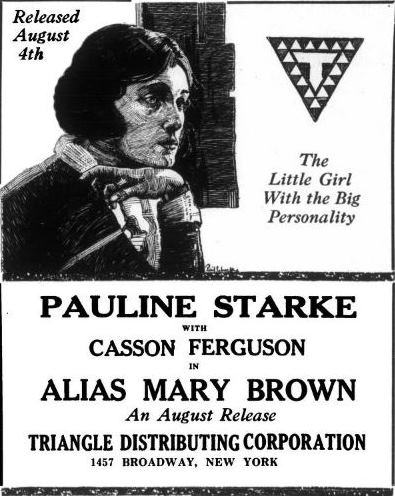
A definitive 5.8/10 rating for a film that redefined the boundaries of cult cinema. Alias Mary Brown remains a cornerstone of transgressive art.
Alias Mary Brown is a film that thrives in the liminal space between noir and operetta, where the line between criminal and avenger blurs under the weight of grief and societal corruption. Sidney De Gray’s portrayal of Dick Browning—a man whose identity fractures into two personas—captures the dissonance of a world where financial exploitation erodes familial bonds. The film’s opening act, a stark depiction of Mr. Browning’s swindling, sets the tone for a narrative steeped in capitalist betrayal, while Dick’s decision to don feminine attire as 'Mary Brown' transforms the heist genre into a grotesque parody of gender performance.
The film’s most striking sequence is Dick’s first heist as Mary Brown. Clad in a shimmering gown (a visual nod to the era’s vaudeville aesthetics), Dick infiltrates the home of one of the financiers, his movements a blend of calculated precision and theatrical flair. The camera lingers on his reflection in a mirror—a motif that recurs throughout the film—underscoring the duality of his existence. This scene, reminiscent of The Monk and the Woman’s exploration of identity, juxtaposes the glamour of deception with the rawness of Dick’s unresolved grief.
Pauline Starke’s Betty is a character of quiet resilience, her arc a counterpoint to Dick’s descent into criminality. Their love subplot, though predictable in its trajectory, is rendered poignant by Starke’s understated performance. The tension between Dick’s mission of vengeance and his desire to redeem himself through marriage to Betty mirrors the larger thematic conflict: can one atone for transgressions committed in the name of justice?
The film’s climax—Dick’s final heist targeting his uncle—unfolds with the tension of a Greek tragedy. The betrayal by his associate, a subplot echoing the treachery in The Avenging Trail, is less a twist than a logical conclusion to the film’s moral labyrinth. The associate’s murder of the uncle and subsequent arrest are handled with clinical detachment, a stark reminder that in this world, even the guilty are not spared the consequences of their hubris.
Technically, Alias Mary Brown is a product of its time. The interplay of light and shadow, particularly in scenes set within the gang’s lair, evokes the starkness of German Expressionism, while the use of cross-cutting during the heist sequences anticipates the rhythmic editing of later noir films. However, the film’s true innovation lies in its narrative structure, which refuses to offer easy resolutions. Dick and Betty’s decision to settle on a farm, framed in golden-hour cinematography, feels less like a triumph and more like an uneasy truce with an indifferent world.
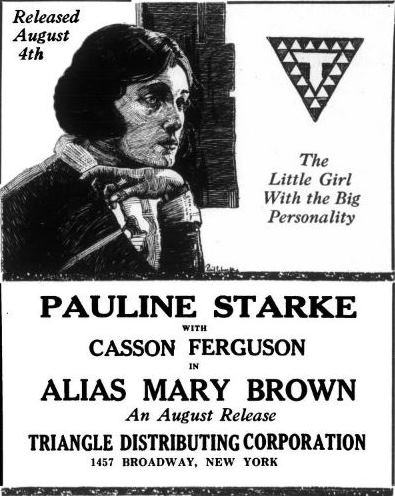
The film’s dialogue, crisp and laden with subtext, often veers into melodrama, yet it remains effective in conveying the characters’ emotional stakes. Walter Belasco’s portrayal of the crooked financier adds a layer of grotesque charm to the villainous archetype, while Alberta Lee’s performance as a gang member hints at the marginalized women who populate the fringes of Dick’s moral universe.
In its deconstruction of the vigilante trope, Alias Mary Brown occupies a unique position in pre-Code cinema. The gender subversion, though not overtly subversive by modern standards, challenges the era’s rigid norms, and the film’s refusal to condemn Dick for his crimes—despite their moral ambiguity—speaks to a complex engagement with class and power. This is a film that understands that justice is rarely pure, and redemption is often a performance.
Comparisons to Life of Christ may seem jarring, but both films grapple with themes of sacrifice and resurrection. Where Life of Christ leans into spiritual transcendence, Alias Mary Brown roots its narrative in the corporeal, using the body as a site of both subterfuge and revelation. Similarly, the cross-dressing motif recalls the gender-fluid experimentation in The Morals of Hilda, though Alias Mary Brown employs it with greater narrative purpose.
Despite its dated aesthetics, Alias Mary Brown endures as a testament to the enduring allure of the antihero. Its legacy lies in its willingness to interrogate the systems that enable both crime and its consequences, making it a quietly radical film for its time. The final scene, with Dick and Betty gazing at their inherited farm, lingers on their faces—their expressions a mixture of hope and resignation—leaving the audience to ponder whether their new life is a rebirth or merely a reprieve.
In an era where streaming platforms resurrect forgotten classics, Alias Mary Brown deserves a place in the canon for its bold storytelling and nuanced characterizations. It is a film that dares to ask, in the language of heist and heartbreak, whether the mask we wear is ever truly ours—or if we are all, in some way, Alias Mary Brown.
IMDb 6.4
1931
Community
Log in to comment.