DbcultAccessing Vault...
6.5/10
Senior Film Conservator
A definitive 6.5/10 rating for a film that redefined the boundaries of cult cinema. La petite chanteuse des rues remains a cornerstone of transgressive art.
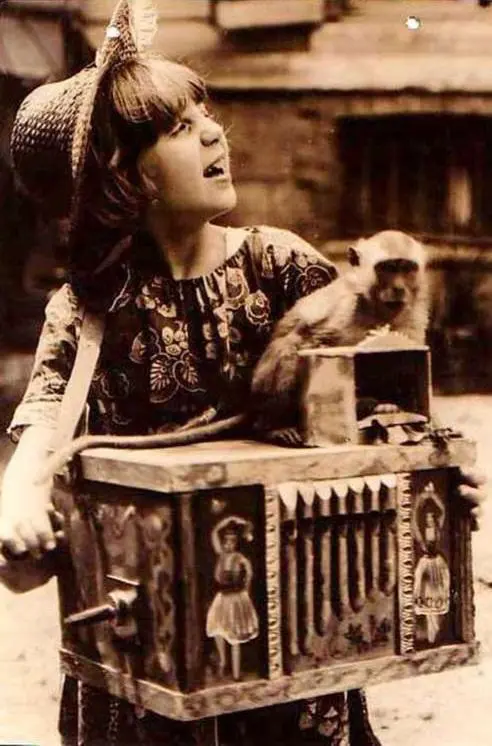
In the pantheon of early silent cinema, few works capture the raw, unvarnished intersection of childhood innocence and systemic hardship as effectively as La Petite Chanteuse des Rues. This is not merely a relic of a bygone era; it is a pulsating, monochromatic document of survival. Nina Star, whose presence on screen radiates a preternatural gravity, anchors the film with a performance that bypasses the exaggerated histrionics often associated with the 1920s. Instead, she offers a masterclass in subtlety, her eyes conveying the crushing weight of maternal responsibility while her small frame navigates a world designed for giants.
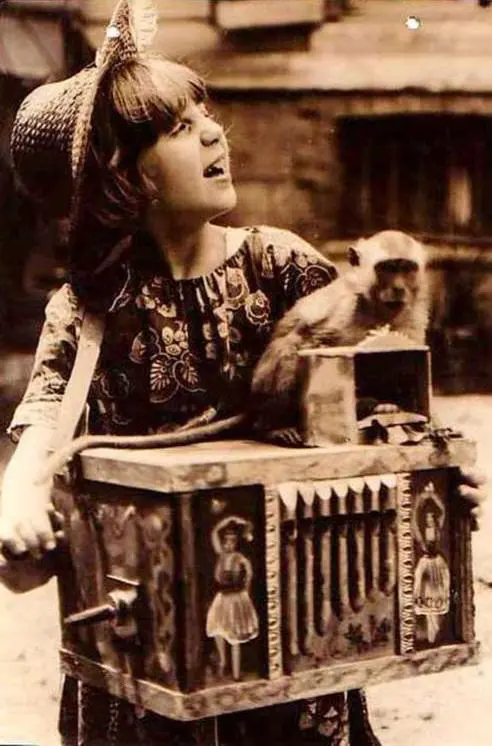
What elevates this narrative beyond the standard street-urchin melodrama is the inclusion of her agile simian companion. This monkey is no mere gimmick; it serves as the kinetic heart of the film. While many contemporary films of the period, such as The Twinkler, relied on traditional slapstick to engage audiences, La Petite Chanteuse des Rues utilizes animal movement to highlight the girl’s own agility and resourcefulness. The monkey acts as an extension of her will, a dexterous agent capable of retrieving coins and performing feats that the girl cannot, symbolizing the precarious balance between play and labor.
The choreography between Nina Star and her primate co-star is nothing short of miraculous. There is a tactile reality to their interactions that puts modern CGI to shame. When the monkey climbs the weathered facades of the city, we feel the grit of the stone and the danger of the height. This sense of physical stakes is a hallmark of the era, reminiscent of the atmospheric tension found in La montagne infidèle, though here the mountain is the unforgiving architecture of the city itself.
The film’s portrayal of the mother’s illness is handled with a stark, almost documentary-like precision. Unlike the more stylized depictions of suffering in The Sin of Martha Queed, the domestic space in this film is claustrophobic and devoid of artifice. The lighting, often harsh and directional, emphasizes the hollowed cheeks of the mother and the sparse furnishings of their dwelling. It is a visual language of scarcity. The contrast between this interior gloom and the bustling, indifferent exterior world creates a profound sense of isolation.
We see the girl standing on street corners, her voice—unheard by us but felt through her straining throat and hopeful posture—competing with the roar of early motorcars and the chatter of the affluent. It is a poignant commentary on the invisibility of the impoverished. This thematic depth mirrors the societal critiques found in Egyenlöség, though translated here into a more intimate, character-driven register. The film doesn't ask for pity; it demands recognition of the protagonist’s agency.
When examining the broader landscape of 1920s cinema, La Petite Chanteuse des Rues occupies a unique niche. It lacks the sprawling, epic ambitions of Paradise Lost or the exoticism of Sands of the Desert. Instead, it finds its power in the miniature. It is a film of small gestures—a hand resting on a monkey’s shoulder, a coin being dropped into a tin cup, the rhythmic folding of a worn blanket. This focus on the minutiae of daily life aligns it more closely with the psychological intimacy of Lulù, albeit with a significantly more optimistic moral compass.
Furthermore, the film’s pacing is surprisingly modern. Unlike the serialized mystery of Lucille Love: The Girl of Mystery, which relies on cliffhangers and external plot twists, the tension in this film is internal and existential. Will they eat today? Will the monkey be captured? Will the mother recover? These are the questions that drive the narrative, and they are far more harrowing than any masked villain or hidden treasure. The stakes are primal, touching on the fundamental human fear of abandonment and the loss of family.
Technically, the film utilizes the limitations of its time to its advantage. The grain of the film stock adds a layer of atmospheric texture that feels like a charcoal sketch come to life. The use of location shooting—or at least very convincing sets—provides a sense of place that is often missing from more stage-bound productions like The Bashful Lover. There is a sequence where the girl and her monkey move through a crowded marketplace that is a marvel of early cinematography. The camera captures the chaotic energy of the crowd, making the viewer feel as though they are being swept along in the girl’s wake.
The editing is equally impressive, utilizing cross-cutting to build tension during the monkey’s more daring escapades. It lacks the frantic energy of Back from the Front or the comedic timing of Toonerville's Fire Brigade, opting instead for a steady, deliberate rhythm that mirrors the girl’s own persistence. Every shot is composed with an eye for balance and emotional resonance, ensuring that even the most mundane actions carry significant weight.
One cannot discuss this film without returning to Nina Star. In an era where child actors were often treated as mere props or vessels for adult sentimentality, Star exhibits a profound understanding of her character’s internal life. Her performance is reminiscent of the emotional depth found in The Man Who Played God, where the silence is filled by the sheer force of the actor’s expression. She does not play for the camera; she exists within the world of the film, making her plight all the more believable.
Her chemistry with the monkey is authentic, suggesting a long period of training and mutual trust. This relationship is the soul of the film. While other films might focus on the spectacle of the animal, La Petite Chanteuse des Rues focuses on the emotional necessity of the animal. The monkey is her only peer, her only friend, and her only coworker. It is a partnership born of necessity but sustained by genuine affection.
As we look back on this film, it stands as a testament to the power of simple storytelling. It doesn't need the sports-centric appeal of Play Ball with Babe Ruth or the moralistic weight of The Devil's Garden to make its point. It is a story about a girl, a monkey, and a mother. By narrowing its focus, it achieves a universal resonance that remains potent nearly a century later. It captures a specific moment in time—the transition of the urban landscape, the struggles of the working class, and the burgeoning art of cinema—and distills it into a narrative of enduring beauty.
In comparison to the more traditional narrative structures of Lena Rivers, this film feels experimental in its focus on the non-human and the non-verbal. It trusts the audience to interpret the girl’s silence and the monkey’s movements. It is a film that rewards close attention, revealing layers of social commentary and emotional nuance with every viewing. It remains a vital piece of cinematic history, a reminder that even in the darkest streets, there is a song to be sung and a life to be saved.
Ultimately, La Petite Chanteuse des Rues is a triumph of the human spirit. It is a film that acknowledges the cruelty of the world without succumbing to cynicism. Through the lens of Nina Star’s performance and the acrobatic grace of her simian companion, we are reminded of the resilience of the marginalized. It is a haunting, beautiful, and essential piece of silent cinema that deserves to be celebrated by modern audiences and critics alike.

IMDb 6
1934
Community
Log in to comment.