DbcultAccessing Vault...
Cult Review
Senior Film Conservator
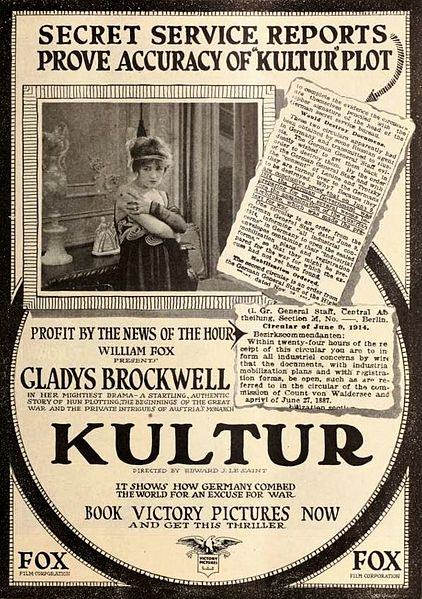
Stepping back into the annals of early cinema, one often finds narratives that, despite their age and the limitations of their medium, resonate with a surprising contemporary vigor. Kultur, a cinematic artifact from 1918, is precisely such a film. Emerging at the tail end of the very conflict it presages, this silent epic dives headfirst into the murky waters of pre-World War I European diplomacy, espionage, and the fatal entanglement of personal ambition with geopolitical machinations. It's a testament to the power of storytelling that even without synchronized sound, the film manages to weave a tapestry of intrigue so dense and compelling, drawing viewers into a world teetering on the brink of cataclysm.
The film unfolds against a backdrop of escalating tensions, where the delicate balance of power is about to shatter. The Kaiser, brimming with a belligerent confidence, dispatches Baron von Zeller to Vienna, a harbinger of war, to inform Emperor Franz Josef of Germany's readiness to declare hostilities against France. This single act sets in motion a chain of events that will ensnare hearts, minds, and nations. The French, ever vigilant, counter this move by deploying their own master spy, René de Bornay, a figure whose very existence is shrouded in the clandestine. His mission: to penetrate the inner circles of the Austrian court and ascertain the true intentions lurking beneath the veneer of diplomatic cordiality. It's a classic setup, yet executed with a certain raw urgency that defines early cinematic thrillers.
De Bornay's entry point into this aristocratic labyrinth is the Countess Griselda von Arenburg, the enigmatic and influential mistress of Emperor Franz Josef. Griselda is a character of immense complexity, a woman whose beauty and cunning afford her a unique position of power in a patriarchal world. She is not merely a decorative figure; she is a strategic player, keenly aware of her influence and unafraid to wield it. The film, in its portrayal of Griselda, touches upon themes explored in other contemporary dramas of female agency, albeit often within the confines of societal expectations. One might draw a thematic parallel to films like A Woman's Power, where the protagonist navigates a world of male dominance through wit and charm, though Griselda’s machinations are far more lethal.
The political undercurrents are palpable, almost suffocating. Archduke Franz Ferdinand, a figure historically significant for his tragic end, is presented here as a man deeply unsettled by Griselda's sway over the Emperor. His distress is not merely personal; it's an imperial concern. He sees her as a threat to the stability of the Habsburg dynasty, an impediment to his own ambitions. This internal conflict within the Austrian court adds another layer of tension, a micro-drama playing out against the macro-drama of impending global warfare. Ferdinand's resolution to eliminate Griselda is a pivotal moment, showcasing the ruthless calculations that often underpin claims to power. It’s a stark reminder that in these rarefied circles, loyalty is fleeting and survival paramount.
However, Griselda is no passive victim. Her intelligence and network of informants are formidable. She uncovers Ferdinand's plot against her, setting the stage for a dramatic reversal of fortunes. In a move that shocks with its audacity, she commissions her Serbian servant, Danilo, to murder the Archduke. This act, so central to actual historical events, is depicted here as a personal vendetta, a pre-emptive strike born of self-preservation, rather than a purely nationalistic fervor. The film, in this narrative choice, personalizes a monumental historical turning point, suggesting that grand historical movements can often be triggered by the intimate, often sordid, desires and fears of individuals. The sheer audacity of this portrayal, even for its time, must have been quite something, daring to reframe a global conflict's spark as a consequence of aristocratic power struggles and a woman's desperate fight for survival.
Baron von Zeller, a character whose motivations are initially purely political, becomes increasingly entangled in Griselda's personal drama. His secret love for her transforms him from a mere messenger of war into her unwitting protector. He orchestrates a meticulous cover-up, ensuring her complicity in the Archduke's assassination remains concealed from the prying eyes of the empire. This act of profound devotion, bordering on obsession, highlights the film's exploration of how personal affections can utterly derail professional duties and political allegiances. Von Zeller's character adds a tragic dimension, a man torn between his loyalty to the Kaiser and his heart's inexplicable pull towards a woman who embodies both danger and allure. This kind of conflicted loyalty is a recurring motif in espionage thrillers, and Kultur demonstrates an early mastery of this trope.
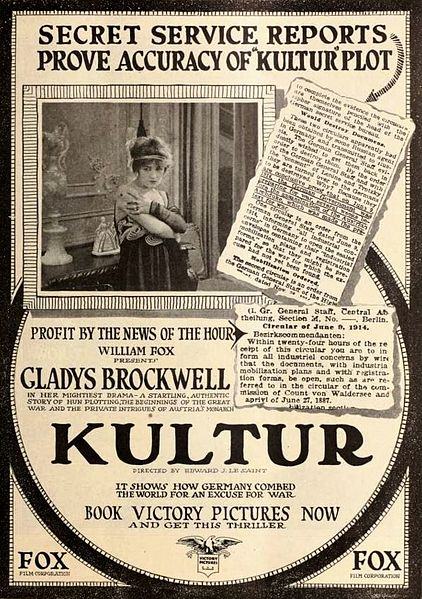
The narrative then shifts, moving Griselda to Berlin, under the guise of serving the Kaiser as an agent. This relocation is von Zeller's doing, a desperate attempt to keep her close, to protect her, and perhaps, to control her. Berlin, a city bristling with its own brand of imperial ambition and clandestine operations, becomes the new stage for Griselda's dangerous game. It is here that she unexpectedly re-encounters René de Bornay. The irony is poignant: she is now tasked with exposing him, with dismantling the very French intelligence network he represents. Yet, fate, with its twisted sense of humor, intervenes, igniting a spark of romance between the two adversaries. This forbidden love, blossoming amidst the thorns of espionage, elevates Kultur beyond a mere political thriller, imbuing it with the heartache and doomed passion of a true melodrama.
The chemistry between Georgia Woodthorpe as Countess Griselda and Nigel De Brulier as René de Bornay, though conveyed through silent acting and intertitles, is remarkably potent. Woodthorpe, with her expressive eyes and nuanced gestures, brings Griselda to life as a woman of formidable intellect and deep emotional vulnerability. De Brulier, in turn, projects an air of suave confidence mixed with a quiet determination, making his René a compelling counterpoint. Their romance is not a frivolous diversion but a central conflict, a moral dilemma that forces Griselda to confront her allegiances and her very sense of self. This kind of high-stakes romantic entanglement, where love and duty clash, can be seen in later classics, but Kultur offers an early, compelling example. It reminds one of the intensity found in other silent era dramas where human emotion had to be conveyed through sheer physicality and facial expression, such as the dramatic tension often found in films like The Conspiracy, where personal loyalties are constantly tested.
The climax of the film is as swift as it is brutal, a testament to the unforgiving nature of the world it depicts. Griselda, succumbing to her love for René, urges him to escape to France, betraying her German handlers. This act of defiance, this choice of love over loyalty, seals her fate. Just as René leaves her apartment, a momentary reprieve that feels tragically brief, von Zeller enters. He has uncovered her treachery, her act of sheltering the enemy. In a moment of chilling resolve, devoid of the love that once softened his gaze, he orders her execution on the spot. It is a shocking, visceral end, highlighting the ultimate price of playing a dangerous game. Griselda's death is not just the end of a character; it's a symbolic representation of the destruction wrought by the very 'Kultur' – a term loaded with ironic meaning in the context of German nationalism and the war – that consumes everything in its path.
From a technical perspective, Kultur, directed by William Scott, showcases the nascent artistry of silent filmmaking. The use of mise-en-scène, though perhaps not as elaborate as later productions, effectively conveys mood and setting. The framing of shots, the dramatic use of light and shadow, and the pacing of the narrative through carefully crafted intertitles all contribute to a compelling visual experience. The performances, particularly by Woodthorpe, are a masterclass in silent screen acting, relying on exaggerated yet emotionally resonant gestures and facial expressions to communicate complex internal states. The film’s ability to sustain tension and emotional depth without spoken dialogue is a powerful reminder of the universal language of cinema. One can appreciate how films of this era, like Treasure Island (also from 1918), relied on strong visual storytelling to captivate audiences, albeit with very different thematic concerns.
The script, penned by Fred Myton and J. Grubb Alexander, is remarkably prescient, given that it was released while World War I was still raging. To construct a narrative that so closely mirrors and reinterprets the very fuse of the conflict, with such intricate character motivations and political maneuvering, speaks volumes about their understanding of the geopolitical climate. The writers deftly weave together historical events with fictionalized personal dramas, creating a narrative that feels both epic and intimately personal. They understood that the grand sweep of history is often driven by the minute decisions and emotional upheavals of individuals. This blend of historical backdrop and personal drama is a hallmark of effective storytelling, allowing audiences to connect with the broader narrative through relatable human experiences.
The film's title, Kultur, is itself a fascinating choice. In 1918, during the height of anti-German sentiment, the term 'Kultur' had become synonymous with German militarism and perceived barbarity in Allied propaganda. By naming the film 'Kultur' and depicting a narrative where German imperial ambition directly leads to war and where its agents are capable of both calculated ruthlessness and tragic, misguided love, the film engages directly with the contemporary discourse surrounding the war. It's not just a story; it's a commentary, a reflection of the anxieties and perceptions of its time. This makes the film not only a historical document of early cinema but also a cultural artifact reflecting the socio-political zeitgeist of its release. It attempts to dissect, or at least dramatize, the very essence of what was being fought over, culturally and ideologically.
In conclusion, Kultur stands as a compelling example of early espionage thrillers, a genre that would continue to captivate audiences for decades to come. Its intricate plot, memorable characters, and tragic romance elevate it beyond a mere historical curiosity. It’s a powerful narrative about ambition, betrayal, love, and the devastating consequences of political intrigue, all set against the monumental backdrop of a world on the cusp of war. The film successfully demonstrates that even in the absence of spoken dialogue, cinema possessed an undeniable power to tell complex, emotionally resonant stories. It’s a film that deserves to be rediscovered, not just for its historical significance, but for its enduring dramatic punch. The silent era, often overlooked, was capable of producing narratives with profound depth and intricate character arcs, and Kultur is a shining example of this capability. Its themes of power, espionage, and doomed love are timeless, making it as relevant for a modern viewer as it was for its original audience over a century ago. The tragic arc of Griselda, caught between powerful men and global forces, resonates with a universal understanding of human vulnerability in the face of overwhelming circumstances, a sentiment that might even be echoed in the dramatic struggles of protagonists in films like The Flower of Doom, where personal fate is often intertwined with larger, uncontrollable forces. The film’s lasting impact lies in its bold portrayal of the human cost of political machinations, reminding us that behind every grand historical event, there are individuals whose lives are irrevocably altered, often tragically so. It’s a stark, compelling piece of cinematic history that speaks volumes without uttering a single word, relying instead on the universal language of human emotion and visual storytelling to leave an indelible mark.
IMDb —
1929
Community
Log in to comment.