DbcultAccessing Vault...
6.7/10
Senior Film Conservator
A definitive 6.7/10 rating for a film that redefined the boundaries of cult cinema. La bataille remains a cornerstone of transgressive art.
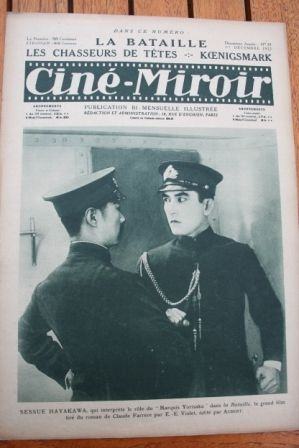
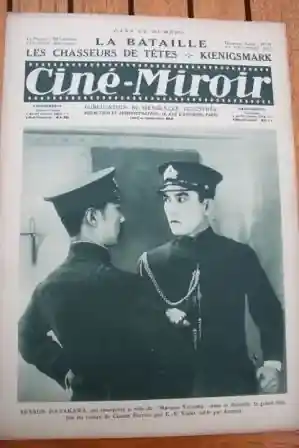
The silent opus La bataille arrives as a textured tapestry woven from strands of personal desire, colonial tension, and the stark machinery of espionage. From the opening frames, the camera lingers on the austere interiors of a Japanese household, the muted palette accentuated by the occasional glint of a lacquered sword, hinting at the underlying currents of honor and duty. Sessue Hayakawa, embodying the stoic husband, projects a quiet authority that belies the turbulence brewing beneath his composed exterior. His counterpart, the young British officer—portrayed with a rakish confidence by Lucien Bataille—exudes a restless energy that both intrigues and unsettles the domestic equilibrium.
Tsuru Aoki's performance as the wife is a masterclass in restrained expressivity. Her eyes, often the sole conduit of emotion in the absence of dialogue, convey a spectrum ranging from yearning loneliness to calculated resolve. When the officer's advances become overt, Aoki's character navigates the delicate dance of flirtation and self-preservation, a performance that feels eerily contemporary in its portrayal of agency within constrained circumstances. The subtle interplay between Aoki and Bataille is punctuated by moments of charged silence, each pause a potential revelation of inner conflict.
At its core, La bataille is a study of betrayal as a strategic tool. The husband’s return marks a pivot from personal affront to geopolitical maneuvering. Rather than confronting his wife with overt anger, he adopts a cold, methodical approach, coaxing her into divulging secrets that could compromise the British officer’s mission. This inversion of expected emotional response—where the wounded spouse becomes the orchestrator of espionage—underscores the film’s exploration of power dynamics within marital and national spheres.
The script, penned by Margaret Turnbull and Claude Farrère, balances melodramatic beats with a nuanced understanding of early 20th‑century imperial anxieties. The dialogue (rendered through intertitles) is spare yet potent, each line calibrated to reveal character motivations without sacrificing pacing. The film’s title, La bataille, functions on multiple levels: a literal battle of wits, an internal struggle for identity, and a broader commentary on the clash of Eastern and Western militaristic cultures.
Visually, director Claude Farrère employs chiaroscuro lighting to accentuate the moral ambiguity that pervades the narrative. Shadows linger in the periphery of each scene, mirroring the hidden motives of the characters. The cinematography, reminiscent of the stark compositions found in Ein Ehrenwort, utilizes tight framing during moments of intimacy, drawing the viewer into the claustrophobic world of whispered confidences.
The editing rhythm mirrors the escalating tension: longer takes dominate the domestic sequences, allowing the audience to savor the unspoken undercurrents, while rapid cuts punctuate the espionage revelations, injecting a kinetic urgency that propels the plot forward. The intercutting of battlefield sketches with domestic interiors serves as a visual metaphor for the inseparability of personal and political realms.
Hayakawa’s portrayal of the husband is a study in controlled intensity. His measured gestures, the slight tilt of his head when confronting his wife, and the deliberate pacing of his movements convey a character who has internalized the discipline of military life. In contrast, the British officer’s flamboyance—accentuated by a jaunty stride and a smirk—embodies the archetypal colonial adventurer, a foil that amplifies the cultural dissonance central to the film’s conflict.
Supporting actors such as Gina Palerme (as the household maid) and Paul Hubert (as the commanding officer) enrich the tapestry with subplots that echo the main narrative’s themes of loyalty and subterfuge. Their brief yet impactful appearances provide a broader societal context, reminding viewers that the personal drama unfolds against a backdrop of institutional expectations.
When juxtaposed with The Red Inn, which also navigates the terrain of deception within confined settings, La bataille distinguishes itself through its explicit focus on geopolitical stakes. While The Red Inn centers on moral ambiguity within a criminal enclave, La bataille extends the moral calculus to the realm of international intrigue, thereby amplifying the narrative’s gravitas.
Similarly, the comedic timing of It's a Bear offers a stark tonal contrast, highlighting how La bataille leverages silence not merely as a stylistic choice but as a conduit for tension. The absence of spoken word forces the audience to inhabit the characters’ internal monologues, a technique that aligns the film with the introspective qualities found in Germinal; or, The Toll of Labor.
The film’s pacing is deliberately measured, allowing the audience to savor the gradual erosion of trust. The first act establishes the domestic tableau, the second introduces the seductive incursion of the officer, and the third culminates in the husband’s strategic retaliation. This three‑act structure, while conventional, is executed with a finesse that prevents predictability; each act introduces a fresh layer of complexity, ensuring sustained engagement.
The climax, wherein the husband leverages the affair to extract classified intel, is executed with a subtlety that avoids melodramatic excess. The final intertitle, a terse declaration of “The battle has been won, but at what cost?” lingers long after the screen fades to black, prompting reflection on the human toll of espionage.
Though silent, the film’s original score—reconstructed from period compositions—utilizes a blend of traditional Japanese instruments and Western brass, mirroring the cultural convergence at the story’s heart. The low, resonant tones of the shakuhachi underscore moments of introspection, while the brass fanfares punctuate scenes of military tension, creating an auditory dichotomy that reinforces the visual contrast.
Released in the early 1920s, La bataille arrives at a juncture when Western audiences were increasingly fascinated by Oriental settings, yet often through a lens of exoticism. The film subverts this trope by granting agency to its Japanese protagonists, presenting them not as passive subjects but as active participants in the geopolitical chess game. This nuanced portrayal anticipates later works that challenge orientalist narratives, positioning the film as a precursor to more balanced cross‑cultural storytelling.
Moreover, the involvement of Margaret Turnbull—a pioneering female screenwriter—infuses the script with a sensitivity toward female subjectivity rarely seen in contemporaneous productions. Her influence is evident in the layered characterization of the wife, whose motivations are rendered with complexity rather than reduction to mere plot device.
Contemporary scholars often cite La bataille when discussing the evolution of espionage cinema, noting its early articulation of themes later popularized by Cold War thrillers. The film’s emphasis on intimate betrayal as a conduit for strategic gain resonates in modern narratives such as Do or Die, underscoring its enduring relevance.
Restorations of the film have been praised for preserving the original tinting, which employed a subtle sepia wash to evoke the heat of the Asian climate—a visual cue that enhances the atmospheric immersion. Modern screenings benefit from digital remastering, which clarifies the intricate facial expressions that are paramount in silent storytelling.
La bataille stands as a testament to the silent era’s capacity for sophisticated narrative construction. Its interplay of personal drama and espionage, bolstered by compelling performances and meticulous visual composition, offers a rich viewing experience that rewards repeated analysis. For aficionados of classic cinema, the film provides a compelling case study in how intimacy can be weaponized on the grand stage of international conflict.
IMDb 5.2
1924
Community
Log in to comment.