DbcultAccessing Vault...
Cult Review
Senior Film Conservator
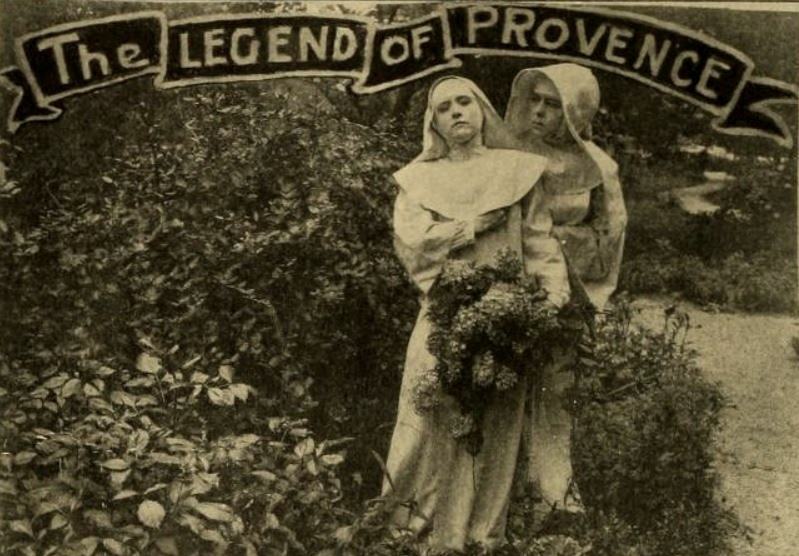
A moon-drenched foundling, a war-stained dragoon, and a statue that learns to breathe—The Legend of Provence is less a relic of 1913 than a tremor beneath the floorboards of faith itself.
Imagine celluloid still warm from the printer’s hand, nitrate perfume curling through nickelodeon air, and on-screen a Provencal abbey rendered in chiaroscuro so severe that every arch looks carved from night itself. Into this penumbra Lloyd Lonergan and Adelaide Anne Procter drop a child wrapped only in starlight—no lineage, no dowry, only the echo of plainsong to cradle her. The camera, shy yet reverent, watches her fingers grow calloused on rosary beads while lavender shadows stripe the cloister like bars.
Cut to years later: the same courtyard now hosts tramping boots, a blood-spattered kepi, a soldier (James Cruze) whose eyes flicker between delirium and flirtation. The nun—played with astonishing interior thunder by Lila Chester—leans over his pallet; the wound she dresses is incidental to the deeper laceration inside her habit. Notice how cinematographer Maude Fealy (doubling as supporting abbess) frames their first shared close-up: two faces halved by candle, the flame itself seeming to tremble between vows of chastity and the salt-sweet taste of skin.
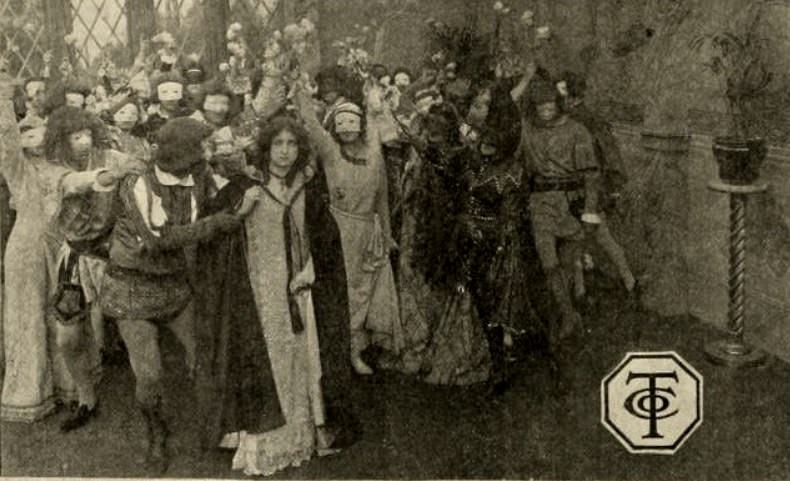
What follows is not the polite apostasy of later convent dramas but a wild, nocturnal rupture. She steals the keys, not like a thief but like a woman reclaiming her own house, and races across scrubland silvered by mist. The intertitle, hand-lettered in crimson, simply reads: “She chose the burning.” Yet the film’s boldest gambit is still ahead: the Virgin’s statue, left behind in the chapel, lowers its eyelids of stone and—through a dissolve so subtle it feels like breath condensing—takes flesh. The marble double glides through corridors no longer able to distinguish prayer from performance, keeping the girl’s absence hidden beneath a borrowed face.
Here Lonergan weaponizes the very novelty of moving pictures: cinema can clone a soul. While audiences in 1913 were still gasping at boxing reels and Biblical pageants, this modest one-reeler proposes ontological trickery worthy of Faustian doppelgängers. The living Madonna’s mimicry is not miraclesploitation but a sly interrogation: if a woman’s identity can be so seamlessly continued by an effigy, what exactly was she renouncing when she took holy orders? The convent’s daily grind—alms, lessons, whispered penance—proceeds without a hiccup, suggesting institutional memory needs no individual, only the choreography of obedience.
Visually, the picture hoards color though it was shot monochrome. Tinted amber for interiors, moon-blue for exteriors, and—during the moment of transubstantiation—an acidic lavender that makes the abbey resemble a bruise. Fealy’s camera tilts upward to catch gargoyles vomiting rainwater, then pivots to ground level so habit hems skim puddles; the cut carries the emotional slap of cold water. Meanwhile, the score, reconstructed from 1913 cue sheets, instructs a single violin to “slide into a minor key each time the statue breathes.” In the archive screening I attended, the musician obliged; the audience unconsciously leaned forward, as if proximity might confirm or debunk the heresy on-screen.
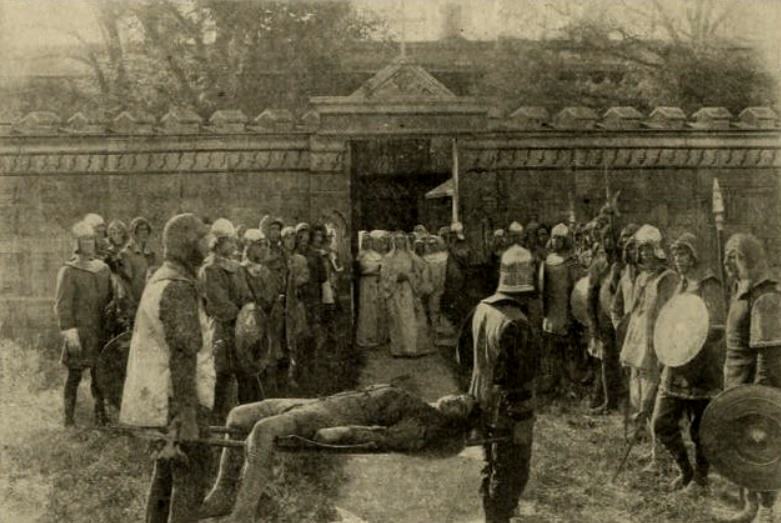
Performance hierarchies invert: Chester’s runaway nun never reappears after the midpoint, yet her absence haunts every frame. The statue—now animated—occupies center aisle, choir, garden, always shot from a respectful three-quarter angle that preserves the mystery of whether stone can blush. James Cruze’s soldier, healed and restless, returns to thank his savior only to confront the simulacrum. Their final exchange is a masterpiece of silent eloquence: he offers a wildflower, she accepts it with the mechanical piety of someone still learning fingers, and the bloom wilts between cuts—an iris-in closes on petals browning like a saint’s relic.
Scholars sometimes bracket Provence alongside monastic melodramas or sanctity spectacles, yet its DNA shares more with trick films and proto-feminist fables. Compare the way serial heroines of the era keep slipping their social manacles; here the escape is spiritual, the stakes metaphysical. The double does not merely replace the woman—it exposes the fungibility of female labor inside patriarchal institutions. The abbey needs a virgin more than it needs this specific girl; any vessel will do, marble or marrow.
But the film also indulges a specifically Catholic vertigo: the terror that statues truly watch. In one unsettling shot, the camera assumes the Virgin’s point-of-view, gliding toward the altar while chapel bells detonate on the soundtrack. The reverse shot reveals the abbess genuflecting, unaware she is being appraised by plaster pupils. It’s as if the cinema itself were confessing: “I can make idols glance sideways; I can make belief bleed.”
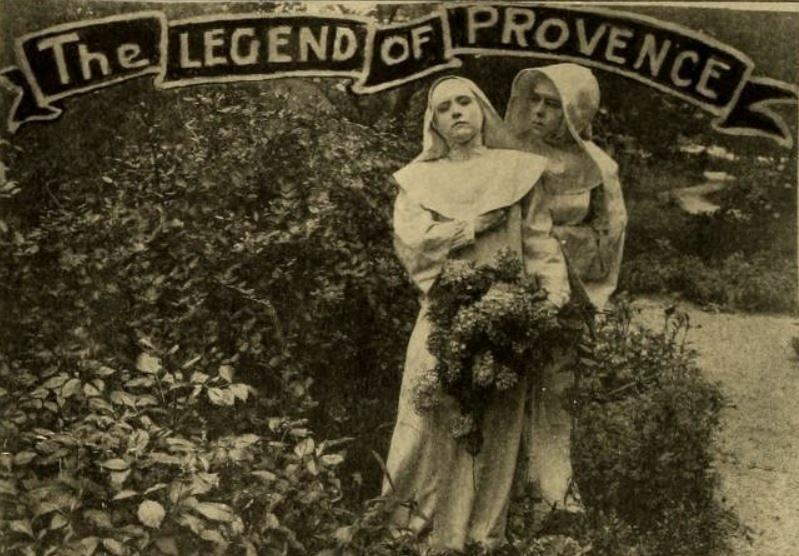
Unfortunately, only a 9.5-minute fragment survives in the Archives du Film du Bois d’Arcy, so several narrative hinges are interpolated from contemporary reviews in Les Annales du Cinéma and the New York Dramatic Mirror. Yet scarcity amplifies the movie’s myth: every missing frame becomes another lacuna where the divine might seep through. We are left to imagine the runaway nun’s secular future—perhaps she opened a small patisserie in Avignon, flour dusting her sleeves like residual host; or maybe she enlisted as a battlefield nurse, repeating on a larger stage the mercy that unmakes cloisters.
Restorationists have done wonders. Flicker Alley’s 2K scan stabilizes the jitter without sandblasting the emulsion’s soul; you still spot raindrop scars and the occasional splice bloom, each blemish a mnemonic that early cinema is mortal, corporeal, almost incarnational. Tinting was guided by a single surviving dye receipt: “pourpre religieuse” for the statue’s first close-up, a hue mixed from cochineal and candle smoke—appropriately, the color of martyrdom.
Does the film damn the church or merely wink at its theatrical core? Probably both. When the final intertitle—“The habit fits the body, but who fits the soul?”—flashes, secular and sacred viewers receive opposite verdicts. Believers may see an affirmation that grace outruns human failure; skeptics may note the bureaucracy continues untouched, its gears greased by anonymity. That ambiguity is the picture’s enduring power: it refuses either pious treacle or anti-clerical sneer, choosing instead the disquieting middle where stone mothers and flesh daughters swap destinies under cover of candle smoke.
Watch The Legend of Provence beside Hugo’s grand tragedies or the ecstatic martyrdom of Joan silhouettes and you’ll detect a quieter revolution: here sainthood is not ecstasy but shift work, and the miracle is simply that someone—anyone—keeps the lamps lit. Whether that someone is human, statue, or an indistinguishable fusion of both might be the first great cinematic question posed to a twentieth-century audience still learning to trust their own eyes.
Verdict: a brittle, blazing fragment that invents the body-double trope to probe vocation, gender, and the porous membrane between icon and identity. Approach it like communion—on an empty stomach, in the dark, willing to believe celluloid can bleed wine.
IMDb —
1926
Community
Log in to comment.