DbcultAccessing Vault...
Cult Review
Senior Film Conservator
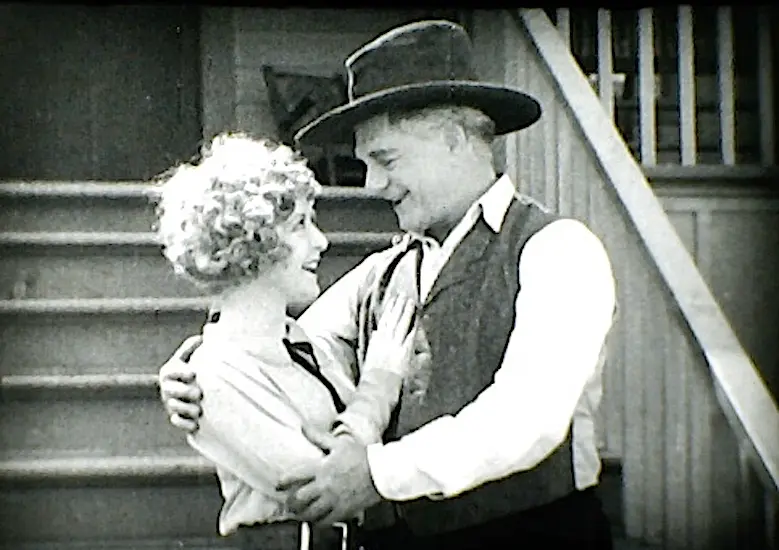
Is The Rider of the Pass worth watching today? Short answer: yes, but only if you have an appetite for the specific rhythmic eccentricities of late-silent Westerns. This film is for the cinema historian who enjoys seeing the genre play with its own tropes, and it is certainly not for the modern viewer who demands high-octane pacing or complex psychological realism.
1) This film works because it successfully blends the 'mistaken identity' farce with traditional frontier action, preventing the story from becoming just another dry cattle-rustling procedural. 2) This film fails because the middle act leans too heavily on the 'European Prince' gag, which eventually loses its comedic steam before the final shootout. 3) You should watch it if you want to see Fred Humes at the peak of his physical charisma, navigating a script that asks him to be both a clown and a killer.
The Rider of the Pass is a fascinating artifact from 1927, a year when the Western was beginning to feel the pressure of more sophisticated urban dramas like Any Woman or the creeping influence of European expressionism. Yet, director and writer May Wadman chose to stick to the dirt. The film’s central conceit—a cowboy mistaken for a prince—is a brilliant, if somewhat clunky, way to explore the American obsession with class. When Fred Humes’ character is treated like royalty, we see a side of the Western hero that is rarely explored: the discomfort of unearned status.
Consider the scene in the ranch house where Humes is forced to endure a formal dinner. His struggle with the cutlery is played for laughs, but it serves as a sharp contrast to the later scenes where he handles a Winchester with lethal precision. This juxtaposition is the film’s strongest asset. It reminds us that the frontier was a place where who you were mattered far less than what you could do. In many ways, it echoes the thematic playfulness found in Anything Once, where social standing is treated as a costume to be donned and discarded.
Fred Humes was never a 'superstar' in the vein of Tom Mix, but he possessed a grounded, relatable quality that makes this film feel more human than its contemporaries. In The Rider of the Pass, Humes uses his face as a map of exhaustion. He isn't a superhero; he’s a man who needs a job and happens to be good with a horse. His performance here is more nuanced than what we see in The Lion's Den, where the heroics feel more choreographed. Here, Humes looks genuinely stressed by the two-fold threat of the rustlers and the social expectations of the rancher’s daughter.
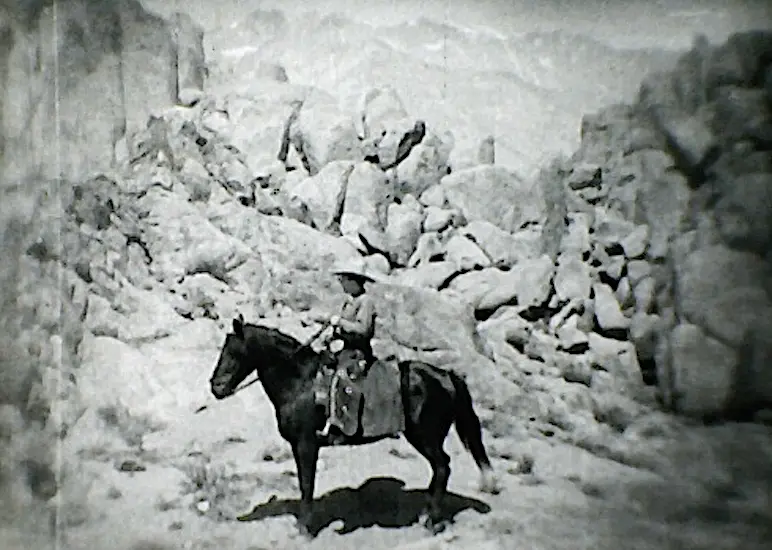
The physical stunts are, as expected for 1927, remarkably dangerous and performed with a lack of vanity. There is a particular chase through a narrow canyon—the 'Pass' of the title—where the camera is mounted low to the ground. The proximity to the horses' hooves creates a sense of peril that modern CGI simply cannot replicate. It’s raw. It’s dusty. It works. But it's flawed by the era's tendency to over-explain every plot point through lengthy intertitles.
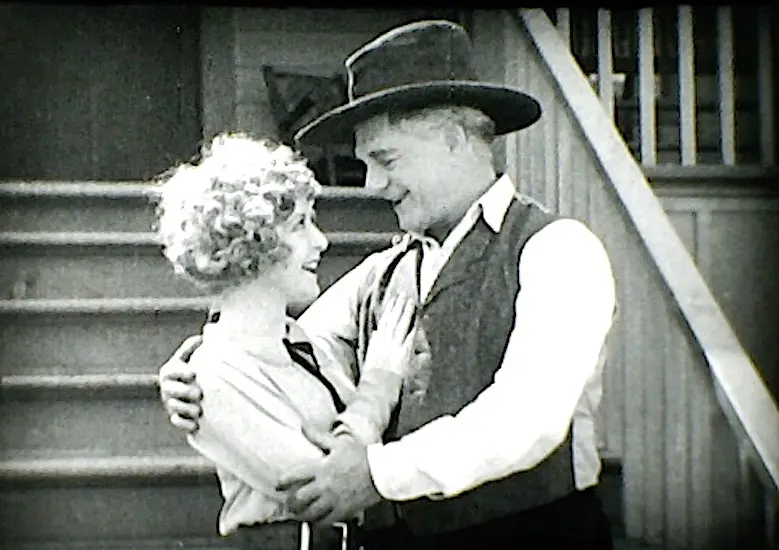
The Rider of the Pass is worth watching if you are interested in the evolution of the Western hero from a simple lawman to a more complex, misunderstood figure. It provides a rare look at how silent films used comedy to bridge the gap between action sequences. While the pacing is uneven, the film’s charm and Fred Humes' earnest performance make it a notable entry in the late 1920s B-Western catalog.
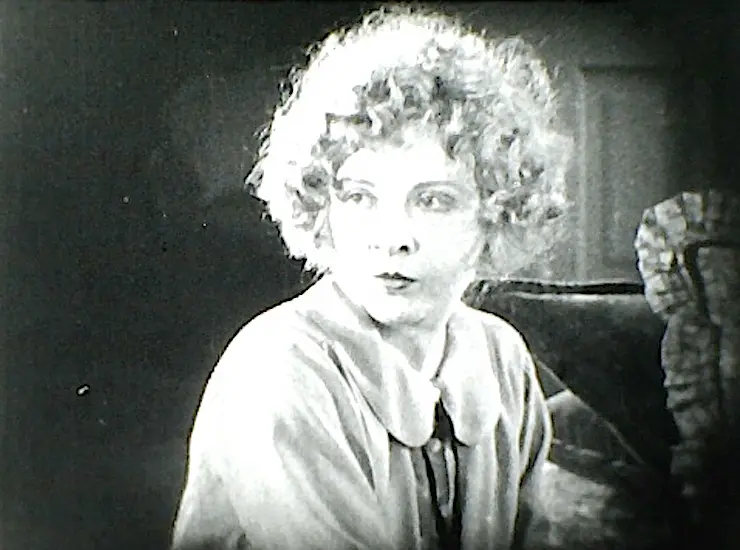
May Wadman’s writing and influence on the production cannot be overstated. At a time when the Western was a male-dominated factory, Wadman injected a sense of domestic vulnerability into the rancher’s plight. The daughter isn't just a trophy; she is a catalyst for the hero's identity crisis. The way she looks at Humes—first with awe, then with suspicion, then with a hard-earned respect—is the emotional anchor of the film. It’s a subtle touch that you don’t always find in films like With Hoops of Steel.
However, the directing is occasionally static. There are long stretches in the middle of the film where characters stand in medium shots, talking via intertitles, which kills the momentum built by the opening rustling sequence. A more dynamic director might have used the 'mistaken identity' scenes to build visual tension, but Wadman treats them as stage plays. It’s a missed opportunity for a film that otherwise understands the power of the wide-open landscape.
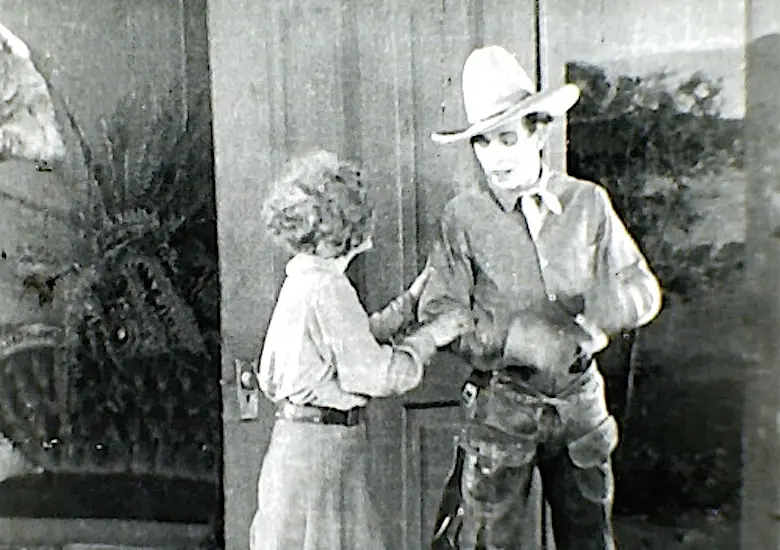
Visually, the film is a standard Universal production of the time, which is to say it is competent but rarely experimental. The lighting in the night scenes—likely shot day-for-night—has that eerie, high-contrast look that makes the villains' silhouettes pop against the sagebrush. This visual style is reminiscent of The Scarecrow, though without the surrealist undertones. The 'Pass' itself is filmed with a reverence for the scale of the West, making the human characters look small and insignificant against the rock faces.
The editing is where the film shows its age. The transitions between the comedic 'Prince' scenes and the violent 'Rustler' scenes are jarring. One moment we are laughing at Humes tripping over a rug, and the next, a man is being shot off a horse. This tonal whiplash was common in the era, but here it feels particularly sharp. It’s as if the film is fighting with itself to decide whether it wants to be a Buster Keaton comedy or a William S. Hart drama.
Pros:
Cons:
The Rider of the Pass is a sturdy, if slightly confused, piece of Western history. It doesn't reach the heights of the decade's greatest achievements, but it possesses a quirky personality that sets it apart from the hundreds of other 'B' pictures released in 1927. It’s a film about the masks we wear and the horses we ride to get away from them. If you can forgive the sagging middle and the tonal jumps, there is a lot of heart in this dusty little story. It isn't a masterpiece. It’s a workhorse. And in the world of the Western, sometimes that’s exactly what you need.
Ultimately, the film serves as a reminder that the Western has always been a flexible genre, capable of absorbing comedy, drama, and social commentary all at once. While it may not have the haunting beauty of Där fyren blinkar or the gritty realism of later sound-era Westerns, it stands as a testament to the creativity of the silent era's journeyman filmmakers. It’s a ride worth taking, provided you don’t mind a few bumps in the road.
IMDb —
1927
Community
Log in to comment.