DbcultAccessing Vault...
Cult Review
Senior Film Conservator
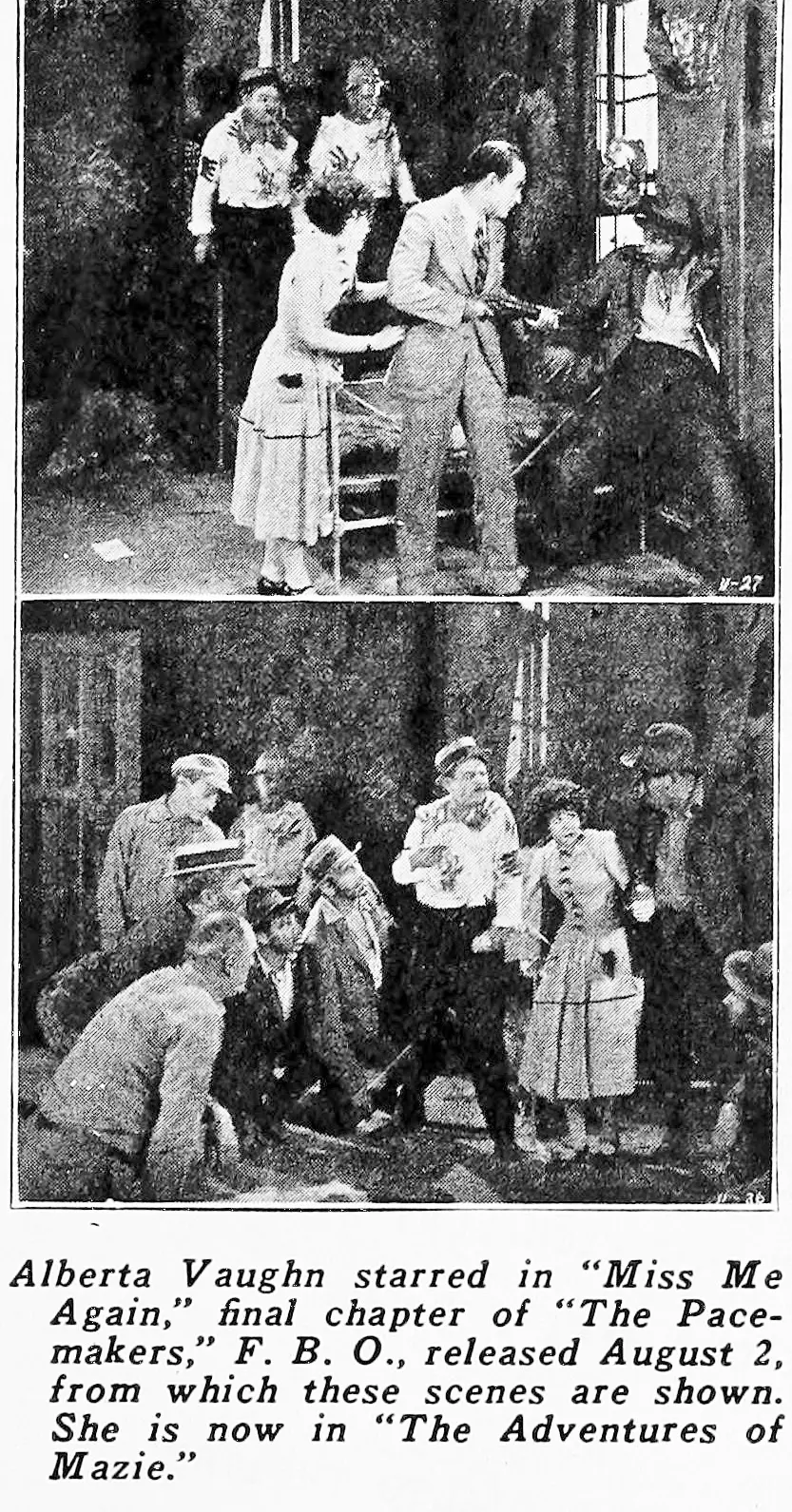
Is Miss Me Again a heavyweight champion of silent cinema? Short answer: no, it is a scrappy middleweight that survives on raw charm rather than technical perfection.
This film is for enthusiasts of early sports cinema and those who appreciate the fast-talking, slang-heavy writing of the 1920s; it is definitely not for those who require high-stakes drama or sophisticated character development.
This film works because it captures the authentic, unpolished energy of the 1920s boxing subculture without the pretension of later prestige sports dramas.
This film fails because its episodic nature makes it feel more like a collection of sketches than a cohesive narrative feature.
You should watch it if you want to see the blueprint for the modern sports-comedy genre and enjoy the chemistry of a seasoned comedic ensemble.
H.C. Witwer was the voice of a generation, or at least the voice of its locker rooms. His writing, which forms the backbone of Miss Me Again, is characterized by a relentless use of contemporary slang that feels both dated and strangely vibrant today. Unlike the poetic intertitles of The Four Horsemen of the Apocalypse, the text here is punchy, aggressive, and designed to elicit a quick laugh.
The film relies heavily on these intertitles to carry the humor. While some silent films use text sparingly, Miss Me Again treats it as a character. When Kit Guard’s character delivers a jab—verbally or physically—the text reflects the staccato rhythm of the boxing ring. It is a fascinating study in how silent cinema attempted to replicate the 'tough guy' dialogue of the era.
However, this reliance on text can occasionally slow the pacing. In a film about boxing, you want movement. When the screen is filled with a long paragraph of Witwer’s idiosyncratic prose, the kinetic energy of the scene stalls. It is a trade-off that defines the 'Fighting Blood' series, but here it feels particularly prominent.
George O'Hara as Gale Galen is a revelation of physical commitment. He doesn't just look like a boxer; he moves with the nervous energy of a man who expects to be hit at any moment. His performance is a far cry from the stylized melodrama found in films like Shattered Idols. O'Hara is grounded, sweaty, and remarkably modern in his approach to the role.
The comedic relief provided by Kit Guard and Al Cooke is where the film finds its heart. Their timing is impeccable. In one specific sequence where they attempt to train Galen using a series of increasingly ridiculous contraptions, the physical comedy rivals the best of the era. They represent the 'everyman' perspective—the guys who want to get rich quick off someone else's talent.
Alberta Vaughn, playing Judy, is unfortunately given less to do. She represents the 'moral compass,' a trope that was already becoming tired by 1923. Compared to the complex female roles in Assunta Spina, Judy is a two-dimensional obstacle to Galen’s career. Vaughn does what she can with the material, but the script fails her by keeping her on the sidelines of the actual action.
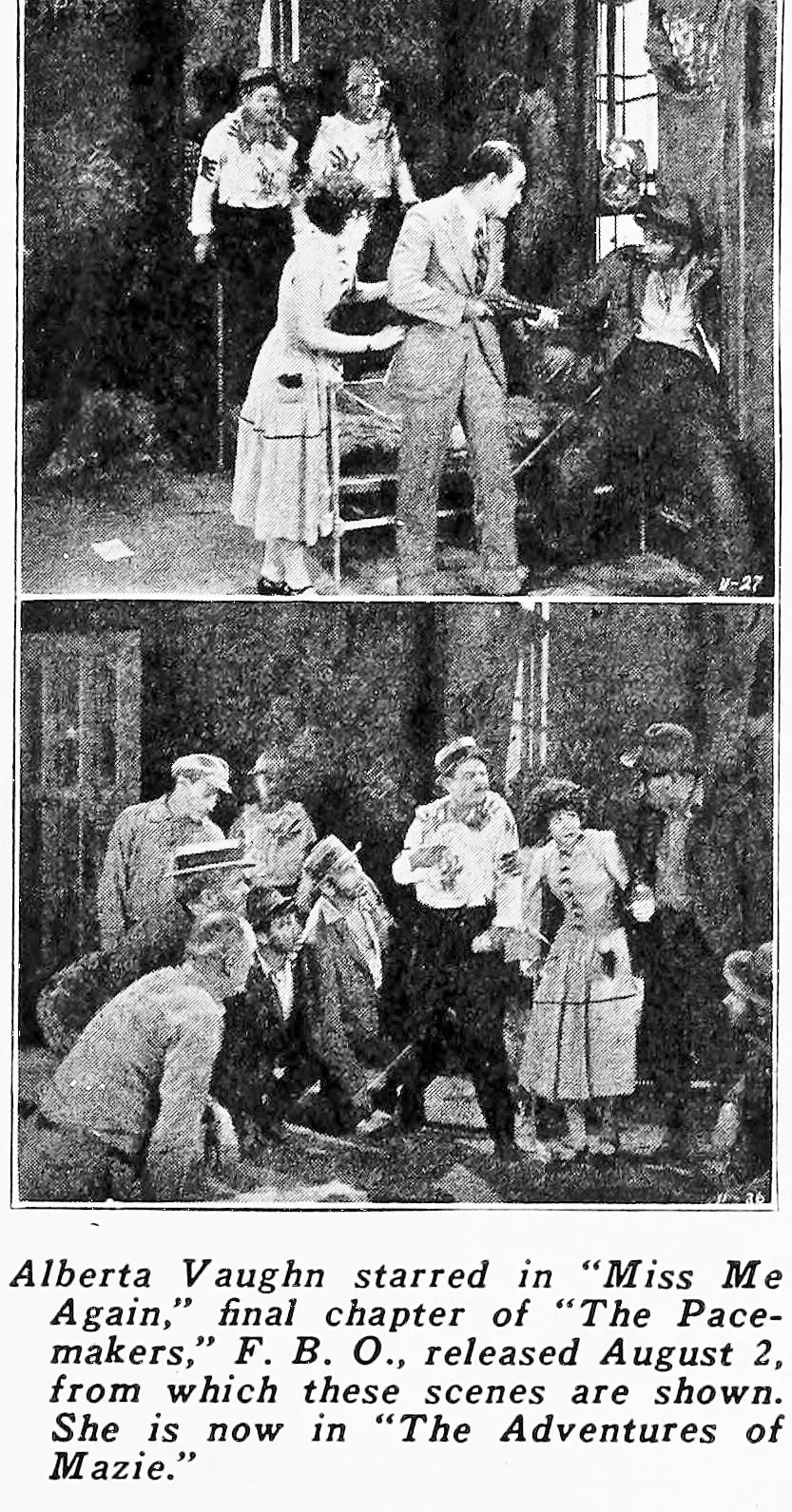
The cinematography in Miss Me Again is surprisingly sophisticated for a short. The lighting in the boxing gym is harsh and high-contrast, creating a sense of claustrophobia that mirrors Galen’s internal struggle. The camera stays close to the action during the sparring sessions, making the viewer feel the impact of every missed swing.
There is a specific shot during the final fight where the camera is positioned at chest level, looking up at Galen as he reels from a blow. It’s a perspective that anticipates the gritty realism of 1940s noir. While the film lacks the sweeping scale of The Sporting Venus, it gains points for its intimacy and its willingness to get down in the dirt.
The editing, however, is where the age shows. The transitions between the domestic scenes and the gym scenes are often jarring. It feels as though two different movies are fighting for dominance. One is a lighthearted romantic comedy, and the other is a cynical sports drama. They don’t always play well together.
Yes, Miss Me Again is worth watching for anyone interested in the evolution of the sports film. It provides a rare look at the 'Fighting Blood' series, which was a massive hit in its day but has since faded into obscurity. The film offers a blend of comedy and athletics that feels surprisingly fresh, even a century later. It is a bite-sized piece of history that doesn't overstay its welcome.
If you are looking for a deep emotional experience, look elsewhere. But if you want to see a well-crafted, energetic, and often funny look at the world of 1920s boxing, this is a solid choice. It works. But it’s flawed. Its flaws are part of its period charm.
Pros:
The boxing choreography is remarkably advanced for 1923. The film avoids the overly theatrical 'stage fighting' seen in earlier silents. George O'Hara’s lead performance is charismatic and physically impressive. The humor, while broad, still manages to land a few genuine laughs, particularly during the training montages.
Cons:
The treatment of the female lead is regressive even by the standards of its time. The plot is thin and relies on coincidences to move from one scene to the next. The pacing suffers from an overabundance of text-heavy intertitles that disrupt the visual flow of the story.
When compared to other films of the era like Let's Go, Miss Me Again feels more focused on the subculture of sports. While many 1923 films were obsessed with high society or exotic locales, this film is content to stay in the smoky gyms and back alleys. It shares some DNA with Daytime Wives in its exploration of domestic tension, but it handles those themes with a much lighter touch.
There is a certain honesty in its low-budget execution. It doesn't try to be an epic like Binnaz. It knows exactly what it is: a crowd-pleasing short designed to entertain a working-class audience. This lack of pretension is its greatest strength. It is a movie that smells of sweat and cheap cigars, and it’s all the better for it.
Miss Me Again is a fascinating artifact of early 20th-century entertainment. It captures the transition of cinema from simple slapstick to character-driven storytelling. While it doesn't always succeed in balancing its disparate tones, the central performances and the energetic direction make it a worthwhile watch for any cinephile.
“It’s a scrappy, unpolished gem that reminds us that the heart of cinema has always been about the struggle to prove oneself, whether in the ring or in life.”
Ultimately, the film stands as a testament to H.C. Witwer’s ability to capture the American spirit in all its loud, messy glory. It’s not a masterpiece, but it’s a hell of a lot of fun. Watch it for the history, stay for the punches, and ignore the dated melodrama.
IMDb —
1917
Community
Log in to comment.