DbcultAccessing Vault...
7.8/10
Senior Film Conservator
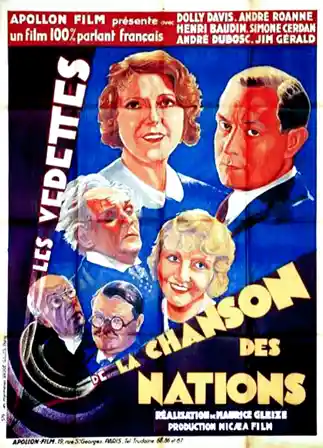
A definitive 7.8/10 rating for a film that redefined the boundaries of cult cinema. La chanson des nations remains a cornerstone of transgressive art.
If you stumbled onto this page looking for a slick, restored classic, you should probably turn back now. La chanson des nations is only for the absolute die-hards who love dusty archival finds and don't mind squinting through a screen that looks like it was dragged through a gravel pit. If you want easy entertainment, you will probably hate this. But if you have a soft spot for the chaotic transition era of early sound cinema, this one has some weirdly sweet charm. 📻
The whole thing is basically about how music can heal national divides after the war. A very nice, very naive sentiment for 1931.
The plot is pretty thin, mostly serving as an excuse to get people in rooms to sing or talk dramatically near large objects. You see, back then, microphones were huge and hard to hide.
There is this one scene where André Roanne is talking to Dolly Davis, and they are both standing incredibly close to a massive vase of fake ferns. It is so obvious the microphone is buried in those leaves. They are basically shouting their love declarations directly into the foliage. It made me laugh out loud. 🌿
Dolly Davis is usually a highlight in these old French films, but here she looks slightly terrified. Like she is waiting for a director to scream at her for stepping off her chalk mark on the floor.
I kept thinking about how much more freedom filmmakers had just a few years earlier. If you watch something like Le stigmate, the camera actually moves! Here, the camera is locked in a soundproof box and feels about as mobile as a refrigerator.
The music itself is... okay. The title song gets repeated about four times too many.

By the third time Henri Baudin starts humming it, I wanted to throw a shoe at my monitor. It is not exactly a catchy tune, either.
And the audio track! Oh my god, the hiss. It sounds like someone is constantly frying bacon right next to your ear.
You get used to it after twenty minutes, but those first few scenes are rough. There is a strange, long shot of a train wheel spinning that goes on for a solid thirty seconds with no music, just the clanking sound of the metal. It feels like the editor fell asleep or went to grab a coffee.
Still, there is something deeply fascinating about watching people in 1931 try to figure out how to make a "talkie." They did not know the rules yet.
It is not a masterpiece like some of the silent classics, say One Week, which mastered its own format perfectly. This is more of an awkward teenager of a movie—all limbs and cracking voices.
"We must sing together, for the future!"
That line is delivered with such intense, wide-eyed sincerity by Marcel Laporte that you almost feel bad for finding it silly. Almost.
Should you watch it? Probably not, unless you are writing a thesis or have a very specific illness that makes you crave obscure European films from the Hoover administration. But I am glad I sat through it, even if my ears are still ringing.
IMDb —
1911
Community
Log in to comment.