Summary
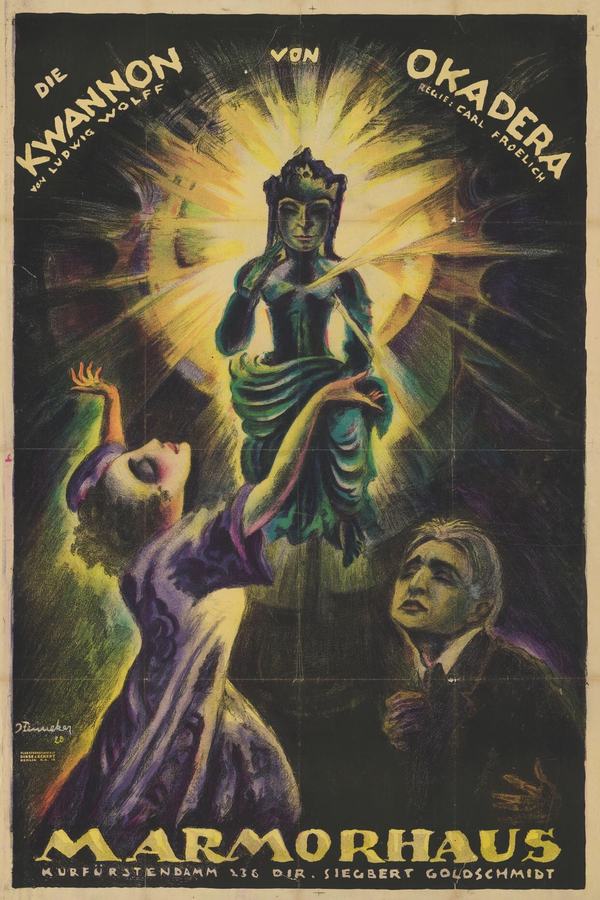
An itinerant Japanese monk, haunted by a premonition of karmic reckoning, drifts into the mist-laced cedar forests surrounding Okadera temple, clutching a crumpled parchment said to map the precise spot where the merciful Kwannon once stepped from lotus to basalt and left a footprint of molten compassion. Instead of enlightenment he finds a dilapidated kabuki troupe—greasepaint flaking like burnt camellia petals—staging vulgarized miracle-plays for gawping peasants who toss coppers and superstition in equal measure. Among the troupe: a disgraced samurai turned female-impersonator, a Bavarian ethnographer filming on brittle 68-mm stock, and a consumptive seamstress stitching silk bodhisattvas while bleeding verses of Rilke onto the linen. When the monk’s parchment is swapped for a forged European contract promising passage to a Berlin film studio, the narrative fractures into three braided fever-dreams: the monk’s hallucinated sea-voyage inside a paper lantern; the samurai’s erotic metamorphosis into the living Kwannon, eyelids lacquered with ground lapis; and the ethnographer’s footage—hand-cranked, solarized—revealing the temple statues blinking at 18 fps, tears of liquid mercury threading their marble cheeks. Time folds; 1919 Weimar superimposes over Edo-period Nara; intertitles crawl like spiders: „Die Gnade ist ein Kinoapparat.“ By the time the monk—now bewigged in Weimar drag—premieres the footage inside a condemned Osaka nickelodeon, the audience has already vanished, leaving only copper rice-bowls rattling like film sprockets. The final shot: a close-up of the seamstress’s eye, iris dilated to the aperture of a 35-mm gate, reflecting the monk who reflects the audience who reflect nothing at all—an infinite regress of hollow compassion.
Review Excerpt
"
There are films you watch, and then there are films that watch you back—films whose sprocket holes glint like the eye-shine of nocturnal predators. Die Kwannon von Okadera belongs to the latter genus: a 1919 phantasmagoria that feels less like a relic of early cinema than a future memory beamed backward through a cracked tanuki mirror. Shot on location in the fog-choked hills of Nara and inside the UFA studios outside Berlin, the picture mashes Buddhist hagiography against Expressionist psycho..."