DbcultAccessing Vault...
Cult Review
Senior Film Conservator
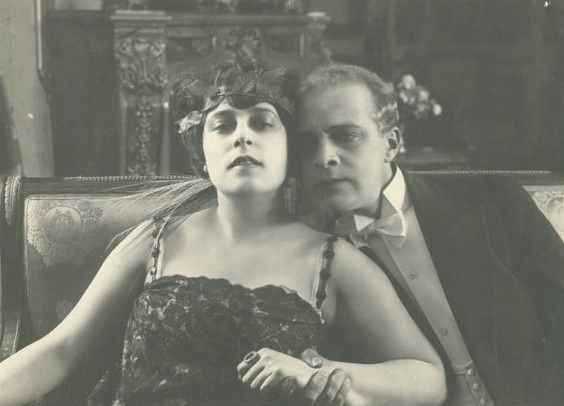
The cinematic tapestry of early 20th-century Hungary often remains an underexplored realm for many cinephiles, a shame given the rich, often melancholic, narratives that emerged from its nascent film industry. Among these, A Szeszély, a film whose very title, 'The Whim' or 'Caprice,' hints at its thematic core, stands as a haunting testament to the era's societal anxieties and the enduring human penchant for impulsive decisions. Penned by Pál Forró, this cinematic endeavor, though perhaps not as widely known as some of its contemporaries, offers a profound meditation on choice, consequence, and the deceptive allure of perceived grandeur.
From its opening frames, A Szeszély establishes a world teetering on the precipice of change, a society where the rigid class structures of old Budapest were beginning to chafe against individual aspirations. We are introduced to Eszter, brought to life with an arresting blend of naiveté and burgeoning ambition by Annie Gaál. Gaál’s performance is a masterclass in silent-era subtlety, conveying volumes with a glance, a posture, a trembling hand. Her Eszter is not merely a protagonist but a canvas upon which the societal pressures and personal yearnings of the time are vividly painted. She is a woman of humble origins, yet possessing a spirit too restless for the confines of her station, a spirit that yearns for something more, something undefined but undeniably grander.
The central conflict ignites with the introduction of her two suitors. On one hand, there is Mihály, portrayed by Gusztáv Vándory, whose earnestness radiates from the screen. Vándory imbues Mihály with a quiet dignity, a steadfastness that promises a life of genuine affection and honest labor. He represents the path of conventional happiness, a life built on solid foundations, albeit without the dazzling sparkle Eszter secretly craves. His love is sincere, palpable, a warmth that could easily anchor a contented existence. Yet, his very predictability, his lack of aristocratic flourish, becomes his undoing in the face of Eszter’s burgeoning 'szeszély.'
Enter Baron Károly, played with a captivating, almost dangerous charm by Gyula Fehér. Fehér's Baron is the embodiment of aristocratic allure – handsome, sophisticated, and utterly captivating. He moves with an air of entitlement and effortless grace, a stark contrast to Mihály's grounded presence. The Baron offers not just love, but a gateway to a world of balls, exquisite gowns, and social prestige, a world Eszter has only ever glimpsed from afar. Fehér’s portrayal is nuanced; beneath the veneer of charm, one can detect a subtle current of self-interest, a hint of the superficiality that will later define his character. It is this potent combination of outward splendor and underlying emptiness that makes his character so compellingly tragic.
Eszter's 'szeszély' – her sudden, overwhelming whim – to choose the Baron over Mihály forms the narrative’s pivotal turning point. It is a decision born not necessarily of malice or calculation, but of a youthful, almost innocent desire for a life perceived as superior, a craving for the extraordinary that blinds her to the genuine value of the ordinary. This impulsive leap into the unknown is a theme that resonates across cinematic history, from the tragic romanticism of Where Love Is to the societal critiques of Body and Soul, where characters often wrestle with the allure of ambition versus the sanctity of true connection. A Szeszély, however, delves deeper into the psychological ramifications of such a choice, charting Eszter's slow, painful descent into disillusionment.
The film excels in its depiction of the Baron’s world – a gilded cage. Director Pál Forró (assuming he directed, as no director is listed, but writer often implies vision) masterfully contrasts the warmth and sincerity of Eszter’s previous life with the cold, calculating nature of high society. The opulent sets, though perhaps modest by today's standards, would have conveyed immense luxury to contemporary audiences, serving as a visual metaphor for the superficiality that increasingly suffocates Eszter. The Baron, once her charming suitor, slowly reveals his true colors: he is a man of fleeting affections, more interested in social standing and momentary gratification than enduring love. His interest in Eszter wanes as quickly as it blossomed, leaving her isolated amidst the very splendor she once coveted.
Sandy Igalits, as Eszter’s friend Ilona, provides a crucial counterpoint to the unfolding drama. Ilona embodies practicality and genuine concern, her warnings and quiet support serving as a moral compass that Eszter, in her infatuation, tragically ignores. Igalits’s performance, though secondary, is essential; she grounds the narrative, offering a voice of reason that highlights Eszter’s increasingly detached reality. Her presence underscores the film’s subtle commentary on friendship, loyalty, and the often-unheeded wisdom of those who truly care.
The narrative arc of Eszter's disillusionment is meticulously crafted. We witness her initial joy morph into quiet confusion, then subtle despair, and finally, profound regret. The film avoids melodrama, opting instead for a more introspective and psychologically resonant portrayal of a woman coming to terms with the consequences of her 'szeszély.' There are no grand, theatrical breakdowns, but rather a series of intimate moments – a wistful gaze out a window, a tear silently falling, a lost expression in a crowded room – that speak volumes about her inner turmoil. This understated approach lends the film a timeless quality, ensuring its emotional impact remains potent even for modern viewers.
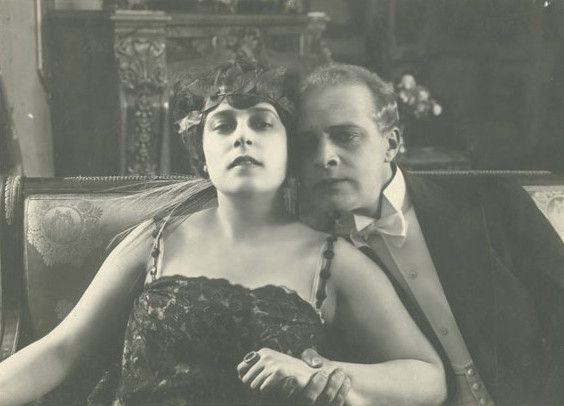
Pál Forró’s screenplay is remarkable for its psychological depth and its refusal to offer easy answers. It doesn't condemn Eszter outright but rather explores the universal human tendency to be swayed by external glitter. The film functions as a cautionary tale, but one delivered with empathy rather than judgment. It asks profound questions about happiness: Is it found in material wealth, social standing, or in the simpler, more profound connections of the heart? The answer, as presented by A Szeszély, is unequivocally the latter.
The cinematography, though limited by the technology of its time, is artful in its use of light and shadow, particularly in contrasting the stark realities of Eszter’s previous life with the opulent yet often dimly lit interiors of the Baron’s mansion. These visual cues subtly reinforce the thematic dichotomies at play. The film's pacing, characteristic of silent cinema, allows for prolonged moments of reflection, inviting the audience to immerse themselves fully in Eszter’s emotional journey. There's a particular sequence, devoid of intertitles for an extended period, where Gaál's facial expressions alone convey a crushing sense of loneliness, a moment of pure cinematic eloquence that transcends language.
In comparing A Szeszély to other films of its era, one might draw parallels with the social commentaries found in films like Madame Jealousy, which also explored the destructive nature of unchecked desires, or perhaps the character-driven dramas like Her Debt of Honor, where individual choices have far-reaching societal implications. However, A Szeszély distinguishes itself through its specific focus on the 'whim' as a catalyst for tragedy, elevating it from a simple romance into a deeper philosophical inquiry into human agency. It doesn't just show a bad choice; it dissects the very impulse behind it.
The film's ending, without giving away explicit details, is a powerful culmination of Eszter’s journey. It is neither overtly happy nor despairing, but rather tinged with a profound sense of melancholic realism. It suggests that while choices can lead to irreversible paths, there is always the potential for a quiet understanding, a hard-won wisdom that emerges from the ashes of regret. This nuanced conclusion avoids the pitfalls of saccharine resolutions or overly punitive moralizing, instead offering a more mature and resonant reflection on the human condition. It’s a testament to Forró’s vision and the cast’s collective talent that such a subtle yet impactful resolution could be achieved in a medium still in its relative infancy.
The legacy of A Szeszély, though perhaps not widely celebrated in global cinema histories, is a crucial piece of Hungarian film heritage. It showcases the sophisticated storytelling capabilities of early Hungarian filmmakers and the remarkable emotive power of its actors. Gyula Fehér and Annie Gaál, in particular, deliver performances that would be lauded in any era, their on-screen chemistry, even in its eventual dissolution, being utterly compelling. Gusztáv Vándory’s portrayal of the spurned but noble lover adds a layer of pathos that prevents the film from becoming a mere morality play. The film's themes—the allure of social climbing, the dangers of impulsive decisions, and the search for authentic happiness—remain strikingly relevant today, making its rediscovery a truly rewarding experience for anyone interested in the foundational narratives of cinema.
In an era where the rapid proliferation of visual media often prioritizes spectacle over substance, returning to a film like A Szeszély is a refreshing reminder of cinema's enduring power to explore the intricacies of the human psyche with quiet grace and profound insight. It stands as a compelling argument for delving into the lesser-known corners of cinematic history, where forgotten gems often hold some of the most resonant and timeless stories. This is not just a film about a 'whim'; it's a film about the very essence of human decision-making and its indelible mark on a life.
Consider, for a moment, the parallels with a film like The Beloved Blackmailer, where external pressures dictate choices, or even the introspective journey of characters in At First Sight. While those films tackle different specific conflicts, the underlying current of personal agency against the tide of circumstance is a shared thread. A Szeszély, however, places the impetus squarely on an internal, almost fleeting impulse, making its tragedy feel uniquely personal and deeply relatable. The narrative unfolds with a meticulous attention to emotional beats, ensuring that every shift in Eszter’s demeanor, every unspoken thought, contributes to the overarching tapestry of her fate. It’s a masterclass in silent storytelling, where the absence of dialogue forces a deeper engagement with visual cues and the actors' expressive prowess.
The film also subtly critiques the societal structures that fostered such 'whims.' The rigid class divisions, the emphasis on appearances, and the limited opportunities for women of Eszter’s background are all implicitly highlighted as contributing factors to her fateful choice. It's not merely a personal failing but a reflection of a broader social environment that valued status over genuine worth. This layer of social commentary elevates A Szeszély beyond a simple romantic drama, positioning it as a valuable historical document that offers insights into early 20th-century Hungarian society. Pál Forró’s writing demonstrates a keen awareness of these dynamics, weaving them seamlessly into the personal tragedy of Eszter.
In conclusion, for those seeking to immerse themselves in the rich, often overlooked heritage of early European cinema, A Szeszély is an indispensable watch. It’s a film that resonates long after the credits roll, prompting introspection on our own choices, desires, and the often-unforeseen paths they lead us down. Its artistic merit, combined with its profound humanistic themes, ensures its place as a significant, albeit perhaps underappreciated, work in the annals of film history. It reminds us that sometimes, the most powerful stories are those that explore the quiet, internal battles waged within the human heart, and how a single 'whim' can irrevocably alter the course of a life, echoing the profound impact of decisions seen in films like Farkas or The Babes in the Woods, albeit through a more personal, romantic lens.
IMDb 7.2
1928
Community
Log in to comment.