DbcultAccessing Vault...
Cult Review
Senior Film Conservator
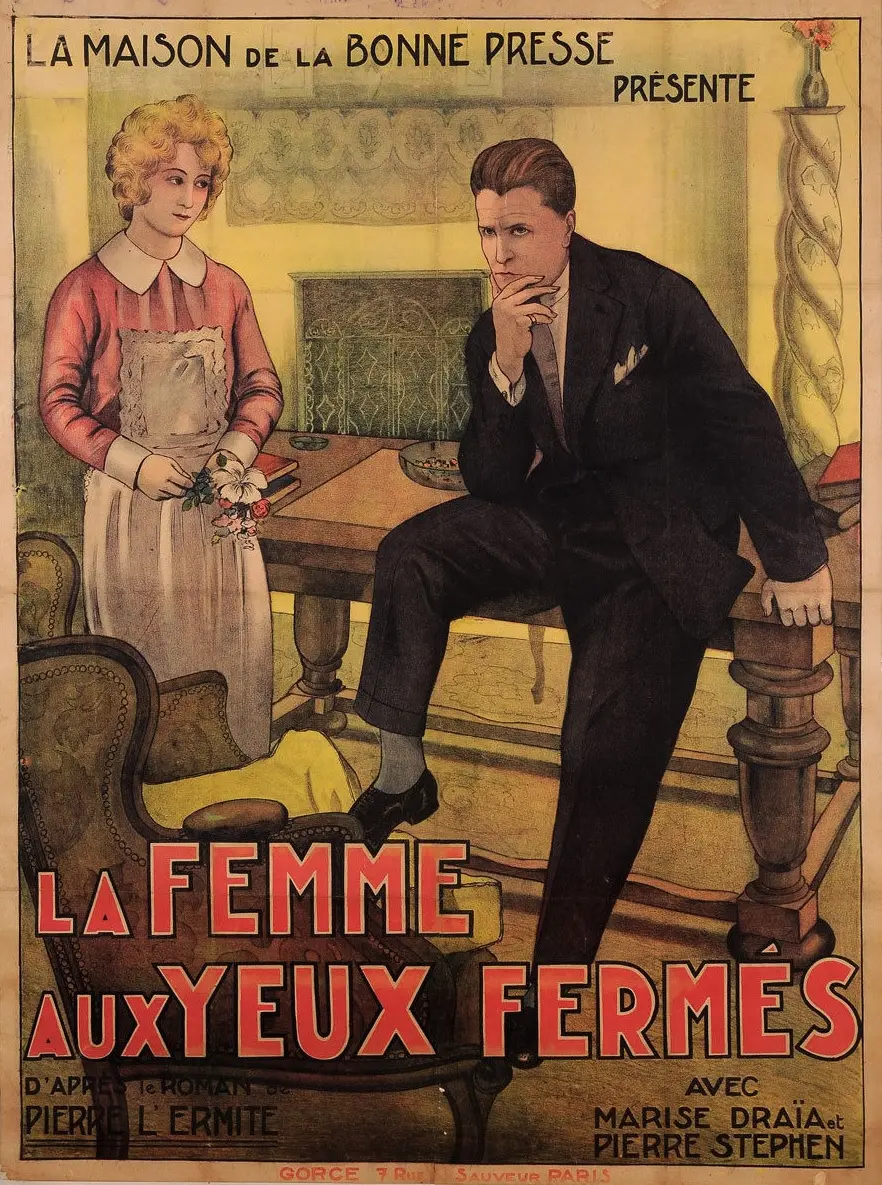
Does this 1924 relic still hold any power for a modern audience? Short answer: yes, but only if you are willing to trade narrative speed for atmospheric moral weight and a very specific brand of French didacticism.
This film is for the dedicated cinephile who values the architectural bones of silent drama and the history of moral storytelling. It is absolutely not for anyone who requires a fast-paced plot or finds religious undertones in cinema to be a dealbreaker.
1) This film works because: It utilizes the silent medium to create a profound sense of interiority, making the protagonist's psychological denial feel like a physical weight on the screen.
2) This film fails because: The pacing is often glacial, and the screenplay by Pierre L'Ermite occasionally prioritizes moral lecturing over character nuance.
3) You should watch it if: You are interested in how early French cinema handled the intersection of faith, social responsibility, and female agency.
If you are looking for a historical artifact that captures the tension of post-war France, then yes, it is worth watching. The film provides a unique window into the conservative, moralistic storytelling that was popular in the mid-1920s. Unlike the more experimental works of the era, such as The Living Image, or the Lady of Petrograd, this film is grounded in a tradition of social realism and spiritual inquiry. It asks a simple but difficult question: is ignorance a sin? For the modern viewer, the answer is obvious, but the journey the film takes to get there is visually arresting.
The title, La femme aux yeux fermés, is not merely a metaphor; it is the central operating principle of the film's visual language. Marise Maia delivers a performance that is defined by what she refuses to see. In the early scenes, her gaze is often directed slightly away from the camera or focused on trivialities while significant events unfold in the background. It is a subtle, effective way to communicate a character's internal state without the benefit of sound.
Jean Lorette, playing her husband, provides a stark contrast. His performance is more kinetic, almost frantic at times, representing the external world that is slowly encroaching on her peace. The chemistry between them is not one of romance, but of friction. They represent two different ways of existing in a world that is rapidly changing. While she represents the old world's desire to remain untouched, he represents the new world's chaotic, often destructive energy.
The cinematography by the uncredited but clearly skilled crew utilizes the chiaroscuro lighting common in the 1920s. Shadows are not just aesthetic choices; they are the literal manifestations of the secrets the characters are keeping. In one particularly striking scene, the protagonist walks through a hallway where the shadows of the window panes look like the bars of a cage. It’s a bit on the nose, but in the context of silent cinema, it works. It’s effective. But it’s flawed.
To understand this film, one must understand its writer, Pierre L'Ermite. He was a man of the cloth, and his stories were designed to be parables. This gives the film a certain rigidity. Every character is a symbol. Every plot point is a lesson. This can be exhausting for a modern viewer who prefers the ambiguity of films like The Branded Woman or the sheer spectacle of The Miracle.
However, there is a certain bravery in this rigidity. The film does not shy away from its message. It demands that the audience look at the poverty and the moral decay that the protagonist is trying to ignore. There is a sequence in a tenement house that is filmed with a surprising amount of grit for a 1924 production. The contrast between the silk gowns of the protagonist and the ragged clothes of the children she encounters is a visual gut-punch that requires no intertitles to explain.
The pacing, however, is where the film struggles most. There are long stretches where the narrative seems to circle the same point. We see the protagonist ignore one sign of trouble, then another, then another. By the third time, the point has been made. A more modern edit would likely cut twenty minutes from the first act to get to the meat of the conflict faster. It’s a slow burn that occasionally threatens to go out entirely.
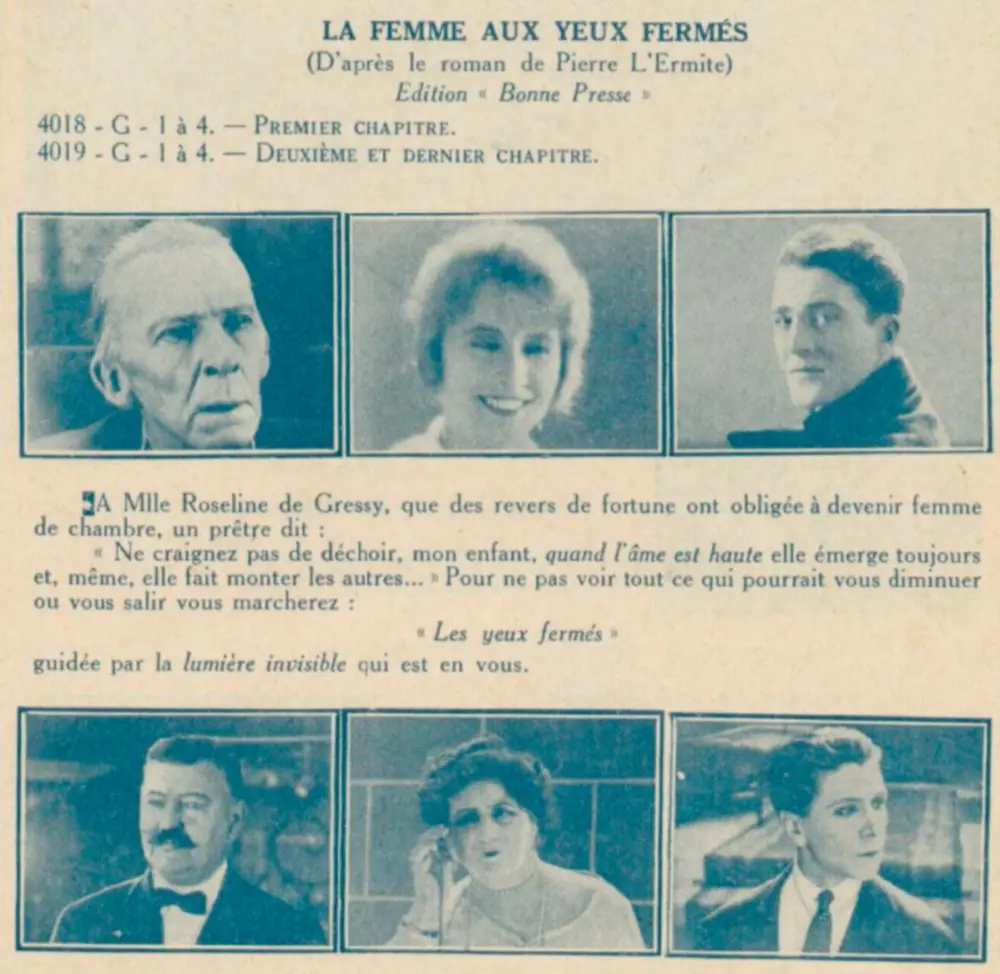
The direction is steady, if not revolutionary. The film lacks the frantic energy of contemporary American films like The Speeding Venus or the comedic timing of Artie, the Millionaire Kid. Instead, it opts for a more European, contemplative style. The camera movements are minimal, forcing the viewer to focus on the compositions within the frame.
One of the more surprising elements is the use of close-ups. In 1924, the close-up was still a powerful tool, and here it is used to capture the minute flickers of doubt in Marise Maia’s eyes. These moments are when the film is at its most human. When the 'closed eyes' finally open, the camera is right there, inches from her face, capturing the moment of realization with a clarity that is almost uncomfortable.
The set design also deserves mention. The interiors of the upper-class home are cluttered and oppressive, filled with heavy drapes and ornate furniture. It feels like a museum, a place where time has stopped. This is contrasted with the open, albeit bleak, spaces of the outside world. The production design effectively mirrors the protagonist's journey from a confined, artificial reality to a vast, painful truth.
It is easy to dismiss a film like this as a 'period piece' with no relevance to today. That would be a mistake. The theme of willful ignorance is more relevant now than ever. We all have our 'closed eyes' moments, where we choose to ignore the systemic issues or personal failings that surround us because the truth is too difficult to bear. In that sense, La femme aux yeux fermés is a universal story.
The film’s exploration of class guilt is also surprisingly modern. It doesn't offer easy absolution. The protagonist's awakening doesn't immediately fix the world; it only fixes her perception of it. This lack of a 'happily ever after' is one of the film's strongest points. It suggests that once you see the truth, you are forever changed, and that change comes with a burden of responsibility. It is a much more sophisticated message than one might expect from a 'moral' film of this era.
Compare this to the more sentimental approach of The Dawn of a Tomorrow, and you see that La femme aux yeux fermés has a much sharper edge. It isn't trying to make you feel good; it's trying to make you feel responsible.
La femme aux yeux fermés is a challenging, often rewarding piece of cinema history. It is a film that demands patience and a willingness to engage with its moral framework. While it lacks the technical flash of some of its contemporaries, it makes up for it with a singular focus on the internal life of its protagonist. It is a somber, serious work that serves as a reminder that the most important sight is often the one we try hardest to avoid. It’s not a masterpiece, but it is a significant work of its time. It’s a film that stays with you, not because of its plot, but because of the questions it forces you to ask yourself. If you can handle the slow burn, the reward is a hauntingly beautiful exploration of the human soul.

IMDb 5.9
1935
Community
Log in to comment.