DbcultAccessing Vault...
5.2/10
Senior Film Conservator
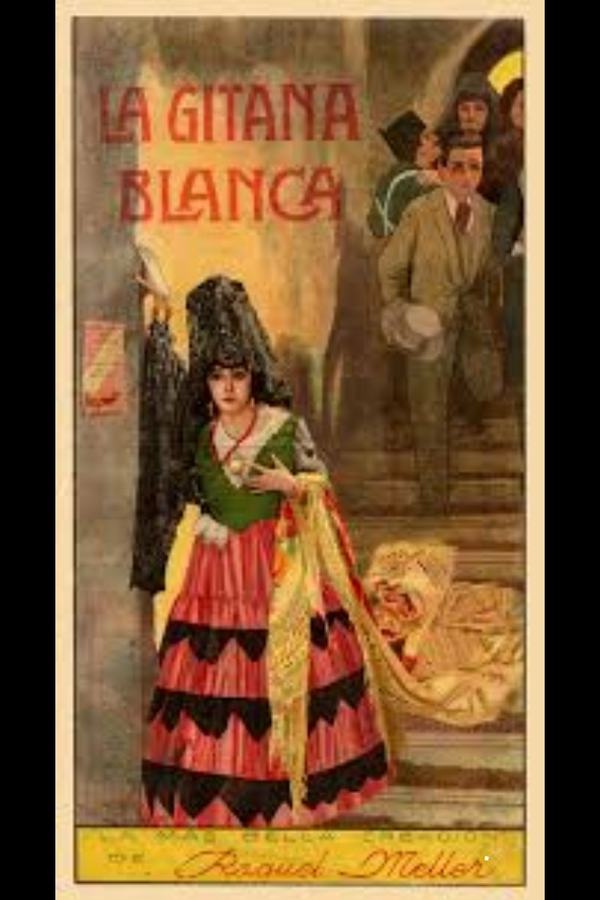
A definitive 5.2/10 rating for a film that redefined the boundaries of cult cinema. La gitana blanca remains a cornerstone of transgressive art.
Stepping into the world of La gitana blanca is akin to unearthing a forgotten jewel from the annals of silent cinema, a luminous testament to the era's dramatic prowess and the magnetic allure of its stars. This Spanish production, though a streamlined iteration of Raquel Meller's earlier screen venture, "Los Arlequines de Seda y Oro," shines brightest as a vehicle for its titular performer, offering a deeply personal and emotionally resonant exploration of identity, belonging, and the enduring power of art. It’s a film that eschews grand pronouncements for the quiet poetry of a woman's journey, making it a compelling study for anyone fascinated by the nuanced storytelling of the 1920s.
At the heart of La gitana blanca lies the incandescent presence of Raquel Meller. More than merely an actress, Meller was a phenomenon, a chanteuse whose stage presence transcended language barriers and captivated audiences across continents. In this film, her unique blend of vulnerability and fierce independence is on full display. She embodies the 'white gypsy' with a grace that is both ethereal and grounded, her expressive eyes conveying volumes without uttering a single word. It's a performance that speaks to the very essence of silent film acting, where every gesture, every flicker of emotion, must be amplified and distilled for maximum impact. Meller doesn't just play a character; she inhabits her, breathing life into the struggles and triumphs of a woman navigating a complex personal history.
Her portrayal here is a masterclass in subtlety and grand emotion. She effortlessly transitions from moments of quiet contemplation to bursts of spirited performance, showcasing the duality of her character's existence. The film capitalizes on her innate musicality, even in silence, allowing the audience to imagine the power and beauty of her voice. This reliance on a star's inherent appeal was a hallmark of the era, and Meller proves why she was among its most treasured figures. Her screen persona, cultivated through years on stage, translates seamlessly, drawing viewers into the intimate world of her character.
The narrative fabric of La gitana blanca is woven with threads of poignant separation and the arduous, yet ultimately fulfilling, journey of self-discovery. We are presented with a protagonist whose early life is fractured by an unforeseen cleavage from her brother. This foundational trauma sets the stage for her unconventional upbringing amongst a Romani community, a life vibrant with music, dance, and a deep-seated sense of communal belonging, yet constantly shadowed by the mystery of her origins. The film, consciously pared down from its earlier incarnation, dedicates its focus almost entirely to her odyssey, charting her evolution from a child of circumstance into a celebrated singer.
Her brother, meanwhile, pursues a dramatically divergent path, ascending to fame and adoration as a formidable torero. This parallel existence, though largely unseen in its direct interaction, casts a long, thematic shadow over the protagonist's life, subtly underscoring the film's exploration of destiny versus nurture. The film doesn't rush towards a contrived reunion; instead, it savors the individual development of its central figure, allowing us to witness the forging of her identity, piece by intricate piece. It's a narrative choice that lends the film a particular kind of gravitas, emphasizing the internal struggles and triumphs over external plot mechanics. The richness of her Romani heritage is depicted not merely as a backdrop but as an integral part of her being, shaping her worldview and her artistic expression. This narrative depth resonates with films like Merely Mary Ann, which similarly explores a protagonist's journey from humble or challenging beginnings to self-realization, often through the melancholic undertones of longing and the search for one's true place in the world. Both films, in their own ways, champion the resilience of the human spirit in forging a path despite adverse circumstances.
One of the most compelling aspects of La gitana blanca is its nuanced examination of how art intertwines with identity, particularly for those existing on the fringes of conventional society. The protagonist's singing is not merely a profession; it is an extension of her soul, a voice for her experiences, and a bridge between her unknown past and her vibrant present. Her performances are depicted with an almost ethnographic fidelity, capturing the spirit and energy of Romani culture, yet always filtered through Meller's unique artistic lens. This duality – being both an insider and an outsider – imbues her character with a profound sense of introspection.
The film subtly critiques societal perceptions, presenting the Romani community not as a monolithic entity, but as a rich tapestry of individuals, each contributing to the protagonist's growth. The writing by Josep Amich i Bert, though focused, manages to evoke a broader world, hinting at the social strata and cultural biases prevalent during the era. This thematic courage to explore marginalized communities, even through the lens of a romantic melodrama, sets it apart. It’s a quiet assertion of the dignity and artistic vibrancy found beyond the societal mainstream. The film's exploration of a woman's agency and determination to forge her own path, irrespective of societal expectations, resonates with the spirited resolve seen in films like The Hell Cat or The Eyes of Julia Deep, where female protagonists defy conventions to assert their independence and carve out their destinies.
While the spotlight justifiably shines on Raquel Meller, the craft of La gitana blanca extends far beyond its star. The visual storytelling, characteristic of the silent era, is handled with a delicate touch, allowing the emotions to unfold naturally through carefully composed shots and evocative intertitles. Though specific directorial credits for this reduced version are sometimes elusive in historical records, the influence of writer Josep Amich i Bert on the overall artistic vision is palpable. His narrative framework provides a strong backbone for the visual poetry, ensuring that every scene contributes meaningfully to the protagonist's emotional arc. The cinematography, though perhaps not groundbreaking for its time, effectively captures the contrasting worlds of the Romani camp and the more 'civilized' settings, using light and shadow to create distinct atmospheres.
The supporting cast, including Francisco Aguiló, Asunción Casal, Juana Sanz, Luisa Oliván, Juan Torrelló, Visitación López, Teresa Vinyals, Tina Meller, Lucien Aristy, Mercedes Bayona, and Carlos Beraza, contribute to the film's rich tapestry, providing essential texture to the protagonist's world. While their roles might be less prominent, their presence helps ground Meller's performance, creating a believable community and an authentic sense of the world she inhabits. Their reactions, their subtle interactions, all serve to amplify the central drama, demonstrating the collaborative nature of silent film production where every face on screen plays a part in conveying the story's emotional weight. The film's pacing allows for moments of quiet reflection, punctuated by bursts of dramatic intensity, maintaining a rhythm that draws the viewer into its unfolding narrative.
La gitana blanca stands as more than just a historical artifact; it is a vibrant piece of cinematic art that continues to resonate. Its exploration of themes like identity, the search for belonging, and the redemptive power of artistic expression are timeless. It offers a rare glimpse into Spanish silent cinema, showcasing its capacity for emotional depth and sophisticated storytelling, even when adapting a narrative for a specific star. The film's focus on the female protagonist's journey, her strength in forging her own identity despite a fragmented past, aligns with the powerful narratives of separation and reunion, or the formation of new familial bonds, seen in films like Sisters of the Golden Circle, albeit with a focus here on the individual's inner world rather than a direct quest for a sibling. This enduring theme of finding oneself amidst a complex personal history makes La gitana blanca a compelling watch.
Raquel Meller's performance alone makes this film essential viewing for enthusiasts of silent cinema and anyone interested in the foundational stars of early film. Her ability to convey such profound emotion without dialogue is a reminder of the unique artistry required during that era. The film serves as a valuable document of a particular moment in Spanish cultural history, reflecting both its artistic sensibilities and its social preoccupations. It encourages us to look beyond the superficial narratives often associated with silent films and delve into the rich, complex worlds they created. The enduring appeal of La gitana blanca lies in its intimate portrayal of a woman's spirit, her resilience, and her unwavering commitment to her art, leaving an indelible mark on the viewer long after the final frame.
In an age where cinematic spectacles often prioritize bombast over introspection, a film like La gitana blanca offers a refreshing counterpoint. It reminds us that the most profound stories can be told with the simplest of tools: a compelling narrative, evocative visuals, and a truly magnetic performer. It’s a film that speaks to the universal human experience of searching for one's place in the world, of finding family not always by blood, but by spirit, and of the transformative power of embracing one's true calling. For these reasons, it remains a significant entry in the canon of early European cinema, and a film well worth rediscovering for its timeless beauty and emotional depth. The subtle nuances of character development, often conveyed through Meller's posture, gaze, and the delicate expressiveness of her hands, elevate the film beyond a mere plot summary, transforming it into a rich emotional journey. This attention to detail, characteristic of the era's best productions, allows the audience to connect deeply with the protagonist's inner world, making her struggles and triumphs feel profoundly personal. The enduring allure of the 'gypsy' archetype in popular culture is here given a respectful and introspective treatment, moving beyond mere exoticism to explore the genuine human experience within a distinct cultural setting. It's a film that, despite its age, still possesses a vibrant pulse, a testament to the timeless artistry of its creators and its star.

IMDb 6.8
1924
Community
Log in to comment.