DbcultAccessing Vault...
Cult Review
Senior Film Conservator
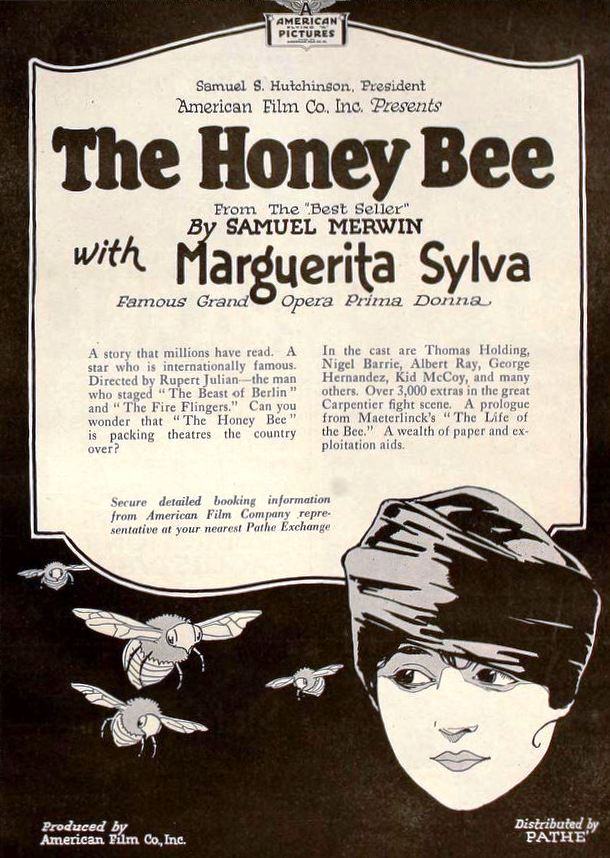
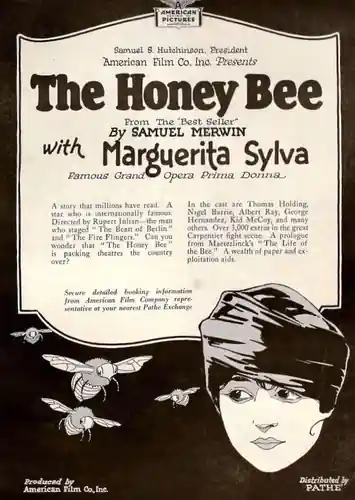
In the shimmering, often tumultuous landscape of early 20th-century cinema, certain narratives emerge with a quiet yet profound resonance, illuminating the intricate dance between personal yearning and societal stricture. "The Honey Bee", a cinematic exploration penned by Rupert Julian and Samuel Merwin, stands as a testament to this enduring struggle, offering a compelling portrait of a woman's arduous journey towards self-realization and authentic love. It’s a film that, even a century later, manages to articulate the timeless quest for agency, particularly for women navigating a world still largely defined by patriarchal expectations.
At its core, "The Honey Bee" introduces us to Hilda Wilson, a character imbued with a quiet strength, yet ensnared in the agonizing dilemma of a forbidden affection. Her heart belongs to Harris Doreyn, a man who, despite his own evident regard for Hilda, remains bound by the legal, if not emotional, ties of matrimony. Doreyn’s wife is depicted not merely as an obstacle but as a symbol of superficiality and indifference, a societal fixture rather than a true partner, making Hilda's position all the more poignant. This initial setup immediately establishes a narrative tension that is both deeply personal and broadly social. Hilda is not merely a woman in love; she is a woman confronting the moral ambiguities and societal judgments that accompany such a clandestine passion. The film masterfully lays out her internal conflict: to succumb to a love that society deems illicit, or to sever ties and seek a different path.
Her decision to depart for Paris is not merely a geographical shift; it is a profound act of self-preservation and an audacious declaration of independence. Paris, with its burgeoning opportunities and reputation for artistic freedom, becomes more than just a backdrop; it transforms into a crucible for Hilda’s metamorphosis. Here, she doesn't merely survive; she thrives, meticulously building a successful business empire. This segment of the film is crucial in establishing Hilda as a character of formidable will and intellect, capable of forging her own destiny beyond the shadow of a complicated romance. It subtly critiques the notion that a woman's worth is solely defined by her marital status or romantic attachments, instead showcasing her entrepreneurial spirit and resilience. This narrative arc resonates with themes found in films like The Night Workers, which similarly explores women carving out their own professional spaces in a changing world, though perhaps with a different emphasis on the romantic entanglement.
During a much-deserved respite from her burgeoning career, Hilda's path intersects with a vibrant, albeit transient, world of American show people. This chance encounter proves pivotal, injecting new emotional complexities into her carefully constructed independent life. When one of the troupe falls ill, Hilda's innate compassion takes precedence, leading her to care for the woman's infant. This act of selfless nurturing awakens a powerful, almost primal, maternal instinct within her, forging an unexpected and profound attachment to the child. It's a beautiful, understated exploration of how love, in its myriad forms, can unexpectedly bloom, challenging preconceived notions of what constitutes a fulfilling life. This newfound connection to the infant is not just a plot device; it’s a narrative exploration of Hilda’s emotional landscape, revealing depths of her character previously unexpressed.
It is within this context of tender care and burgeoning maternal affection that Hilda encounters Blink Moran, an American pugilist on the cusp of a career-defining fight with the French champion. Moran, portrayed with a compelling blend of strength and sensitivity by Norman Selby, stands in stark contrast to the sophisticated, yet emotionally distant, Harris Doreyn. Moran's unwavering kindness and genuine devotion are a refreshing balm to Hilda's soul, offering a vision of love unburdened by societal complications or emotional baggage. His proposal of marriage is a direct, honest plea for a shared future, presenting Hilda with a new, fundamentally different, romantic possibility. This moment encapsulates a crucial turning point, forcing Hilda to weigh the allure of a straightforward, devoted love against the lingering specter of her past, complex affection. It’s a classic romantic dilemma, handled with a nuanced hand that avoids simplistic resolutions, pushing Hilda further into a journey of self-discovery.
Hilda, caught between two profoundly different futures, promises Moran an answer after his pivotal fight. The boxing match itself becomes a powerful metaphorical arena, not just for Moran’s physical prowess but for Hilda’s moral and emotional reckoning. Witnessing the raw, visceral brutality of the pugilist's profession, Hilda is overwhelmed. The violence, the primal aggression, the sheer physical toll, all serve to repel her, triggering a flight response that sends her fleeing from Paris to the comparative anonymity of London. This reaction is not merely a sign of weakness; it speaks to a deep-seated sensitivity and perhaps an aversion to a life that seems to demand such harshness. It highlights the chasm between the idealized vision of a man and the gritty reality of his chosen path, forcing Hilda to confront another layer of complexity in her emotional landscape.
In London, Hilda’s emotional turmoil reaches its zenith. A telegram arrives from Harris Doreyn, not a declaration of love, but a plea for her to safeguard her name, a poignant echo of the societal pressures that initially drove her to Paris. This communication underscores the persistent constraints placed upon women of the era, even those who, like Hilda, strive for independence. However, just as Hilda grapples with this renewed sense of dilemma, fate intervenes with a dramatic, almost theatrical, twist. A subsequent cable announces the unexpected death of Doreyn’s estranged wife. This deus ex machina moment, while convenient, serves to finally dismantle the primary barrier to Hilda and Doreyn’s union, freeing them from the ethical and societal binds that had long kept them apart. The ending, therefore, is not merely a happy resolution but a complex culmination of personal growth, unforeseen circumstances, and the enduring power of a long-deferred love.
Charlotte Merriam, as Hilda Wilson, delivers a performance that transcends the often-melodramatic conventions of the silent era. Her portrayal is nuanced, conveying a woman of profound inner strength and evolving desires. Hilda is no passive damsel; she is an architect of her own destiny, even when buffeted by the winds of fate. Her journey from a woman silently suffering an illicit love to a successful Parisian businesswoman, then to a nurturing temporary mother, and finally to a woman confronting complex romantic choices, is rendered with remarkable depth. Merriam’s ability to communicate Hilda’s internal world through expression and gesture is truly commendable, making her character’s transformations feel earned and authentic. Her silent acting speaks volumes, portraying the resilience required to navigate a world that often sought to confine women to predetermined roles. The film's strength lies in allowing Hilda to make choices, even if those choices are fraught with emotional consequences, echoing the spirit of other strong female leads in films like Queen of the Sea, where women assert their agency against formidable odds.
Nigel Barrie, as Harris Doreyn, presents a figure of restrained longing. His performance paints Doreyn as a man trapped by circumstance, perhaps even by his own indecision, rather than outright villainy. His love for Hilda is palpable, yet his inability to extricate himself from his marriage speaks to the societal pressures and personal weaknesses that often complicate human relationships. The arrival of his final telegram, a plea for Hilda to protect her reputation, is a telling detail, revealing his concern for her standing, even if it comes at the expense of their immediate happiness. It’s a complex portrayal of a man who is neither entirely good nor entirely bad, but rather a product of his era and his own limitations.
Norman Selby’s Blink Moran offers a stark yet appealing contrast. As the pugilist, Selby embodies a raw, unvarnished honesty and devotion. His kindness towards Hilda and the infant is genuine, uncomplicated by the societal webs that entangle Doreyn. Moran represents a simpler, perhaps more direct, path to happiness, one based on mutual respect and straightforward affection. His character serves as a vital counterpoint, forcing Hilda to confront what she truly values in a partner and in life itself. The brutality of his profession, while ultimately repelling Hilda, does not diminish his inherent goodness, making her ultimate choice even more complex.
The central theme of "The Honey Bee" is undoubtedly the pursuit of independence, particularly for women, within the rigid social framework of the early 20th century. Hilda's journey to Paris and her subsequent success as a businesswoman are powerful affirmations of self-reliance. This narrative thread speaks volumes about the burgeoning feminist consciousness of the era, where women increasingly sought avenues for personal and professional fulfillment beyond the confines of marriage and domesticity. Her ability to thrive financially and independently provides a crucial foundation for her later emotional choices, demonstrating that her eventual union with Doreyn is a choice made from a position of strength, not desperation. This aspect of the film resonates with the broader societal shifts occurring at the time, where women were gaining more rights and opportunities, albeit slowly.
Furthermore, the film delves into the multifaceted nature of love. Hilda experiences forbidden love, maternal love, and the straightforward affection offered by Blink Moran. Each form of love presents its own challenges and revelations, forcing Hilda to introspect and prioritize. The film suggests that true love, while often complicated by external factors, ultimately requires authenticity and a willingness to transcend superficial barriers. The narrative subtly questions whether societal approval is truly necessary for a love to be valid, even as it acknowledges the very real consequences of defying convention. The nuanced portrayal of Doreyn's "uncaring, frivolous wife" also serves as a critical commentary on the superficiality that could pervade marriages of convenience, contrasting sharply with the deep emotional connection between Hilda and Harris. This thematic exploration of marital dissatisfaction and the quest for genuine connection can be seen in other films of the era, such as Lilli's Ehe (Lilli's Marriage), which also examines the complexities of marital bonds and a woman's desire for a more fulfilling existence.
The concept of fate versus free will is another compelling undercurrent. While Hilda makes conscious choices — to leave Doreyn, to build her business, to care for the baby, to flee the boxing match — the ultimate resolution of her romantic dilemma is orchestrated by an external event: the death of Doreyn’s wife. This narrative device, while perhaps a convenient plot mechanism, raises interesting questions about the extent to which individuals truly control their destinies, or if some forces beyond their command ultimately shape their paths. It suggests that sometimes, despite all human effort and intention, destiny plays a decisive hand, bringing about resolutions that were previously unattainable. This element adds a layer of classical dramatic irony and a sense of the unpredictable nature of life.
As a silent film, "The Honey Bee" relies heavily on visual storytelling, and in this regard, it largely succeeds. The direction, likely overseen by Rupert Julian (who is also credited as a writer), effectively uses cinematic techniques available at the time to convey emotion and narrative progression. Close-ups of Charlotte Merriam’s expressive face are particularly effective in communicating Hilda’s internal struggles and joys. The contrasting settings of the sophisticated Parisian business world, the intimate domestic scenes with the baby, and the brutal boxing arena are all rendered with a distinct visual language, enhancing the thematic dichotomies of the film. The pacing, while deliberate, builds a steady tension, particularly in the latter half as Hilda’s choices become more pressing. The cinematography, though perhaps not groundbreaking for its era, is competent and serves the story well, creating a clear visual narrative that allows the audience to connect deeply with the characters' emotional journeys. The use of intertitles is sparse enough to allow the actors' performances to carry the emotional weight, yet descriptive enough to clarify plot points and character motivations, striking a delicate balance crucial for silent film narratives.
The film's ability to evoke empathy without spoken dialogue is a testament to the power of the actors and the directorial vision. The scene where Hilda cares for the baby, for instance, is conveyed through gentle gestures and tender expressions, creating a powerful sense of maternal bond that transcends words. Similarly, the visceral reaction Hilda has to the boxing match is communicated through her frantic movements and horrified expressions, making the audience feel her revulsion. This reliance on visual cues necessitates strong performances, and the cast delivers, particularly Merriam, whose portrayal anchors the film.
While perhaps not as widely remembered as some of its contemporaries, "The Honey Bee" offers a fascinating glimpse into the social anxieties and romantic ideals of its time. Its exploration of female independence, the complexities of love, and the role of fate in human affairs remains relevant. The film serves as a valuable historical document, showcasing the evolving depiction of women in cinema and society. It reminds us that the struggles for personal freedom and authentic connection are perennial, transcending eras and cultural contexts. The emotional arc of Hilda Wilson, a woman who dares to forge her own path and ultimately finds love on her own terms, continues to resonate, speaking to the universal desire for a life lived with purpose and passion. In an era where cinema was still finding its voice, films like "The Honey Bee" contributed significantly to developing narrative complexity and character depth, paving the way for future cinematic masterpieces. The film’s nuanced approach to morality, avoiding simple black-and-white distinctions, is particularly noteworthy for its period, suggesting a maturity in storytelling that was ahead of its time. It’s a compelling example of how early cinema grappled with profound human experiences, using the nascent language of film to tell stories that still move and provoke thought today.
The film’s resolution, while seemingly a convenient plot device, also serves to emphasize the often-unpredictable nature of life and love. It suggests that sometimes, the most desired outcomes arrive not through direct effort but through unforeseen circumstances, a powerful reminder of the delicate balance between human agency and external forces. This blend of character-driven narrative and fated events gives the film a unique texture, making it more than just a simple romance. It’s a reflection on the unpredictable currents that shape our lives, and the enduring hope that, even after detours and heartbreaks, genuine happiness can ultimately be found.
IMDb —
1919
Community
Log in to comment.