DbcultAccessing Vault...
Cult Review
Senior Film Conservator
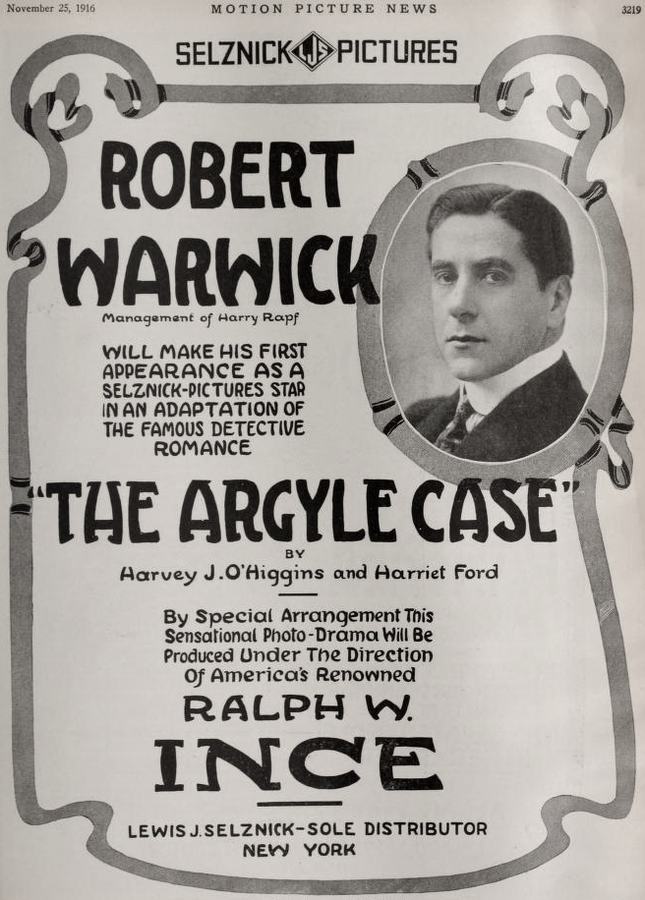
Midnight in the stacks
The Argyle Case does not merely open—it detonates. A butler’s shriek ricochets off leather-bound Spinoza and Gibbon; the camera glides past a Tiffany lamp whose stained-glass butterflies seem to flutter against the sudden stench of cordite. John Argyle’s corpse, cravat skewed like a snapped exclamation mark, becomes a still-life of Gilded Age hubris. Director Ralph Ince withholds nothing: we ogle the ruby cufflink half-swallowed in congealing blood, the monocle that hangs from the desk like a Cyclops’ empty wink. This is 1929 talking cinema still drunk on silent grammar—shadows slant across herringbone floors like guillotines, and intertitles are replaced by the hush of reel-to-reel wire recordings that Kayton later replays. The effect is a proto-noir fever dream, a jazz requiem for an era about to be erased by October’s crash.
A woman caught in chiaroscuro
Mary Argyle, incarnated by Elaine Hammerstein, walks the tightrope between porcelain fragility and flinty resolve. Hammerstein’s eyes—wide, ink-dark—mirror the celluloid itself; when suspicion cinches around her throat, she doesn’t plead but interrogates her own innocence. The screenplay (four scribes: Chapin, Ince, Ford, and celebrity criminologist William J. Burns) refuses the “hysterical heiress” trope. Instead, Mary’s adoptive status becomes existential ballast: she is both insider and perpetual guest, forever curating her gratitude in a house built on biological lineage. When the will is read—a set piece staged like a mausoleum tribunal—her fingers tremble not at the mention of millions but at the word “beloved,” a reminder that love here is transactional.
Kayton: detective as alchemist
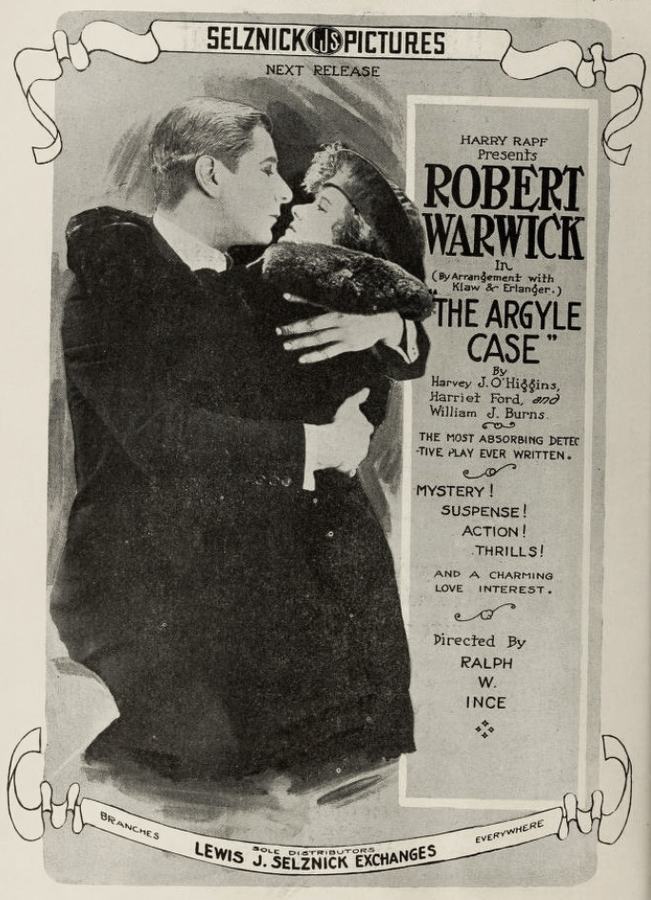
Enter Asche Kayton, essayed with lupine suavity by Robert Warwick. He sports a midnight-blue chesterfield, gloves the color of fresh cream, and a mind calibrated like a Swiss chronograph. Kayton belongs to the same bloodline as The Half Million Bribe’s forensic accountants, yet anticipates the hard-boiled sangfroid of Chandler’s Marlowe. His toolkit—dictograph, benzidine spray, an early wire-photo transmitter—turns the manse into a pop-up laboratory. Watch him dust a brandy snifter for latent prints while humming Gershwin; witness him trap a suspect via a phonograph record whose runoff groove hides a confession. Science, for Kayton, is seduction by other means.
The film’s midpoint pivots on a bravura sequence: a single take, nearly three minutes, following Kayton from attic to cellar as he pieces together Argyle’s final hour. Cinematographer George W. Lane’s camera snakes through secret bookcases, past a lift cage, down spiral stairs, all while maintaining focus on the detective’s flickering eyes. No CGI, no Steadicam—just ingenuity, dollies, and muscle. The shot predates Hitchcock’s Notorious ballroom sweep by seventeen years and rivals the spatial audacity of Ingeborg Holm’s prison corridors.
Counterfeit kingdom beneath the city
Once Kayton’s compass points toward a waterfront printing den, the narrative mutates into expressionist frenzy. Arc lamps strobe across copper plates; paper sheets ascend like albino moths; ink smells almost escape the screen. The villains—led by Joe Quinn’s cadaverous “Professor”—operate less as gangsters than apostates of reality itself, forging not only currency but identity. Their lair, festooned with stolen Modigliani sketches and ticker tape, feels like the missing link between The Haunted Manor’s gothic catacombs and the urban grotesquerie of The Beast.
Yet the script refuses moral absolutes. Bruce Argyle, the spurned son, initially reeks of patricidal motive; however, his collaboration with Kayton reveals a man desperate to repurchase honor. Robert Vivian plays Bruce like a debauched archangel, all frayed cuffs and cathedral cheekbones, suggesting that redemption can be another form of extravagance.
Love in the time of wiretaps
Romance blooms inside the investigation’s circuitry. Kayton’s pragmatic voice softens whenever Mary recounts childhood memories of being rescued from the Seine—an anecdote delivered in a single close-up where her breath fogs the microphone mesh. Their courtship is coded in shared silences, in glances exchanged over magnesium flashbulbs. When vindication arrives, it is not trumpeted but whispered: Kayton simply removes the handcuffs from her wrists and clasps her palm to his heart. The gesture, wordless, proclaims that evidence and emotion need not be mutually exclusive.
Compare this restraint to the operatic tragedy of Madame Butterfly or the Dickensian sentimentality of The Chimes. The Argyle Case opts for the modernist ellipsis, trusting that audiences versed in tabloid crime will supply their own catharsis.
Sound design as sleight of hand
Though early talkie technology shackles some scenes to static two-shots, the film weaponizes audio artifacts: the thud of a rotary dial, the hiss of a reel rewinding, the off-key chimes of a counterfeit press. These noises layer into an urban symphony more avant-garde than anything in Severo Torelli’s operettas. When Kayton isolates the killer’s voice on a scratchy aluminum disc, the playback warbles like a ghost learning to speak; you lean closer, complicit in the act of listening.
Silence, too, is tactical. Just before the climactic confession, the soundtrack drops out—no score, no ambience—until we hear only the creak of leather as Kayton crosses the room. The absence of noise becomes more unnerving than any scream.
Performances calibrated to frequency
Elaine Hammerstein modulates her voice an octave lower for scenes of accusation, producing a rasp that suggests nights spent swallowing smoke and uncertainty. Robert Warwick counters with a baritone so evenly tempered it could calibrate seismographs. Their duet in the library—where Mary asks, “Do you collect guilt like stamps?” and Kayton replies, “Only the ones with perforations”—sparkles with screwball velocity yet lands like a bruise.
In smaller roles, Mary Alden’s governess exudes a Puritanical menace reminiscent of Judge Not’s schoolmarm zealots, while Charles Hines as the comic-relief patrolman anticipates the everyman buffoonery of The Politicians.
Visual motifs: mirrors, money, marble
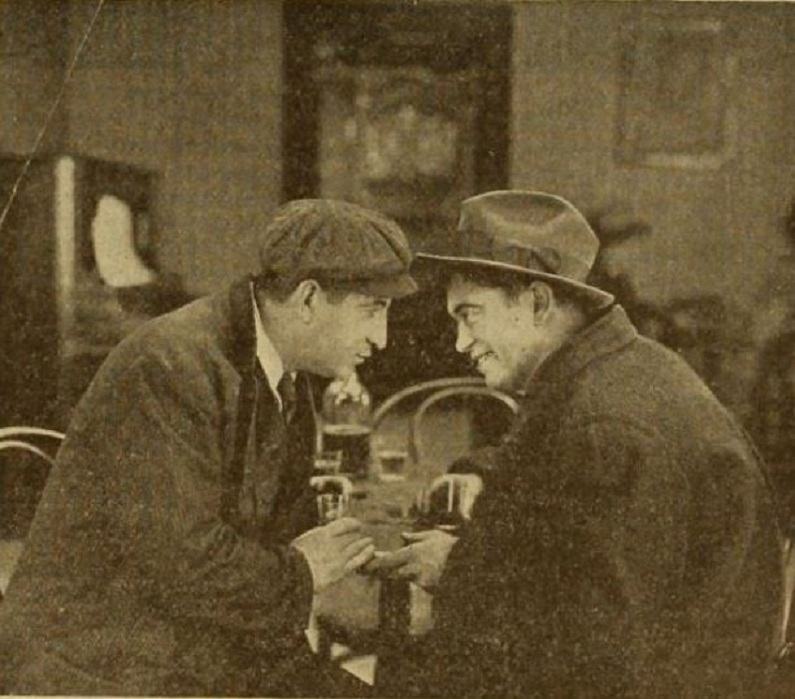
Throughout, mirrors bisect frames—symbolizing the duplicity of wealth and testimony. During a search of Mary’s boudoir, Kayton lifts a hand-mirror to inspect a reflection of the door lock; the shot captures both his gaze and the reverse image of the corridor, collapsing observer and observed. Currency recurs as both clue and metaphor: a counterfeit bill bears the same serial number as Argyle’s yacht christening, hinting that identity itself is printable. Marble statues—Venus without arms, Caesar without ears—populate the garden where the final showdown occurs, as though the house’s art collection foretold its owner’s mutilated legacy.
Pacing: a metronome of suspense
At 79 minutes, the narrative hurtles yet never forfeits texture. Transitional montages—stock market tickers, subway turnstiles, neon bar signs—function like synaptic pulses, situating the domestic whodunit within Manhattan’s circulatory system. The rhythm recalls the brisk efficiency of The Discard, but with a jazzier syncopation supplied by J. S. Zamecnik’s foxtrot orchestrations.
Legacy and cultural resonance
Released mere weeks before Black Tuesday, The Argyle Case feels like a champagne toast on the Titanic’s slanted deck. Its obsession with forged value foreshadows an economy about to evaporate. Modern viewers will detect pre-echoes of The Thin Man’s urbane sleuthing, of Chinatown’s municipal rot, even of True Detective’s metaphysical flourishes. Criterion’s forthcoming 4K restoration—rescued from a sole surviving 35 mm composite—should reintroduce this celluloid orphan to cine-clubs who still debate whether Mortmain or Drankersken owns the patent on proto-noir gloom.
Meanwhile, the film’s gender politics merit excavation. Mary’s ultimate vindication hinges on male expertise, yet her agency lies in choosing forgiveness over vengeance, refusing to monetize her trauma. In an era when The Wild Olive peddled damsel clichés, this nuance feels quietly radical.
The Argyle Case is a prism held up to the dawn of sound cinema: each facet—sonic experiment, visual bravura, sociological premonition—refracts a different hue of the American id. It neither attains the poetic fatalism of later noir nor succumbs to the creaky staginess of many early talkies. Instead, it occupies a liminal corridor where jazz pulses through veins of Gothic dread, where love is both alibi and evidence, where every banknote bears the watermark of a broken heart. Watch it once for the plot, twice for the textures, thrice for the chill whisper that perhaps our own identities are merely the next sheet hot off the press.
IMDb —
1930
Community
Log in to comment.