DbcultAccessing Vault...
6.5/10
Senior Film Conservator
A definitive 6.5/10 rating for a film that redefined the boundaries of cult cinema. La montagne infidèle remains a cornerstone of transgressive art.
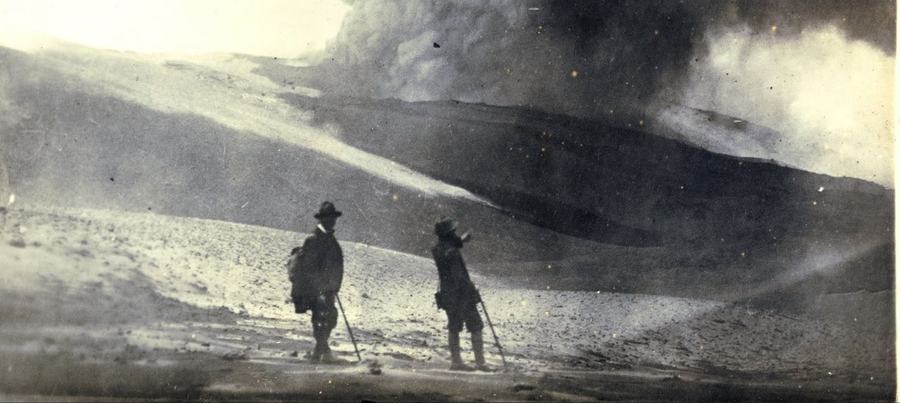
There are moments in cinematic history when the sheer audacity of a filmmaker transcends mere storytelling, venturing instead into the realm of the elemental, the primal, the utterly awe-inspiring. Jean Epstein's 1923 masterpiece, La montagne infidèle (The Unfaithful Mountain), is precisely such a moment. It is not merely a film; it is a visceral confrontation with the raw, untamed power of nature, captured with a daring that remains breathtaking even a century later. Imagine the scene: Sicily, June 1923. Mount Etna, a timeless sentinel, stirs from its slumber, not with a gentle sigh, but with a mighty roar, tearing open two new craters and unleashing a hellish river of molten rock upon the unsuspecting landscape.
Epstein, a luminary of French impressionist cinema, was not content to observe from a safe distance. He, along with his indefatigable operator Paul Guichard, ventured directly into the path of this geological leviathan. This was an era before drones, before sophisticated remote cameras, before even basic safety protocols for filming such cataclysms were conceived. Their tools were cumbersome, their film stock fragile, and their courage, it seems, boundless. What they achieved was not just a documentary record, but a profound cinematic poem, an ode to destruction and the terrifying beauty inherent in the earth's ceaseless, indifferent churn. The film transports us not just to a place, but to a state of being, where human insignificance is laid bare against the backdrop of planetary forces.
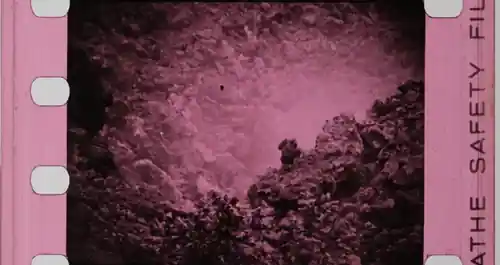
The opening shots immediately establish a sense of foreboding, a quiet tension that precedes the storm. Epstein masterfully builds this anticipation, perhaps showing the serene Sicilian landscape before the eruption, or the initial tremors that hint at the impending chaos. Then, the eruption itself. The screen becomes a canvas for nature's most spectacular, terrifying artistry. Lava, a slow, inexorable tide of incandescent rock, oozes forth, its viscosity palpable even through the grainy black and white footage. It flows with a malevolent grace, consuming olive groves, vineyards, and structures that once stood as testaments to human perseverance. Each frame is a testament to the sheer destructive force, yet also to the mesmerizing, almost hypnotic beauty of the molten earth. The textures, the light reflecting off the viscous surface, the plumes of smoke and ash – it's an overwhelming sensory experience.
What distinguishes La montagne infidèle from mere newsreel footage is Epstein's distinct artistic vision. He doesn't just record; he interprets. There's a palpable sense of awe, even reverence, for the volcano's power. The camera angles are often daring, placing the viewer uncomfortably close to the encroaching inferno, allowing us to feel the heat, the rumble, the impending doom. This isn't a film about human heroes battling a natural disaster; it's a profound meditation on the indifference of nature, on the fleeting impermanence of human constructs when confronted by geological time scales. The homes, the fields, the very pathways of life are swallowed whole, not with malice, but with a detached, geological inevitability. This philosophical undercurrent elevates the film beyond a simple record, transforming it into a piece of art that compels introspection.
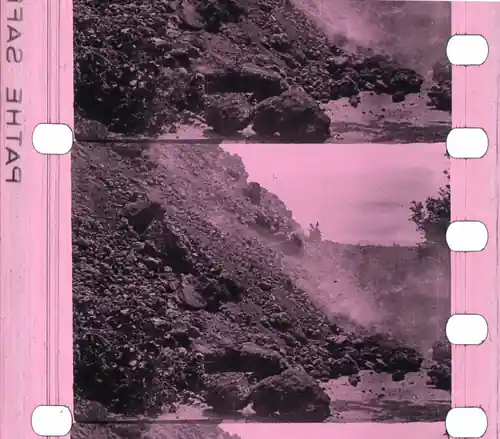
The sheer logistical and technical challenges faced by Epstein and Guichard cannot be overstated. Filming in 1923 meant lugging heavy, hand-cranked cameras to precarious vantage points, often amidst choking ash and blistering heat. The risk of sudden explosions, gas emissions, or the ground collapsing beneath them would have been constant. Yet, they pressed on, driven by an artistic imperative to capture this unfolding drama. Guichard's skill behind the lens is evident in the remarkable clarity and composition of many shots, especially given the chaotic environment. He wasn't just pointing a camera; he was framing a cataclysm, seeking out the most impactful perspectives, understanding the interplay of light and shadow on the flowing lava, and capturing the scale of devastation with a keen eye for both detail and grandeur.
Epstein’s approach to editing, even in its minimalist form, would have been crucial in shaping the narrative of the eruption. The pacing, the juxtaposition of serene landscapes with erupting infernos, the lingering shots on the destructive path – all contribute to the film’s hypnotic rhythm. One can imagine the painstaking process of reviewing the footage, selecting the most potent images, and assembling them into a coherent, compelling narrative that spoke to the sublime terror of the event. This wasn't just about documenting; it was about evoking. The film doesn't just show us a volcano; it makes us feel its presence, its power, its ancient, unyielding will. It's an early example of how non-fiction cinema could be imbued with an artistic sensibility, pushing beyond mere reportage into the realm of poetic expression.
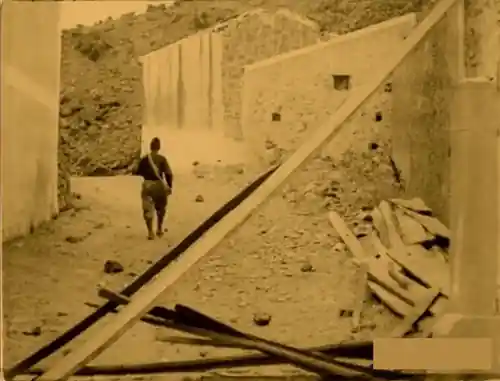
The film also stands as a significant historical document, providing a rare, unmediated glimpse into a specific natural disaster of the early 20th century. Beyond its artistic merits, it offers invaluable insight into the eruption's progression, its impact on the local populace, and the sheer scale of the environmental transformation. These frames are not merely celluloid; they are time capsules, preserving a moment when the earth decided to reassert its dominance, reminding humanity of its comparatively fragile existence. It's a stark reminder that even as societies build and progress, the fundamental forces that shaped our planet continue to operate, often with devastating consequences for those who inhabit its surface. The resilience of the Sicilian people, though not explicitly the focus, is implied by the very act of Epstein filming amidst a populated area, highlighting their enduring relationship with this formidable mountain.
For contemporary audiences, La montagne infidèle offers a unique opportunity to connect with an era of filmmaking that prioritized raw observation and a profound engagement with its subject matter. It lacks the special effects and slick production values of modern disaster films, yet its impact is arguably more profound precisely because of its unadorned authenticity. There’s no artificial drama, no contrived narrative arcs; just the unvarnished truth of a geological event unfolding before our very eyes. This commitment to realism, coupled with Epstein’s artistic eye, creates a cinematic experience that is both educational and deeply moving, a testament to the power of the natural world and the courage of those who sought to capture its majesty.
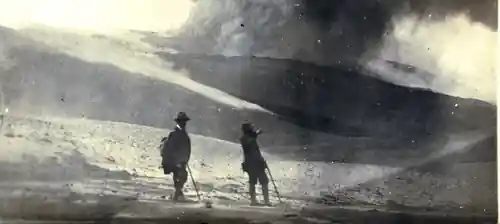
One could even argue that Epstein's film, in its stark portrayal of nature's dominance, subtly critiques the anthropocentric view of the world. It forces us to reconsider our place within the grander scheme, to acknowledge the limits of our control and the immense, indifferent power that lies beneath the earth's crust. This isn't just about a volcano; it's about the very fabric of existence, the constant push and pull between creation and destruction that defines our planet. The 'unfaithfulness' of the mountain, as the title suggests, isn't a moral failing, but a natural characteristic, a reminder that it operates by its own ancient, inscrutable laws, utterly unconcerned with human expectations or desires.
The film's legacy is perhaps found in its pioneering spirit, influencing subsequent generations of documentary filmmakers to pursue challenging subjects and to approach them with a distinct artistic vision. It demonstrated that actuality footage could be more than just informational; it could be transformative, capable of evoking deep emotional and intellectual responses. Epstein's willingness to immerse himself in the danger, to bring the camera into the heart of the inferno, set a precedent for immersive filmmaking that continues to resonate today. It’s a powerful reminder that sometimes, the greatest stories are not invented, but simply observed, and then presented with an unflinching gaze and an artist's soul.
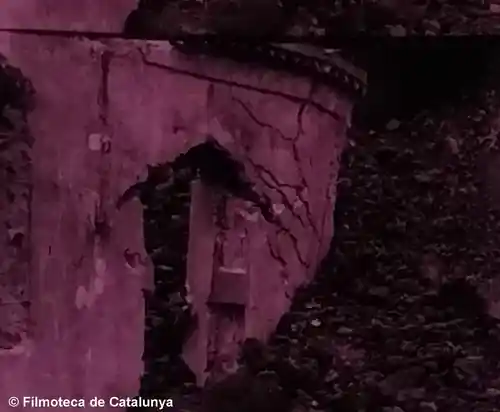
In an age saturated with digital imagery and hyper-realism, La montagne infidèle stands as a powerful testament to the enduring impact of early cinema. Its black and white palette, far from being a limitation, enhances the stark drama, lending an almost timeless quality to the unfolding disaster. The absence of sound forces a deeper engagement with the visual, allowing the viewer's imagination to supply the roar of the lava, the crackle of burning vegetation, the rumble of the earth itself. It is a film that demands quiet contemplation, a surrender to the overwhelming spectacle it presents, and a recognition of the profound, often terrifying, beauty of our planet's living geology.
Ultimately, La montagne infidèle is more than just a document of a volcanic eruption; it is a profound cinematic experience that explores the human-nature relationship at its most raw and humbling. It is a work of immense courage, artistic vision, and enduring power, a film that continues to captivate and challenge viewers with its uncompromising portrayal of one of earth's most spectacular and destructive forces. Epstein and Guichard, in their reckless pursuit of truth and beauty amidst chaos, crafted a timeless piece that solidifies its place as a cornerstone of early documentary cinema and a testament to the sublime terror of the natural world. It is a film that whispers of ancient forces, of the planet's relentless pulse, and of our own fragile, yet persistent, existence upon its ever-changing surface. A true marvel, even a century on, its fiery images etch themselves into the mind with an indelible force, reminding us that some mountains, indeed, remain eternally unfaithful to human expectations, abiding only by their own colossal will.

IMDb —
1931
Community
Log in to comment.