DbcultAccessing Vault...
Cult Review
Senior Film Conservator
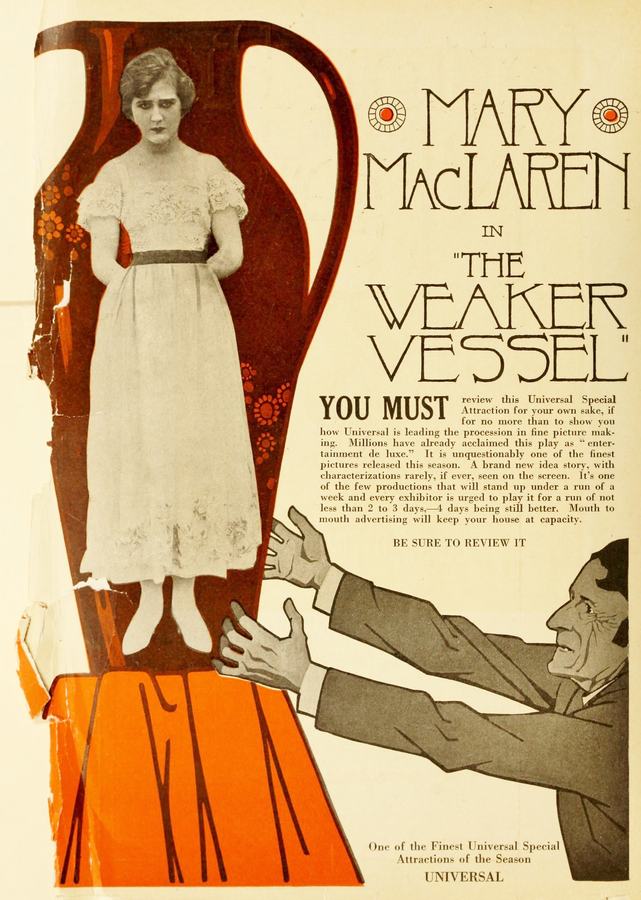
Elmer Ellsworth constructs Abby Hopkins' pre-escape existence with Kafkaesque claustrophobia. The Hopkins household isn't merely poor; it's a museum of faded respectability, where daughters are decorative artifacts awaiting profitable placement. Editorials in father's newspaper preach morality while domestic strategy reduces Abby to reproductive currency for Hanks' coffers. Anne Schaefer's performance in these early reels is masterful restraint – her eyes hold storms beneath a placid surface, fingers trembling almost imperceptibly as Hanks (John Cook, exuding entitled menace) examines her like livestock. The wedding sequence becomes grotesque satire: lace choking Abby’s throat, champagne fueling guests' raucousness, the groom's sweaty proximity a violation foreshadowed. Her flight isn't impulsive; it's the geological shift of suppressed tectonic plates.
New York in 1918 wasn't just backdrop; Ellsworth lenses it as sentient antagonist and liberator. Abby’s tenement room, shared with the wonderfully pragmatic Molly (Zoe Rae, radiating weary optimism), is a far cry from satin boudoirs. Steam pipes clang symphonies of struggle, shared bathrooms speak of communal vulnerability, yet the electric streetlights outside promise anonymity. Schaefer’s physicality transforms – her posture uncoils, shoulders lose their defensive hunch. The waitress sequences are anthropological studies: Abby navigating leering patrons, greasy kitchen hierarchies, blistered feet, yet discovering profound dignity in self-sufficiency. Every nickel earned is a bullet against her past.
"Hunter’s entrance isn't mere plot device; it's the chaotic id disrupting Abby's fragile order. His drunken recitation of Macbeth in the diner – grandiose, tragic, absurdly compelling – mirrors Abby's own internal drama. Schaefer and Thurston Hall perform a duet of damaged souls finding accidental harmony."
Thurston Hall’s J. Booth Hunter is no simplistic savior. He embodies the ruined potential of American manhood – a ham actor whose talent drowns in rye whiskey, his gestures oversized for the cramped realities of his existence. Hall plays him with heartbreaking specificity: the tremor in hands reaching for a bottle, the false bravado masking oceanic shame. His chemistry with Schaefer crackles not with instant romance, but with mutual recognition of fracture. Her attempts to sober him aren't moral crusades; they're lifelines thrown to a reflection of her own submerged desperation.
Contrast this with Hanks’ return – John Cook weaponizing bourgeois entitlement. His intrusion into Abby’s apartment isn't passion; it's territorial violation. The ensuing fight, choreographed with brutal clumsiness (no stylized heroics here), sees Hunter defending Abby not as property, but as sovereign being. Cook’s impotent rage as he’s bested by the very wreck he dismissed is a deliciously subversive tableau. Hunter’s subsequent detoxification, shown via agonizing close-ups of Hall’s sweat-sheened face clawing at phantom demons, becomes the film’s rawest testament to redemption.
Ellsworth smuggles radical ideas through visual grammar. Abby’s divorce isn't a legal montage; it's symbolized by her burning the wedding dress in a tenement sink, flames licking satin as emancipation proclamation. Her final union with Hunter avoids conventional clinches; they’re framed side-by-side looking towards an uncertain future, hands barely touching – comrades more than lovers. Schaefer’s genius lies in micro-expressions: the flicker of hesitation before accepting Hunter’s ring, the weary determination while scrubbing floors, the defiant stillness facing Hanks. This isn't passive resilience; it's strategic warfare waged with silence.
Considered alongside The Impostor (1918), which explores identity masquerade in wartime, The Weaker Vessel reveals how women utilized societal chaos for self-invention. Abby’s escape predates the urban trials of Lillian Gish in The Awakening of Helena Ritchie but shares its DNA of awakening through adversity. The film’s nuanced handling of addiction feels startlingly modern when contrasted with the moralistic temperance tales like What the Gods Decree. Hunter’s struggle avoids demonization, focusing instead on recovery as collaborative act – a theme resonating with later character studies like Missing.
Ellsworth’s direction warrants comparison to Maurice Tourneur’s atmospheric work in The Blindness of Virtue. Both utilize shadow to sculpt psychological depth – observe how Abby’s face is half-obscured in darkness during Hanks' proposal, her conflicted thoughts visualized without title cards. The bustling diner scenes prefigure King Vidor’s The Crowd in their documentary-like immersion. Yet The Weaker Vessel distinguishes itself through its uncompromising focus on female interiority, a rarity in an era dominated by male-centric narratives like The Lion's Claws.
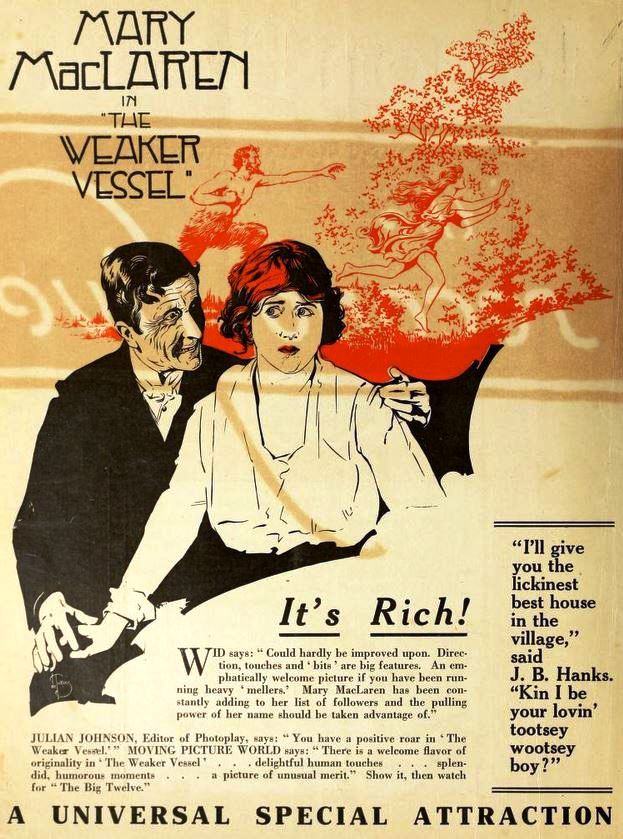
Anne Schaefer’s performance remains the film’s beating heart. She rejects the florid gestures common to silent heroines. Watch the slight tightening of her jaw when Hanks mentions her "wifely duties," or the nearly imperceptible softening around her eyes as Hunter clumsily offers a sober daisy. Her strength isn't histrionic; it’s in the economy of movement, the intelligence radiating from stillness. When confronting Hanks in the apartment, she doesn't scream; she stands like a sentinel, her silence more terrifying than any outburst. Schaefer crafts Abby as neither victim nor saint, but a pragmatist navigating limited options with ruthless self-preservation evolving into guarded affection.
Supporting players orbit Schaefer’s gravity with precision. Ethel Ritchie and Lina Basquette as younger sisters convey, through fleeting glances and hesitant touches, their dawning realization of Abby’s sacrifice. Mary MacLaren’s brief cameo as Hunter’s skeptical landlady provides gritty comic relief. Thurston Hall, often cast in blustering roles, accesses unexpected vulnerability. His Hunter isn't redeemed by love alone, but by confronting the abyss within himself – a journey mapped in the deterioration and slow reassembly of his physicality.
Costume design functions as silent polemic. Abby’s wedding gown is armor of suffocation – high lace collar, restrictive bodice, a virginal white mocking her transactional purpose. Her waitress uniform, coarse and practical, becomes battle dress. Hunter’s progressively disheveled suits mirror his disintegration, while Hanks' immaculate waistcoats symbolize rigid control. The film’s sartorial climax occurs when Abby buys a simple blue dress with her own earnings – the scene lingers on her fingers tracing the affordable fabric, a tactile celebration of self-determined identity.
Elmer Ellsworth, an under-discussed auteur, weaponizes melodramatic conventions against themselves. The expected trajectory – fallen woman redeemed by virtuous love – is upended. Abby’s "fall" is ascent into autonomy; Hunter’s virtue emerges *after* his fall from grace. Ellsworth avoids sensationalism in Abby’s city life. There’s no predatory employer or white slaver; her dangers are mundane – exhaustion, loneliness, economic precarity. The camera lingers on the texture of peeling wallpaper, the steam rising from dishwater, the weariness in Molly’s shoulders – finding epic struggle in the quotidian.
His use of close-ups is revolutionary for 1918. Not just for emotional revelation, but for sociological insight: the grime under a fingernail, the wobble of a coffee cup on an overloaded tray, Hanks’ ring glinting like a shackle. Ellsworth frames Abby frequently in doorways and windows – thresholds symbolizing her perpetual state of passage. The final shot, devoid of romantic sunset, shows them boarding a streetcar, destination unknown, future unwritten – a profoundly modern refusal of tidy closure.
"The Weaker Vessel doesn’t argue for equality through speeches; it demonstrates it through a woman’s labor – the sweat on Abby’s brow as she scrubs, the calculations behind her rent payments, the unyielding grip on her own narrative. Schaefer’s elbows-deep realism dismantles the porcelain doll ideal."
To watch The Weaker Vessel today is to witness subterranean feminism in silent cinema’s golden age. Abby’s defiance isn't marked by grand speeches, but by the quiet accumulation of choices: leaving the bouquet behind, mastering the lunch rush, refusing Hanks’ ultimatum. Her relationship with Hunter succeeds precisely *because* it begins in mutual brokenness – a partnership forged in the smithy of shared struggle, not romantic delusion. The film’s enduring power lies in its rejection of easy categorization. Is it social realism? Melodrama? Character study? It transcends genre, much like its heroine transcends the cage of ‘The Weaker Vessel’ – a title wielded with devastating irony.
In an era saturated with simplistic heroines and moral binaries, Ellsworth and Schaefer crafted something startlingly complex. Abby Hopkins stands alongside later icons like Nora Helmer or Thelma Dickinson – not as symbol, but as resolutely human architect of her own messy, magnificent escape. The flickering silver light from 1918 still illuminates the path for anyone who’s ever burned a cage, however gilded, to the ground.
IMDb 2.3
1916
Community
Log in to comment.