DbcultAccessing Vault...
Cult Review
Senior Film Conservator
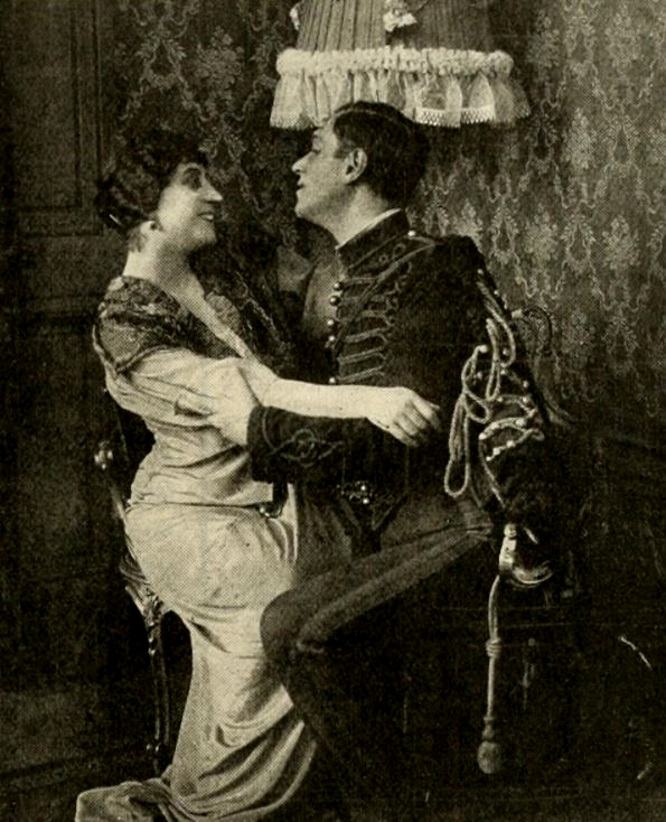
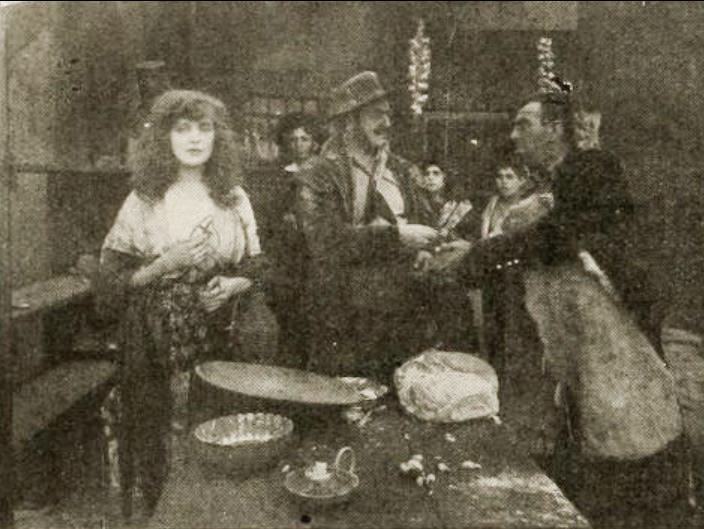
The year is 1911; cinema is still learning to breathe. Out of the gaslit Italian studios ambles For the Queen's Honor, a one-reel fever dream that compresses courtly intrigue, insurrection, adulterous pulse, and apocalyptic flame into a blistering twelve minutes. What survives—through duped prints, decomposing nitrate, and the unreliable hush of legend—is less a linear narrative than a lithograph of passions inked in high contrast: whites blinding as magnesium, blacks swallowing whole corridors.
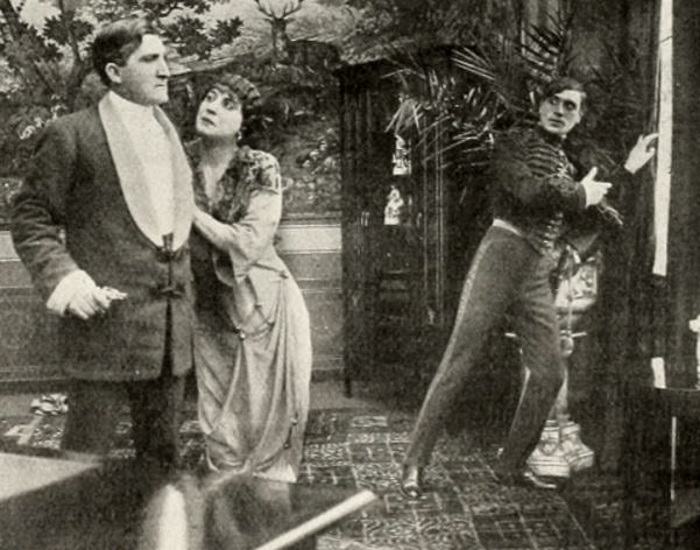
Director Cesare Zocchi (also credited as scenarist) stages conspiracy inside a palazzo whose baroque arches dwarf the human body. Notice how he blocks the militia: clustered like a single gargoyle, capes merging into negative space so that treachery feels architectural. When Oscar (Alfredo Bertone, all cheekbones and epaulettes) sprints across the garden, the camera stays rooted, forcing depth cues from lantern light that trembles on clipped hedges—an early, instinctive riff on what would later be called chiaroscuro noir.
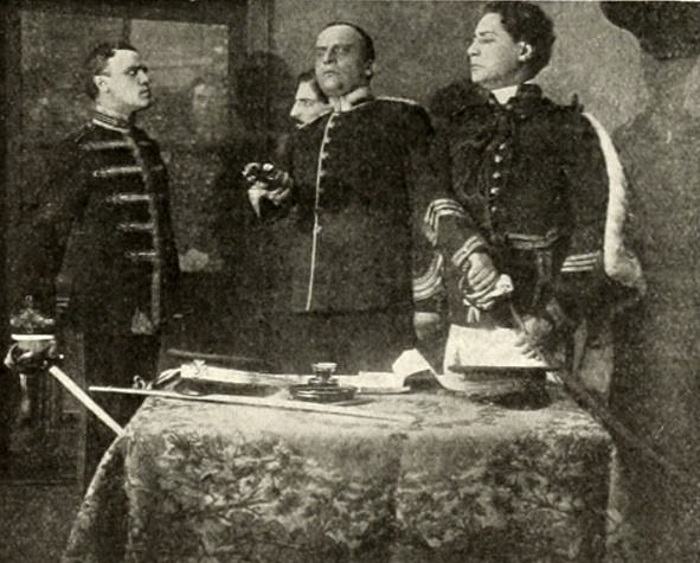
Compare this to the static pageantry of Les Amours de la reine Élisabeth (1912) and you realize how For the Queen's Honor anticipates the kinetic court thrillers of the mid-1910s. The film’s centerpiece—a night-time palace escape—predates the more famous carriage bolt in The Prisoner of Zenda (1913) yet equals its breathlessness despite a budget that probably couldn’t pay for the latter’s lace handkerchiefs.
Mary Cleo Tarlarini essays the Queen with the brittle regality of Sèvres porcelain. She has perhaps two genuine close-ups in the entire reel; both are medium shots by later standards, but the glint in her eyes—half maternal, half carnivorous—registers like a sudden zoom. One can’t help but recall Sarah Bernhardt’s stylized suffering in Cleopatra (1912), yet Tarlarini tempers theatrical flourish with something eerily private: the way her gloved thumb strokes the rim of a goblet while Oscar describes revolution, as though fidelity and rebellion were liqueurs to be sipped.
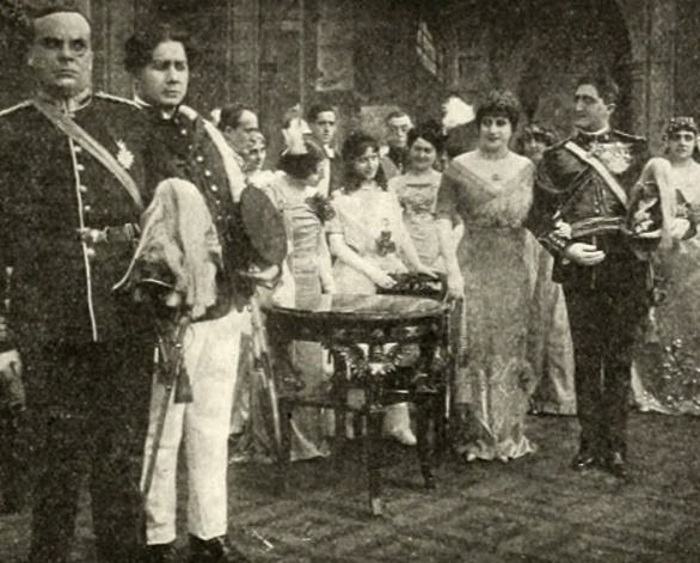
The Queen’s robe, a cascade of silk trapunto, becomes a narrative device: it hides clandestine letters, smuggles a dagger she never uses, and ultimately swallows her silhouette as she collapses—an ebony waterfall of grief.
Bertone’s Oscar is less a soldier than a fuse. His rumpled hair suggests permanent wind; his stride telegraphs that he’s already halfway out of frame. The performance is silent-film semaphore at its most eloquent: shoulders thrown back in royal presence, knuckles whitening when they brush Maritza’s, and finally a mad sprint into conflagration that feels predestined from the first smoldering glance. If you splice his final silhouette—arms outstretched against licking flame—beside the cruciform shadow of Life and Passion of Christ (1903), you’ll find an accidental echo of martyred iconography repurposed for erotic self-immolation.
Word has it Zocchi torched a derelict farmhouse for authenticity; insurance papers list it as a “controlled artistic conflagration.” Whatever the truth, the footage crackles with verité: embers swirl past the lens, a stuntman (presumably Bertone) vaults through real sparks, and the double-exposure of collapsing beams against Maritza’s fainting form anticipates the apocalyptic montage in Dante’s Inferno (1911). The tinting—amber and sangria—was hand-brushed frame by frame; surviving prints show oxidation that makes flames appear to throb even when frozen on a digital timeline.
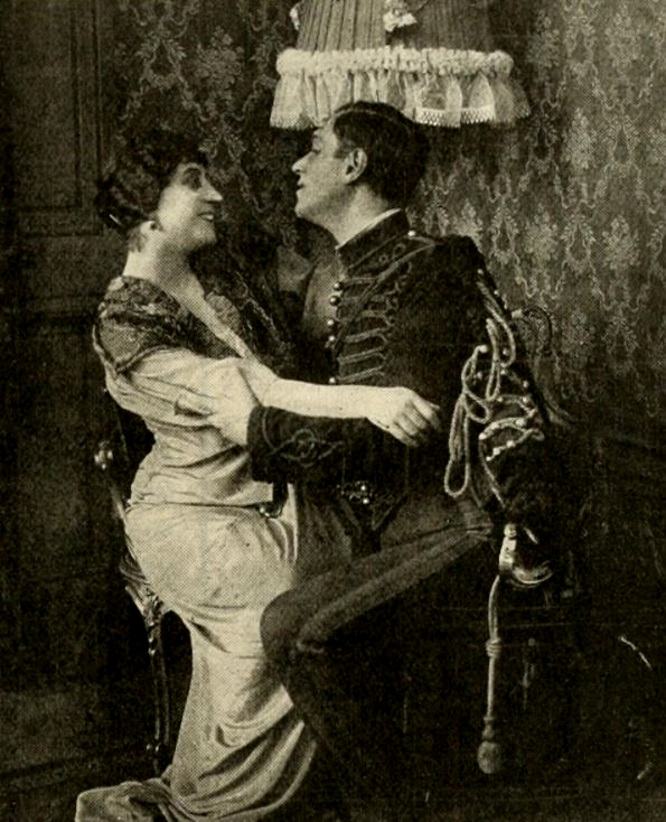
Released months before Italy’s own Italo-Turkish War campaigns, the film’s depiction of a military clique toppling a rightful monarch plays like whispered dissent. Note the conspirators’ uniforms: identical yet stripped of medals, a sartorial erasure of hierarchy. Compare that to the patriotic pageantry of The Independence of Romania (1912) and you sense Zocchi hedging his bets—courtroom drama disguised as royalist fable.
Maritza’s arc is tragic because agency is always deferred. She engineers nothing; she reacts—first to desire, then to catastrophe. Yet the film’s final tableau complicates victimhood: restored to throne and spouse, she lays white lilies at the charred site, her tears refusing voice-over titles (of which there are few). The camera lingers on her back, refusing us the catharsis of facial confession. In that withholding, the film anticipates the suffocating decorum of Anna Karenina (1914) where society’s judgment is the true auteur.
No original score survives, but censorship cards list cue notes: “Marcia funebre” for the conspirators’ oath, “La Paloma” under the Queen’s tryst. Modern festivals often commission new accompaniments; I recommend the 2019 Pordenone rendition—a prepared-piano soundscape that detonates like glass each time Oscar’s footfall lands on parquet. Seek it on archival streaming services; the dissonance clarifies the picture’s proto-modernist pulse.
Contemporary trade sheets praised the “spectacular conflagration” while tut-tutting the “immoral suggestion” of royal adultery. Within five years the movie vanished from distribution ledgers, eclipsed by multi-reel giants such as Quo Vadis? (1913). Yet echoes surface: the flaming mansion motif resurfaces in The Last Days of Pompeii (1913), and the aide-in-love-with-queen dynamic resounds through Les Misérables (1913) where Marius’s republican ardor similarly courts catastrophe.
Strip away the ermine and the smoke, and For the Queen's Honor is a study in collateral damage: how private desire ricochets through corridors of power, how revolutions are kindled not by manifestos but by a cigar stub carelessly set down. In an age when every smartphone can conjure CGI infernos, Zocchi’s analog blaze feels almost sacrilegious—proof that peril, to paralyze the heart, must first scorch the retina.
If you stumble upon a duped Portuguese print labeled Pelo Honra da Rainha, notify an archive; nitrate doesn’t forgive procrastination. And while you’re at it, spare a thought for Oscar—whose epitaph exists only in the sprocket holes of a film that time tried, but failed, to burn.
IMDb —
1924
Community
Log in to comment.