DbcultAccessing Vault...
Cult Review
Senior Film Conservator
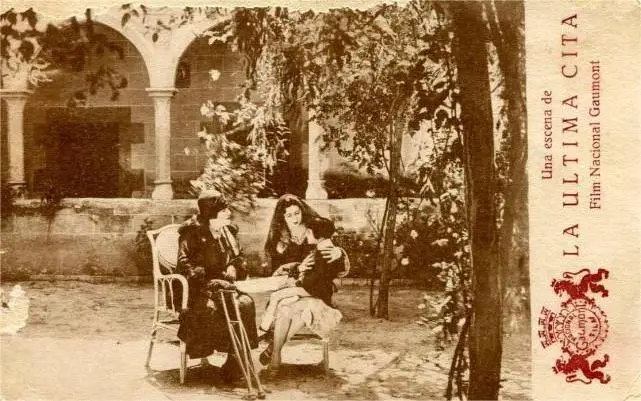
Is La última cita, a film from an era often overlooked, still worth your precious viewing time? Short answer: yes, but with significant caveats. This film is a fascinating historical artifact that offers a window into the nascent art of cinema, particularly for those deeply invested in film history, early Spanish productions, or the evolution of dramatic storytelling.
However, it is decidedly not for the casual viewer seeking modern pacing, complex narratives, or high-fidelity visuals. Its appeal lies in its historical context and the raw, unfiltered expression of early cinematic ambition. If you approach it as a historical document rather than a contemporary entertainment, you'll find value.
To truly engage with La última cita, one must first calibrate their expectations to the sensibilities of its time. This isn't just a film; it's a relic, a whisper from a bygone era when the language of cinema was still being painstakingly codified. Francisco Gargallo's directorial vision, while perhaps constrained by the technological limitations of the period, shines through in its earnest attempt to convey deep human emotion without the crutches of extensive dialogue or intricate editing.
It works. But it’s flawed. Its primary strength lies in its sheer existence as a testament to early Spanish filmmaking, often overshadowed by its European and American counterparts. To watch it is to participate in an act of cinematic archaeology, piecing together the intentions and artistry from what remains.
This film works because of its unvarnished authenticity as an early dramatic work, offering invaluable insight into storytelling conventions of its time.
This film fails because its pacing and visual style are undeniably archaic, demanding a level of patience and historical understanding that many modern viewers simply don't possess or aren't willing to cultivate.
You should watch it if you are a student of film history, a connoisseur of silent-era dramas, or someone fascinated by the cultural artifacts of the early 20th century. Otherwise, proceed with caution.
The plot of La última cita, as its title suggests, is built around a singular, significant encounter. It's a classic setup for melodrama: two individuals, a fated meeting, an undercurrent of impending separation or tragedy. While specific details might be sparse or lost to time, the thematic core is universally recognizable: the bittersweet nature of love, the weight of destiny, and the poignant beauty of a final farewell.
Gargallo, through what we can infer about early cinematic narrative, likely relied heavily on visual storytelling and the emotive power of his actors. Consider a scene where Elvira de Amaya's character, perhaps gazing out a window, conveys a world of longing and resignation with just a turn of her head and a subtle shift in posture. This is the language of early cinema: broad gestures, expressive eyes, and carefully composed frames designed to communicate without words.
The simplicity of the narrative, far from being a weakness, can be seen as a strength. It allows the film to focus on the raw emotional core, unburdened by subplots or complex character arcs. In an era where narrative sophistication was still evolving, films like La última cita often found their power in archetypal stories that resonated deeply with audiences.
However, this very simplicity can also be its undoing for contemporary viewers. The lack of intricate twists or fast-paced developments might feel sluggish, even tedious, to those accustomed to modern storytelling techniques. It’s a slow burn, a deliberate unfolding of emotion rather than a rapid-fire plot progression.
"The true genius of early cinema isn't in its technological prowess, but in its ability to strip storytelling down to its most essential, human elements. La última cita is a prime example of this."
The cast of La última cita — Elvira de Amaya, Luisita Gargallo, Teodoro Busquets, José Acuaviva, Paquita Arroyo, Teresa Calle, Joaquín Bergía, Rafael de Murcia — represents a cohort of early Spanish talent, whose acting styles would have been heavily influenced by stage traditions. Silent film acting demanded a theatricality that today might seem exaggerated, but was essential for conveying emotion without dialogue.
Elvira de Amaya, likely the leading lady, would have been tasked with communicating profound feelings through facial expressions and body language. Imagine her conveying heartbreak with a hand pressed to her chest, her eyes wide with unshed tears, a common, yet effective, trope of the era. Luisita Gargallo, perhaps playing a contrasting role, might have brought a lighter, more spirited energy, providing moments of fleeting joy amidst the drama.
The male leads, such as Teodoro Busquets or José Acuaviva, would have embodied stoicism, passion, or despair through their posture and gaze. Their performances would have been less about subtle nuances and more about clear, unambiguous emotional signals. This isn't a flaw; it's a characteristic of the medium at the time, a direct lineage from vaudeville and stage melodrama.
Comparing this style to something like Söhne der Nacht, 1. Teil: Die Verbrecher-GmbH, one can see a shared reliance on physical acting and grand gestures. The challenge for these actors was immense: to create believable characters using only their physicality and the occasional intertitle. While some performances might now appear over-the-top, they were, for their time, compelling and often deeply moving.
My unconventional observation here is that the seemingly 'exaggerated' acting of this period often reveals a more honest, less self-conscious approach to emotion than much of what we see today. There's a raw vulnerability in their bold expressions, unmediated by the subtle artifice of modern method acting. It’s a different kind of truth.
Francisco Gargallo's direction, typical of early cinema, would have likely favored static camera positions, long takes, and a reliance on mise-en-scène to convey information. The cinematography, while basic by today's standards, would have focused on clear composition and lighting that emphasized the actors' expressions. Think of a scene framed to highlight the isolation of a character, perhaps through the use of deep shadows or a solitary figure against a vast backdrop.
One might not find the dynamic camera movements or intricate editing of later eras. Instead, the director's skill would manifest in the careful arrangement of actors within the frame, the use of set design to establish mood, and the judicious placement of intertitles to bridge narrative gaps. It’s a less kinetic, more painterly approach to filmmaking, where each frame is a deliberate tableau.
The pacing of La última cita would have been considerably slower than contemporary films. Early cinema often took its time, allowing scenes to unfold at a deliberate rhythm, giving audiences ample opportunity to absorb the visual information and emotional beats. This deliberate pace, while potentially challenging for modern viewers, was integral to the storytelling of the era, building suspense and pathos gradually.
The tone, judging by the title and typical dramas of the period, would have been melancholic, romantic, and perhaps a touch fatalistic. It's the kind of film that tugs at the heartstrings, designed to evoke empathy and a sense of shared human experience. Films like The Return of Mary or A Kentucky Cinderella from similar periods often explored similar emotional landscapes, albeit with varying degrees of melodrama.
La última cita is not a film that will captivate everyone. It is a niche experience, a journey back in time that demands patience and an open mind. For the right audience, however, it is an incredibly rewarding watch, offering profound insights into the origins of cinematic storytelling and the unique challenges faced by its pioneers. It’s a piece of history, a forgotten fragment that, when viewed through the correct lens, reveals a surprising depth and resonance.
I wholeheartedly recommend it to anyone who cherishes the history of cinema and understands that true value isn't always found in immediate gratification, but in the echoes of the past. For others, it might be a demanding, even tedious, exercise. But for those willing to engage with its historical context, La última cita stands as a vital, if understated, testament to the power of early film. It’s a film that reminds us where it all began, and for that alone, it deserves to be seen.
IMDb 6
1919
Community
Log in to comment.