DbcultAccessing Vault...
Cult Review
Senior Film Conservator
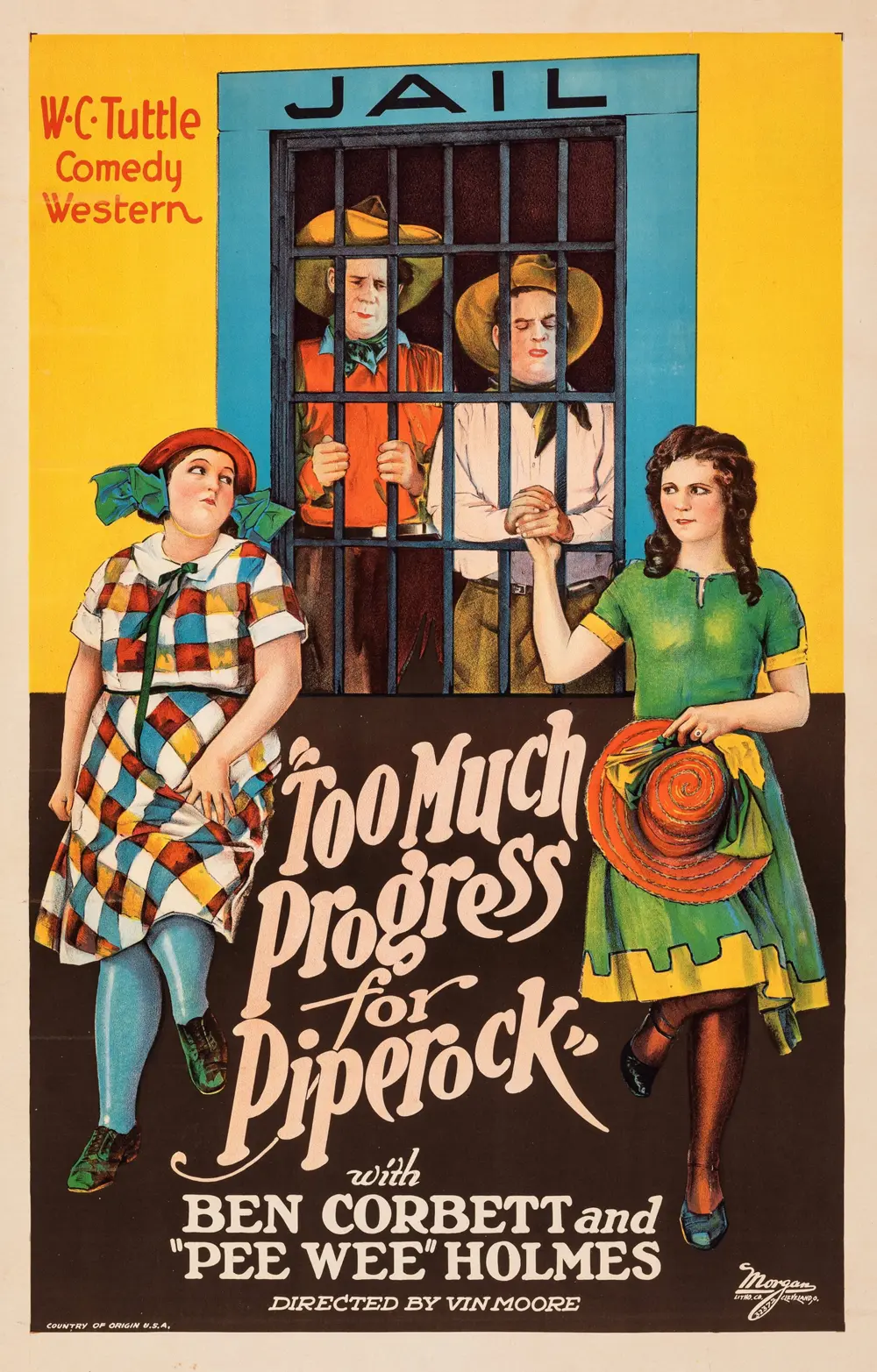
Too Much Progress for Piperock is not a hidden gem. It is a tired, dusty short that feels significantly older than its 1927 release date suggests. While other films of the era were pushing the boundaries of what a camera could do, this production stays rooted in a primitive style of filmmaking that relies on repetitive pratfalls and a script that barely qualifies as a story. It is strictly for those who have a completionist obsession with silent Westerns or the specific 'Magpie and Ike' series based on W.C. Tuttle's stories.
This film works because the physical rapport between Ben Corbett and Gilbert Holmes is functional. They have a practiced rhythm in their bickering that provides the only real energy in the film. This film fails because the gags are telegraphed miles away and the 'progress' theme is treated with the most basic, uninspired slapstick imaginable. You should watch it if you want to see a low-budget example of how the Western genre was being milked for cheap laughs in the late silent era. You should skip it if you expect the wit of a Buster Keaton short or the narrative drive of a standard feature.
By 1927, the audience's appetite for simple 'cowboy falls down' humor was beginning to wane. Films like Grandma's Child had already shown that comedy could be integrated with character growth and genuine stakes. Too Much Progress for Piperock ignores those lessons. It treats its characters, Magpie and Ike, as static cartoons. They don't react to the 'progress' of the title with any specific irony; they just trip over it.
The plot is a thin clothesline for gags that don't always hold the weight. We see the duo attempting to navigate a town that is supposedly changing, but the visual evidence of that change is minimal. The set design is the same collection of wooden fronts and dirt paths we've seen in a hundred other cheap shorts. There is a lack of imagination in how the environment is used. When a film is this short, every gag needs to land. Here, they mostly just thud.
Nancy Drexel is largely wasted here. As was common in these 'buddy' Western comedies, the female lead is relegated to standing in the frame and looking concerned or mildly amused by the antics of the men. Her presence feels like a contractual obligation rather than a narrative necessity. It’s a sharp contrast to films like M'Liss, where the female lead actually has something to do.
The pacing is the film's biggest enemy. There is a strange lethargy to the editing. A gag will happen—Magpie gets hit with something or Ike falls into a trough—and the camera lingers just a second too long, as if waiting for the audience to catch up. This lack of snap makes the twenty-minute runtime feel like forty. Compared to the frantic energy of The Haunted House, Piperock feels like it's moving through molasses.
The cinematography is flat. There is very little use of close-ups to emphasize a joke or a reaction. Most of the action is captured in medium shots that feel distant and unengaged. It’s the kind of filmmaking that assumes the mere sight of a cowboy doing something stupid is enough to carry the scene. It isn't. The lighting is harsh and naturalistic in a way that feels cheap rather than intentional. It lacks the atmosphere seen in even minor dramas like The Hell Cat.
One debatable point is whether the film’s reliance on Tuttle’s characters actually hurts it. While these characters were popular in pulp magazines, their transition to the screen here feels stiff. The writing by Robert McKenzie doesn't capture the vernacular or the specific wit of the source material, leaving us with two generic bumbling cowboys. It’s a reminder that a popular IP doesn’t guarantee a functional movie.
Pros:
The chemistry between the leads is established and comfortable. Some of the location work provides a gritty, unvarnished look at the Hollywood version of the West. It’s short enough that it doesn’t overstay its welcome by much.
Cons:
The jokes are ancient and poorly executed. The 'progress' theme is barely utilized beyond a few props. Nancy Drexel is given absolutely nothing to do. The film feels technically outdated for 1927.
Too Much Progress for Piperock is a minor entry in a series that was already running out of steam. It’s not offensively bad, but it is aggressively mediocre. If you’ve seen When Seconds Count and found it too fast-paced, maybe this slow-motion comedy is for you. For everyone else, it’s a forgettable piece of celluloid that proves 'progress' was something the filmmakers themselves weren't quite ready for.
IMDb 6.2
1934
Community
Log in to comment.