DbcultAccessing Vault...
5.2/10
Senior Film Conservator
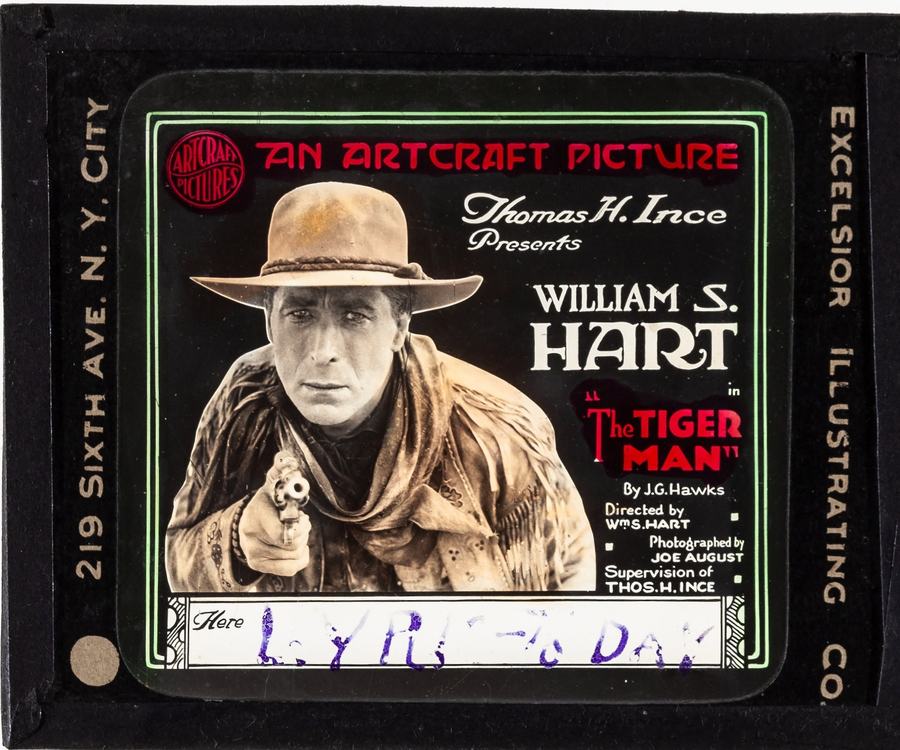
A definitive 5.2/10 rating for a film that redefined the boundaries of cult cinema. The Tiger Man remains a cornerstone of transgressive art.
Stepping into the world of "The Tiger Man" is to journey back to a pivotal era of American cinema, a time when the Western genre was finding its voice and its iconic figures were being etched into celluloid. William S. Hart, a name synonymous with the stoic, conflicted outlaw, delivers a performance here that is both deeply characteristic of his oeuvre and remarkably nuanced. This isn't merely a tale of good versus evil; it's a profound exploration of the grey areas that define human nature, set against the unforgiving canvas of the New Mexican desert. Hart's Hawk Parsons is not a villain in the conventional sense, nor is he an uncomplicated hero. He is a product of his environment, a man hardened by circumstance, whose moral compass is severely skewed yet not entirely broken.
The film opens with the visceral thrill of an escape – Parsons and his gang, a motley crew of desperadoes, bursting forth from the confines of jail. Their flight into the vast, desolate expanse immediately establishes the tone: one of raw survival and untamed freedom. The desert, an ever-present character in silent Westerns, here symbolizes both liberation and an ultimate test. It’s a place where societal rules dissolve, and primal instincts prevail. This initial sequence, masterfully directed, sets the stage for the complex moral landscape Parsons is about to navigate. His journey is less about physical distance and more about an internal odyssey, a transformation ignited by an unexpected encounter.
Fate, or perhaps a cruel twist of irony, leads the outlaws to a stranded wagon train, a microcosm of civilization gasping for life in the parched wilderness. Here, the film introduces its emotional core: Ruth Ingram, portrayed with quiet strength by Jane Novak. Ruth is not merely a damsel in distress; she is the catalyst for Parsons' spiritual reckoning. Her dignity, even in the face of despair, captivates Hawk, sparking an infatuation that transcends mere physical attraction. It’s a fascination that hints at a deeper longing within the outlaw, a yearning for something beyond the transient thrill of lawlessness. This pivotal moment, where the hardened criminal agrees to lead the emigrants to safety due to his sudden affection for Ruth, immediately subverts typical Western tropes. The rescuer is also the captor in waiting, a duality that makes Parsons such a compelling figure.
The narrative tension escalates with an Indian attack, a brutal reminder of the constant peril lurking in the frontier. This sequence is not just an action beat; it’s a crucible, forcing Parsons to make immediate, life-or-death decisions. It's during this chaos that the distant glimpse of U.S. cavalry troops appears, a beacon of hope for the emigrants, but a harbinger of doom for Parsons. The dilemma he faces is exquisitely drawn: save the people he’s ostensibly helping, knowing it means his own capture, or allow them to perish to preserve his freedom. The revelation that members of the posse tracking him are among the stranded party adds another layer of profound irony and personal risk. This is where Hart's ability to convey complex internal struggle without dialogue truly shines.
Parsons' ultimate decision – to allow the distress signal to be sent, but only on the condition that Ruth accompanies him to his mountain lair – is the film's central moral knot. It’s an act of both salvation and profound selfishness, a demonstration of his still-unredeemed nature. This sequence resonates with themes explored in films like "Saint, Devil and Woman", where characters are often torn between their baser desires and nascent moral impulses. Hawk, at this point, embodies both the "devil" of his outlaw past and the potential for a "saintly" act, albeit one tainted by his possessive love for Ruth. His triumph in escaping with Ruth feels hollow, a victory of obsession rather than genuine connection.
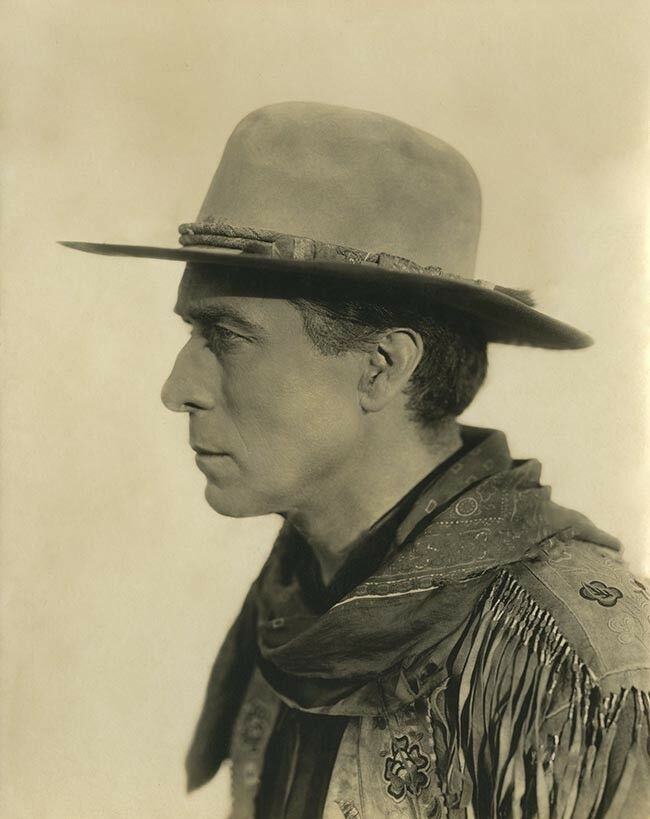
The secluded mountain lair, intended as a sanctuary for his stolen love, becomes instead a prison of despair for Ruth. Her attempted suicide is a moment of stark, raw emotional power, a silent scream against her captivity. This act is the turning point for Parsons, the shattering blow that breaks through his hardened exterior. It's a sudden, brutal illumination, akin to the revelatory moments found in films like "The Flashlight", where a sudden insight changes everything. Confronted with the devastating consequence of his selfishness, the "Tiger Man" finally sees himself, truly, perhaps for the first time. This isn't merely regret; it's an epiphany, a realization that his desire, untempered by respect or understanding, has led only to suffering.
This internal transformation is the film's most compelling aspect. Parsons' subsequent actions – returning Ruth to her husband and voluntarily surrendering to the sheriff – are not born of external pressure but of an awakened conscience. It's a powerful statement on redemption, one that feels earned because it comes from within. This arc of an outlaw finding atonement echoes the narrative complexity seen in films such as "Ranson's Folly", where the morally ambiguous protagonist is given a chance at a different path. The film masterfully avoids a simplistic happy ending, instead opting for a resolution that emphasizes personal accountability and the profound cost of true change. Parsons' surrender is not a defeat but a victory of the spirit, a testament to his newfound humanity.
William S. Hart's screen persona was built upon these very foundations: the outlaw with a heart of gold, the man who lives by his own code but ultimately bows to a higher moral imperative. In "The Tiger Man," he embodies this archetype with unparalleled conviction. His understated acting, relying on subtle gestures, intense gazes, and a powerful physical presence, conveys a depth of emotion that transcends the limitations of silent cinema. He doesn't need dialogue to express torment, love, or the agony of self-realization; it's all etched in his rugged features. Jane Novak, as Ruth, provides a crucial counterpoint. Her vulnerability is balanced by an inner fortitude, making her not just an object of desire but an active participant in Parsons' transformation, even if through her suffering. The dynamic between them is the engine of the film's emotional resonance.
The film’s thematic richness extends to its portrayal of the institution of marriage and the sanctity of the family unit. Ruth's predicament, caught between her commitment to Reverend Ingram and Hawk's obsessive desire, touches upon the very real societal anxieties of the era regarding fidelity and moral uprightness. The disruption of her marital life by Hawk’s actions is central to the dramatic tension, making comparisons to films like "Husband and Wife" particularly apt, though "The Tiger Man" injects this domestic drama into the far more perilous and morally ambiguous context of the Wild West. Ruth's unwavering, albeit despairing, loyalty to her husband, even when facing an impossible choice, underscores the film's subtle endorsement of conventional morality, despite its unconventional protagonist.
Moreover, the film delves into the profound question of whether a person can truly escape their past, or if redemption is always a winding, arduous path. Hawk Parsons, despite his initial good deed in saving the emigrants, cannot simply shed his outlaw skin. His actions, driven by a possessive love, demonstrate that good intentions can be corrupted by self-interest. This struggle for moral purity, or at least moral clarity, is what makes his journey so compelling. It's a narrative that grapples with the concept of "Unsühnbar" (Irredeemable), asking if certain acts are beyond forgiveness or if true atonement is always possible. "The Tiger Man" argues for the latter, but not without illustrating the immense personal cost involved in such a transformation.
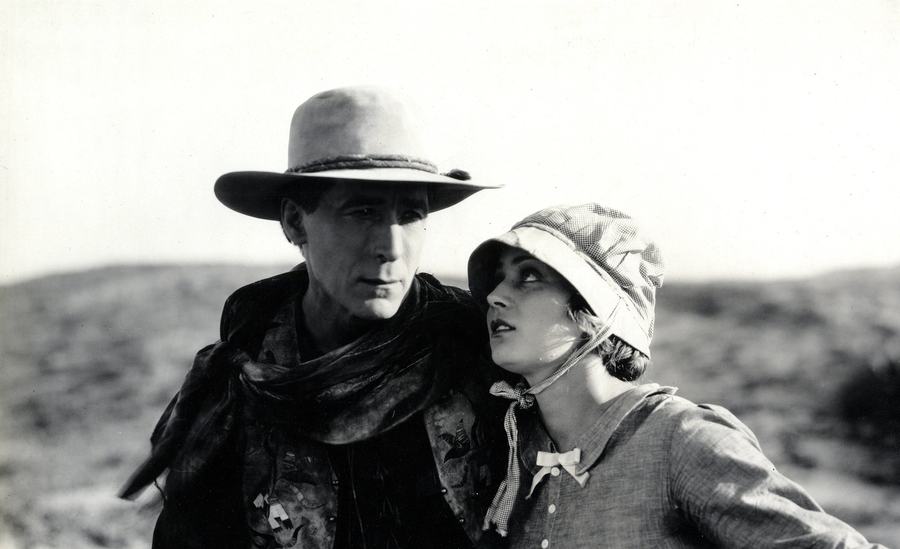
The cinematography of "The Tiger Man" is a masterclass in silent film storytelling. The vast, sweeping landscapes of the New Mexican desert are not merely backdrops; they are integral to the narrative, emphasizing the isolation, the grandeur, and the unforgiving nature of the frontier. Close-ups on Hart’s expressive face, and on Novak’s, convey powerful emotions without the need for dialogue, allowing the audience to intimately connect with their internal struggles. The use of natural light and rugged outdoor locations lends an authenticity to the film that was a hallmark of Hart's productions. It’s a visual poetry that speaks volumes, creating an atmosphere of both epic adventure and profound personal drama. The action sequences, particularly the Indian attack, are staged with a visceral energy that keeps the audience on the edge of their seats, while never overshadowing the deeper human story.
Comparing Hawk Parsons' internal battle to the "Hour of Temptation" is also highly relevant. His decision to take Ruth, despite his earlier act of assistance, represents a profound moral failing born of irresistible desire. This moment of weakness, where personal gratification overrides ethical duty, is the very essence of temptation. The film meticulously charts his struggle within this "hour," demonstrating how swiftly one can fall from grace and how arduous the climb back can be. It’s a testament to the film's sophisticated understanding of human psychology that it doesn't shy away from portraying the complexity of such moral quandaries, instead embracing them as central to the narrative engine.
The cultural impact of William S. Hart and his particular brand of Western hero cannot be overstated. He brought a sense of gritty realism and psychological depth to a genre often characterized by simplistic heroes and villains. His characters were often outlaws, but outlaws with a strict, if self-imposed, code of honor, capable of redemption. "The Tiger Man" stands as a prime example of this philosophy. It's a film that argues for the inherent goodness that can, sometimes, be found even in the most hardened individual, given the right catalyst. It's a testament to the power of love, not as a romantic ideal, but as a force capable of profound personal transformation, even when that love initially manifests as obsession.
Beyond the immediate narrative, the film offers a fascinating glimpse into the social mores and expectations of early 20th-century America. The depiction of emigrants, the threat of Native Americans (a common, if often problematic, trope of the era), and the omnipresent reach of law and order all contribute to a rich historical tapestry. While some elements might be viewed through a different lens today, it’s crucial to appreciate the film within its historical context, recognizing its pioneering efforts in character development and moral complexity within the Western genre. It's a historical artifact that still speaks volumes about universal human struggles.
Ultimately, "The Tiger Man" is more than just an action-packed Western; it’s a psychological drama cloaked in dust and leather. It forces its audience to confront uncomfortable truths about human nature: the thin line between savior and captor, the destructive power of unchecked desire, and the arduous, often painful, journey towards self-awareness and redemption. Hart’s performance is a masterclass in silent acting, conveying a world of emotion through subtle expressions and powerful physicality. Jane Novak’s portrayal of Ruth is equally compelling, providing the moral anchor that ultimately steers Hawk Parsons towards his destiny. This film remains a significant piece of cinematic history, a testament to the enduring power of storytelling through images, and a poignant reminder that even the fiercest 'tiger man' can, in the end, find his humanity.
The film's exploration of control and freedom, particularly through Hawk's initial "Tyrannenherrschaft" (tyranny) over Ruth, is a vital component of its narrative depth. His assertion of power, however brief and misguided, sets the stage for his eventual realization that true connection cannot be forged through coercion. This dynamic underscores the film's sophisticated understanding of power imbalances and their emotional consequences. Moreover, the raw emotional landscape of Ruth's despair, the feeling of her heart being metaphorically "sold" to an inescapable fate, echoes the profound emotional turmoil that titles like "Naar Hjertet sælges" suggest. Her attempted suicide is a desperate act of reclaiming agency in a situation where she has none, forcing Hawk to confront the ethical vacuum of his actions.
The legacy of "The Tiger Man" lies not just in its thrilling plot or its iconic star, but in its unwavering commitment to exploring the complexities of the human spirit. It’s a film that asks profound questions about morality, desire, and the possibility of change, offering answers that are as nuanced as the New Mexican landscape itself. It stands as a powerful example of how silent cinema, far from being primitive, was capable of delivering narratives of immense psychological depth and emotional resonance. For anyone seeking to understand the foundations of the Western genre, or indeed, the early evolution of character-driven storytelling in film, "The Tiger Man" is an essential, captivating experience.
IMDb —
1921
Community
Log in to comment.