DbcultAccessing Vault...
Cult Review
Senior Film Conservator
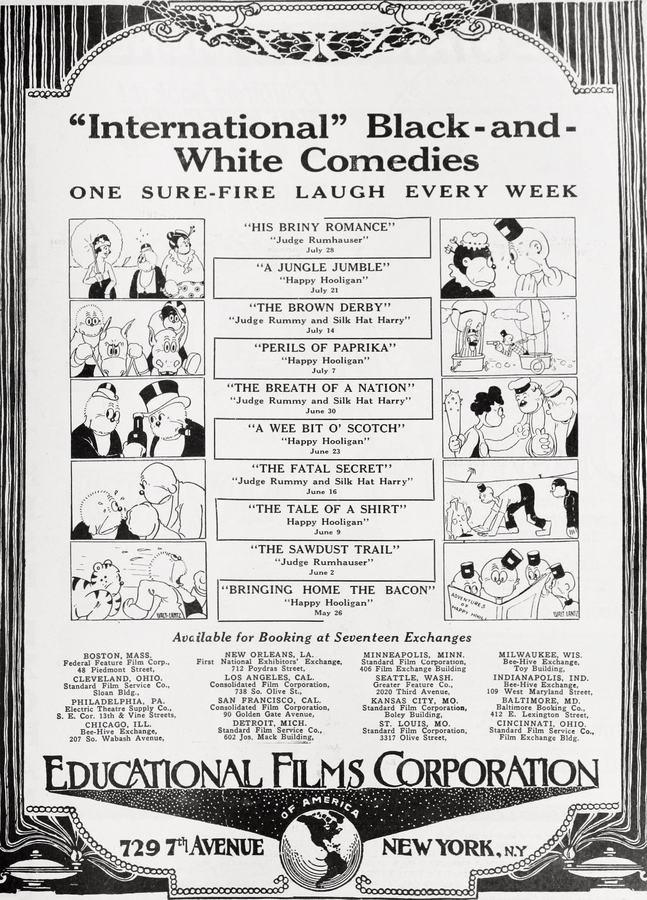
To approach the work of Frederick Opper is to step into a temporal vortex where the static panels of the Sunday funnies first began to breathe with the flickering life of the kinetoscope. Perils of Paprika stands not merely as a relic of early twentieth-century amusement, but as a sophisticated experiment in the geometry of chaos. While contemporary audiences might view the era through a sepia-toned lens of simplicity, Opper’s narrative architecture is anything but primitive. It is a calculated demolition of social hierarchy, executed with the precision of a watchmaker and the soul of a vandal.
The cinematic grammar of the 1910s was often a struggle between the proscenium arch and the burgeoning possibilities of the frame. In Perils of Paprika, this tension is weaponized. Unlike the somber, heavy-handed moralizing found in Pride and the Devil, Opper’s script revels in a certain nihilistic joy. The inciting incident—a simple culinary error involving a jar of paprika—serves as a fuse. Once lit, the film refuses to decelerate. The physical comedy here is more than just pratfalls; it is a choreographic exploration of space and inertia. We see echoes of this rhythmic physicality in The Avalanche, though where that film sought the sublime in nature, Opper finds it in the absurdity of the human form in distress.
"Opper does not merely write a scene; he engineers a collapse. The 'Perils' are not existential threats, but the inevitable consequences of a world built on the fragile glass of etiquette."
The cast navigates this landscape of sneezing fits and tumbling furniture with a commitment that borders on the religious. There is a specific type of silent-era intensity that modern actors struggle to replicate—a total bodily investment in the moment. When the titular spice begins its atmospheric conquest, the performers transform into vessels of pure reaction. This level of visceral engagement is a far cry from the restrained, almost ghostly presence of characters in Doch isterzannoy Pol'shi. In Opper’s world, there is no room for the melancholic gaze; there is only the frantic search for a handkerchief or an open window.
One must consider the cultural semiotics of 'paprika' in the context of the era. It represents the 'exotic'—a disruptive element introduced into the bland, predictable palate of the upper-middle class. This film acts as a comedic cousin to the more dramatic explorations of class and identity seen in The Girl in the Checkered Coat. In both, clothing and appearance are markers of status that are ultimately betrayed by circumstance. As the dinner guests in Perils of Paprika lose control of their faculties, their fine silks and stiff collars become cages. The humor is derived from the friction between their desire to remain dignified and the biological imperative to sneeze their way into oblivion.
The direction, though uncredited in many archives but clearly following Opper's sequential logic, utilizes the frame to maximize the feeling of claustrophobia. As the sneezing spreads, the room seems to shrink. This is a fascinating contrast to the expansive, rugged landscapes of Colorado or the gritty urban realism of Sliakot bulvarnaia. Opper prefers the pressure cooker of the parlor. He understands that for a gag to truly land, the audience must feel the impossibility of escape. It is the same principle that makes Barry Butts In so effective, though Opper’s touch is perhaps more refined in its cruelty.
To understand the unique positioning of Perils of Paprika, we must look at what it is *not*. It lacks the saccharine sentimentality of Redeeming Love and the heavy psychological burden of Hedda Gabler. Instead, it occupies a space of pure, unadulterated id. It is closer in spirit to the mischievous subversion of A Black Sheep, where the protagonist exists solely to disrupt the status quo. However, Opper’s 'protagonist' is the spice itself—an inanimate object that possesses more agency than the humans it affects.
The film’s pacing is relentless. It shares a certain breathless quality with the Danish thriller De røvede Kanontegninger, albeit for very different emotional ends. While the latter uses speed to build suspense, Opper uses it to build a crescendo of absurdity. By the time the final plate is smashed and the last guest has stumbled out into the street, the viewer is left with a sense of cathartic exhaustion. This is the hallmark of a master storyteller who knows that the best way to expose the absurdity of life is to simply add a little too much seasoning.
Technically, the film is a marvel of its time. The use of practical effects—the plumes of 'paprika' (likely talcum powder or flour)—is handled with a flair for the theatrical. The lighting, while rudimentary by modern standards, effectively highlights the mounting desperation on the faces of the banqueters. We see a similar attention to the 'face in crisis' in Hidden Fires, though in that film the fires are internal and metaphorical. In Opper's hands, the 'fire' is a literal stinging in the nostrils that leads to a figurative explosion of the social order.
Consider the arrival of the characters. Much like the entrance in The Arrival of Perpetua, each guest in Perils of Paprika is introduced with a specific set of traits that we know will be decimated. The 'Square Deal' morality of a character like those in The Square Deal Man has no place here. In the face of a paprika-induced sneezing fit, no man can maintain a square deal or a stoic face. It is the ultimate equalizer.
In the final analysis, Perils of Paprika is a vital piece of the cinematic puzzle. It bridges the gap between the static humor of the 19th century and the sophisticated visual comedy of the 20th. It lacks the cynicism of An American Widow, opting instead for a joyous, almost childlike fascination with the breakdown of things. Frederick Opper understood that humans are essentially fragile creatures held together by a thin veneer of manners, and that nothing peels back that veneer faster than a well-placed irritant.
For those interested in the evolution of the screen comedy, this film is essential viewing. It reminds us that before there were digital effects and complex plot twists, there was the simple, profound power of a well-timed gag and the anarchic spirit of a writer who wasn't afraid to get a little spice on the lens. It is a fever dream of white tablecloths and red pepper, a testament to the enduring power of the slapstick tradition, and a reminder that sometimes, the greatest perils come in the smallest jars.
Final Verdict: A Pungent Masterpiece of Silent Anarchy
Score: 9.2/10 - Essential for Historians and Comedy Aficionados Alike.
IMDb 6.5
1929
Community
Log in to comment.