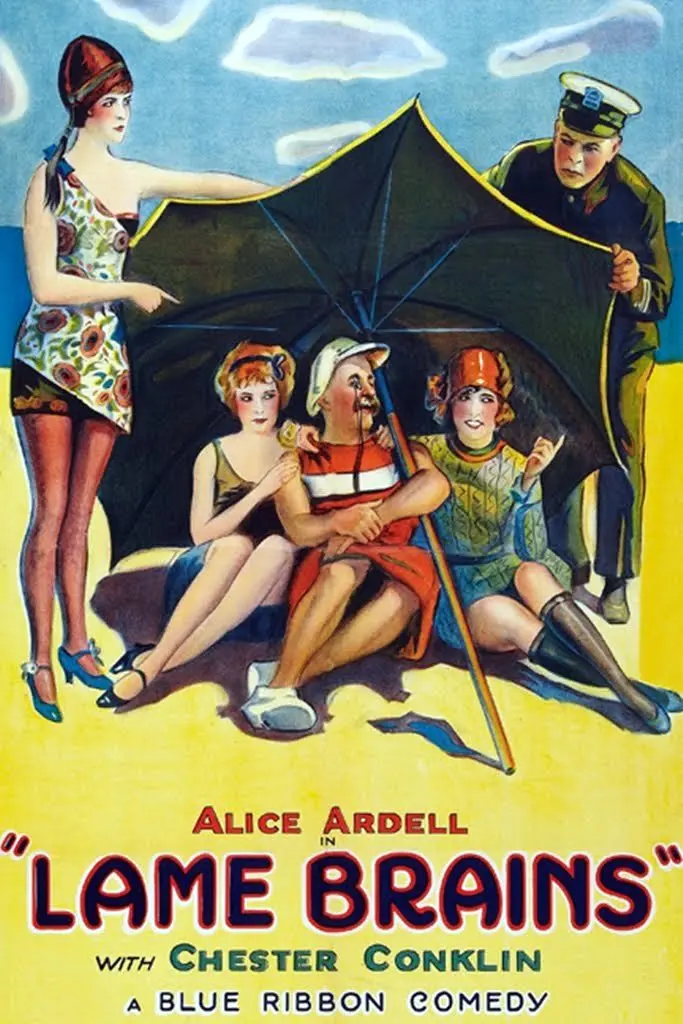
Is 'Lame Brains' worth watching today? Short answer: yes, but with significant caveats that demand a specific viewing context. This film is best suited for ardent silent film historians and those with a deep appreciation for early slapstick mechanics, but it will likely frustrate viewers accustomed to modern narrative pacing and sophisticated comedic timing.
This film works because of its surprising narrative twist, a genuine subversion of audience expectations for its time that remains intriguing even now. It offers a glimpse into early cinematic storytelling that occasionally dares to defy convention.
This film fails because its humor is largely a product of its era, relying on broad physical comedy and predictable gags that feel dated and often tedious. The comedic rhythm frequently misses the mark for a contemporary audience, leading to more eye-rolls than genuine laughter.
You should watch it if you are interested in the evolution of comedic cinema and the early careers of its stars, particularly Alyce Ardell's unexpected turn. It serves as a valuable historical document, showcasing the foundational elements of a genre still in its infancy.
A Glimpse into Early Cinematic Comedy
"Lame Brains", a 1920 silent comedy starring Chester Conklin and Alyce Ardell, is not merely a film; it is an archaeological dig into the nascent stages of cinematic humor. Directed by Bob Hopkins, the film's premise of an amateur sleuth stumbling through a bootlegging ring offers a deceptively simple framework for what becomes an unexpectedly complex narrative reveal. It's a curious artifact, one that simultaneously embodies the limitations and the burgeoning creativity of its era.
The early 20th century was a crucible for film, and "Lame Brains" emerges from this period as a testament to both the experimental spirit and the rudimentary nature of its craft. While it shares some thematic DNA with other early comedies like Pick and Shovel, its unique twist sets it apart, albeit not always for the better when viewed through a modern lens.
The Narrative Twist: A Glimmer of Ingenuity
The most compelling aspect of "Lame Brains" is undoubtedly its denouement. The revelation that the true 'Sherlock' of the story, the mastermind behind the bootlegging operation, is none other than Alyce Ardell herself, is genuinely ahead of its time. In an era where female characters often served as damsels or romantic interests, Ardell’s transformation into the orchestrator of the entire scheme is a bold, almost subversive narrative choice.
This twist defies the predictable hero-villain dynamic so prevalent in early cinema. It’s a moment that elevates the film from mere slapstick to something more intriguing, hinting at the potential for complex characterization that would later define genres like film noir. One can almost see the embryonic stages of a femme fatale archetype taking shape, long before the likes of Barbara Stanwyck or Rita Hayworth graced the screen in their iconic roles.
The build-up to this surprise, however, is not always as effective as the reveal itself. While Ardell's presence throughout the film is subtle, it doesn't always feel like a meticulously crafted performance designed to conceal her true nature. Instead, it often feels like a standard supporting role, making the twist more of a sudden narrative jolt than a satisfying unraveling of clues. Yet, for 1920, the sheer audacity of the concept is commendable.
Chester Conklin, a veteran of the Keystone Kops and a familiar face in silent comedy, fully embodies the 'lame brain' aspect of his character. His performance is a masterclass in physical buffoonery, replete with exaggerated gestures, wide-eyed confusion, and an almost magnetic ability to attract trouble. Conklin’s character, the amateur sleuth, is less a detective and more a human magnet for slapstick scenarios.
There's a particular sequence where Conklin attempts to discreetly follow a suspect, only to trip over his own feet, crash into a stack of barrels, and alert everyone within earshot. This kind of broad, physical humor was the bread and butter of silent comedy, and Conklin delivers it with practiced ease. However, for a modern audience, this relentless reliance on pratfalls can become monotonous. While Chaplin’s pathos or Keaton’s stoicism offered layers, Conklin often remains purely on the surface of comedic chaos.
"Conklin's performance is a relic of pure, unadulterated physical comedy, a style that demands a certain nostalgic appreciation to truly resonate today."
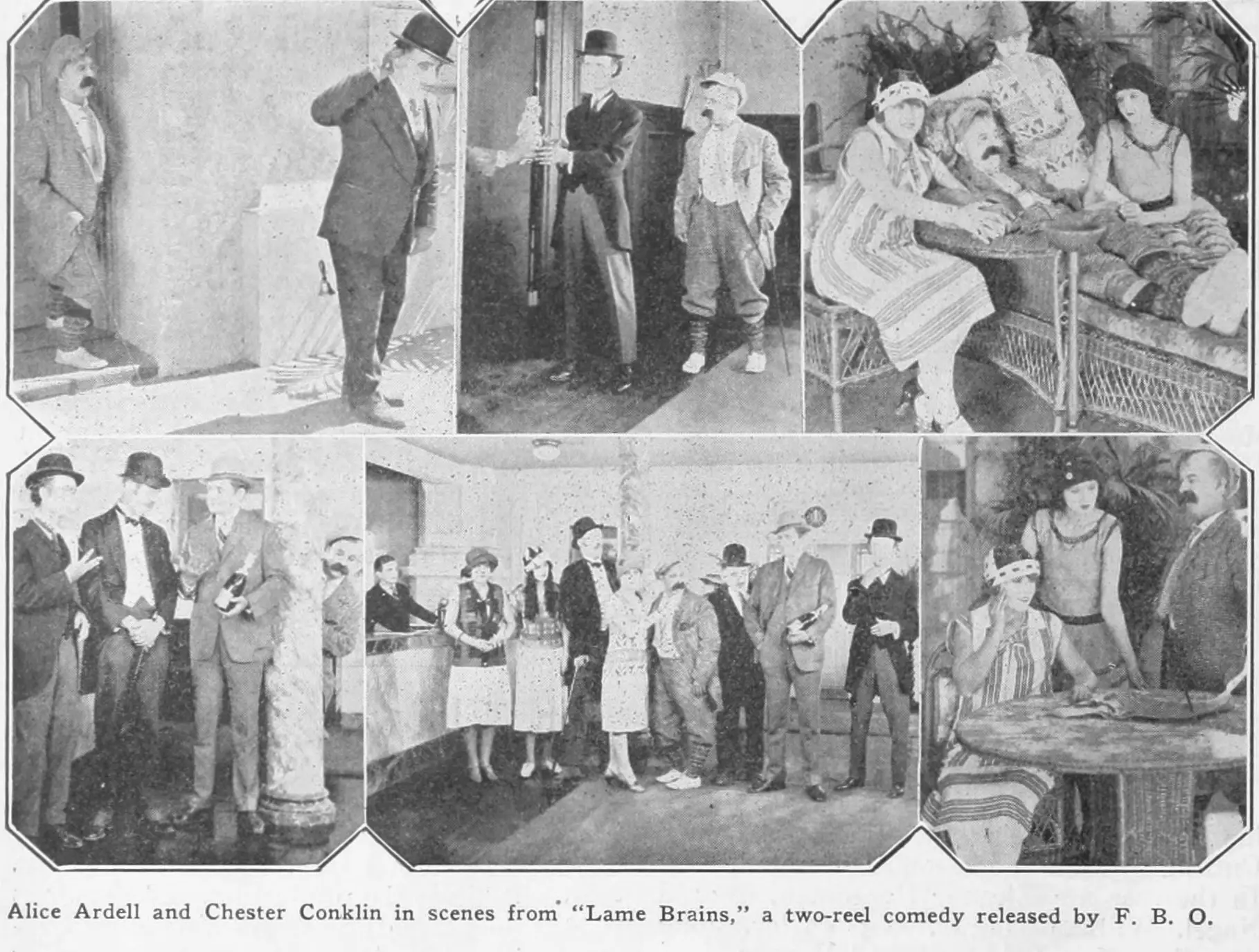
Scene from Lame Brains
Cinematic perspective: Exploring the visual vocabulary of Lame Brains (1925) through its definitive frames.
Alyce Ardell: The Unsung Mastermind
Alyce Ardell's role is, by necessity, more understated for much of the film. She plays her part with a quiet efficiency that, in hindsight, serves to mask her true intentions. Her movements are less frantic than Conklin's, her expressions more controlled. This subtle contrast is what makes her eventual reveal so impactful.
Her final moments on screen, after the twist, are perhaps her strongest. The shift in her demeanor, from seemingly innocent bystander to calculating criminal, is handled with a surprising degree of conviction. It’s a performance that, while brief in its full revelation, suggests a talent for more complex roles than silent comedies often afforded women. It certainly distinguishes her from more overtly comedic roles seen in films like Alice Is Stage Struck.
Billy Franey: The Supporting Player
Billy Franey, a character actor known for his often villainous or gruff roles, provides solid support. His interactions with Conklin are typical of the straight man/funny man dynamic, often reacting to Conklin's antics with exasperation or frustration. While not given much depth, Franey’s presence grounds some of Conklin's more outlandish moments, offering a necessary foil.
Directing and Cinematography: A Product of Its Time
Bob Hopkins' direction is competent but largely uninspired. The camera work is typical of the era: static shots, often from a medium distance, capturing the full scope of the physical gags. There's little in the way of dynamic camera movement or innovative editing that would later become hallmarks of cinematic storytelling. The focus is squarely on the performers and their actions within the frame.
One chase scene, for instance, unfolds with a series of wide shots, showing Conklin running haphazardly through a street set. While functional, it lacks the kinetic energy or creative framing that a director like Buster Keaton would bring to similar sequences. The visual language is clear, but not particularly engaging. It is, in essence, utilitarian filmmaking, designed to convey the plot and the gags without much stylistic flourish.
Lighting and set design are similarly straightforward. Indoor scenes are brightly lit, lacking the atmospheric shadows that would become common in later genres. The sets, likely studio-bound, are functional but sparse, serving as backdrops rather than integral elements of the narrative or mood. This minimalist approach is not a flaw in itself, but it does highlight the film's place in an era prioritizing story and performance over visual grandeur.
Pacing and Tone: The Challenge of Early Comedy
The pacing of "Lame Brains" presents a significant hurdle for modern viewers. Silent comedies often oscillated between frenetic bursts of action and prolonged stretches of relatively slow exposition, communicated through intertitles. This film is no exception. There are moments of genuine comedic energy, particularly during Conklin's more elaborate physical routines, but these are often punctuated by lulls that can feel interminable.
The tone is pure farce. There's no attempt at realism or emotional depth; the sole purpose is to elicit laughter through absurd situations and exaggerated character reactions. The bootlegging plot, while providing the narrative backbone, is merely a vehicle for Conklin's mishaps. Any potential for genuine suspense or danger is quickly overshadowed by the next comedic misstep.
This unwavering commitment to farce, while authentic to the genre, means the film lacks the emotional resonance or thematic complexity that allows some silent films to transcend their era. It exists purely as a comedic mechanism, and when that mechanism feels rusty, the viewing experience suffers.
Is This Film Worth Watching?
For the casual viewer seeking simple entertainment, 'Lame Brains' will likely disappoint. Its humor is dated, its pacing often sluggish, and its visual style rudimentary. It demands patience and a specific historical lens to appreciate fully.
However, for film scholars, silent film enthusiasts, or those curious about the evolution of narrative twists and female roles in early cinema, it offers genuine value. It's a fascinating case study in how cinematic storytelling developed, and Ardell's twist is a notable moment of innovation.
It's a foundational piece, not a peak experience. Its primary worth lies in its historical context rather than its entertainment value for a broad contemporary audience.
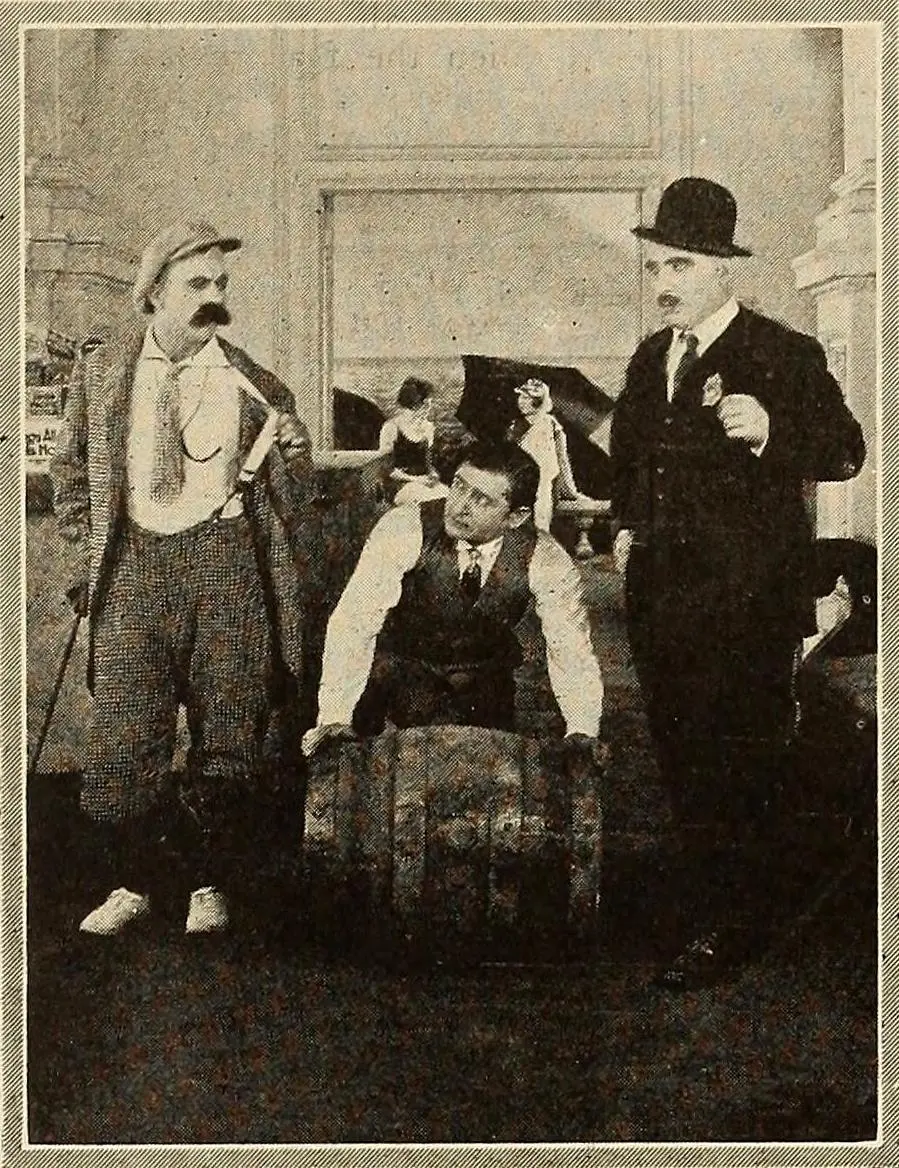
Scene from Lame Brains
Cinematic perspective: Exploring the visual vocabulary of Lame Brains (1925) through its definitive frames.
The Enduring Legacy of "Lame Brains"
"Lame Brains" doesn't hold the same iconic status as films from Chaplin or Keaton, nor does it possess the dramatic weight of something like Komödianten. Its legacy is more subtle, residing in its contribution to the vast tapestry of early American silent cinema. It's a reminder of the sheer volume of films produced during this period, many of which, like this one, experimented with narrative conventions in small, yet significant, ways.
The film serves as a valuable resource for understanding the comedic sensibilities of the 1920s, the popularity of slapstick, and the evolving roles of actors like Conklin and Ardell. It shows that even in seemingly straightforward comedies, filmmakers were beginning to play with audience expectations, laying groundwork for future generations of storytellers. This is particularly evident in its daring final reveal, a moment that feels surprisingly modern in its intent.
While it may not inspire widespread re-watches, its place in the historical record is undeniable. It's a piece of the puzzle, illustrating the diverse and often experimental nature of a truly formative cinematic decade. It reminds us that innovation wasn't limited to the most celebrated productions; sometimes, it hid in the unlikeliest of places.
Pros and Cons
Pros:
The Unexpected Twist: The reveal of Alyce Ardell as the true 'Sherlock' is genuinely surprising and innovative for its time, offering a glimpse into early narrative subversion. It challenges typical gender roles in early cinema.
Chester Conklin's Physicality: Conklin delivers a committed performance as the bumbling detective, showcasing the energetic, broad physical comedy that defined much of the silent era. His enthusiasm is palpable, even if the gags are repetitive.
Historical Value: As a 1920 silent comedy, it's a valuable document for film historians and enthusiasts interested in the development of the genre, acting styles, and early cinematic tropes. It represents a specific moment in film evolution.
Concise Runtime: At a typical silent short length, it doesn't overstay its welcome, allowing viewers to experience its historical context and unique twist without a massive time commitment. It's efficient.
Cons:
Dated Humor: The film's reliance on broad slapstick and predictable gags often falls flat for contemporary audiences. Much of the comedy feels uninspired and repetitive, lacking the timeless quality of more acclaimed silent works.
Pacing Issues: The rhythm of the film can feel uneven, with slow exposition punctuated by bursts of chaotic action. This often leads to moments of boredom, particularly for viewers accustomed to modern, faster-paced narratives.
Rudimentary Direction and Cinematography: The filmmaking is largely functional, with static camera work and basic editing. There's little in the way of visual flair or innovative techniques, making the aesthetic less engaging than many other films of the period.
Lack of Depth: Characters are largely one-dimensional, serving primarily as vehicles for gags or plot devices. There's minimal emotional resonance or thematic exploration, limiting its appeal beyond surface-level comedy.
Key Takeaways
Best for: Silent film historians, students of early cinema, and those with a high tolerance for dated slapstick and an appreciation for narrative innovation.
Not for: Casual viewers seeking laugh-out-loud comedy, audiences expecting modern pacing or sophisticated storytelling, or those with little interest in film history.
Standout element: Alyce Ardell's surprising role as the true mastermind, a rare and progressive twist for its time that truly elevates the film's narrative ambition.
Biggest flaw: Its pervasive reliance on dated, often tedious physical comedy that fails to consistently entertain a modern audience, making the journey to the twist a chore.
Verdict
"Lame Brains" is a film that demands a specific kind of engagement. It’s not a lost masterpiece, nor is it a forgotten gem of comedic genius. Instead, it occupies a fascinating space as a historical curiosity, a testament to the early film industry's willingness to experiment, even within the confines of broad comedy. Its humor is undoubtedly dated, a relic of a bygone era that struggles to elicit genuine laughter today. It works. But it’s flawed.
Yet, the surprising narrative pivot, placing Alyce Ardell at the center of the bootlegging scheme, offers a tantalizing glimpse of a more daring, less conventional cinema emerging from the shadows of slapstick. This singular moment of ingenuity makes "Lame Brains" worth a watch for the dedicated film scholar or the truly curious, even if the journey to that revelation is often a test of patience. It’s a foundational piece, offering more academic value than pure entertainment, but its unexpected twist ensures it holds a small, significant place in the annals of early film history.