DbcultAccessing Vault...
Cult Review
Senior Film Conservator
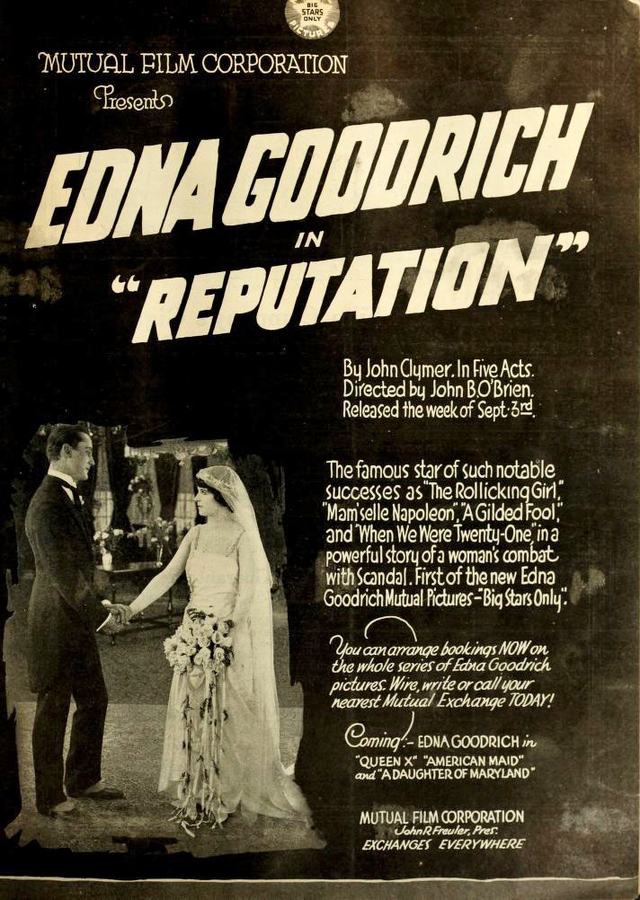
A nitrate print still smoldering a century later, Reputation is less a relic than a wound that never learned to scar.
John B. Clymer’s scenario, distilled from magazine pages now crumbling in archive basements, lands like a gauntlet: what price does a woman pay for wanting more than the horizon her aunt stitched into samplers? The answer is filmed in chiaroscuro so sharp you could slice your knuckles on the shadows.
The opening reels—hand-cranked, flickering—linger on clapboard houses whose eaves seem to frown. A church steeple skewers a pearl-grey sky; inside, Constance’s aunt quotes Proverbs while mending petticoats. Clymer intercuts this austerity with Manhattan’s electric marquees, the edit itself a form of seduction. When Constance steps onto the elevated train, the iris-in feels like a pupil dilating. The metropolis is not a backdrop; it is a secondary character with mercury in its veins.
Nellie Parker Spaulding, statuesque yet capable of micro-tremors, plays Constance with eyes that register every ledger of hurt. Watch her first fitting at Berste’s showroom: she stands on a dais surrounded by mirrors, each reflection selling a different version of herself. The camera tilts up to Edmund Berste—Frank Goldsmith oozing the oleaginous charm of a man who signs paycheques the way cardsharps fan aces. His gaze crawls across her clavicle; the subtitle card flares: “You’ll model the ermine next—after hours.” The ellipsis is a snakebite.
Esther Evans, as Mrs. Berste, storms the frame like a maenad in mousseline. Her confrontation with Constance is blocked like a boxing match: low-angle shots that make the corseted wife loom, high-angle shots that shrink the employee to prey. The film’s genius lies in refusing to grant either woman the safety of caricature. Mrs. Berste’s tirade—delivered in a single, unbroken take that lasts twenty-three seconds on the surviving print—is laced with the knowledge that her own currency is depreciating with every wrinkle Berste inventories.
Exile follows: a train ride back to the town whose name we never learn, rendered through rear-projection landscapes that smear into tears on the window. Constance’s return is shot at dusk, the hour when righteousness and resentment share the same pew. The local grande dame—Mathilde Brundage in a lace bib that looks like a verdict—leads the boycott. The church sequence is a masterclass in negative space: empty benches around Constance form a cruciform aisle, the camera fixed from the altar so that every whispered snub lands like a stone in a pond.
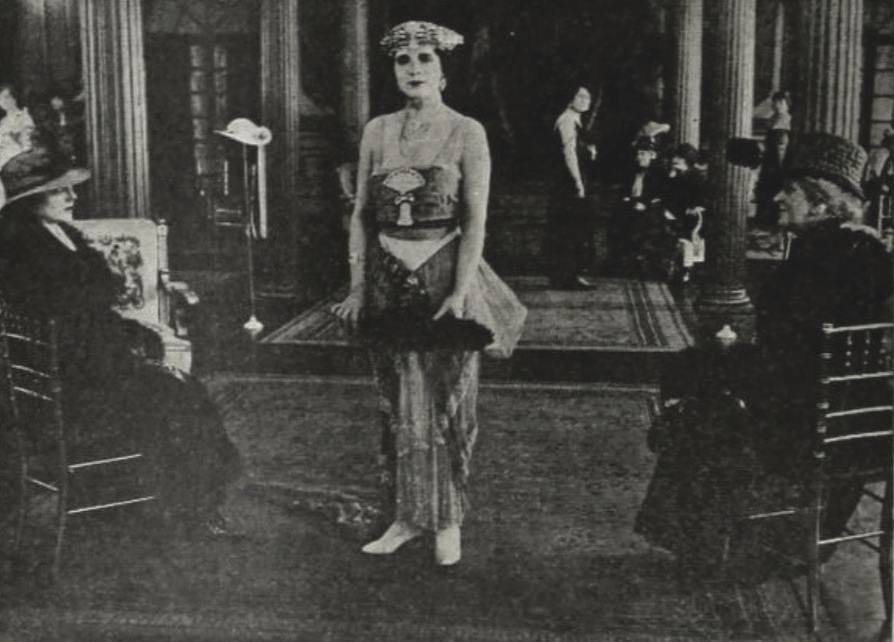
Constance’s boutique is a rebellion stitched in serge and ambition. Clymer films the grand opening with a dolly shot that glides past bolts of taffeta, each stack a rampart against patriarchal decree. Female customers enter like conspirators; their coins clink with the sound of shackles snapping. Yet the store’s success is precisely what summons Berste’s second assault. Capital, the film whispers, is a knife that cuts both ways for women.
The narrative pivot—a lure disguised as reconciliation—unfolds in Constance’s apartment, wallpapered with peacocks that seem to preen on her audacity. She invites Berste under the pretext of a private showing, but Mrs. Berste is secreted behind a Japanese screen. The scene’s tension is Hitchcockian a decade before Hitchcock touched a camera: every rustle of silk sounds like a warrant being signed. When Berste murmurs, “You know you’re mine,” the subtitle card trembles on screen, as though even the intertitles are nauseated.
Berste’s counter-move—hiring a woman detective to compromise Constance—exposes the film’s queasy understanding of sorority weaponized. Edna Goodrich plays the operative with a baby-doll laugh that never reaches her eyes. She entices Constance to Berste’s suite under the guise of a fashion emergency. The elevator ascent is filmed from outside the grille, each floor indicator a rung on the gallows.
Inside the room, the décor is a fever of overstuffed velvet and absinthe lamps. Berste corners Constance; the camera adopts her POV so that his face swells into a carnal moon. Enter John Clavering—William Hinckley’s shoulders squared like a cavalry charge—fresh from Mexico’s revolutionary dust. The door splinters; a tussle; the revolver drops. The gunshot is not shown; we see only a curtain fluttering as if the room itself has exhaled its last breath. The moment is more chilling for its discretion.
The trial sequence, condensed to twelve minutes on the surviving print, is a stained-glass window smashed by public opinion. Prosecutors brand Constance’s boutique as a bordello in gingham; the defence cites her war-widow aunt and charity sewing circles. Clymer cross-cuts between the jury’s stony faces and Constance’s gloved fingers worrying the fabric of her skirt—an echo of the first fitting that began her downfall. When the foreman announces “Not guilty,” the courtroom erupts, but the camera stays on Constance’s eyes: hollow, unconvinced that the world has acquitted her.
The closing nuptials should read as restoration; instead they thrum with menace. Clymer positions the camera behind the church’s rear window so that the congregation appears imprisoned in their own stained glass. Rice becomes confetti, yet each grain resembles the salt once thrown on Constance’s reputation. When the newlyweds step into the buggy, the iris-out halts mid-circle, freezing on Constance’s hand clutching John’s—not in rapture but in a vice-grip that says, never again.
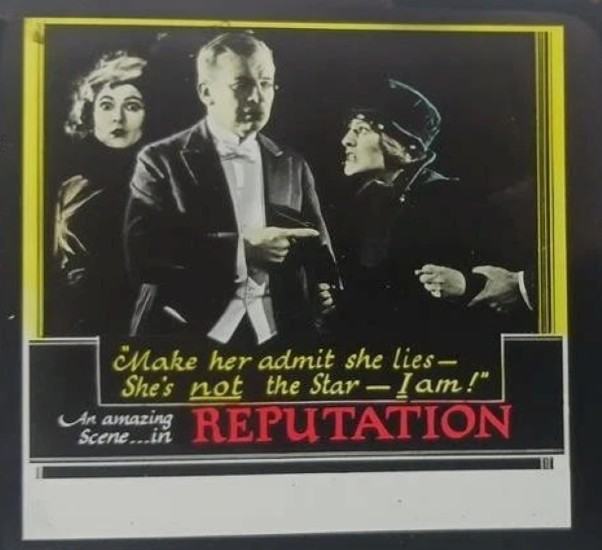
Spaulding’s face is a palimpsest: innocence overwritten by experience, then overwritten again by a resolve so fierce it could cut diamonds. Goldsmith courts loathing without twirling a moustache—his villainy is managerial, the kind that signs paycheques and ruin in the same swirl of ink. Evans, as the wife, gifts the film its rawest nerve: a woman who knows that divorce would leave her penniless and so chooses public mutilation instead.
Forget the tableau style still clinging to 1916; Clymer already toys with continuity editing. Eyeline matches across doorframes, match-cuts from sewing needles to bayonets, and—most radical—a sustained over-the-shoulder shot during the seduction scene that positions the viewer as accomplice. The absence of close-ups until the final reel makes their eventual arrival devastating: when the camera finally pushes in on Constance, pores and tears exposed, it feels like skin being flayed.
Where Europäisches Sklavenleben wallows in ethnographic pity and The Bondage of Fear spiritualizes female suffering, Reputation refuses transcendence. It is closer in DNA to The Devil at His Elbow’s cynicism, yet predates it by months. The film also rhymes with Infatuation in its excavation of rumor as currency, but where the latter softens with melodramatic absolution, Reputation ends on a question mark wearing a wedding veil.
Post-#MeToo, the film feels like a prophecy written in disappearing ink. The boss who conflates paycheque with consent, the wife who demonizes the other woman, the town that weaponizes scripture—none have vanished. They merely swap telegrams for Twitter. Reputation dramatizes how quickly a woman’s story can be redacted into scarlet letters, and how gunfire sometimes becomes the only period at the end of a sentence no one let her finish.
No complete negative survives; what circulates is a 35 mm abridgement rescued from a Vermont barn in 1978. The Library of Congress holds a 4K scan, ghostly yet gorgeous, available for on-site viewing. A European print with French intertitles resides at Cinémathèque Paris, mislabeled as Réputation, drame américain 1915. For the brave, a YouTube rip—watermarked by some enterprising ghoul—circulates, but half the courtroom cards are swapped from a 1922 divorce drama, creating surreal non-sequiturs. Still, even mutilated, the film bites.
Reputation will not hold your hand toward uplift. It offers no moral summit, only the vertiginous cliff of being believed. That Clymer dared such ambiguity in 1916—while other studios peddled Salvation-Army endings—makes this reel a clandestine bomb. Watch it with the lights low and the windows open, because the gunpowder smell lingers long after the screen fades to black.
IMDb —
1932
Community
Log in to comment.