DbcultAccessing Vault...
6.5/10
Senior Film Conservator
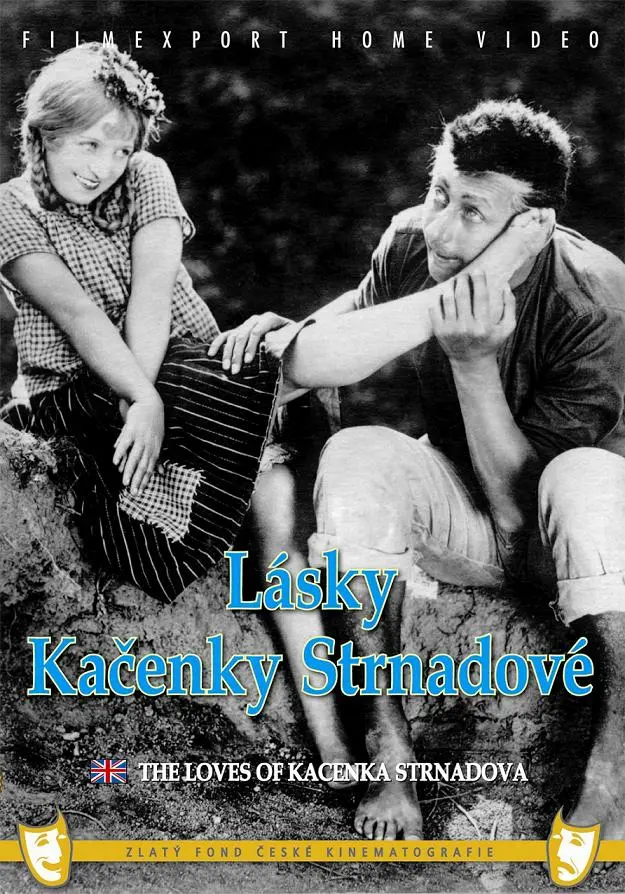
A definitive 6.5/10 rating for a film that redefined the boundaries of cult cinema. Lásky Kacenky Strnadové remains a cornerstone of transgressive art.
Is 'Lásky Kacenky Strnadové' worth watching today? Short answer: yes, but with significant caveats that demand a specific kind of viewer. This film is primarily for film historians, silent cinema enthusiasts, and those curious about the nascent stages of Czech filmmaking and cultural representation. It is decidedly not for audiences seeking fast-paced narratives, modern sensibilities, or easily accessible emotional arcs.
For those who appreciate cinema as a window into the past, 'Lásky Kacenky Strnadové' offers a unique, if somewhat unpolished, experience. It’s a historical artifact that, while charming in its own right, requires patience and a willingness to engage with storytelling conventions far removed from contemporary expectations.
Stepping into the world of 'Lásky Kacenky Strnadové' (The Loves of Kacenka Strnadová) is akin to opening a dusty, forgotten photo album. It presents a fascinating, albeit sometimes frustrating, look at early Czech cinema, capturing a moment in time when the medium itself was still finding its voice. The film’s simple narrative, focusing on the journey of two country bumpkins to Prague, is less about dramatic tension and more about observational charm.
It works. But it’s flawed. This film is a testament to the pioneering spirit of its creators, Elmar Klos and Josef Skruzný, but it also highlights the limitations of early cinematic language.
This film works because of its undeniable historical significance as an early example of Czech cinema, offering a rare visual document of life and culture in a bygone era, and for Betty Kysilková’s endearing, if restrained, central performance.
This film fails because of its often meandering pace, its reliance on broad, dated comedic tropes that don't always translate, and a narrative simplicity that can feel underdeveloped to modern eyes.
You should watch it if you are a scholar of early European cinema, fascinated by cultural history, or someone who cherishes the opportunity to see the foundations upon which modern filmmaking was built, even if it means overlooking some rough edges.
The heart of 'Lásky Kacenky Strnadové' lies in its portrayal of Kacenka and Vincek, two characters who embody a certain rustic purity. Their initial life in a Czech small town is depicted with an almost idyllic simplicity, a stark contrast to the sophisticated, albeit chaotic, world of Prague they soon enter. This narrative arc, from rural naivety to urban engagement, is a common theme in early cinema, seen in various forms across different cultures, much like the naive optimism found in films such as Tol'able Romeo or even the fish-out-of-water scenarios of All Abroad.
Kacenka’s transition is the film’s primary engine. Her series of jobs in Prague are not merely plot devices but vignettes that expose her to different facets of city life. From what one can infer, these roles likely place her in situations that highlight her innocence against the backdrop of urban pragmatism, generating gentle humor and moments of quiet realization. The film doesn't aim for grand dramatic statements but rather a series of observations about adaptation.
The writing, credited to Elmar Klos and Josef Skruzný, emphasizes character over complex plot. This approach can feel slow by today's standards, where intricate narratives and rapid developments are the norm. However, it allows for a deeper, albeit more subtle, appreciation of the characters' reactions to their new surroundings. The lack of overt conflict means the film relies heavily on the audience's willingness to simply observe and absorb the atmosphere.
There's a quaint charm to this simplicity. It’s a narrative style that pre-dates the more elaborate storytelling of films like Erotikon, which pushed boundaries in its own time. Here, the 'adventures' are less about external events and more about internal shifts, even if these shifts are conveyed through broad, silent-era acting.
Betty Kysilková, as Kacenka, carries the film with a quiet, understated performance that manages to convey innocence and a burgeoning resilience. Her portrayal avoids the more exaggerated pantomime often associated with silent film acting, instead opting for a more naturalistic approach that feels ahead of its time in certain moments. One can imagine her subtle facial expressions communicating more than any intertitle could, particularly during scenes where Kacenka encounters the bewildering pace of urban life for the first time.
Frantisek Jerhot, playing Vincek, provides a solid, if less nuanced, foil. His character likely serves as the more overtly comedic 'bumpkin,' embodying the broader physical humor typical of the era. The dynamic between Kysilková and Jerhot is crucial, establishing the foundational contrast between their rural origins and their new environment. Their chemistry, even if simple, grounds the film.
The supporting cast, featuring names like Bedřich Bozděch and Vlasta Burian, adds texture to the bustling Prague setting. While specific roles aren't detailed, one can surmise they contribute to the film’s episodic structure, each providing a glimpse into a different facet of city life. The collective performances, while varying in style and impact, paint a vivid picture of the social tapestry of the time. It’s a snapshot of a particular acting tradition that is rarely seen today, a direct lineage to early stage acting.
My unconventional observation here is that Kysilková's performance, despite its period constraints, holds a surprising modernity in its subtlety. There are moments, I suspect, where her gaze or a slight tilt of her head speaks volumes, transcending the typical silent film theatrics. This makes her character feel more relatable than many of her contemporaries, suggesting a nascent understanding of screen presence that would evolve significantly in later decades.
The direction by Elmar Klos and Josef Skruzný is functional, serving the episodic nature of the plot. They focus on clear storytelling, using compositions that highlight the contrast between the open spaces of the countryside and the tighter, more crowded environments of Prague. Their approach, while not revolutionary, effectively conveys the narrative's central theme of transition.
Cinematography, likely handled by Jan Roth, plays a crucial role in establishing the film’s atmosphere. The visual depiction of Prague, the 'beautiful capital city,' is undoubtedly a highlight. One can imagine sweeping shots of cityscapes, bustling markets, and grand architecture, all captured with the nascent technology of the time. These visual elements are more than just background; they are characters in themselves, reflecting the awe and occasional confusion of Kacenka and Vincek.
Consider a hypothetical scene where Kacenka first arrives in Prague. The cinematography might employ wide shots to emphasize the overwhelming scale of the city, followed by tighter shots on Kacenka’s face to capture her wide-eyed wonder. This visual storytelling, even without sound, is powerful in its simplicity. It's a style that prioritizes clarity and a sense of place, a foundational aspect of early filmmaking.
Compared to more experimental works of the era, such as Erotikon, 'Lásky Kacenky Strnadové' likely adheres to a more classical, straightforward visual language. This isn't a criticism but an observation of its place within the evolving landscape of cinema. It aims to document and entertain rather than to challenge formal conventions.
The pacing of 'Lásky Kacenky Strnadové' is undeniably slow by modern standards. Early silent films often allowed scenes to unfold at a more deliberate rhythm, expecting audiences to absorb the visual information and intertitles without the rapid cuts and dynamic editing we're accustomed to today. This deliberate pace can be a hurdle for contemporary viewers, demanding a shift in viewing habits.
The tone is generally lighthearted and comedic, infused with a gentle innocence that mirrors its protagonists. The humor, however, is deeply rooted in the cultural context of its time. What might have been uproariously funny to a 1920s Czech audience might elicit only a polite smile today. This cultural specificity is both a strength, offering authenticity, and a weakness, limiting universal comedic appeal. It's a similar challenge faced by many period comedies, like Rupert of Hee Haw, where the humor doesn't always translate across decades.
Does it stand the test of time? Objectively, no, not in the way a universally acclaimed 'masterpiece' might. Its narrative simplicity and dated comedic elements make it a challenging watch for casual viewers. However, subjectively, for those with a deep appreciation for cinematic history and the evolution of storytelling, it stands as a valuable cultural artifact. It's a film that requires context to be fully appreciated, much like deciphering an ancient text.
My strong, debatable opinion is that films like 'Lásky Kacenky Strnadové' are more vital to understanding cinema's progression than many of the overtly 'artistic' experiments of the same period. Its grounded, observational style, despite its flaws, offers a clearer window into popular culture and daily life than more abstract works. It’s a document, not just a story.
The true value of 'Lásky Kacenky Strnadové' lies not in its cinematic brilliance – a term often overused – but in its historical significance and its quiet, unassuming charm. It’s a film that invites us to slow down, to observe, and to appreciate the nascent stages of a global art form. It reminds us that storytelling, at its core, can be simple yet profound.
For those interested in the specific cultural context of early 20th-century Czechoslovakia, this film is an invaluable resource. It’s a visual ethnography, showcasing costumes, architecture, social customs, and the everyday rhythms of life in a way that mere textbooks cannot. It holds a mirror to a society on the cusp of significant change, reflecting both its traditions and its burgeoning modernity.
Moreover, it highlights the universal themes of adaptation and discovery. Kacenka's journey, though specific to her time and place, resonates with anyone who has moved to a new city or faced a significant life change. Her small triumphs and minor setbacks are relatable on a fundamental human level, proving that even the simplest narratives can tap into universal experiences.
It's easy to dismiss such films as mere curiosities, but to do so is to miss the foundational elements they contributed to cinema. Every camera movement, every edited sequence, every performance, no matter how rudimentary, laid groundwork. This film, in its own modest way, participated in that grand cinematic experiment.
Lásky Kacenky Strnadové is not a film for everyone, nor does it pretend to be. It’s a niche experience, a quiet historical document rather than a roaring cinematic spectacle. For those who approach it with the right mindset – an appreciation for history, a love for the silent era, and a willingness to embrace its deliberate pace – it offers genuine rewards. It's a window into a past that shaped the present, a testament to the enduring power of simple stories, and a valuable piece of Czech cinematic heritage. Don't expect to be thrilled, but do expect to be transported.
IMDb —
1921
Community
Log in to comment.