DbcultAccessing Vault...
5.4/10
Senior Film Conservator
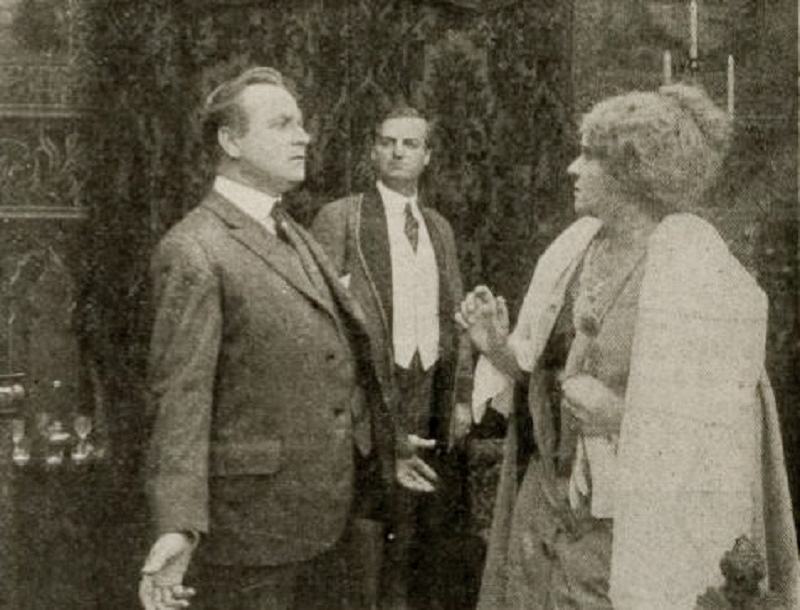
A definitive 5.4/10 rating for a film that redefined the boundaries of cult cinema. Captain Swift remains a cornerstone of transgressive art.
There is a moment—halfway through Captain Swift—when the camera lingers on a trembling lace curtain rather than on the faces of the actors, as if the film itself were reluctant to witness the collision of two Londons: the city of sooty omnibuses and the phantom city of colonial guilt. That hesitation feels modern, almost Malick-like, and it is one of many reasons this 1914 one-reel marvel refuses to stay politely embalmed in archive footnotes.
Adapted from C. Haddon Chambers’ West-End smash, the picture distills a Dickensian sprawl into a brisk twenty-eight minutes without sacrificing emotional granularity. Director-producer J. Searle Dawley—usually dismissed as a jobbing storyteller for Edison—here reveals a gift for chiaroscuro psychology: candlelight glints on cutlery like moral interrogation points, while the Australian outback is rendered through smears of ochre tinting that anticipate the fever palettes of Tess of the Storm Country.
Harold Gage’s exile begins in a cradle of satin and shame; Lady Staunton’s pact with the Marshalls is staged like a clandestine Mass, the swaddled infant passed over with the furtive solemnity of contraband. The scar—an angry crescent moon carved by a scythe—operates as both brand and benediction, marking Harold as elect and outcast. In a medium that still relied on florid intertitles, the wound is allowed to speak in silence: close-ups of the arm, years later, throb with unspoken backstory more eloquently than any lecturing placard.
Once transplanted to Queensland, the film pivots into a sunstruck fever dream. The bushranging sequences were shot in New Jersey’s Pine Barrens, yet cinematographer H. Lyman Broening floods the print with saffron tinting so aggressive it feels like staring into a solar flare. Swift’s first hold-up—an attempted stick-up of George Gardner’s stagecoach—eschews the kinetic shoot-outs of The Story of the Kelly Gang for something more spectral: the camera tracks away from the robbery, focusing instead on a windmill’s skeletal blades, turning, turning, as if the landscape itself were indifferent to ownership and theft alike.
Renunciation is the film’s true protagonist. When Harold buries the alias of Captain Swift beneath the name of his dead companion William Wilding, we witness a reverse resurrection: the self slain so that the soul may totter toward grace. David Wall—Broadway matinée idol making his celluloid debut—plays the shift with astonishing minimalism: the outlaw’s cocky thumb-loop in his belt evaporates, replaced by a tentative downward glance whenever doffing his hat. It is the kind of micro-gesture that would become the hallmark of late-period Lon Chaney.
Back in London, the picture morphs into drawing-room noir. The Seabrook mansion—actually the Astor summer home in Newport—becomes a labyrinth of polished surfaces that reflect more than they reveal. Stella Darbisher (Emily Lorraine) first glimpses Wilding through a beveled mirror, literally meeting his reflection before the man. The shot is duplicated at climax when the same mirror is shattered by a stray bullet—identity exploding into silvered shards.
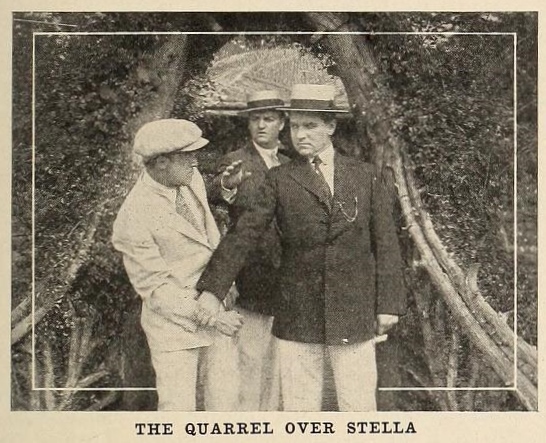
Stella’s romantic dilemma is less a choice between suitors than between mythologies. Harry Seabrook (Harry Spingler) embodies heedless Edwardian entitlement—his cricket-sweater knotted with the confidence of someone who has never imagined the empire might contract. Swift, meanwhile, carries the antipodean vastness in his hollowed cheeks; he has slept beneath Southern Cross constellations that Harry probably misidentifies on a schoolboy chart.
Their rivalry culminates in a fencing bout staged in the Seabrook conservatory at dawn. Rapiers are exchanged for plantation canes; instead of clanging steel we hear the humid thwack of bamboo on flesh. Dawley films the duel through a lattice of orchids, petals trembling each time a cane whistles past—botanical voyeurism worthy of Powell & Pressburger.
Marshall, the foster brother turned domestic Cerberus, is essayed by Philip Robson with reptilian bonhomie: his bow is always a fraction too deep, implying contempt disguised as servility. The blackmail scene—set in a coal cellar lit only by the cherry glow of his cigar—recalls Iago whispering to the camera in a 1912 Othello. When Marshall rolls up Swift’s sleeve to finger the scar, the gesture is almost erotic, a parody of brotherhood.
The finale is a master-class in cross-purposes. A Scotland Yard detective and a colonial bounty hunter converge on the Seabrook house like rival playwrights staging competing third acts. Swift’s leap from the second-storey window is framed in a low angle that makes his coat unfurl like broken wings; for a heartbeat he hangs against the night sky, a secular Lucifer refusing to serve. The simultaneous discharge of two pistons—Marshall’s hidden revolver and the detective’s service-issue Webley—creates a diagonal of violence that crisscrosses the screen like an exclamation mark scrawled by a drunk.
He dies off-camera, because the film is less interested in corporeal extinction than in social eradication: the legend must outlive the flesh.
The final intertitle, terse even by 1914 standards, reads: “And the world never knew the name of the man who loved too much.” No epilogue, no graveyard tableau; only the creak of a garden gate in the wind, a sound that might be the soul departing or merely a hinge in need of oil.
Emily Lorraine’s Stella is no wilting Edwardian blossom; her eyes carry the predatory gleam of someone who has read too much Byron beneath governess-proof bedcovers. In the scene where she bandages Swift’s arm, her thumb lingers on the scar a beat too long—an infinitesimal trespass that the camera catches like a pickpocket.
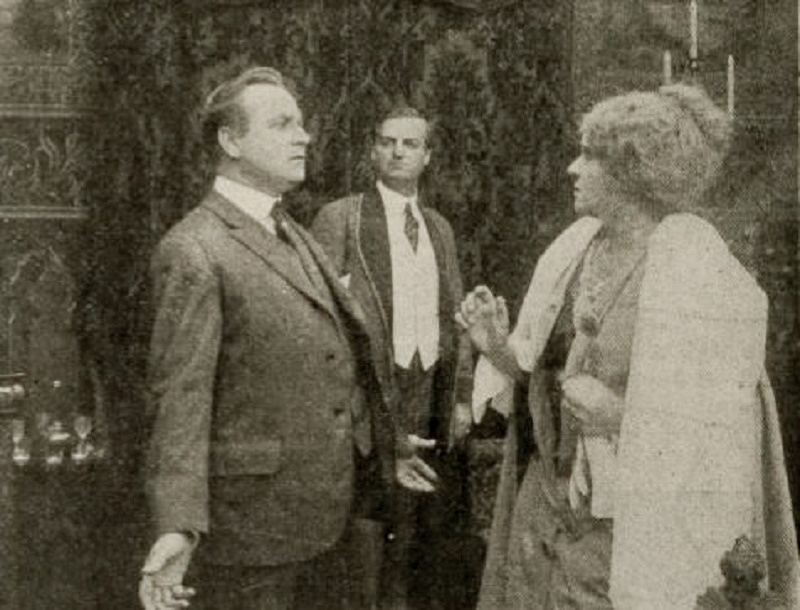
David Wall, saddled with the unenviable task of making virtue look sexy, opts for a slow-burn melancholia: his smiles arrive pre-emptively bruised. Watch the way he fingers a teacup—pinkie retracted, as though fearing the porcelain might bite. It is the body language of a man who has learned that survival depends on occupying the smallest possible space.
Maxine Brown, as the compromised mother Mrs. Seabrook, has perhaps two minutes of screen time yet etches a lifetime of complicity in the way she clutches a handkerchief as if wringing her own conscience.
Though marketed as black-and-white, the surviving 35 mm nitrate at MoMA is a chromatic fever: amber for Australian dust, viridian for London drawing rooms, rose for Stella’s boudoir. The tints were applied by the Parisian firm Pathé, using a stencil process that occasionally bleeds outside the lines—sky seeping into skin—creating the impression of a world morally water-logged.
Dawley’s blocking favors depth: characters enter from distant doorways, traverse cavernous sets, and vanish again, underscoring the episodic rootlessness of the protagonist. Compare this to the tableau style of The Pride of Jennico, where actors pose as if for a cabinet photograph; Dawley’s players move through space the way memories insinuate themselves through time.
No original score survives, but copyright records list a cue sheet calling for “Hearts and Flowers” during Stella’s confession, and La Paloma under the bush-ranging montage. Modern restorations often commission new compositions; the 2018 Pordenone premiere featured a string quartet that plucked coat-hanger wire to mimic whipcracks—an aural echo of the scythe that set the tragedy in motion.
Contemporary trade papers praised the film’s “breathless momentum,” though Moving Picture World carped that “the moral turpitude of the hero may unsettle young minds.” Today the picture languishes in that limbo of early features too long for YouTube attention spans, too short for TCM slots. Yet its DNA proliferates: the scar-as-plot-device resurfaces in Voodoo Vengeance; the outlawnyme exodus prefigures the melancholy heroes of Enoch Arden.
A 2 K scan was completed by MoMA in 2017, but the Australian climax remains truncated. Rumors persist of a complete 35 mm print in a Rio de Janeiro monastery archive, awaiting funds for conservation. Fans can currently stream a 480p rip on niche silent-film forums; colours are bleached to nicotine yellow, but the emotional voltage still crackles.
Go in expecting the kinetic swagger of later bushranger sagas and you will be jilted. Approach it as a chamber poem about the price of names—those we inherit, those we flee, those we kill to keep—and Captain Swift will haunt you like the echo of a revolver fired in a garden at midnight, the sound swallowed by fog before it can reach the ear of justice.
IMDb 6.2
1932
Community
Log in to comment.