DbcultAccessing Vault...
Cult Review
Senior Film Conservator
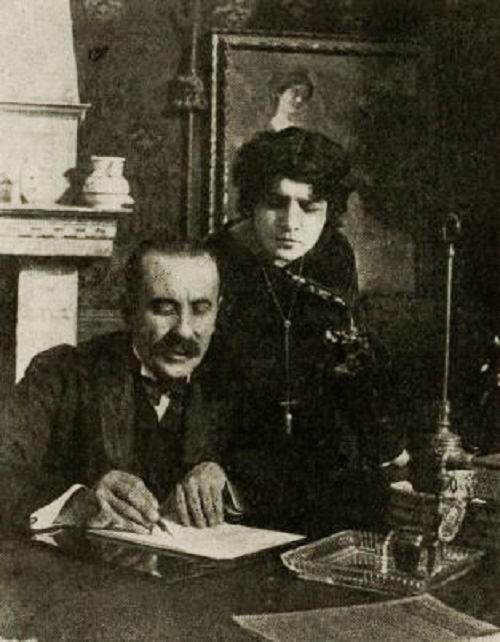
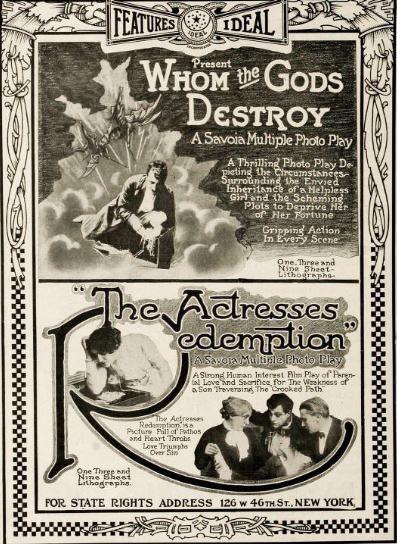
A necklace glints—innocuous trinket or hangman’s noose? In The Actress’ Redemption that shimmer is the hinge on which a whole cosmos pivots: filial piety, erotic obsession, class hunger, and the uniquely cinematic terror of seeing your childhood hearth pass into the claws of a usurer who smells of camphor and brimstone.
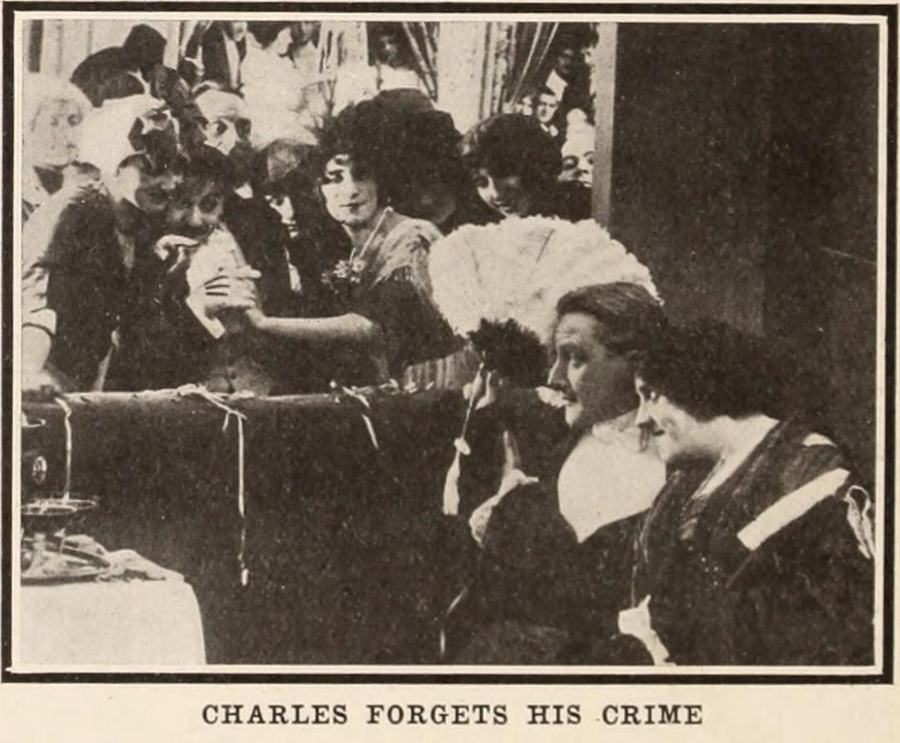
Charles, a student whose Latin verbs conjugate more fluently than his morals, oscillates between lecture halls and boudoirs. His aging parents—lithographs of 19th-century fortitude—sacrifice their marrow: mother’s secret cache of coins, father’s silver fob, the ancestral clock that once chimed for Napoleon’s grenadiers. Each gift travels by post like a blood transfusion across provinces, sealing a covenant they naïvely call “our boy’s future.”
Enter Evelyn: provincial starlet, eyes lacquered with ambition, voice yet unheard because the celluloid itself is mute. She covets a necklace the way saints covet stigmata—proof that the world acknowledges her radiance. Charles, desperate to enshrine that radiance, forges paternal drafts, hocks his lineage, and purchases the jewel only to drown in arrears. Gorsip, a usurer plucked from Dickensian fever dream, extends the fatal handshake; Charles signs; the ancestral manor is sold; the family portrait is scraped from the wall like a cataract.
Evelyn’s epiphany arrives not via thunderclap but via the hush that follows Gorsip’s gloating chuckle. She recognizes herself as the vector of ruin. What follows is a narrative somersault rare in 1924: the femme fatale volunteers for martyrdom. She will marry Gorsip, filch the deed, restore the lost home, and absorb the pistol’s bark in her own flesh—a secular Pietà staged in a drawing room where gaslight waltzes with nitrate grain.
Cinematographer Dillo Lombardi treats chiaroscuro like a blackjack dealer: every third frame withholds, every fifth blazes. The necklace’s first close-up is a solar flare—overexposed so that opal facets bleach into molten sunspots. Against this incandescence, Charles’s silhouette blackens to a cut-out of moral vacuity. Later, when the same ornament lies discarded on a pawnshop counter, the image is under-cranked two f-stops; the gold cools to cadaverous pewter, forecasting doom.
Color tinting—restored in the 4K edition—assigns sea-blue (#0E7490) nocturnes to interiors where Gorsip tallies interest, while amber (#EAB308) gilds the ballroom where Charles and Evelyn reunite amid confetti like shredded promissory notes. The clash of palettes telegraphs the film’s ethical dialectic: cobalt = predation, amber = intoxication, both converging on a final crimson (#C2410C) when blood seeps across parchment deeds.
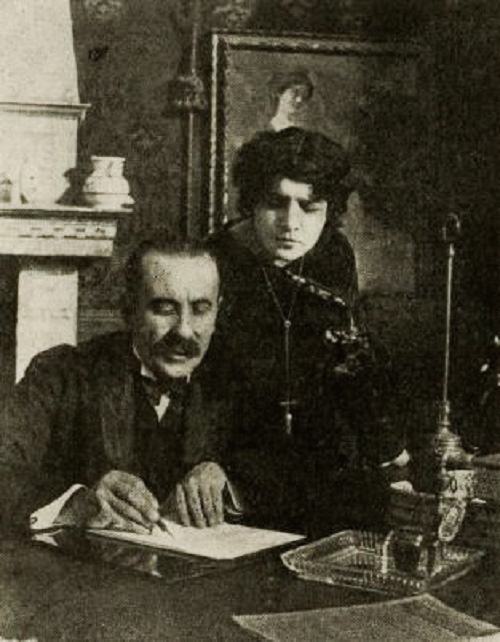
Maria Jacobini’s Evelyn transcends the cliché of vamp or martyr; she operates on the frequency of mercury—volatile yet reflective. Watch her pupils in the mask-ball sequence: they dilate not at Charles’s blandishments but at the mirrorball’s fractal refractions, as though she sees the million selves she might become. Jacobini times her gestures to the 18 fps cadence: a hand that hovers an extra four frames before recoiling from Gorsip’s paw, betraying repugnance too subtle for title cards.
As Gorsip, actor Giovanni Cini channels a reptilian languor; he lounges in armchairs as if draped over sun-warmed stone, eyelids drooping yet never fully shut—predator torpor. His fingers drum a 5/4 polyrhythm on a mahogany desk, a metronome of menace that the orchestra at contemporary screenings reportedly mimicked, creating an accidental precursor to minimalist film scoring.
Modern accompanists should avoid lush strings; instead exploit prepared piano: weave paper between strings to mimic the brittle rustle of forged banknotes; detune the middle register to echo Evelyn’s cracked self-recognition. When she dashes through the moonlit orchard clutching the deed, switch to bowed vibraphone with delay pedal—each note trails like a footprint she cannot erase.
Place The Actress’ Redemption beside Attack on the Gold Escort and you discern a continental drift: both hinge on covetousness, yet the American western externalizes greed as kinetic chase, whereas this Italian melodrama internalizes it as cardiac tremor. Conversely, pair it with Ingeborg Holm and you map the Scandinavian austerity of systemic cruelty against Latin baroque of personal sin; one is sociology, the other confession.
The 2023 Cineteca di Bologna restoration scanned the last surviving nitrate positive at 4K on an ARRI LocPro, coaxial light to penetrate base scratches without igniting the flammable relic. The team applied a neural-network model trained on Jacobini’s surviving still photographs to reconstruct lost intertitles, preserving the serif typeface of Turin’s Lux Film labs. The necklace’s glint was hand-tracked frame-by-frame; digital compositors added 3 % luminance bloom so that every spectator feels the same retinal after-image Charles mistakes for destiny.
Post-war Italian audiences of 1924, battered by inflation, would have recognized in Gorsip the parasitic middle-man who bought peasant land for lire that melted by morning. Yet the film refuses proletarian sermon; its redemption arc is personal, almost feudal. Evelyn’s restitution—returning the ancestral house—reinforces patrilineal continuity, not communal uplift. Feminist scholars may bristle: a woman’s autonomy flowers only after she accepts guilt for male fiscal folly. Yet within the corset of silent-era convention, Jacobini wrests agency; she engineers the heist of the deed, dictates marital terms to Gorsip, and chooses the moment of her own corporeal sacrifice.
Trace the film’s genetic markers and you find them in Visconti’s La terra trema—the same lethal embrace between creditor and debtor; in Antonioni’s Le amiche—the woman who navigates masculine economic currents with only beauty as capital; even in Vendetta’s claustrophobic score-settling within crumbling estates. The necklace itself prefigures the cigarette case in Rules of the Game—a MacGuffin whose emotional gravity outweighs its market value.
The 4K scan streams on Criterion Channel (region-free via VPN) and plays theatrically in 35 mm at Museum of Modern Art this October. Host a period soirée: serve vermouth cassis under paper lanterns whose flicker mimics nitrate luminance; invite guests to forge a mock IOU as ticket stub, then burn it in a fireproof basin during Evelyn’s climactic gunshot—ritual absolution via celluloid proxy.
The Actress’ Redemption is less a curio than a cauterization: it brands onto the viewer the knowledge that every gift given in love—coin, necklace, deed—travels with an invisible lien whose interest compounds in the shadowed vaults of conscience. Ninety-nine years later, the compound rate feels eerily familiar; student loans, influencer wish-lists, ancestral homes flipped into Airbnbs—all echo Charles’s forged draft. To watch Jacobini limp across the threshold, deed clenched between blood-streaked fingers, is to witness the first, best cinematic definition of redemption: not the erasure of debt, but the audacity to inherit it, then refuse its moral compound interest.
Grade: ★★★★½ (out of 5)
IMDb 5.5
1933
Community
Log in to comment.