DbcultAccessing Vault...
5.8/10
Senior Film Conservator
A definitive 5.8/10 rating for a film that redefined the boundaries of cult cinema. L'autre aile remains a cornerstone of transgressive art.
There's a certain raw, unvarnished power to silent cinema, a unique ability to convey profound emotion through gesture, expression, and the sheer evocative force of visual storytelling. L'autre aile, a cinematic relic from an era captivated by nascent technology and burgeoning human ambition, serves as a potent testament to this art form. It's a film that doesn't just tell a story; it plunges the viewer into a maelstrom of grief, ambition, and the intoxicating allure of the boundless sky. This isn't merely a tale of overcoming adversity; it's an exploration of how the very source of one's deepest pain can become the crucible for an unforeseen rebirth.
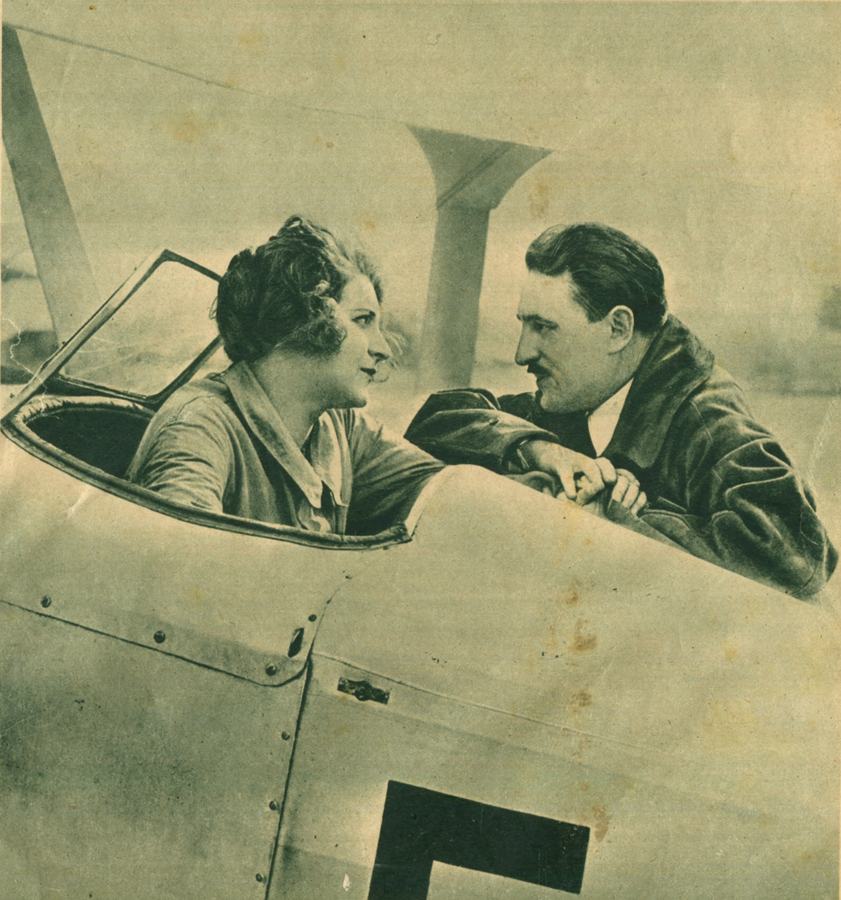
The film opens with a flourish, a grand spectacle designed to thrill and awe. Reymat, a celebrated aviator, is at the zenith of his career, commanding the heavens with a grace and daring that borders on the poetic. His aerobatic exhibition is a ballet of man and machine, a testament to human ingenuity pushing the boundaries of what's possible. The camera, even in its early form, strives to capture the exhilaration, the dizzying spins, the breathtaking dives that define his artistry. We are meant to feel the collective gasp of the crowd, the surge of pride in Hélène, his fiancée, who watches from below, her heart swelling with love and admiration. This initial sequence is crucial; it establishes not just Reymat's skill, but the profound connection he shares with Hélène, a bond forged in shared dreams and the intoxicating promise of a future together. Marthe Ferrare, as Hélène, conveys this adoration with a delicate intensity, her eyes reflecting the light of the sun-drenched sky and the brilliance of her beloved’s performance. But this idyllic scene is shattered with a brutal suddenness that leaves an indelible mark. The mechanical roar falters, a wing buckles, and the impossible happens. Reymat’s plane, once a symbol of mastery, becomes a harbinger of doom, plummeting from the sky in a terrifying descent. The spectacle transforms into a catastrophe, the collective gasp turning into a horrified silence. The impact is not just physical; it's a visceral blow to Hélène, whose world crumbles in an instant. The film, without a single spoken word, articulates the crushing weight of this loss, the sudden void left by a life extinguished mid-flight.
The aftermath of Reymat's death is a study in profound grief. Hélène is not merely sad; she is adrift, a soul unmoored by an unimaginable tragedy. The world, once vibrant, now appears muted, her days a monotonous cycle of memory and sorrow. It’s a familiar narrative arc in many silent films of the era, where melodrama often dictated the emotional landscape. However, L'autre aile distinguishes itself by not allowing Hélène to languish indefinitely in this despair. Instead, a spark ignites within her, born not of resignation, but of a fierce, almost defiant resolve. To truly understand the depth of her character, one must consider the societal expectations of women in the early 20th century. For many, a widow’s path was one of quiet mourning, perhaps finding solace in domesticity or a new, more conventional love. Hélène, however, rejects this prescribed narrative. Her decision to become an aviator herself is nothing short of revolutionary. It's an act of profound psychological complexity: is it a desperate attempt to feel closer to Reymat, to literally inhabit his world? Is it a form of penance, a way to conquer the fear that now grips her whenever she looks skyward? Or is it, more profoundly, a search for agency, a way to reclaim control over a life that felt utterly derailed?
Marthe Ferrare's portrayal of Hélène is central to the film's success. She masterfully navigates the subtle shifts in Hélène's emotional state, from the initial shock and despair to the burgeoning determination that slowly transforms her. Her eyes, often downcast in sorrow, gradually gain a steely glint as she commits to her audacious plan. The film meticulously documents her journey, not merely as a montage of training sequences, but as a deeply personal struggle against the elements, against mechanical complexities, and perhaps most importantly, against her own lingering fears. We witness her frustrations, her small triumphs, the calloused hands, the oil-stained clothes – all visual cues that speak volumes about her dedication. This transformation isn't instantaneous; it's a grueling process, fraught with moments of doubt and near-failure. Yet, each hurdle overcome is a step towards not just becoming an aviator, but towards reconstructing her identity, piece by painful piece. This journey resonates with the spirit of other films that depict individuals striving against immense odds, such as the sheer grit displayed in The Sailor, though here the stakes are far more personal and emotionally charged.

The airplane in L'autre aile is far more than just a mode of transport; it is a powerful, multifaceted metaphor. Initially, for Reymat, it represented freedom, ambition, and the pinnacle of human achievement. For Hélène, after his death, it becomes a symbol of terror, the instrument of her heartbreak. Her decision to learn to fly is thus an act of confronting her deepest fears head-on. As she slowly masters the controls, the aircraft morphs yet again, becoming an extension of her will, a vessel for her burgeoning independence. The sky itself, once a stage for tragedy, transforms into a canvas for her resilience. This thematic depth is a credit to the writers, Charles-Félix Tavano and Ricciotto Canudo, who craft a narrative that transcends simple melodrama, imbuing it with a psychological richness often overlooked in early cinema analyses. Canudo, a prominent film theorist and critic of his time, likely brought a sophisticated understanding of cinematic language to the project, elevating the narrative beyond a mere plot summary.
The visual storytelling here is paramount. The cinematography, though limited by the technology of the era, strives to convey the vastness of the sky and the vulnerability of the human endeavor within it. We see close-ups of Hélène’s determined face, interspersed with sweeping shots of biplanes soaring against dramatic cloud formations. The contrast between her grounded grief and her eventual aerial liberation is visually striking. This film, in its quiet way, explores the burgeoning modernism of the early 20th century, where technology offered both unprecedented opportunities and terrifying risks. It taps into the public's fascination with aviation, a world that was still new, dangerous, and utterly captivating. The daredevilry seen in the opening sequence, while ending tragically, speaks to a broader cultural fascination with pushing boundaries, a sentiment echoed in other adventure films of the era like Die Luftpiraten, though L'autre aile grounds its aerial exploits in a deeply personal, emotional journey.

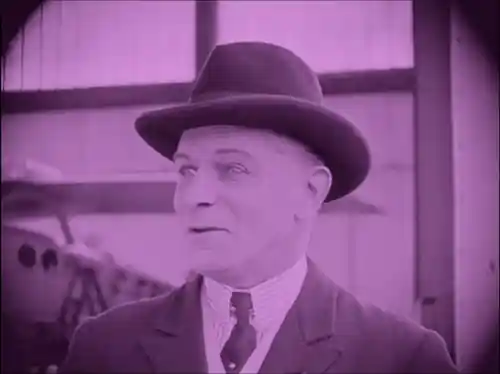
While Marthe Ferrare's Hélène is undeniably the magnetic core of L'autre aile, the supporting cast plays a vital role in grounding her extraordinary journey within a believable world. Claude France, André Bertoux, Charles Vanel, Jean Murat, and Mary Harald, though perhaps in less prominent roles, contribute significantly to the film’s emotional texture. Claude France might portray a sympathetic friend, offering solace and encouragement, or perhaps a rival, providing a subtle counterpoint to Hélène's singular focus. André Bertoux could be the gruff but ultimately kind flight instructor, whose initial skepticism gives way to admiration for Hélène’s tenacity. Charles Vanel, a formidable presence in French cinema, might embody a figure of authority or a skeptical observer, representing societal norms that Hélène defies. Jean Murat, with his leading man qualities, could be a new suitor, forcing Hélène to confront the possibility of a future beyond her grief, or a fellow aviator, a comrade in the dangerous skies. Mary Harald might play a more traditional female character, highlighting Hélène's unconventional choices by contrast. Each of these performances, through subtle expressions and well-placed gestures, would contribute to the narrative's depth, reinforcing the isolation of Hélène's grief, the challenges of her training, and the eventual recognition of her triumph. They are the human landscape against which Hélène's personal mountain is scaled.
The interactions, even without dialogue, would be crucial. A shared glance of understanding, a gesture of concern, a moment of shared laughter or sorrow – these are the building blocks of silent film character development. The film’s strength lies not just in its central performance but in how these peripheral figures illuminate Hélène’s internal world, reflecting her struggles and celebrating her victories. Their presence creates a sense of community, even amidst the intensely personal nature of Hélène's quest, preventing her story from feeling entirely solitary. This tapestry of human connection, however faint, provides the necessary contrast for Hélène's extraordinary determination to shine even brighter. The subtlety of these supporting roles often goes unappreciated, but in silent cinema, every expression, every movement, every costume choice, and every interaction carries immense weight, contributing to the overall emotional resonance.
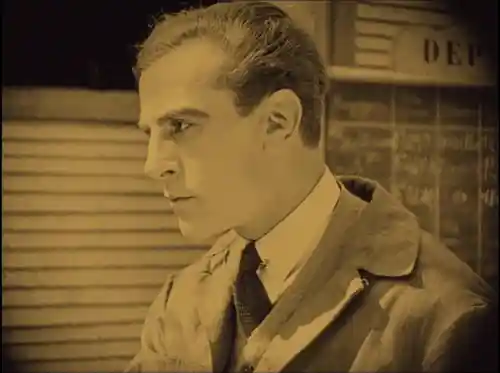
As Hélène takes to the skies, her narrative transcends the personal. She becomes a symbol of female empowerment, a woman who redefines her identity not through the traditional roles prescribed by society, but through an act of audacious self-determination. Her journey is a profound statement about resilience, about finding strength in vulnerability, and about transforming sorrow into purpose. The film, in its quiet grandeur, suggests that true healing doesn't always come from forgetting, but from actively engaging with the source of pain and transforming it. It's a message that resonates deeply, even a century later. The film's conclusion, whether it depicts Hélène finding a new love, achieving legendary status as an aviator, or simply finding peace within herself, would undoubtedly emphasize her newfound independence and strength. It's a testament to the power of human spirit to not only endure but to soar, even after the most devastating fall.
The creative partnership of Charles-Félix Tavano and Ricciotto Canudo as writers ensures a narrative that is both emotionally compelling and structurally sound. Tavano, likely bringing a strong sense of dramatic pacing and character development, would have worked in concert with Canudo's more theoretical and artistic sensibilities. This collaboration likely resulted in a screenplay that was visually rich and thematically resonant, allowing the silent film medium to convey its story with maximum impact. The decision to make the protagonist a woman in such a pioneering and dangerous field was a bold one for the time, reflecting perhaps a subtle undercurrent of progressive thought or simply a recognition of a compelling dramatic possibility. While films like The Truant Husband or All at Sea might have explored domestic comedies or lighthearted adventures, L'autre aile delves into a far more profound and challenging emotional landscape, setting it apart as a significant work of its era.

The aesthetic of L'autre aile is a masterclass in silent film artistry. The use of light and shadow, typical of the period, is employed here to underscore Hélène's emotional journey. Early scenes of her grief might be bathed in dim, melancholic lighting, emphasizing her internal darkness. As she embarks on her training, the lighting might gradually brighten, reflecting her burgeoning hope and determination. The sequences involving flight would undoubtedly be shot with a sense of grandeur and awe, using wide shots to capture the vastness of the sky and the relative smallness of the aircraft, juxtaposed with close-ups of Hélène's focused face, conveying the intensity of her concentration. The editing, too, would play a crucial role, perhaps employing rapid cuts during the initial tragedy to convey chaos and shock, then slowing down to a more deliberate pace during Hélène's training, emphasizing the methodical nature of her learning. The pacing of a silent film, without the guide of dialogue, relies heavily on these visual cues and rhythmic editing to guide the audience through the narrative and emotional shifts.
The film’s enduring appeal lies in its universal themes. While the specific context of early aviation might seem distant, the core story of processing loss, finding purpose, and challenging societal expectations remains timeless. Hélène's journey is not just about flying a plane; it's about reclaiming one's life, about transforming personal tragedy into a source of strength. It's a narrative that speaks to anyone who has faced overwhelming adversity and found the courage to forge a new path. The film, in its quiet eloquence, reminds us that even in the face of profound sorrow, the human spirit possesses an incredible capacity for resilience and reinvention. It stands as a powerful example of how silent cinema, through its unique visual language, could convey complex emotional narratives with an impact that transcends the need for spoken words. It’s a film that asks us to look up, not just at the sky, but within ourselves, to find the other wing that allows us to fly again.
This exploration of personal transformation through an unconventional pursuit resonates with the spirit of other films focused on individual journeys, though often in different contexts. For instance, the determination seen in Hélène's quest for mastery can be compared to characters driven by singular goals in films like Get Your Man, albeit with vastly different motivations and outcomes. The film’s ability to imbue its protagonist with such depth and agency, even within the confines of silent storytelling, is a testament to the artistry involved. It's a compelling reminder that stories of human struggle and triumph are not bound by technological limitations, but by the power of imagination and the skill of their creators. L'autre aile is more than a historical artifact; it's a vibrant, emotionally resonant piece of cinema that continues to speak to the enduring human desire for purpose and freedom.
IMDb —
1933
Community
Log in to comment.