DbcultAccessing Vault...
Cult Review
Senior Film Conservator
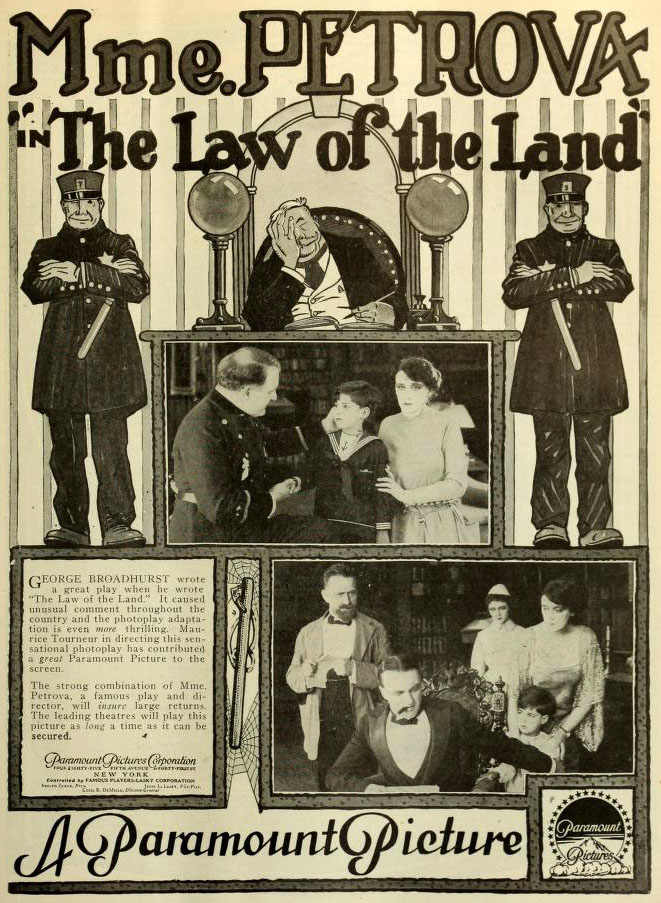
In the annals of early cinema, certain films emerge not merely as historical artifacts but as resonant narratives that speak to the perennial struggles of the human spirit. "Law of the Land", a cinematic offering from 1917, stands as a stark and unflinching examination of duty, despair, and the ultimate, desperate quest for liberation. Crafted by the collective vision of writers Maurice Tourneur, George Broadhurst, and Charles E. Whittaker, this silent drama transcends its era, presenting a narrative that, even today, grips with its raw emotional intensity and profound moral questions. It's a film that dares to confront the suffocating societal expectations placed upon women, the insidious nature of domestic tyranny, and the lengths to which a mother will go to protect her child. Far from a simplistic melodrama, it delves into the intricate psychological landscape of its protagonist, Margaret, rendering her journey from constrained compliance to defiant action with a remarkable depth for its time.
The narrative of "Law of the Land" commences with a decision born of filial obligation rather than romantic inclination. Margaret, a woman of evident grace and sensitivity, finds herself at a cruel crossroads. To spare her mother the ignominy of a social disgrace, the exact nature of which is left to simmer in the background, she relinquishes her heart's true desire – the affection of Geoffrey Morton – and instead enters into a marriage of convenience with Richard Harding. This initial sacrifice sets the tone for a life defined by self-denial, a theme that resonates powerfully with other narratives of the era depicting women trapped by circumstance, such as in "A Woman Wills", where female protagonists are often forced into difficult choices to maintain societal standing or protect loved ones. Margaret's choice is not a fleeting moment of weakness but a foundational act that irrevocably alters the trajectory of her existence, condemning her to a union devoid of warmth, respect, or genuine partnership.
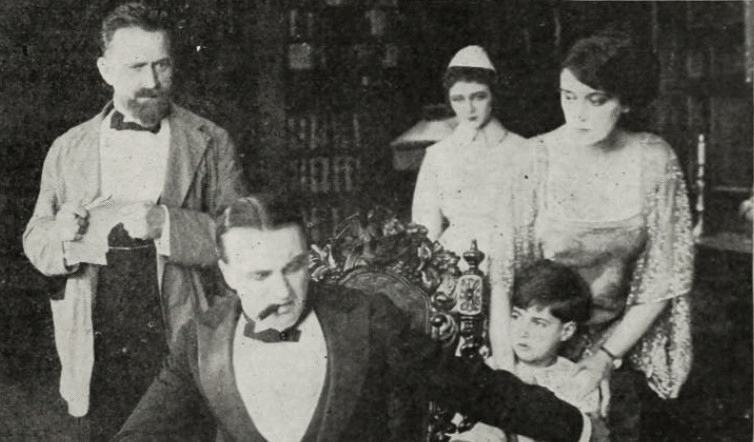
Five years elapse, and the initial sacrifice has metastasized into an unbearable daily reality. Richard Harding, portrayed with chilling efficacy by Robert Vivian, is no mere unloving husband; he is a domestic tyrant, his cruelty manifesting in a relentless emotional and, implicitly, physical abuse that poisons every corner of their shared life. Margaret's existence becomes a desolate landscape, punctuated only by the fragile hope embodied by their young son. The film masterfully conveys the suffocating atmosphere of this household, where a child's innocence is threatened by a father's capricious sadism. Harding's character serves as a stark embodiment of unchecked power within the patriarchal structures of the time, a figure whose moral decay might find a thematic parallel in the villainy explored in films like "Satan's Rhapsody", albeit in a domestic rather than grander scale. Margaret endures, her spirit battered but not entirely broken, clinging to her son as the sole beacon in her personal darkness.
The carefully constructed, albeit miserable, equilibrium of Margaret's life is irrevocably shattered by the return of Geoffrey Morton (Mahlon Hamilton) after a two-year absence. Morton, still bearing the scars of Harding's false accusations against him, arrives at the Harding residence not for romance, but for vindication. He demands a retraction, seeking to restore his good name. What he encounters, however, is far more disturbing than he could have anticipated. In a harrowing sequence, Morton becomes an unwitting witness to Harding's profound cruelty, observing the man brutally whipping his own child. This scene is pivotal, not only for its visceral impact but for its role in stripping away any remaining veneer of respectability from Harding. It transforms Morton from a wronged lover into a horrified witness, a representative of external morality confronting the depravity hidden behind closed doors. The film uses this moment to expose the dark underbelly of a seemingly respectable home, a theme of hidden truths and societal facades that could be loosely connected to the thematic concerns of "The Pretenders".
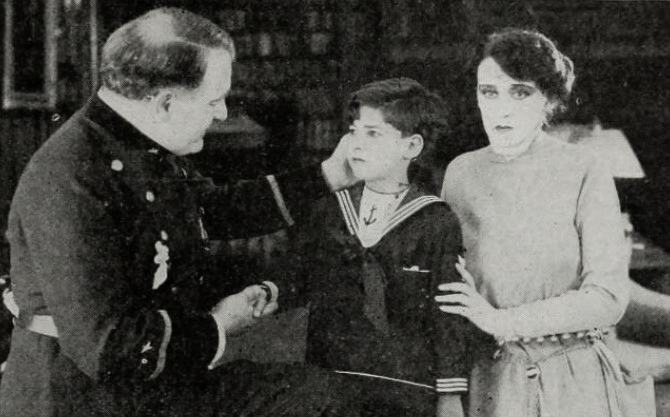
The horror intensifies after Morton's departure. Harding, emboldened by his own sadism and perhaps by the prior confrontation, threatens to beat his son once more. This is the breaking point for Margaret. Her years of silent suffering, her sacrifices, her very existence have been predicated on enduring for her child. Now, that child is directly imperiled. In a moment of primal, maternal ferocity, Margaret issues an ultimatum, a stark and chilling promise: if Harding dares to touch their son again, she will shoot him. Harding, a man consumed by his own depravity and perhaps disbelieving her resolve, defies her. He advances, mocking her plea, and Margaret, true to her word, carries out her desperate threat. This act is not one of malice but of ultimate protection, a visceral response to an intolerable threat. It is a moment that encapsulates the film's bold stance on a woman's right to defend her offspring, even if it means transgressing the most fundamental of laws. The scene’s raw power lies in its depiction of a woman pushed beyond all limits, transforming from victim to avenger in an instant, a narrative arc that shares a spiritual kinship with other tales of individuals pushed to extreme measures for survival or justice, such as those found in "The Fugitive", albeit with different contexts of flight and pursuit.
In the immediate aftermath, a desperate attempt is made to obscure the truth. Harding's secretary, perhaps out of loyalty to Margaret or a shared understanding of Harding's villainy, conspires with Margaret to stage the scene as a suicide. They place the revolver in a manner meant to deceive, but the police, undeterred, are not easily fooled. The facade crumbles, and Margaret is arrested, facing the full might of the legal system. The ensuing legal battle forms a significant portion of the film's latter half. Her lawyers, recognizing the profound mitigating circumstances and the sheer brutality of Harding's character, mount a desperate defense. The courtroom scenes, though silent, would have been charged with tension, relying on the actors' expressions and the intertitles to convey the gravity of the proceedings. Ultimately, through a combination of compelling arguments and perhaps a tacit societal understanding of the extreme provocation, the death is ruled accidental. This verdict, while a legal victory for Margaret, raises complex questions about justice itself. Was it truly an accident, or was it a recognition by the system of the impossible situation Margaret found herself in? It speaks to the fluidity of legal interpretation and the human element in dispensing justice, a theme that, while not always explicit, underpins many dramas of the era, including those exploring societal failings or moral ambiguities like "The Folly of Sin".
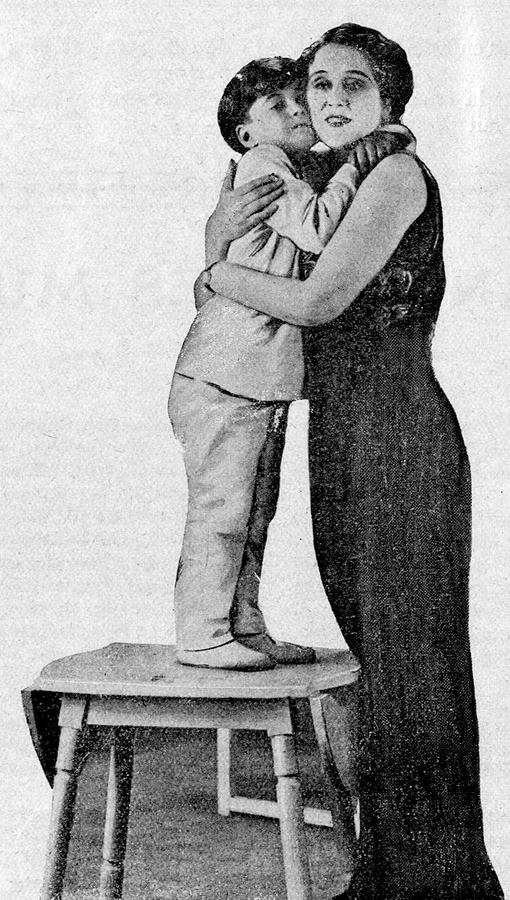
Margaret is thus freed, granted an improbable second chance to begin life anew. Her liberation is not without its shadows, however. The scars of her marriage, the act of violence she committed, and the loss of her former innocence would undoubtedly linger. Yet, the film concludes on a note of cautious optimism, suggesting the possibility of redemption and the reclaiming of one's future, even after the most harrowing of trials. This arc, from absolute despair to a fragile hope, is a testament to the resilience of the human spirit and the film's surprisingly progressive outlook for its time.
The success of "Law of the Land", like many silent films, hinges significantly on the power of its performances. Without spoken dialogue, actors were tasked with conveying complex emotions, subtle nuances, and dramatic shifts through facial expressions, body language, and carefully choreographed movements. The cast of this film rises admirably to this challenge, delivering portrayals that are both compelling and deeply affecting.
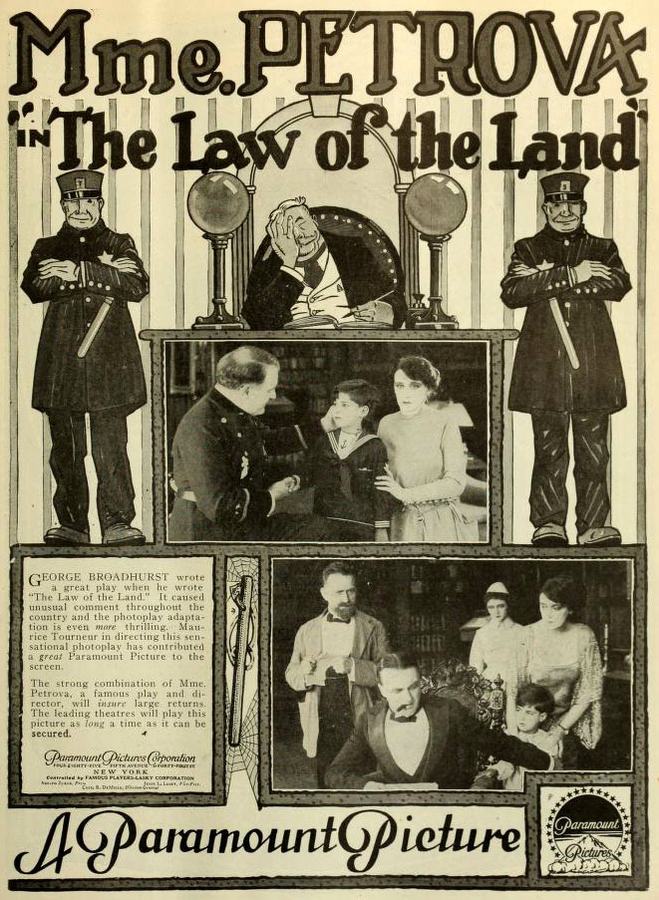
At the heart of the film is Olga Petrova's magnificent portrayal of Margaret. Petrova, a formidable star of the silent era known for her strong, often tragic, female characters, imbues Margaret with a profound sense of dignity even in her deepest suffering. Her expressive eyes convey volumes – the initial resignation, the years of quiet despair, the fierce maternal love, and the ultimate, desperate resolve. Petrova avoids caricature, presenting Margaret not as a mere victim but as a woman of immense inner strength, whose breaking point is reached only after unimaginable torment. Her performance in the climactic shooting scene and the subsequent legal drama is particularly noteworthy, capturing the blend of terror, defiance, and vulnerability that defines Margaret's ordeal. It's a masterclass in silent film acting, demonstrating how powerful emotion can be communicated without a single uttered word, making her one of the most compelling figures of the period, echoing the strength seen in characters navigating societal pressures in films like "Niobe".
Opposite Petrova, Robert Vivian delivers a chilling performance as Richard Harding. Vivian crafts a villain who is not overtly monstrous but subtly, insidiously cruel. His gestures, his sneers, and his cold demeanor effectively convey the psychological and physical torment he inflicts upon his family. He is the embodiment of the respectable façade masking a corrupt soul, making his acts of domestic abuse all the more horrifying because they occur within the supposedly sacred confines of the home. His portrayal is vital to the film's dramatic tension, providing a tangible threat that justifies Margaret's extreme actions. The supporting cast, including Riley Hatch as one of Margaret’s lawyers, Mahlon Hamilton as the earnest Geoffrey Morton, and William Conklin and Freddie Verdi, contribute solid performances that flesh out the film's world, adding layers of credibility to the unfolding tragedy.
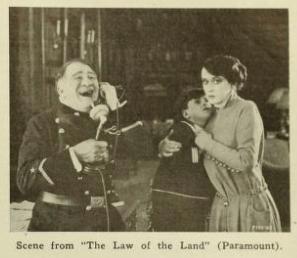
Beyond its compelling plot and strong performances, "Law of the Land" is rich with thematic depth that continues to resonate with contemporary audiences. It tackles issues that were often whispered about, if discussed at all, in the early 20th century, bringing them to the forefront of cinematic storytelling.
The film profoundly explores the theme of sacrifice, particularly as it pertains to women in patriarchal societies. Margaret's initial decision to marry Harding for her mother's sake highlights the limited agency women often possessed, where personal happiness was secondary to familial duty and social standing. Her subsequent life is a testament to the crushing weight of such choices. However, the film ultimately celebrates a different kind of autonomy – one born of desperation and self-preservation. Margaret's final act, though violent, is an assertion of her right to protect her child and herself from an intolerable existence, a radical notion for its time. This struggle for individual freedom against oppressive circumstances is a recurring motif in cinema, finding echoes in the personal battles waged by characters in films such as "Martin Eden", albeit from a male perspective of societal advancement.
Perhaps the most harrowing and enduring theme is the depiction of domestic abuse. "Law of the Land" unflinchingly portrays the psychological and physical torment inflicted by Harding, culminating in the brutal whipping of his son. For a film of its era, this was a remarkably daring subject. It brought into the public consciousness a private horror, forcing viewers to confront the reality of violence within the home. The film argues implicitly that such abuse, particularly against a child, justifies extreme measures, challenging conventional notions of marital sanctity and legal recourse. This progressive stance on a deeply uncomfortable topic makes the film a significant work in the history of social commentary through cinema.
The film's resolution, where Margaret's act of homicide is deemed "accidental," introduces a fascinating layer of moral ambiguity. It suggests that the "law of the land" is not always black and white, and that circumstances can mitigate even the most serious of offenses. The verdict implies a societal, or at least judicial, understanding of the intolerable conditions Margaret faced. This nuanced approach to justice, where the spirit of the law might bend to human suffering, is a powerful statement. It prompts reflection on whether true justice was served, or whether it was a pragmatic solution to an impossible situation. This exploration of legal and moral grey areas is a sophisticated element for a film of its period, distinguishing it from simpler tales of good versus evil.
The strength of "Law of the Land" owes much to its well-structured narrative, penned by Maurice Tourneur, George Broadhurst, and Charles E. Whittaker. The pacing is deliberate, allowing the audience to fully grasp Margaret's escalating despair before her decisive action. The use of intertitles, a crucial element of silent film, is effective in conveying dialogue, inner thoughts, and crucial plot points without disrupting the visual flow. The story builds tension effectively, from the initial forced marriage to the harrowing domestic scenes, culminating in the dramatic climax and the subsequent legal struggle. The visual storytelling, characteristic of the era, relies on strong compositions, evocative close-ups, and the actors' expressive performances to convey emotion and meaning. While specific directorial credits for this particular film are not highlighted in the provided context, the overall execution speaks to a competent and sensitive hand behind the camera, translating the writers' potent vision into a compelling cinematic experience. The film’s ability to maintain high dramatic stakes throughout its runtime, despite the technical limitations of early cinema, is a testament to the power of its core narrative and the skill with which it was brought to life.
"Law of the Land" is more than a historical curiosity; it is a powerful and surprisingly modern drama that tackles uncomfortable truths with remarkable courage. Its unflinching portrayal of domestic abuse, its empathetic exploration of a woman's desperate choices, and its nuanced take on justice ensure its continued relevance. Olga Petrova's central performance is a standout, elevating the film beyond mere melodrama into a profound character study. As an artifact of silent cinema, it showcases the era's capacity for complex storytelling and emotional depth, proving that powerful narratives do not require spoken words to resonate. The film serves as a potent reminder of the societal battles fought and won, and those that regrettably persist. It invites viewers to reflect on the nature of sacrifice, the limits of endurance, and the ultimate, often violent, cost of freedom when conventional avenues fail. Its legacy lies in its bold thematic choices and its enduring ability to provoke thought and empathy, securing its place as a significant, albeit often overlooked, entry in the canon of early American cinema. It is a testament to storytelling that transcends its temporal origins, speaking to universal human experiences of suffering, resilience, and the relentless pursuit of a life unburdened by tyranny.
IMDb 4.7
1931
Community
Log in to comment.