DbcultAccessing Vault...
Cult Review
Senior Film Conservator
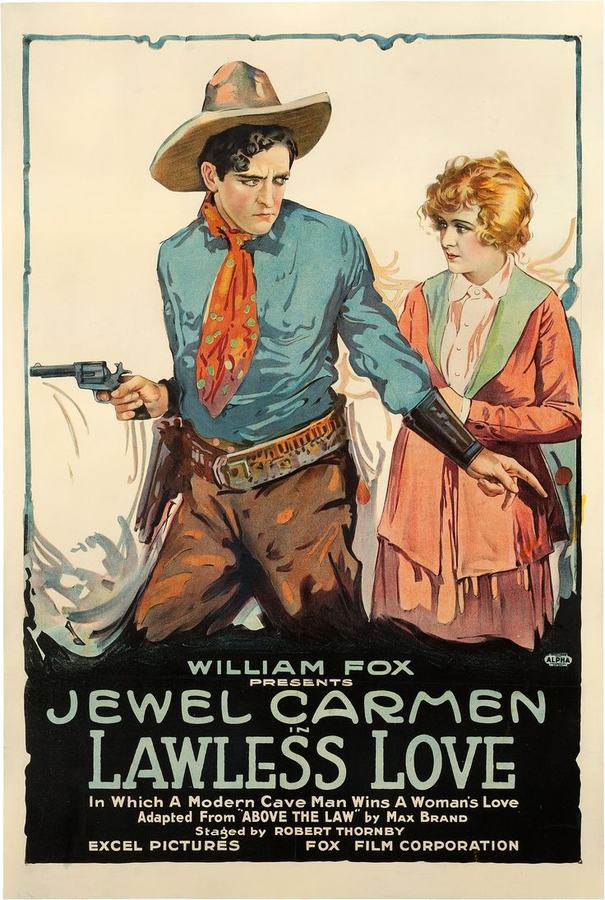
In the annals of early cinema, particularly the sprawling genre of the Western, certain narratives emerge that defy simple categorization, blending elements of high drama, unexpected romance, and thrilling adventure. Olga Printzlau and Max Brand’s 1918 creation, Lawless Love, stands as a testament to this intricate tapestry, a silent film that, despite its age, still pulsates with a vibrant energy and a surprisingly modern sensibility. It's a tale spun from the threads of desperation and mistaken identity, blossoming into an unlikely affection amidst the harsh, unforgiving backdrop of the Arizona wilderness. This isn't just a story about outlaws and pursuit; it's a profound exploration of character transformation, of finding integrity in the most unexpected places, and the potent, transformative power of love.
The film introduces us to LaBelle Geraldine, portrayed with spirited verve by Jewel Carmen, a vaudeville artist whose livelihood has been cruelly severed. Stranded in the arid expanse of Arizona with her dancing partner, Freddie Montgomery (Edward Hearn), Geraldine finds herself staring into the abyss of destitution. Her solution? A scheme so audacious it borders on the absurd: Freddie will impersonate the notorious masked bandit, Black Jim, allowing Geraldine to "apprehend" him and claim the substantial $2,000 reward. This initial premise immediately sets a tone of desperate ingenuity, highlighting Geraldine’s sharp wit and fearless resolve. It’s a classic setup of a woman taking charge, subverting the traditional damsel-in-distress trope prevalent in many films of the era. The very notion of a stage performer orchestrating such a bold con speaks volumes about the societal pressures and limited opportunities faced by women, even those with talent and charisma, in the early 20th century. Her ambition, though born of necessity, is undeniably captivating.
However, the finely tuned mechanics of Geraldine's plan are spectacularly derailed by the intervention of fate, or perhaps, simply bad luck. As her coach rumbles along, it is waylaid by none other than the *actual* Black Jim. In a moment of high-wire tension and dramatic irony, Geraldine, believing this masked assailant to be her complicit Freddie, boldly draws her own weapon, ready to play her part. The real bandit, however, is not in on the act. The ensuing confrontation leaves Geraldine with a bullet wound to the wrist and her world irrevocably altered. This pivotal scene is a masterclass in silent film storytelling, relying on visual cues and the sheer force of Carmen’s performance to convey the shock, the miscalculation, and the sudden, terrifying shift in her reality. It’s a brilliant twist that immediately elevates the narrative beyond a simple caper, plunging Geraldine into genuine peril and forcing her to confront a reality far more dangerous than her theatrical charade.
Whisked away to Black Jim's secluded cabin, Geraldine's initial defiance slowly gives way to a complex blend of fear, observation, and burgeoning curiosity. Henry Woodward, as Black Jim, masterfully portrays a character who is both menacing and, surprisingly, honorable. He is not a cartoonish villain but a man of the frontier, hardened by circumstance yet possessing an underlying code. His treatment of Geraldine, though born of her capture, reveals a certain respect, a stark contrast to the expected brutality. This nuanced portrayal of an outlaw is a recurring motif in Westerns, seen in films like The Sunset Trail, where the lines between good and bad often blur in the rugged landscape. But Lawless Love takes this a step further, focusing on the intimate, psychological dance between captor and captive.
The arrival of Freddie, who is also subsequently captured, serves as a crucial dramatic pivot. His failure to protect Geraldine when members of Black Jim's gang insult her is a defining moment. Edward Hearn’s portrayal of Freddie as cowardly and self-serving highlights the stark contrast between his theatrical bravado and his real-world lack of courage. This betrayal, or rather, this glaring absence of protection, serves to further illuminate Black Jim's character. Where Freddie falters, Black Jim steps in, his unspoken disapproval of his gang’s disrespect solidifying Geraldine’s growing admiration. It's a powerful narrative device, demonstrating that true valor isn't found in a costume or a pre-planned ruse, but in actions when genuine danger arises. This dynamic echoes themes found in stories like All Man, where the true nature of masculinity and courage is tested under duress.
As days turn into weeks, the forced proximity and shared peril begin to chip away at Geraldine’s preconceived notions. She sees beyond the masked outlaw to the man beneath, recognizing his strength, his peculiar sense of justice, and the unexpected tenderness he shows her. Black Jim, in turn, is captivated by Geraldine's indomitable spirit, her quick wit, and her sheer resilience. This isn't a Stockholm Syndrome narrative; it's a slow burn of mutual respect evolving into a profound affection. The film, through its silent artistry, beautifully conveys these unspoken emotions, relying on subtle gestures, lingering gazes, and the evocative power of intertitles. The chemistry between Carmen and Woodward is palpable, building a believable foundation for their burgeoning romance.
The narrative reaches its emotional zenith when Geraldine is presented with an opportunity to escape. Here, the film challenges conventional heroics. Instead of seizing her freedom, a choice that would be entirely understandable, she makes a conscious decision to return. Her motive isn't fear or coercion, but a genuine concern for Black Jim. She has learned of his gang's treacherous plot to kill him, and her loyalty, now firmly placed, compels her to warn him. This act of self-sacrifice, of choosing to protect her former captor, is the ultimate testament to the profound shift in her affections and her moral compass. It showcases a female protagonist who is not merely reactive but proactive, making a difficult, ethically complex decision rooted in love and admiration. This kind of moral ambiguity and character depth was quite progressive for its time, distinguishing Lawless Love from more straightforward adventure tales like Pardners or The Middleman.
The climax of Lawless Love is nothing short of spectacular, a fiery testament to the power of their unconventional bond. United against the treacherous gang, Black Jim and Geraldine defend their cabin with fierce determination. The ensuing battle is visceral and intense, culminating in the gang setting their hideout ablaze. The visuals of the burning cabin, the flickering light against the dark desert night, would have been particularly striking for audiences of the era, showcasing impressive production values for a silent film. The tension is almost unbearable as the flames engulf their sanctuary, threatening to consume them both.
In a breathtaking display of courage and coordinated action, they dash through the inferno, leaping onto their horses to make a desperate escape. This sequence is pure cinematic exhilaration, a thrilling chase against a backdrop of destruction. It's a moment that solidifies their partnership, a shared triumph over adversity that marks them as more than just lovers, but as true companions in the wild. The image of them riding off into the safety of the night, leaving the burning wreckage behind, is iconic, a powerful visual metaphor for their escape from their past lives and into a new, uncertain but shared future. It’s an ending that resonates with the spirit of freedom and resilience often celebrated in Westerns, yet imbued with a unique romantic intensity.
Jewel Carmen delivers a tour de force performance as LaBelle Geraldine. Her portrayal is nuanced, moving from desperate showgirl to cunning schemer, then to a captive whose spirit remains unbroken, and finally, to a woman deeply in love. Carmen’s expressive face and body language convey a wealth of emotion without a single spoken word, a true hallmark of silent era acting. She embodies a strength and independence that challenges the passive female roles sometimes seen in films like The Stolen Paradise, presenting a heroine who is both vulnerable and fiercely self-possessed. Her journey is the emotional core of the film, and Carmen carries it with remarkable grace and intensity.
Henry Woodward, as Black Jim, is equally compelling. He projects an aura of dangerous charisma, a figure who commands respect even as he operates outside the law. His transformation, from a hardened outlaw to a man capable of deep affection and loyalty, is subtly rendered, allowing the audience to believe in Geraldine’s changing perception of him. Woodward avoids caricature, imbuing Black Jim with a humanity that makes his villainy complex and his eventual redemption believable. Edward Hearn, though in a supporting role, effectively portrays Freddie Montgomery's opportunism and ultimate cowardice, serving as an excellent foil to both Geraldine's courage and Black Jim's rugged honor.
The direction, while not explicitly attributed in the provided details, skillfully navigates the narrative's twists and turns. The cinematography effectively captures the vastness and isolation of the Arizona landscape, using it not merely as a backdrop but as an active participant in the story, reflecting the harshness and wild freedom of the characters' lives. The pacing is robust, building tension gradually and exploding into thrilling action sequences. The use of intertitles is judicious, providing necessary exposition and character thoughts without overwhelming the visual storytelling. For a film from 1918, the technical execution demonstrates a sophisticated understanding of cinematic language, proving that early filmmakers were already adept at crafting engaging and visually rich narratives.
Lawless Love is more than just a Western romance; it's a profound meditation on identity, perception, and the nature of love. It questions who the 'real' outlaw is: the one who robs coaches, or the one who betrays trust? It delves into the idea that love can blossom in the most unlikeliest of circumstances, transcending social norms and expectations. Geraldine's journey is one of self-discovery, where her initial cynical pragmatism evolves into a deep, genuine connection. The film's themes of redemption, courage, and the subversion of expectations resonate even today, proving its timeless appeal. It challenges the audience to look beyond surface appearances and conventional morality, much like the way Geraldine learns to see Black Jim not as a villain, but as a complex man capable of great love and loyalty. In a cinematic landscape often dominated by clear-cut heroes and villains, Lawless Love dares to explore the intricate shades of grey. Its portrayal of a strong, independent woman in a challenging environment also makes it a noteworthy piece for those interested in the evolution of female representation in film, setting it apart from more traditional portrayals found in works like Niobe or The Girl from Rector's.
Ultimately, Lawless Love is a compelling cinematic artifact, a thrilling silent Western that offers much more than just a simple adventure. It's a testament to the enduring power of storytelling, the transformative nature of human connection, and the unexpected paths that love can forge even in the most lawless of lands. It's a film that deserves to be rediscovered, appreciated not just as a historical curiosity, but as a potent and emotionally resonant piece of filmmaking that continues to captivate. Its blend of daring action, intricate plot twists, and a deeply felt romance makes it a truly memorable experience, cementing its place as a fascinating, if sometimes overlooked, gem of the silent era.
IMDb 5.9
1914
Community
Log in to comment.