DbcultAccessing Vault...
Cult Review
Senior Film Conservator
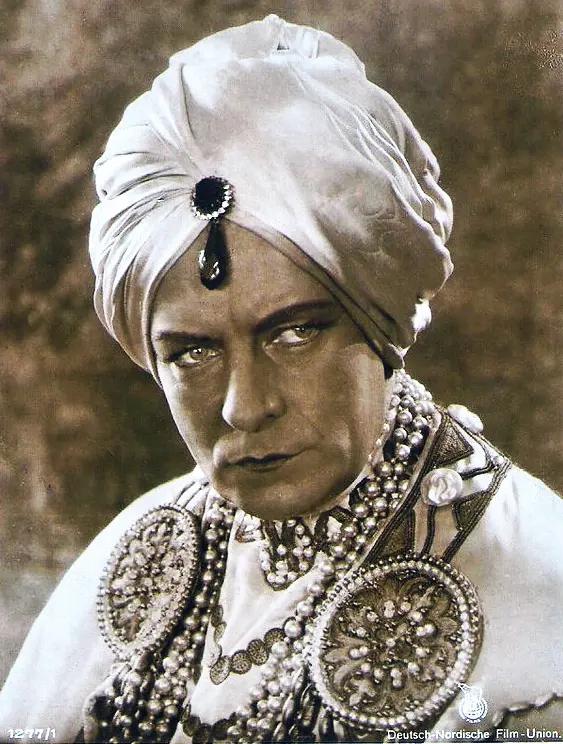
Is Maharadjahens yndlingshustru III worth your time a century after its release? Short answer: yes, but only if you are a dedicated student of silent cinema or interested in the roots of European cultural tropes. This film is for the cinephile who enjoys the slow, deliberate pacing of the 1920s; it is definitively not for those who require modern narrative momentum or sensitive cultural portrayals.
This film represents the final gasp of Nordisk Film’s dominance before the industry shifted toward the gritty realism of the 1930s. It is a spectacle of artifice, and in that artifice, we find its greatest strengths and its most glaring weaknesses.
1) This film works because it utilizes the full technical prowess of the Danish silent film industry, offering a visual richness in set design that rivals the best of Hollywood’s contemporary output like Aladdin's Other Lamp.
2) This film fails because its narrative is built on a foundation of 'Othering' that feels static and repetitive by the third act, lacking the emotional nuance found in The Exiles.
3) You should watch it if you want to see Gunnar Tolnæs at the height of his stardom, embodying the 'exotic' archetype with a charisma that explains why he was a global icon of the era.
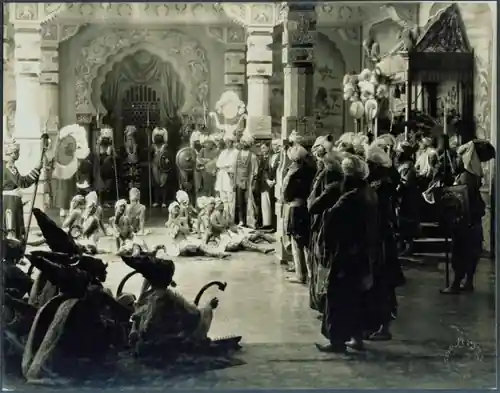
The film’s primary draw is its visual language. Director August Blom (though the series had various hands) understands that the audience isn't here for a documentary on Jodhpur; they are here for a dream of it. The sets are magnificent. They are heavy, draped, and cavernous. When Edith first enters the Maharajah's palace, the camera lingers on the architecture in a way that suggests the environment itself is a character. It is a gilded cage, and the cinematography ensures we feel both the gold and the bars.
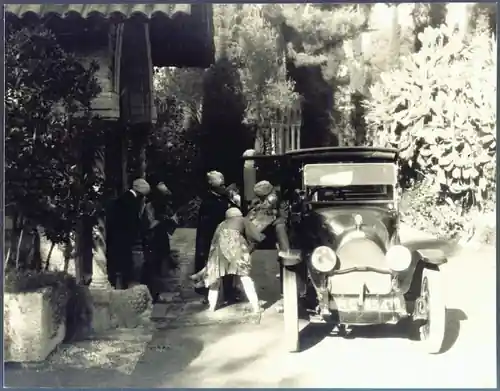
Unlike the rugged landscapes seen in The Last Frontier, this film is entirely studio-bound in its 'Eastern' segments. This creates a claustrophobic beauty. The lighting is remarkably sophisticated for 1921, using shadows to delineate the 'mysterious' nature of the Maharajah’s world versus the flat, high-key lighting of the Danish scenes. It works. But it’s flawed.
Gunnar Tolnæs is the anchor. By the time he reached this third installment, he had perfected the Maharajah persona. It is a performance of stillness. In a medium often criticized for overacting, Tolnæs uses his eyes and his posture to convey a sense of power that is both alluring and terrifying. He doesn't need to flail. He simply exists, and the world bends around him.
Astrid Steffensen, as Edith, has a harder task. She must sell the idea that a woman would leave everything behind for a life in a harem. Her performance is grounded in a specific kind of 1920s melodrama—lots of hand-to-heart gestures and wide-eyed realization. While it feels dated compared to the modern naturalism of The Payment, it fits the heightened reality of this particular trilogy. The chemistry between the two is palpable, even through the flickering grain of the remaining prints.
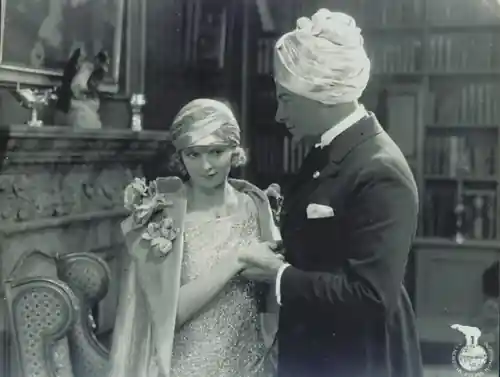
For the average viewer, the answer is likely no. The pacing is reflective of a time when cinema was still finding its heartbeat. Scenes linger long after the narrative point has been made. However, for those who appreciate the evolution of visual storytelling, it is a goldmine. It offers a window into how Western Europe viewed the rest of the world—as a playground for romantic fantasy and moral testing.
If you compare it to The Vengeance Trail, you see a stark difference in how 'adventure' was categorized. Where the American films focused on the physical conquest of land, the Danish 'Maharajah' films focused on the emotional conquest of the self within an alien environment. It is a psychological drama dressed in silk.
The cinematography by George Schnéevoigt is the film’s hidden weapon. There is a specific shot where Edith looks out over the 'Jodhpur' skyline—a clever use of miniatures and matte paintings—that rivals anything in Ultus, the Man from the Dead. The depth of field in the interior shots allows for multiple layers of action, a hallmark of the Nordisk style that influenced later masters like Dreyer.
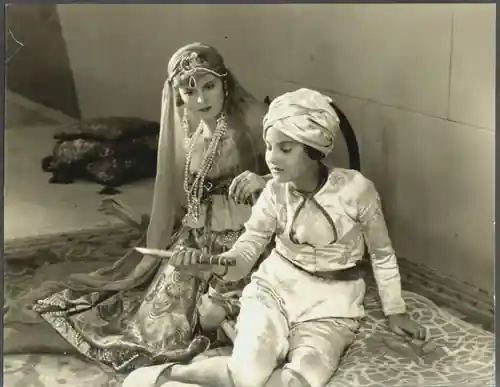
However, the pacing is a slog. The middle section, involving the politics of the harem and the jealousy of the other wives, feels like it could have been trimmed by twenty minutes without losing any narrative weight. It suffers from 'trilogy fatigue.' The writers, including Sam Ask, seem to be retreading ground already covered in the first two films. It is beautiful to look at, but the soul is occasionally missing.
Pros:
Cons:
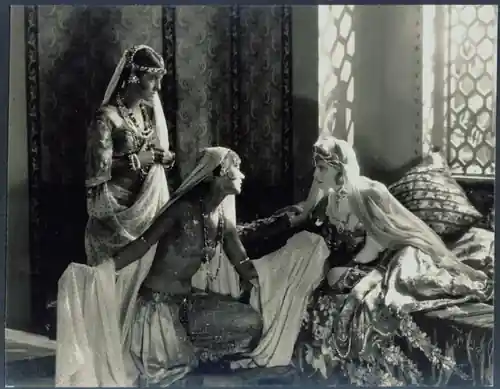
When we look at Pampered Youth or Grevarna på Svansta, we see a cinema that was beginning to grapple with domesticity and class. Maharadjahens yndlingshustru III goes the opposite direction. It flees from the domestic into the fantastic. It is the 'escapist' cinema of its day. While A Son of Erin dealt with the immigrant experience with a certain level of grit, this film treats travel as a mystical ascension. It is a fascinating contrast in search of what the medium of film was 'for' in 1921.
"The film doesn't just show a harem; it constructs a temple to the European imagination's most fevered dreams of the East."
There is a brutal simplicity to the film's moral core: love conquers cultural distance. But the film complicates this by showing the cost of that love. Edith is not the same woman at the end of the film as she was at the start. She has been 'Easternized,' a concept that terrified and fascinated audiences in Copenhagen and beyond. It is this transformation that remains the film's most interesting aspect, far more than the romance itself.
Maharadjahens yndlingshustru III is a gorgeous relic. It is a film that demands your patience but rewards your eyes. While it lacks the raw emotional power of Isterzannye dushi, it makes up for it with a sheer sense of scale. It is a testament to a time when Denmark was the Hollywood of Europe, and Gunnar Tolnæs was its king. Watch it for the history, stay for the shadows, and forgive it for its age. It is a flawed masterpiece of a forgotten genre.

IMDb 6
1925
Community
Log in to comment.