DbcultAccessing Vault...
Cult Review
Senior Film Conservator
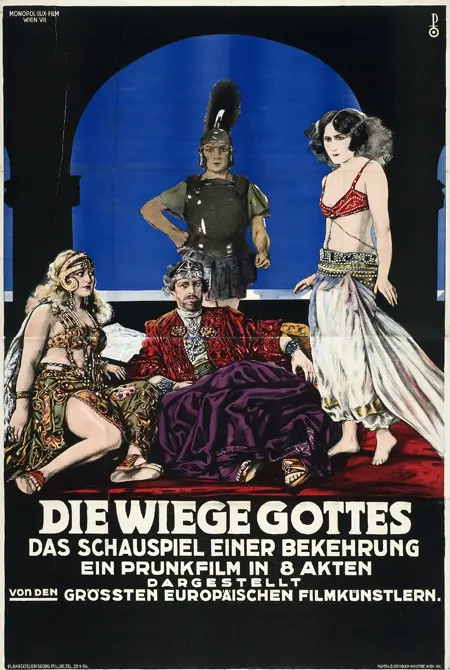
Is Le berceau de dieu worth watching today? Short answer: yes, but with a significant asterisk. This 1926 silent film is a fascinating relic, a bold, if heavy-handed, exploration of faith and intellectual despair that speaks volumes about the cinematic ambitions of its era. It’s a compelling watch for those with a deep appreciation for silent cinema’s unique language, offering a window into early attempts at profound spiritual storytelling.
However, it is decidedly not for viewers accustomed to modern pacing, subtle character development, or nuanced theological debate. If you require psychological realism or an action-packed narrative, you will find its deliberate rhythm and didactic approach challenging.
The film introduces us to J. Powers, an intellectual whose world is irrevocably shattered by the death of his wife. This tragedy doesn't just break his heart; it obliterates his faith, propelling him into a defiant, almost vindictive, atheism. His response is not quiet despair, but a published work, a shocking polemic designed to dismantle religious belief entirely. This initial setup is remarkably audacious for its time, presenting a protagonist whose intellectual struggle is front and center.
Powers’ subsequent journey to Jerusalem, a city steeped in spiritual significance, serves ironically to deepen his unbelief. The sight of countless sects, each convinced of their own divine truth, only fuels his cynicism, highlighting the perceived absurdity of organized religion. This visual irony, captured through silent film’s expressive power, is one of the film’s strongest early statements. It lays the groundwork for a confrontation between hardened intellect and simple faith, a thematic battle that defines the film's core.
The turning point arrives when Powers, lost in the countryside, stumbles upon a humble, devout family. Their daughter, Ruth, embodies a pure, unwavering faith that begins to thaw his embittered heart. Their exchanges, conveyed through intertitles and expressive acting, highlight the chasm between his learned skepticism and her inherent belief. Ruth’s gentle suggestion of meditation on the Gospels as a path to healing is met with Powers’ sorrowful lament that, despite his longing, belief is simply impossible for him. This moment of vulnerability is crucial, humanizing Powers beyond his intellectual facade.
The climax of Powers' spiritual journey unfolds not through rational argument, but through a vivid, sprawling dream sequence. Exhausted by his internal conflict, he falls asleep and witnesses the entire panorama of the Old Testament, from the Garden of Eden to the prophets and kings. It is within this cinematic dreamscape that he repents, awakening with his faith miraculously restored. The film concludes with his proposal to Ruth, signifying not just a personal reconciliation with God, but a return to conventional societal and emotional norms, tying his spiritual and romantic redemption together.
Let’s cut to the chase for those wondering about its merits:
This film works because of its audacious thematic ambition for its era, its surprisingly effective visual storytelling during the Old Testament dream sequence, and Annette Benson's earnest, compelling performance as Ruth, which grounds the more abstract spiritual journey.
This film fails because its resolution is overly simplistic and relies heavily on a narrative deus ex machina (the dream sequence) that undermines the intellectual struggle it so carefully builds. The pacing can also feel sluggish, and its didacticism often overrides genuine character development.
You should watch it if you are a silent film aficionado, a student of early cinematic religious themes, or someone curious about how complex spiritual crises were portrayed on screen before the advent of sound. It offers valuable insight into the cultural and storytelling conventions of the 1920s.
In silent cinema, the burden of conveying internal states falls heavily on the actors’ physicality and facial expressions. Jean Bradin, as J. Powers, attempts to capture the intellectual’s torment, moving from cynicism to spiritual yearning. His early scenes effectively communicate his bitterness, particularly through his stern gaze and rigid posture. However, the transition to restored faith feels somewhat abrupt, relying more on the dream sequence’s narrative power than on a gradual emotional shift in his performance.
Annette Benson, portraying Ruth, is arguably the film’s emotional anchor. Her performance is imbued with a quiet grace and unwavering conviction that feels authentic. She embodies the simple, pure faith that Powers initially rejects but ultimately embraces. Her gentle expressions, especially in the scene where she counsels Powers, provide a stark and touching contrast to his intellectual angst. Benson’s ability to convey profound empathy without a single spoken word is a testament to her skill, making Ruth a truly memorable figure.
The supporting cast, including the family members, contribute to the film's atmosphere, though their roles are primarily functional. For instance, the family's shared moments of prayer are depicted with a sincerity that reinforces Ruth's devout upbringing. These smaller performances help to build the world around Powers, emphasizing the contrast between his isolated despair and the warmth of community and faith. Compared to other films of the period, such as the dramatic Enoch Arden or the comedic Laughing Gas, Le berceau de dieu demands a specific, heightened form of silent acting that prioritizes grand gestures and clear emotional signals.
Stefan Markus’s direction, while occasionally uneven, truly shines during the film’s ambitious dream sequence. This segment, spanning the entirety of the Old Testament, is a remarkable feat of early cinematic spectacle. The rapid succession of biblical tableaus, from the Garden of Eden’s idyllic beauty to the dramatic pronouncements of prophets and the grandeur of kings, is visually inventive. It uses early special effects and elaborate sets to create a sense of sweeping history and divine intervention.
The cinematography, though not groundbreaking for its time compared to, say, the German Expressionist works like Kurfürstendamm, effectively utilizes light and shadow to establish mood. The stark contrast between the bright, open landscapes of Ruth's home and the shadowed, introspective moments of Powers' despair is notable. The visual language during Powers' spiritual crisis is particularly strong, using close-ups on his troubled face and wide shots emphasizing his isolation in the bustling, indifferent city of Jerusalem.
The pacing, however, is where the film shows its age. The early scenes of Powers’ intellectual struggles can feel drawn out, emphasizing his internal conflict perhaps a little too much. The film picks up energy during the dream sequence, which moves with a surprising swiftness, but then slows again for the final resolution. The tone oscillates between intellectual drama and religious allegory, sometimes struggling to meld the two seamlessly. This reliance on allegory, especially in the dream, is a fascinating choice, allowing the film to tackle vast theological concepts without the need for extensive dialogue.
For the discerning cinephile, Le berceau de dieu absolutely warrants a viewing. It's a significant piece of cinematic history, demonstrating the capacity of silent film to tackle profound, abstract themes. While its narrative shortcuts and didactic approach might frustrate modern sensibilities, its sheer ambition and the visual ingenuity of its central dream sequence are undeniable. It's a film that demands patience but rewards with a unique perspective on faith and doubt from a bygone era.
It's a testament to the power of visual storytelling that, even without spoken words, the film manages to convey such a sweeping spiritual arc. The film's message, though delivered with a certain bluntness, remains clear: belief, however challenging to attain, offers solace where intellect alone cannot. It's a film of its time. But it’s flawed. And it’s undeniably compelling for its historical context.
Le berceau de dieu is a curious and essential piece of silent cinema. It attempts to grapple with profound questions of faith and doubt with a sincerity that is both admirable and, at times, frustratingly naive. While its narrative contrivances, particularly the dream-induced conversion, might elicit an eye-roll from contemporary audiences, it's crucial to view it through the lens of its time. It’s a film that prioritizes spiritual message over psychological realism, a common trait in moralistic cinema of the era, reminiscent of themes explored in Mon curé chez les pauvres.
The film’s strength lies in its visual ambition and the heartfelt performance of Annette Benson. It serves as a valuable historical document, showcasing how early filmmakers tackled grand themes of human spirituality. It’s not a film for everyone, nor is it a subtle masterpiece. But for those willing to engage with its unique cinematic language and its earnest, if heavy-handed, message, Le berceau de dieu offers a compelling, if imperfect, journey into the heart of belief.

IMDb —
1925
Community
Log in to comment.