DbcultAccessing Vault...
Cult Review
Senior Film Conservator
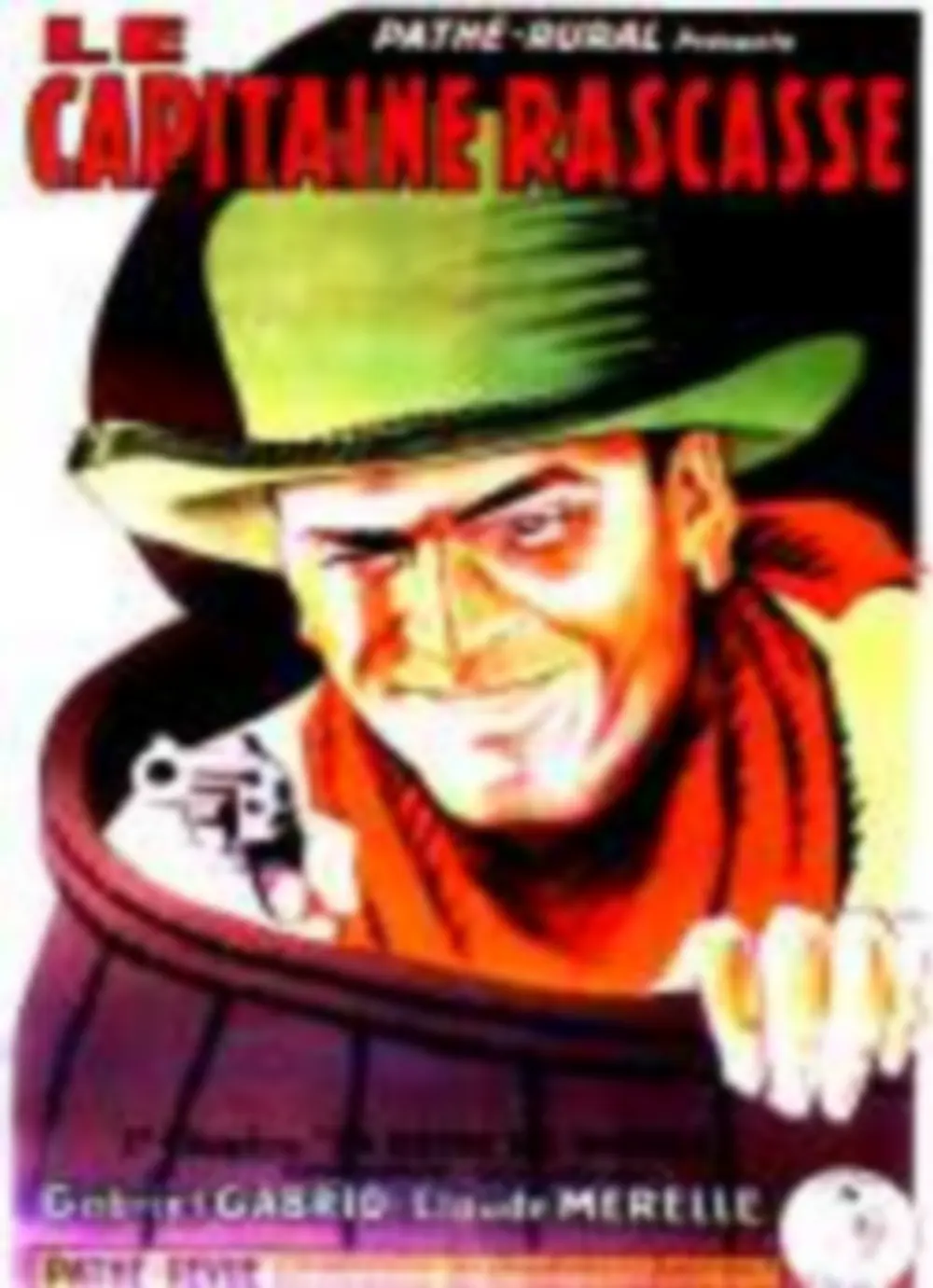
Can a silent film from nearly a century ago still captivate a modern audience, or is it merely a relic for academic study? Short answer: yes, Le capitaine Rascasse does possess a certain, undeniable magnetism, but it demands patience and an appreciation for the cinematic language of its era.
This film is best suited for those who find beauty in the expressive power of early cinema, who are fascinated by character-driven drama, and who appreciate the foundational elements of storytelling that predate synchronized sound. It is decidedly not for viewers seeking fast-paced action, intricate dialogue, or contemporary narrative conventions. If you are unfamiliar with the conventions of the silent era, its deliberate pacing might prove a hurdle.
In the vast ocean of cinematic history, certain films emerge not as mere drops, but as powerful currents. Le capitaine Rascasse, a French silent drama from a bygone era, attempts to carve its own niche with a compelling character study set against the rugged backdrop of the sea. Directed with a clear vision, even if occasionally constrained by the technical limitations of its time, the film benefits immensely from a central performance that anchors its narrative ambitions.
Gabriel Gabrio, in the titular role, delivers a performance that transcends the often-exaggerated pantomime associated with silent cinema. His Captain Rascasse is a figure of imposing stature and simmering internal conflict, a man whose hardened exterior is slowly chipped away by circumstance and human connection. It’s a portrayal that, even through the lens of nearly a century, speaks volumes without uttering a single word. This is where the film finds its most profound success.
The film’s strength lies in its ability to craft a sense of place and atmosphere. The coastal settings, whether the tumultuous open sea or the shadowy confines of a seaside tavern, feel authentic and lived-in. There’s a palpable grittiness to the production design that grounds the more melodramatic elements of the plot, preventing the narrative from drifting too far into pure fantasy. The salt spray almost feels real, the creak of the ship’s timbers almost audible.
However, for all its strengths, Le capitaine Rascasse is not without its significant shortcomings. The narrative, while promising in its premise, occasionally meanders, allowing certain subplots to dilute the intensity of the main character's journey. Pacing, a common challenge in silent films, can feel inconsistent, with moments of profound tension followed by stretches that test the modern viewer's patience. It works. But it’s flawed.
This film works because of Gabriel Gabrio's magnetic, nuanced portrayal of a morally ambiguous character, and its evocative, atmospheric setting that truly immerses the viewer in its world. This film fails because its narrative occasionally loses focus, allowing its pacing to slacken, and some supporting characters remain underdeveloped, feeling more like plot devices than fully realized individuals. You should watch it if you seek a powerful central performance in a classic silent drama and appreciate the visual storytelling inherent to the era, particularly those with a fondness for maritime tales.
Gabriel Gabrio’s performance as Captain Rascasse is, without hyperbole, the beating heart of this film. He doesn't just play the role; he inhabits it with a gravitas that commands attention. His eyes, often narrowed against the sea wind or gazing with a profound weariness, convey more complex emotions than many spoken monologues ever could. There’s a specific scene, early on, where Rascasse is shown mending a net, his hands calloused and precise, yet his gaze distant. This single moment establishes a man burdened by his past, hinting at depths yet to be explored.
His physical presence is equally compelling. Gabrio moves with a deliberate, powerful stride, embodying the rugged independence of a man who lives by his own rules. When he confronts a rival, his posture alone speaks of years of weathered experience and an unyielding will. This isn't grandstanding; it's a quiet, formidable strength.
Jeanne Helbling, as the young woman who inadvertently upends Rascasse’s world, provides a delicate counterpoint to Gabrio’s stoicism. Her performance is imbued with a quiet resilience, a fragile strength that shines through moments of vulnerability. While her character arc feels somewhat less developed than Rascasse’s, Helbling brings a much-needed emotional warmth to the screen. Consider the scene where she first encounters Rascasse; her initial apprehension slowly gives way to a flicker of understanding, a subtle shift beautifully conveyed through her expressions.
The supporting cast, including Claude Mérelle and Alice Tissot, fulfill their roles adequately, though they rarely rise to the same level of intensity as Gabrio. Mérelle, often cast as the femme fatale or the hardened woman, brings a certain sharp edge to her character, but the script doesn't afford her the same opportunities for internal exploration. Tissot, too, is competent, but her character feels more archetypal, serving primarily as a catalyst for other characters’ actions rather than a fully realized individual.
Gabriel Gabrio's portrayal of Captain Rascasse is a masterclass in silent film acting, a performance that elevates the material beyond its period constraints. It is a testament to his skill that he can evoke such a rich inner life without a single spoken word. His performance alone is a strong argument for seeking out this film.
The direction of Le capitaine Rascasse demonstrates a keen understanding of visual storytelling, a necessity in the silent era. The director, working from Paul Dambry’s script, often favors wide shots that emphasize the vastness and power of the sea, juxtaposing it against the smallness of human endeavors. This creates a powerful sense of man versus nature, a recurring motif throughout the film. One memorable sequence, depicting a storm at sea, uses clever practical effects and dynamic camera angles to convey both the danger and the captain's unwavering resolve.
The cinematography, while perhaps not as groundbreaking as some of its contemporaries like The Song of Love or Reputation, is consistently effective. There’s a stark, almost documentary-like quality to some of the shots of the fishing village and the working boats, lending an air of authenticity. The use of natural light, whenever possible, adds to this realism, particularly in the exterior scenes.
However, the film truly shines in its use of shadows and artificial light in interior scenes. The dimly lit tavern, for instance, is a character in itself, full of secrets and hushed conversations. The interplay of light and shadow on Gabrio's face in moments of introspection is particularly striking, enhancing the dramatic weight of his internal struggles. It's in these moments that the cinematography moves beyond mere documentation and into the realm of artistry, revealing character through visual texture.
Pacing, as mentioned, is a double-edged sword. While some sequences, particularly those involving direct conflict or the dramatic rescue, are taut and engaging, others tend to linger, perhaps a beat too long. This isn't necessarily a flaw unique to Le capitaine Rascasse, but a common characteristic of many films from the period, where the rhythm of storytelling was fundamentally different. The film takes its time to establish mood and character, a deliberate choice that can be rewarding for patient viewers but frustrating for others.
The overall tone oscillates between gritty realism and a touch of romantic melodrama. The film grounds itself in the harsh realities of a fisherman's life, yet it never shies away from the emotional peaks and valleys of its characters. This balance, while sometimes precarious, ultimately contributes to its unique charm. It’s a film that understands the struggle of existence but believes in the possibility of redemption and connection.
The story of Le capitaine Rascasse, at its core, is a classic tale of a hardened individual finding solace or challenge in an unexpected encounter. It explores themes of isolation versus community, the burden of a past reputation, and the transformative power of empathy. Rascasse, initially presented as a figure almost beyond reproach or redemption, slowly reveals layers of vulnerability, particularly through his interactions with the innocent female lead.
The script, penned by Paul Dambry, understands the dramatic potential of these universal themes. While the plot beats might feel familiar to those accustomed to silent era melodramas, they are executed with conviction. The conflict isn't just external – a rival, the authorities – but deeply internal for Rascasse. His struggle to reconcile his past actions with his burgeoning desire for a different future forms the narrative's emotional core.
One unconventional observation is how the sea itself functions as a character. It's not merely a backdrop; it's an active participant in Rascasse's life, shaping his personality, providing his livelihood, and constantly threatening his existence. The film subtly suggests that his gruffness is as much a defense mechanism against the unforgiving ocean as it is against human society. This depth given to an environmental element is surprisingly sophisticated for its time.
However, the film's exploration of certain secondary characters feels underdeveloped. The motivations of Rascasse's adversaries, for instance, are somewhat simplistic, serving primarily to create obstacles rather than adding meaningful complexity to the moral landscape. A stronger delineation of their internal worlds could have elevated the overall dramatic tension. This is a missed opportunity, as a more nuanced antagonist could have mirrored Rascasse’s own moral ambiguities.
Yes, Le capitaine Rascasse is worth watching for specific audiences. If you are a student of early cinema, a fan of character-driven silent dramas, or simply curious about the expressive power of non-verbal storytelling, this film offers significant value. It presents a compelling central performance and a rich, atmospheric setting that largely compensates for its narrative shortcomings. It's a window into a different era of filmmaking and storytelling.
Le capitaine Rascasse stands as a compelling, if imperfect, testament to the power of silent cinema. It is a film that relies heavily on the formidable screen presence of Gabriel Gabrio, whose performance alone is enough to justify its viewing. While its narrative structure and pacing might occasionally falter, the film's ability to create a vivid, atmospheric world and explore complex human emotions through purely visual means is genuinely impressive.
It’s not a film for everyone, nor does it strive to be. It is a specific experience for those willing to engage with a different mode of storytelling. For the discerning cinephile, particularly those with an interest in the foundational works of French cinema, Le capitaine Rascasse offers a rich, rewarding dive into the past. It serves as a potent reminder that compelling drama doesn't require a single spoken word, only a powerful story and a captivating performance.
Ultimately, while it may not achieve the universal acclaim of some of its more celebrated peers, its unique charm and Gabrio's indelible portrayal ensure its place as a film worthy of rediscovery. Give it a chance, and you might just find yourself swept away by the silent tides of Captain Rascasse's world.
IMDb 6.1
1934
Community
Log in to comment.