DbcultAccessing Vault...
6.1/10
Senior Film Conservator
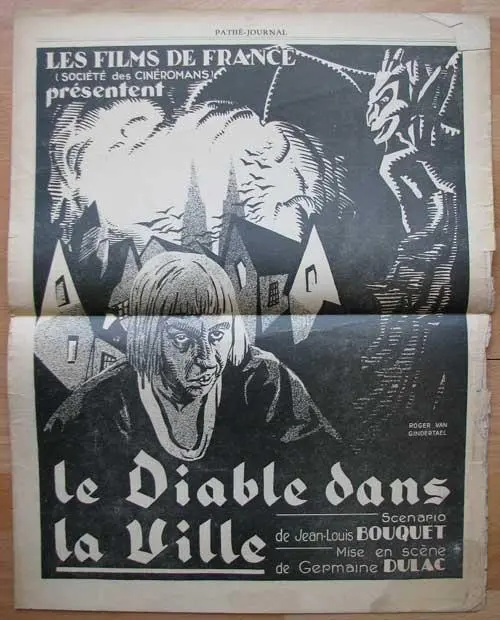
A definitive 6.1/10 rating for a film that redefined the boundaries of cult cinema. Le Diable dans la ville remains a cornerstone of transgressive art.
To gaze upon the frames of Le Diable dans la ville (1924) is to witness the collision of French Impressionism with the primal, atavistic fears of the Middle Ages. Directed by the visionary Germaine Dulac and penned by Jean-Louis Bouquet, this film is far more than a period piece; it is a psychological autopsy of a community in the throes of a self-inflicted hysteria. While many of its contemporaries were preoccupied with the burgeoning urbanity of the 1920s, Dulac retreated five centuries into the past to find a mirror for the contemporary soul. The result is a shadow-drenched exploration of how quickly the human mind retreats into the supernatural when confronted by the inexplicable presence of the 'Other'.
The Grey Tower is not merely a setting; it functions as the central nervous system of the narrative. Abandoned, crumbling, and steeped in the weight of forgotten history, it initially serves as a hideout for a band of smugglers. This use of a decaying monument as a den of criminality evokes a sense of moral decay that mirrors the physical erosion of the stones. Much like the societal tensions seen in The Italian, there is an underlying current of class struggle and the desperation of those living on the fringes of an unforgiving social order.
When the tower is sold at auction, the transition from a 'lawless' space to a 'private' one triggers a fascinating shift in the town's perception. The smugglers were a known quantity—a nuisance, perhaps, but one that fit within the town’s understanding of crime. The new owner, however, represents a vacuum of information. Jacques Vandenne delivers a performance of chilling restraint as the stranger. He does not need to perform acts of evil to be perceived as the devil; he merely needs to exist in silence. His purchase of the tower is a disruption of the town's spiritual geography.
The genius of Bouquet’s writing lies in its refusal to confirm the supernatural. Instead, the film focuses on the mechanics of rumor. We see how a simple glance or an unfamiliar habit is magnified through the lens of medieval piety until it becomes proof of a satanic pact. This thematic thread shares a DNA with the moral panics depicted in The Black Stork, where societal anxieties are projected onto the bodies and actions of individuals who do not conform to the established norm. In Le Diable dans la ville, the 'devil' is a construct of the townspeople’s own insecurities.
As the rumors swell, the visual language of the film becomes increasingly distorted. Dulac uses light and shadow not just to illuminate the scene, but to suggest the warped perception of the characters. The flickering torches and the oppressive stone walls create a sense of entrapment. The town, which should be a place of sanctuary, becomes a cage of its own making. This claustrophobia is reminiscent of the psychological tension in Gefangene Seele, where the soul itself feels imprisoned by external circumstances and internal fears.
The cast, including Vetty, Jean-François Martial, and Michelle Clairfont, provides a rich tapestry of medieval life. Each character represents a different facet of the community’s response to the stranger. Some are driven by greed, others by a genuine, albeit misguided, religious fervor. The interplay between these archetypes creates a friction that propels the plot forward without the need for traditional action beats. The film’s pacing is deliberate, allowing the dread to marinate in the viewer’s mind, much like the slow-burn suspense found in Time Lock No. 776.
In contrast to the grim atmosphere of the Grey Tower, the scenes within the town often feature a chaotic, almost carnivalesque energy. This juxtaposition highlights the absurdity of the town’s collective delusion. While The Wildcat used satire to dismantle military and social structures, Dulac uses a more somber, impressionistic approach to dismantle the sanctity of the mob. The townspeople are not villains in the traditional sense; they are victims of their own lack of imagination and their historical context.
Dulac’s direction is a masterclass in using the camera to convey subjectivity. The way she frames the Grey Tower—often from low angles that make it appear to loom over the very heavens—suggests a power that may or may not be there. The editing patterns during the auction scene and the subsequent riots are frantic, mirroring the heartbeat of a community on the verge of a breakdown. This technical virtuosity places the film in conversation with other high-concept silent dramas like Black Oxen, which also grappled with themes of transformation and the disruption of the natural order.
The use of space is particularly noteworthy. The interior of the tower is depicted as a labyrinthine void, a place where the logic of the outside world ceases to apply. This spatial disorientation serves to alienate the audience, placing us in the shoes of the suspicious villagers. We are never quite sure what the stranger is doing behind those thick stone walls, and it is in this ambiguity that the film finds its greatest strength. It forces the viewer to confront their own tendency to fill in the blanks with their darkest suspicions.
The mysterious stranger is a recurring trope in cinema, often used to expose the hidden rot within a 'civilized' society. In Le Diable dans la ville, this figure acts as a catalyst for a series of events that reveal the town's hypocrisy. Their readiness to believe in the devil speaks volumes about their own lack of faith in their fellow man. This theme of social judgment and the fallibility of human perception is echoed in The Girl and the Judge, where legal and moral frameworks are tested by individual circumstances.
Furthermore, the stranger’s isolation in the tower can be seen as a form of self-imposed exile, a theme explored in different contexts in films like Always in the Way. However, unlike the sentimental protagonists of many 1920s dramas, the hero—or anti-hero—of Dulac’s film remains an enigma until the very end. He does not seek redemption or acceptance; he merely seeks a place to exist. The tragedy of the film is that the town cannot allow him even that small mercy.
The production design of Le Diable dans la ville is remarkably detailed for its time. The costumes and sets do not feel like stage props; they have a tactile, lived-in quality. The mud, the stone, and the coarse fabrics contribute to a sense of 'dirty realism' that was rare in the silent era. This commitment to historical texture invites comparisons to Dorothy Vernon of Haddon Hall, although Dulac’s film eschews the romanticism of the latter in favor of a grittier, more philosophical tone.
The lighting, handled with a painterly sensibility, evokes the works of the Old Masters. Shadows are not just black voids; they are textured and deep, suggesting secrets hidden just out of sight. This mastery of the frame is what elevates the film from a simple morality tale to a profound work of art. It captures the essence of the 15th century—a time of transition between the darkness of the Middle Ages and the burgeoning light of the Renaissance—and uses it as a backdrop for a timeless story about human nature.
As the film reaches its crescendo, the line between the smugglers’ mundane crimes and the stranger’s perceived sins becomes increasingly blurred. The town’s descent into violence is portrayed with a visceral intensity that feels surprisingly modern. The destruction of the tower—and the people within it—is a haunting finale that offers no easy answers. It is a cautionary tale about the dangers of groupthink and the ease with which a community can be manipulated by its own fears.
In the broader landscape of 1920s cinema, Le Diable dans la ville stands as a precursor to the folk horror genre. It shares a certain spiritual kinship with The Unholy Three in its fascination with the macabre and the deceptive nature of appearances. Yet, Dulac’s film is more grounded in sociological reality. It doesn't need monsters or circus freaks to scare us; it only needs a group of ordinary people convinced that they are doing God’s work by destroying what they don't understand.
Reflecting on other works of the era, such as Mouchy or Caught in the Act, one realizes how unique Dulac's vision was. She was not interested in simple entertainment; she was interested in the cinema of ideas. Even in more lighthearted fare like Pick Out Your Husband, there is often a focus on social dynamics, but Dulac takes these dynamics to their most extreme and terrifying conclusion. Even the stoicism found in The Courageous Coward or the professional struggles in Erlebnisse einer Sekretärin pale in comparison to the existential dread that permeates every frame of this medieval nightmare.
Ultimately, Le Diable dans la ville is a towering achievement of silent cinema. It challenges the viewer to look beyond the surface of things and to question the 'devils' we create in our own minds. Germaine Dulac and Jean-Louis Bouquet crafted a film that is as relevant today as it was in 1924, reminding us that the walls of the Grey Tower are never truly gone—they are simply rebuilt in every generation that chooses fear over understanding.
IMDb 5.7
1931
Community
Log in to comment.