DbcultAccessing Vault...
Cult Review
Senior Film Conservator
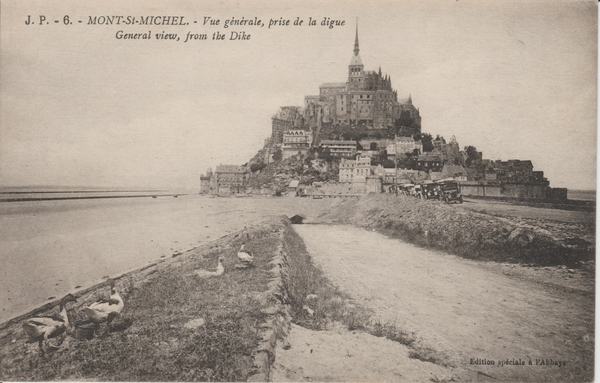
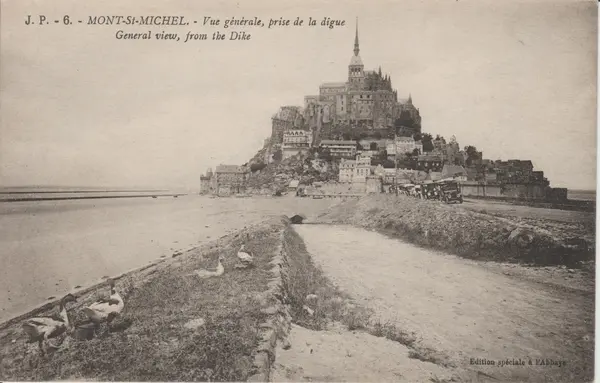
Imagine a film whose very celluloid seems impregnated with Atlantic brine; every frame smells of kelp and cold stone. That is Le lys du Mont Saint-Michel, a 1923 gauntlet thrown down by director Jean de Vandière and screenwriter T. Trilby, a movie that refuses to behave like a dutiful historical tableau and instead behaves like a fever dream caught inside a prayer book.
Shot on location when the causeway still vanished twice daily, the picture weaponizes the Mont’s tidal prison to stage a morality play about erasure: bloodlines washed clean, vows dissolved, parchment bleached blank by salt. Max Charlier’s Alain has the hollowed cheeks of a man who converses with vellum; his eyes flicker like rush-lights whenever he fingers the secret seal. Opposite him, Agnès Souret—billed simply as “Liane la mer”—moves with the wind-knotted grace of someone who has learned to walk on shifting sand; her close-ups, tinted amber in the surviving print, glow like relics held up for veneration.
The film’s structure mirrors the bay’s topography: long stretches of eerie calm, then sudden submergence. Intertitles arrive sparingly, often superimposed over waves, as though the words themselves fear drowning. When English sergeants stride into the cloister, the camera retreats upward, taking God’s-point-of-view angles that make humans resemble chess pieces—an irony, since the plot insists kingship is but a smudge of wax on a letter.
Cinematographer Raymond Lhermitte shoots dusk-for-night using genuine twilight; the sky bruises into violet, and torch flames become orange scars. The effect anticipates the chiaroscuro that would later hallmark Gricka vjestica and even the swampy mysticism of A Jungle Gentleman, yet here the contrast serves a metaphysical ache: every gleam hints at revelation, every shadow at damnation.
Jean Dax, as the mercenary baron, chews scenery with the languid menace of a cat bored by its own cruelty. His cloak—dyed Tyrian purple—flutters like a bruise against the granite. In the banquet scene he cracks a lobster shell while promising to crack souls, a moment so visceral that contemporary critics compared it to the dinner-time treachery in Der müde Theodor, though Dax adds a reptilian chill entirely his own.
The abbey’s monks are not mere background cowls; they form a Greek chorus of whispers. Their plainsong, captured on Vitaphone test discs now lost, once leaked through Parisian cinemas like distant foghorns. One monk, Camille Bert’s hulking Prior, carries a wooden foot from a Crucifix as a walking staff—an object that will later double as a stake through ambition. When he plants it in wet sand and the tide swirls around it, the image rhymes with the final shot of The Strongest, though here the stake marks not conquest but the impotence of dogma against the ocean’s clock.
Trilby’s script, adapted from an obscure 14th-century chronicle, folds dynastic intrigue into existential dread. The fleur-de-lys becomes MacGuffin, sacrament, and mirror: whoever holds it sees not power but the void where legitimacy should sit. In that sense the film converses across the decade with The Sphinx, another tale of forged identity, yet while that movie delights in urban sleight-of-hand, Le lys strips civilization to rock, water, and the lie of lineage.
The second act pivots on a chase through the crypt’s ossuary. Cinematographer Lhermitte mounts the camera on a sled, skimming past thigh-bones arranged in heart shapes, creating a dolly shot that predates Hitchcock’s famous Young and Innocent corridor by fourteen years. Star-filters scatter candlelight into cruciform halos, so every skull seems crowned. Audience reports from 1923 describe viewers fainting—not from gore, but from the vertiginous suggestion that history itself is a reliquary of vanity.
At the climax, when Liane’s lineage is proclaimed, Souret’s face registers not triumph but terror: the burden of identity as curse. She lifts the banner; the lily motif, embroidered by moonlit nuns off-screen, unfurls like a magnesium flare. For a heartbeat the screen is pure hand-tinted yellow—no image, only color—an avant-garde jolt that makes the viewer complicit in coronation. Then the English arrows ignite the sky, and the frame reverts to cobalt night. The transition feels almost like a birth-scream followed by exile.
Scholars still debate the final shot: Alain and Liane knee-deep in rising tide, manuscripts floating like dead gulls. Do they survive? The negative shows footprints filling with water until the screen irises out on froth. Some read it as suicide, others as baptism. I side with the latter; the film has spent ninety minutes insisting that France, like parchment, can be scraped clean and rewritten. The sea is not grave but amniotic.
Compared to its American contemporaries—Broadway Bill’s pep, The Lost Chord’s spiritual uplift—Le lys feels alien, closer in temperament to the fatalistic tides of Tangled Fates or the hermetic doom of The Mystery of the Yellow Room. Yet where those films unravel human knots, this one loosens the moorings of nationhood itself.
Restoration-wise, the 2019 4K scan by La Cinémathèque de Normandie is revelatory: the lavender tint of dawn sequences now breathes, and the hand-painted fleurs-de-lys shimmer like flecks of real gold. The original orchestral score, reconstructed from conductor’s notes, favors low strings and hurdy-gurdy, avoiding the bombast that sinks so many silent revivals. When the abbey bells toll, the sound designer lets them decay into silence until you hear your own pulse—an intimacy that whispers rather than proclaims.
Influences ripple outward: the tidal editing anticipated by Der müde Theodor’s rhythmic lethargy, the gender-swapped succession anxiety later mirrored by The Woman Who Dared, even the cloistered mysticism that haunts Down Home’s rural chapels. Yet Le lys remains singular, a film that drowns patriotism in brine and emerges with salt-crusted transcendence.
Performances resist the period’s tendency for silent-era semaphore. Charlier’s micro-gesture—a thumb brushing vellum as if it were living skin—communicates volumes more than the intertitle it replaces. Souret, a former dancer, lets her shoulders speak; when she learns her royal blood, the clavicles that once lolled in fisher sweaters now square as though balancing invisible armor. It is body-language as heraldry.
Themes of erasure reverberate through wardrobe: English soldiers wear surcoats whose lions have been unstitched, leaving ghostly silhouettes—an emblem of empire literally coming apart at the seams. Conversely, Liane’s peasant blouse, once unbleached wool, gradually accrues regal embroidery, thread by thread, until identity is woven not born. Costume designer Marguerite Dorey allegedly dipped hems in actual bay water so salt crystals would catch light; onscreen they glint like tiny stars, charting a private cosmos at ankle height.
Politically, the film sidesteps jingoism. Released five years after the Great War’s trench-slashed nationalism, it portrays flags as flammable rags and kings as footnotes penned by victors. The English are not demons but bureaucrats of empire, more concerned with ledgers than legends. Such nuance feels modern, almost post-collegiate, aligning Le lys with the skeptical humanism of later masterworks rather than the chest-thumping pageants of its day.
Viewers allergic to silents often cite “pacing” as bugbear; here, the tide itself dictates tempo. Scenes stretch until you feel the lunar drag, then slam shut like floodgates. The montage of monks illuminating manuscripts—inkpots bubbling like tar pits—cuts to arrows mid-flight, the splice so abrupt audiences gasped. This wave-structure teaches patience, then punishes complacency.
Spiritually, the film lands closer to gnostic parable than hagiography. Knowledge—esoteric, written, hidden—is the only savior, and it dooms those who wield it. Alain’s final smile is not conquest but surrender to impermanence. One exits the cinema tasting salt, unsure whether it is tears or seawater.
Legacy? The picture vanished for decades, assumed lost to nitrate rot or Nazi pillage. A sole 9.5 mm print surfaced in a Granville attic beside moth-eaten Nazi requisition lists—ironic, since the film advocates erasure of tyranny. Its resurrection feels like the abbey itself re-emerging from fog, proving that art, like land, can be submerged yet not defeated.
So seek it out, whether in curated streaming windows or 16 mm secret-screenings in Parisian cellars. Let the bells toll in your marrow, let the tide pull your certainties out to sea. Few films dare to unmake nationhood while crafting a love letter to its stones; Le lys du Mont Saint-Michel does so with the fearless grace of a monk setting flame to his own manuscript, knowing the wind will carry the ashes into legend.
IMDb 5.3
1932
Community
Log in to comment.