DbcultAccessing Vault...
Cult Review
Senior Film Conservator

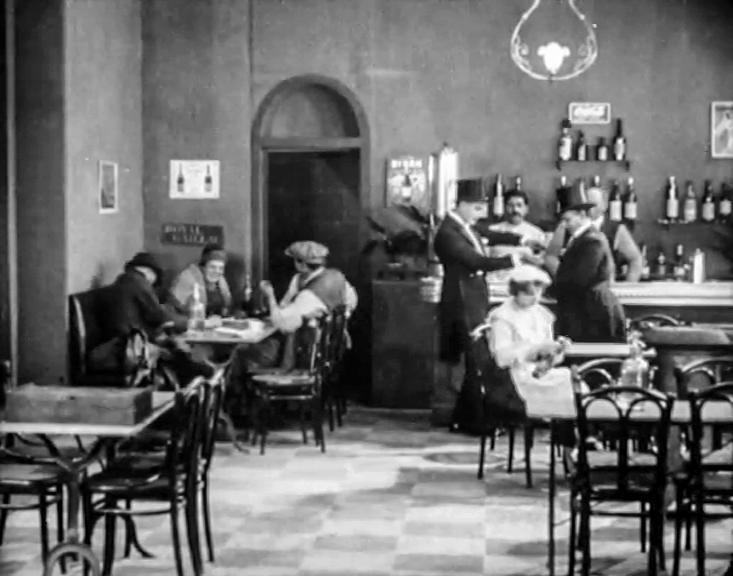
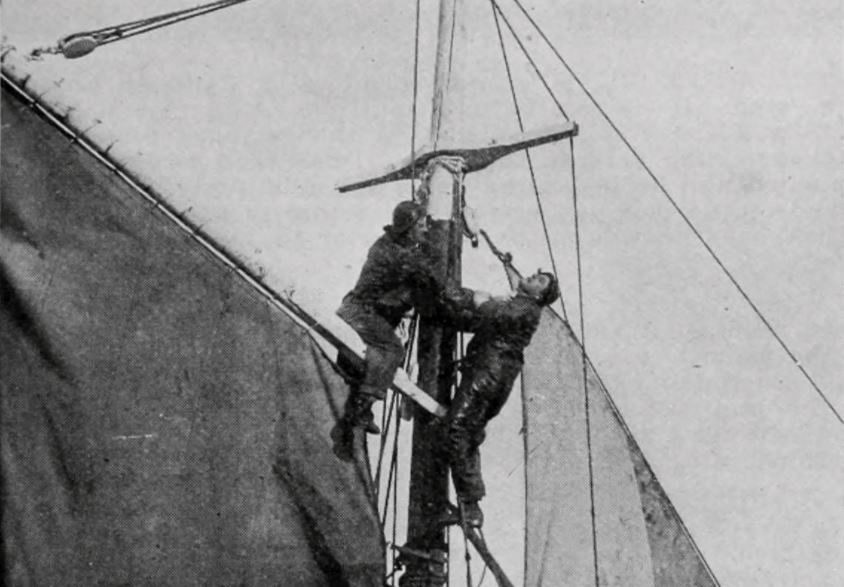
In the annals of early cinema, where narratives often painted in broad strokes, there emerge films that, even without the benefit of spoken dialogue, delve into the intricate labyrinth of the human psyche with surprising acuity. 'A Woman Alone' (1917), featuring the remarkable Alice Brady, stands as one such cinematic artifact. More than a mere melodrama, it functions as a profound character study, tracing the tumultuous emotional odyssey of a young woman caught between the idyllic simplicity of her past, the crushing weight of an unforeseen present, and the deceptive allure of a glittering future. It's a testament to the power of silent storytelling, where every gesture, every flicker of expression, carries the narrative weight of a thousand words, revealing the profound solitude that can permeate even the most seemingly connected lives. This film, though a product of its time, resonates with a timeless quality, exploring themes of belonging, the nature of companionship, and the arduous, often painful, path to self-discovery and genuine affection. It invites us to consider the often-unseen struggles of individuals as they navigate the societal expectations and personal desires that shape their destinies.
Our protagonist, Nellie Waldron, begins her journey bathed in the warmth of a prosperous farm, her spirit described as 'light-hearted' – a phrase that immediately establishes a sense of youthful exuberance and uncomplicated joy. Life with her kindly uncle and aunt is one of comfort and community, a stark contrast to the desolate landscape that will soon define her existence. This initial portrayal is crucial; it sets a baseline of happiness and social connection, making her subsequent isolation all the more poignant and impactful. Her engagement to Tom Blaine, a telegraph operator, seems a natural progression, a step towards a conventional future. However, Tom's transfer to a 'little wayside station, far removed from all other habitation,' acts as the initial tremor, a subtle but seismic shift that reorients Nellie's entire world. The decision to marry him before his departure, propelled by love and perhaps a touch of youthful impetuousness, seals her fate. At first, the intensity of her new marital bond, the freshness of love, acts as a shield against the encroaching silence. Yet, as the novelty wanes, the relentless, oppressive loneliness of the deserted post begins its insidious work. This isn't just physical isolation; it's an intellectual and emotional vacuum, a void where her once vibrant spirit struggles to find sustenance. She yearns not merely for company, but for the specific texture of her old home, the familiar rhythms, the laughter, the inherent belonging that the wayside station conspicuously lacks. This internal struggle is beautifully depicted through Brady's nuanced performance, conveying the slow erosion of cheerfulness into a deep-seated melancholy. It's a universal theme, perhaps even more pronounced in an era when women's identities were often inextricably linked to their domestic spheres, highlighting how even a loving marriage could become a cage if it stifled one's inherent needs for connection and stimulation. The film subtly critiques the societal expectation that a woman's happiness should solely derive from her husband's presence, exposing the hollowness of such a confined existence.
Tom Blaine, Nellie's husband, embodies a form of well-meaning but ultimately myopic contentment. He is 'perfectly contented' with his lot, finding satisfaction in his work and, presumably, in Nellie's presence. His love for her is not in question, but his capacity to understand the profound shift in her emotional landscape is severely limited. For Tom, the station is simply a place of work, an environment where he can fulfill his duties. For Nellie, it's a desolate prison for her spirit. This fundamental disconnect forms the tragic core of their early marital strife. When Nellie articulates her longing for companionship and her old home, Tom, unable to grasp the depth of her despair, perceives it as a complaint, an ingratitude. His reaction is one of resentment, leading to 'hot words' and, ultimately, an arrogant dismissal: 'if she does not like the life, she may return home and remain there.' This outburst, born from his inability to empathize and his own sense of aggrieved pride, shatters the fragile peace of their union. It's a poignant depiction of how love, however genuine, can be undermined by a lack of understanding and communication, particularly when one partner's needs are complex and evolving. The film here echoes the quiet desperation found in other narratives of domestic dissatisfaction, such as The Coming Power, where personal aspirations clash with the rigid expectations of a partner or societal role. Tom’s failure to recognize Nellie’s distress is not malicious, but rather a tragic blindness to the nuances of her inner world, a blindness that precipitates the unraveling of their shared life.
Into this emotionally barren landscape strides Stephen Carter, Jr., a figure of captivating contrast. Described as a 'wealthy idler,' he represents everything the wayside station is not: sophistication, urbanity, and a life of leisure. His enforced stop at the station, a mere inconvenience for him, becomes a pivotal moment for Nellie. Carter, with an almost predatory amusement, begins to flirt with her, finding in her an 'eager listener' to his stories of 'life in the big city.' For Nellie, starved of intellectual stimulation and social interaction, these tales are more than mere flirtation; they are tantalizing glimpses into an alternative existence, a world of vibrancy and possibility that her current life utterly lacks. He doesn't just offer companionship; he offers an escape, a fantasy. While she ultimately refuses his direct proposition to leave with him, the encounter leaves an indelible mark. The seeds of profound dissatisfaction, already germinating in her heart, are now fully sown. Carter, despite his superficiality and ultimately manipulative nature, serves as a powerful catalyst. He doesn't create Nellie's unhappiness, but he illuminates its depth, making her current situation unbearable by presenting a vivid alternative. This encounter underscores a critical theme: the allure of the unknown, the seductive power of a perceived 'better life,' especially when one is deeply unhappy. It’s a classic narrative device, akin to the introduction of temptation in many moral dramas, perhaps even echoing the subtle societal pressures and allure of illicit passion explored in films like Lucíola, where characters grapple with choices that promise escape but often lead to deeper complications. Stephen is not just a character; he is a symbol of the dangerous seduction of a world that promises everything but delivers little of substance.
The departure of Stephen Carter, Jr. leaves Nellie more lonely and dissatisfied than ever before. The brief glimpse of an alternative life has made her current reality insufferable. Her renewed complaints and Tom's unyielding resentment create an unbridgeable chasm, culminating in his harsh ultimatum. Heartbroken and feeling utterly abandoned, Nellie takes Tom at his word and returns to her uncle's house, a place that once offered solace but now feels tainted by her failure. This return, however, is not a homecoming. The world she left behind has moved on, and she, through no fault of her own, has been irrevocably altered. It is here, in her moment of vulnerability, that Stephen Carter reappears, once again attempting to persuade her to go to the city with him. His timing is tragically impeccable, coinciding with Tom's own dawning repentance. John (the prompt uses John, but earlier it was Tom, assuming John is Tom, so I'll stick to Tom for consistency with the plot summary), having somewhat regretted his hasty words, arrives at the uncle's house, his suspicions already aroused by a note Stephen had written to Nellie. The sight of Nellie and Stephen together confirms his worst fears, a cruel twist of fate that misinterprets a moment of desperate conversation as an act of betrayal. Denouncing Nellie, he declares he is 'through with her' and that she 'may go with Stephen.' This public condemnation, amplified by her aunt's subsequent casting out, leaves Nellie utterly adrift, a pariah in the very community that once nurtured her. Her forced departure for the city is not an act of choice but a desperate flight, a struggle to 'forget her unhappiness' in the anonymity of the metropolis. This sequence is a masterclass in melodramatic tragedy, reminiscent of the societal ostracization and moral dilemmas faced by women in films like Den skønne Evelyn, where a woman's reputation and future hang precariously on the whims of circumstance and male judgment. Nellie's journey to the city is thus less an adventure and more an exile, a desperate attempt to outrun the pain that has consumed her rural existence.
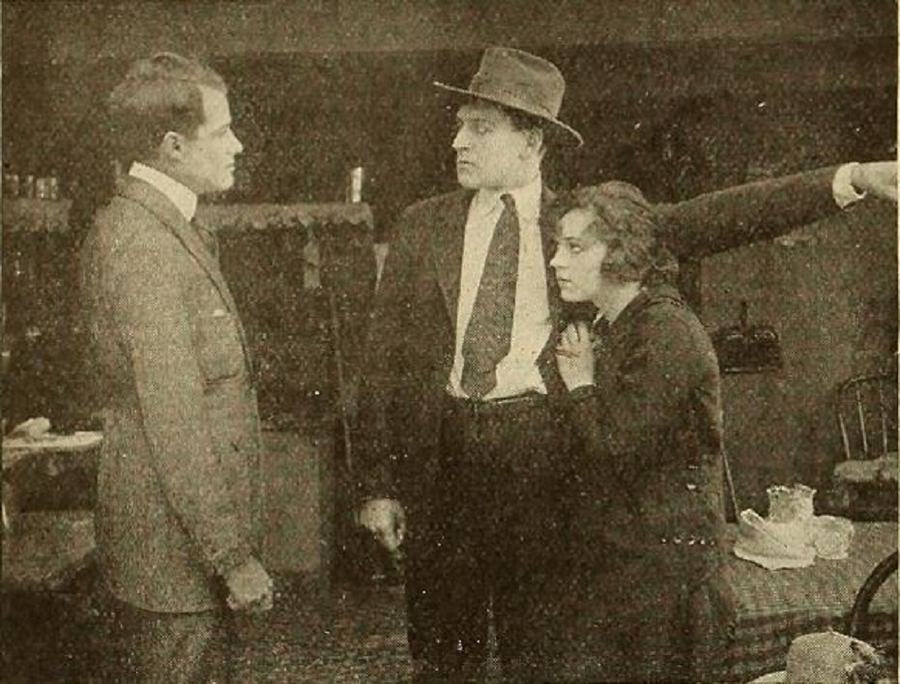
Nellie's arrival in the city marks a new, equally harrowing chapter in her quest for solace. Her initial hope, to 'strive to forget her unhappiness,' quickly dissipates amidst the bewildering anonymity of urban life. She struggles, not just financially, but existentially. The bustling streets, the endless stream of faces, the cacophony of a thousand lives being lived simultaneously – all these elements, which she once imagined as antidotes to her rural isolation, prove to be equally, if not more, alienating. This is a profound realization: that loneliness is not merely the absence of people, but a deeply internal state, a feeling of disconnection that can persist even when surrounded by a multitude. The 'gayety and people' she had envisioned as a panacea are revealed to be superficial, offering no genuine companionship or understanding. Her experiences in the city underscore the film's central thesis: true connection is not about proximity but about profound empathy and shared experience. She discovers that the clamor of crowds can mirror the silence of the wilderness, each environment presenting its own unique form of isolation. This thematic thread runs deep, echoing the disillusionment found in other narratives of rural innocence encountering urban complexity, where the promise of the city often gives way to its harsh realities. It's a poignant commentary on the human condition, illustrating that external circumstances, while influential, are often secondary to internal resilience and the quality of one's relationships. Nellie’s struggle in this new, overwhelming environment is not just for survival, but for a sense of belonging that continually eludes her, a yearning for authentic connection that the superficiality of city life cannot fulfill. Her journey becomes a stark reminder that true happiness is not found in a change of scenery, but in a change of heart and the presence of genuine affection.
A twist of fate brings Flynn, an acquaintance from the Wayside station, back into Nellie's life when she is knocked over by his auto. This seemingly random event reopens the door for Stephen Carter, Jr., who, through Flynn, is informed of Nellie's whereabouts. Stephen, ever the manipulator, seizes this opportunity not to genuinely help, but to ensnare. Unknown to Nellie, he secures a position for her, thereby placing her in his debt. This is a subtle but insidious form of control, where apparent generosity masks a deeper, more sinister agenda. He gradually gets her further into his debt, creating a web of obligation that binds her to him. Nellie, still unhappy and surrounded by 'uncongenial associates,' remains unaware of Stephen's machinations, yet her instincts tell her something is amiss. The urban 'gayety' she now experiences is hollow, filled with people who offer no true camaraderie. This realization – that life surrounded by superficial revelry can be 'equally as lonely as life at a deserted wayside station' – is a pivotal moment of clarity. It marks her disillusionment with the urban dream and a profound yearning for what she truly lost: the genuine, albeit flawed, connection with Tom. This longing prompts her to write to him, begging forgiveness and hinting at a 'great secret' – a narrative device that adds suspense and depth to her character, suggesting a maturity born of suffering. Stephen, feeling he has waited long enough, finally reveals the truth of her precarious financial and social position, demanding 'payment for his favors.' This moment is the culmination of his calculated cruelty, exposing his true character. It's a stark reminder of the vulnerability of women in that era, often dependent on the whims and 'favors' of men, a theme that resonates with other films exploring the exploitation of women, such as Paid in Full, which often depicted the moral and social quandaries faced by those in precarious financial situations. Nellie's struggle against his advances is not just physical; it's a battle for her dignity and autonomy, a refusal to succumb to the very forces she had unwittingly sought to escape.
The tension in Stephen's apartment reaches its peak as he presses his demands upon Nellie. Her struggle against his advances is a powerful cinematic moment, conveying her moral fortitude and unwavering resolve despite her vulnerable position. It is at this precise, critical juncture that the door is dramatically flung open, and Tom rushes in. His arrival is nothing short of a deus ex machina, a perfectly timed intervention that saves Nellie from a fate worse than loneliness. The ensuing confrontation is swift and decisive: Stephen is thrown out, his manipulative game brought to an abrupt and ignominious end. In the aftermath of the chaos, husband and wife are left to confront each other, their past mistakes, and the arduous journey that has led them back together. It is in this moment of shared vulnerability and relief that they experience a profound epiphany: 'love is the only thing in the world.' This conclusion, while perhaps appearing somewhat neat in its resolution, serves as a powerful affirmation of the film's core message. It suggests that true love, forged in the crucible of adversity, misunderstanding, and profound personal struggle, is ultimately the most resilient and redemptive force. Their journey, fraught with separation, temptation, and despair, ultimately brings them to a deeper understanding of each other and the true value of their bond. It's a classic cinematic resolution, emphasizing the triumph of enduring affection over superficial allure and the harsh realities of life. The ending, therefore, is not merely a happy one, but a meaningful one, symbolizing the hard-won wisdom that comes from navigating life's most challenging emotional landscapes. The film concludes not with a return to innocence, but with a matured, chastened understanding of what truly matters, a sentiment that resonates with the emotional arcs of characters in other dramas of moral fortitude and reconciliation, such as The Catspaw or Sowers and Reapers, where protagonists overcome significant obstacles to find their way back to a path of virtue and genuine connection.
Central to the enduring impact of 'A Woman Alone' is the extraordinary performance of Alice Brady. In an era where melodramatic gestures could easily overshadow subtle character work, Brady delivers a portrayal of remarkable depth and nuance. Her ability to convey Nellie's complex emotional transformation without the aid of spoken dialogue is nothing short of masterful. We witness her transition from the 'light-hearted young girl,' brimming with innocent joy, to the woman slowly consumed by the 'intense loneliness' of the wayside station. Brady uses her eyes, her posture, and the smallest shifts in facial expression to communicate Nellie's burgeoning discontent, her yearning for companionship, and her quiet despair. Later, as Nellie grapples with the superficiality of city life and Stephen's insidious manipulation, Brady imbues her with a fragile resilience, a sense of inner strength that belies her outward vulnerability. Her struggle against Stephen's advances is portrayed with a visceral honesty that makes the scene truly compelling. It is through Brady's eloquent silence that Nellie's journey from naive contentment to profound disillusionment, and finally to a hard-won understanding of true love, becomes utterly believable and deeply moving. Her performance elevates the film beyond a simple plot, transforming it into a rich character study that allows audiences to empathize profoundly with Nellie's internal world. Her command of the silent medium, akin to the expressive power seen in performances from stars in films like Such a Little Queen or Sweet Kitty Bellairs, underscores the unique artistry required to communicate complex human emotions in the absence of sound, making her a standout figure in silent cinema.
More than a century after its release, 'A Woman Alone' continues to resonate with audiences, a testament to its timeless themes and the compelling performance by Alice Brady. The film functions as a poignant social commentary, subtly critiquing the restrictive roles often imposed upon women in the early 20th century, where a woman's happiness was frequently expected to be solely derived from her domestic situation, regardless of her individual needs for intellectual stimulation and social connection. Nellie's journey from the pastoral idyll to urban disillusionment, and her ultimate realization about the nature of love, offers a powerful message about the search for authentic connection in a world filled with superficiality and misdirection. It underscores the idea that true loneliness is an internal state, capable of permeating both deserted landscapes and bustling metropolises. The film's examination of marital discord, the seductive power of external allure, and the corrosive effects of misunderstanding within relationships remains remarkably relevant. It's a reminder that communication, empathy, and a deep understanding of one another's inner worlds are paramount for sustaining genuine affection. As a piece of early cinema, it showcases the sophisticated storytelling capabilities of the silent era, proving that profound emotional narratives could be woven without a single spoken word. The film's enduring legacy lies in its exploration of the human heart's complex desires and its ultimate affirmation that, despite life's many trials and temptations, a love forged in adversity and understanding is indeed the 'only thing in the world.' It stands as a compelling example of how early films, often dismissed as mere historical curiosities, can offer profound insights into the universal human experience, inviting us to reflect on our own journeys for connection and belonging. The enduring appeal of such narratives, which explore the depths of human emotion and the complexities of relationships, can be seen in the continued scholarly interest in films like The Heiress at Coffee Dan's or Lena Rivers, which similarly delve into the struggles and triumphs of women navigating their worlds.

IMDb 7
1937
Community
Log in to comment.