DbcultAccessing Vault...
Cult Review
Senior Film Conservator
Is Le Paraguay worth watching today? Short answer: yes, but with significant caveats that demand a specific kind of viewer. This film is an invaluable historical artifact, best suited for those with a deep interest in early documentary filmmaking, cultural anthropology, or the specific history and geography of Paraguay. It is decidedly not for viewers seeking a fast-paced narrative, high-definition visuals, or a contemporary deep dive into geopolitical complexities, nor for those who demand a tightly structured plot.
What we have here is a relic, a time capsule from an era when cinema was still finding its voice as a tool for exploration and education. It’s a journey, not a drama. It works. But it’s flawed. Its value lies less in its cinematic artistry by modern standards and more in its unique historical perspective.
The cinematic landscape is vast, filled with narratives that captivate and characters that linger. Then there are films like Le Paraguay, which exist in a different dimension altogether. This isn't a film designed to entertain in the conventional sense, nor is it a meticulously crafted documentary with a clear agenda beyond pure observation. Instead, it serves as a fascinating, if somewhat rudimentary, record of a specific place at a specific time.
This film, attributed to the intrepid Marquis de Wavrin – a figure synonymous with early 20th-century exploration and ethnographic documentation – is less a directed piece and more an compiled visual diary. It invites us to consider the very purpose of early cinema: to capture, to inform, to transport. In an age before instant global access, such films were windows to unseen worlds, vital for understanding cultures and landscapes beyond one's immediate experience. Its mere existence is a testament to the pioneering spirit of its creators.
For those who appreciate the raw, unfiltered gaze of historical footage, Le Paraguay offers a rare opportunity. It’s a film that demands patience, curiosity, and a willingness to engage with its particular rhythms. It's a foundational text for anyone interested in how visual media began to shape our understanding of the world.
The narrative, or lack thereof, of Le Paraguay is its most defining characteristic. We are taken on a journey across a vast nation, guided by the very river that gives the country its name – a powerful metaphor for the lifeblood of the land. The film opens with this geographical anchor, immediately establishing a sense of place that is both grand and elemental. This foundational approach sets the tone for an exploration that prioritizes breadth over depth, showcasing the sheer diversity of the Paraguayan landscape.
From the ancient rhythms of the Chamacoco Indian village in the north, a segment that offers a precious, if brief, glimpse into a culture often marginalized, to the bustling streets of Asunción, the film attempts to paint a comprehensive picture. The transition from the timeless rituals of the Chamacoco to the colonial architecture of Concepción and the urban sprawl of the capital is jarring, but deliberately so. It highlights the vast cultural and developmental spectrum within Paraguay, a nation caught between its deep historical roots and the march of progress.
One particularly striking sequence involves the traditional lime production at Calera. Here, the camera lingers on the meticulous, laborious process, a testament to enduring craftsmanship. This segment, devoid of dialogue, speaks volumes about human ingenuity and resilience. It stands in stark contrast to the awe-inspiring scale of the Itaipú dam, one of the modern world's engineering marvels, which the film also highlights. This juxtaposition of the ancient and the modern, the hand-crafted and the industrial, is perhaps the film's most compelling, albeit understated, thematic thread.
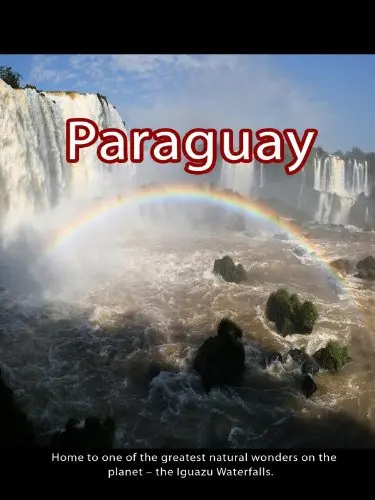
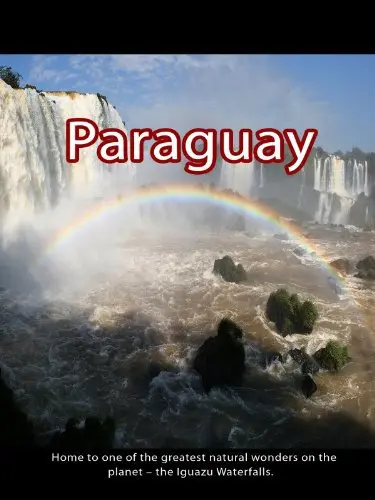
The film’s culminating sequence, a cross-border expedition to the Iguazú waterfalls, is visually breathtaking. It’s a grand finale that emphasizes the natural splendor of the region, a reminder that some wonders transcend national boundaries. While similar in spirit to other early travelogues like High Spots of Hawaii, Le Paraguay feels more grounded in ethnographic curiosity, less a mere tourist brochure and more an earnest attempt at cultural documentation.
To critique the cinematography and direction of Le Paraguay through a modern lens would be unfair. This is not a film with elaborate tracking shots or sophisticated lighting setups. Instead, its visual language is one of raw observation. The camera, likely heavy and cumbersome, is often static, capturing wide vistas or intimate, unposed moments with a simple, direct gaze. There's an honesty in this simplicity, a lack of artifice that is refreshing.
Marquis de Wavrin, listed as 'Cast', likely served as both the primary explorer and, by extension, the de facto director and cameraman. His 'direction' is evident in the choice of subjects and the framing of each shot. He prioritizes clarity and information, ensuring that the viewer can clearly discern the activity or landscape being presented. For instance, the shots of the Chamacoco village, while brief, are composed to show daily life in motion, offering a rare window into their world without overt sensationalism, a remarkable feat for its time.
However, this observational style also means that some segments feel less polished. There's a certain unedited quality to the transitions, a lack of smooth continuity that can be jarring. The camera work, while functional, occasionally suffers from limitations of the era, such as inconsistent focus or exposure. But these imperfections are part of its charm, a reminder of the pioneering spirit required to make such a film in remote locations. It's a raw, unfiltered vision, and for those who appreciate the rough edges of historical cinema, it’s a treasure.
The pacing of Le Paraguay is deliberate, even languid. This is a film that takes its time, allowing scenes to unfold without hurried edits or a propulsive score. In an era saturated with TikTok-fast content, this slow burn can feel challenging. Minutes might pass showing a river flowing or people engaged in mundane tasks. This isn't a flaw, however; it's a characteristic of early documentary filmmaking, where the goal was often simply to present reality as it appeared, rather than to manipulate it for dramatic effect.
The tone is largely one of detached curiosity, an anthropological gaze. There’s little overt commentary or emotional manipulation. Marquis de Wavrin's presence, though uncredited as narrator, pervades the film through his choices of what to show. There's a sense of wonder, but it's understated, allowing the viewer to form their own impressions. The visit to the Czech countryman, for example, is presented as a simple encounter, a cultural exchange rather than a dramatic meeting. This reserved approach lends the film an air of authenticity, even if it sacrifices some engagement for a modern audience.
My unconventional observation: the film’s greatest strength might also be its greatest contemporary hurdle. Its refusal to conform to modern storytelling tropes, its almost stoic presentation of facts and observations, makes it feel profoundly alien to today's documentary landscape. It’s less a film and more a moving archive, which, for the right viewer, is infinitely more valuable.
For the casual viewer seeking entertainment, Le Paraguay will likely feel like a chore. Its slow pace, lack of a clear narrative, and dated visual quality are significant barriers. However, for those with a specific academic or cultural interest, its value is undeniable. It's a rare portal to a past world, offering insights into a nation that has undergone immense transformation.
If you are a student of history, an ethnographer, or simply someone fascinated by the early days of cinema and its role in documenting unexplored territories, then yes, it is absolutely worth your time. It provides context, raw data, and a unique perspective that no modern documentary could fully replicate. It serves as a primary source, a direct visual link to a historical moment.
It's also a powerful reminder of how much the world has changed, and how much has remained the same. The natural beauty, the resilience of indigenous cultures, the human drive to build and explore – these themes resonate across centuries. But approach it with the right mindset: not as a blockbuster, but as an archaeological find.
Le Paraguay is not a film you ‘enjoy’ in the traditional sense; it’s a film you study. It’s a testament to the power of the moving image to preserve moments in time, to capture worlds that have since transformed. While it demands considerable patience and a specific kind of intellectual engagement, its historical and cultural significance is undeniable. For those willing to meet it on its own terms, it offers a profoundly rewarding, if challenging, glimpse into a fascinating nation and a pioneering era of filmmaking. It stands as a vital piece of cinematic archaeology, a window into a past that continues to inform our present.
IMDb 6.4
1921
Community
Log in to comment.