DbcultAccessing Vault...
Cult Review
Senior Film Conservator
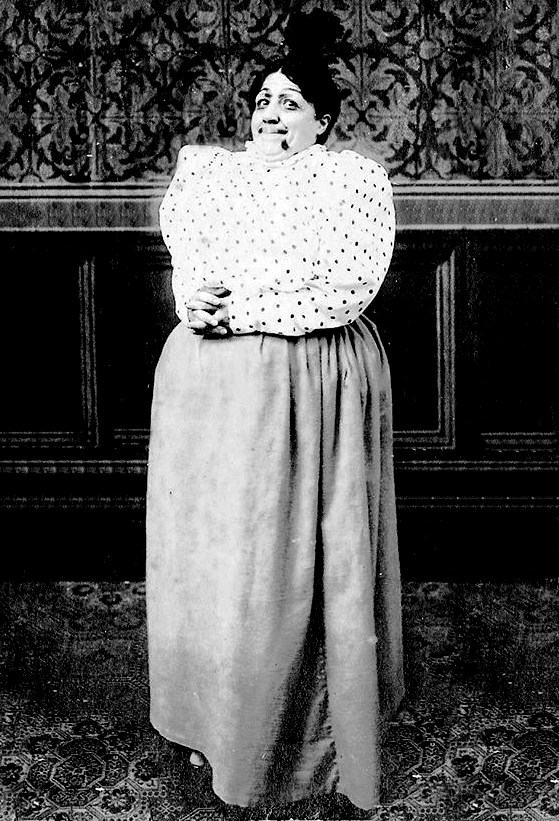
To witness Le peripezie dell'emulo di Fortunello e compagni is to step into a fever dream of early 20th-century sensibilities. Released in 1918, a year of profound global transition, this film serves as a fascinating bridge between the vaudevillian traditions of the past and the burgeoning language of cinema. While many contemporary works like The Valentine Girl leaned heavily into the sentimentalism of the ingenue, this Italian production embraces a chaotic, almost dadaist energy that feels remarkably modern in its cynicism toward social structures.
The film’s central conceit—the 'emulo' or imitator of Fortunello—is a stroke of intertextual genius. Fortunello, a character derived from the American comic strip 'Happy Hooligan' by Frederick Burr Opper, had already become a cultural touchstone in Italy. By centering a film on an *imitator* of this character, the directors (whose identity remains a subject of scholarly debate) crafted a meta-narrative that explored the nature of celebrity and the democratization of humor. Unlike the moral gravity found in Pride and the Devil, this film revels in the superficial, the kinetic, and the absurd.
The ensemble cast is led by the formidable Paola Pezzaglia and Cesare Zocchi, performers who understood the unique requirements of the silent frame. In an age before synchronized sound, the body was the primary instrument of storytelling. Pezzaglia, in particular, brings a nuanced physicality that contrasts sharply with the broader strokes of her contemporaries. While a film like The Strong Way utilized its actors to convey earnest melodrama, the players here are conduits for a more frantic, almost desperate form of comedy.
The supporting cast, including Signorina Marini and Signorina Miotti, provides a necessary grounding for the 'emulo’s' erratic behavior. Their interactions are choreographed with a precision that rivals the clockwork complexity of Un día en Xochimilco, though the tone remains decidedly more irreverent. Egidio Velotti and Mario-Maria De Mur contribute to the film’s sense of community—a 'compagni' that feels less like a traditional family and more like a band of survivors navigating a world that has lost its mind.
Visually, the film is a masterclass in the use of the tableau. The cinematography utilizes deep staging to allow multiple layers of action to occur simultaneously. This density of visual information is a far cry from the more static compositions of Blazing Love. There is a palpable texture to the film—the grain of the wood in the sets, the dust in the streets, the exaggerated makeup of the performers—all of which contributes to a sense of 'verismo' filtered through a funhouse mirror.
The editing, though rudimentary by modern standards, possesses a rhythmic quality that propels the viewer through the 'peripezie' (misadventures) with breathless speed. It lacks the brooding atmosphere of The Sons of Satan, opting instead for a bright, high-key lighting scheme that emphasizes the clarity of the physical gags. This choice is crucial; the film is a celebration of the visible, the tangible, and the immediate.
To understand the impact of this film, one must consider the historical backdrop. Italy in 1918 was a nation scarred by war and social upheaval. In this context, the 'emulo' of Fortunello is not merely a clown; he is a symbol of resilience. Like the protagonists in Australia Calls, he is a figure struggling against forces beyond his control, yet he does so with a grin and a tumble. Where When Men Betray sought to explore the fractures in the social contract through tragedy, 'Le peripezie' does so through the subversion of social norms.
The film’s episodic structure mirrors the fragmented reality of the time. Each misadventure is a self-contained unit of chaos, much like the disparate narrative threads found in Kennedy Square. However, the connective tissue here is the character’s unwavering commitment to his own absurdity. This is a film that refuses to take itself seriously, and in doing so, it achieves a level of honesty that more 'serious' works often miss.
When comparing this work to American contemporaries like The Pinch Hitter, the difference in comedic philosophy is striking. American slapstick often relied on a 'zero-to-hero' arc, whereas 'Le peripezie' is content with the hero remaining a zero—a perpetual outsider whose only victory is his continued existence. It shares more DNA with the whimsical subversion of Impossible Susan than with the rugged masculinity of Her Man.
Even when compared to the burgeoning Western genre, such as John Ford's Bucking Broadway, the Italian film maintains a distinct urbanity. It is a product of the piazza and the theater, not the open range. It is interested in the friction of bodies in crowded spaces, the misunderstanding of high-society etiquette, and the sheer joy of the unexpected. The technical ingenuity on display here, while different in scope, echoes the puppetry and craft found in Sanz y el secreto de su arte, where the illusion of life is created through meticulous physical control.
It is a tragedy of film history that so many works from this period have been lost or relegated to the shadows of archives. Unlike the enduring presence of religious epics like Life of Christ, early comedies were often viewed as ephemeral entertainment, disposable as yesterday’s newspaper. Yet, 'Le peripezie dell'emulo di Fortunello e compagni' demands a reappraisal. It is a vital document of a time when cinema was still discovering its own power to provoke laughter through pure visual invention.
The film’s final sequences, involving a dizzying chase that seems to encompass the entirety of the city, serve as a precursor to the great chase scenes of Keaton and Lloyd. There is a primitive beauty in these frames—a raw, unpolished energy that more sophisticated productions often lack. The 'emulo' is a figure of pure id, a reminder that in a world of rigid structures and devastating conflicts, there is still a place for the clown.
Ultimately, 'Le peripezie dell'emulo di Fortunello e compagni' is more than just a historical curiosity. It is a vibrant, breathing piece of art that captures the essence of the human spirit’s refusal to be crushed by circumstance. The performances of Signora Fosca and the rest of the ensemble provide a snapshot of a theatrical world in transition, while the direction hints at the surrealist movements that would soon sweep through European cinema.
For the modern viewer, the film offers a chance to disconnect from the hyper-realism of today and reconnect with the primal joy of the image. It is a reminder that cinema, at its heart, is a medium of movement. Whether it is the subtle twitch of a mustache or the grand spectacle of a falling set piece, this film understands that the eye is the gateway to the soul—and that sometimes, the best way to reach that soul is through a well-timed stumble. In the pantheon of silent cinema, this work deserves a place of honor, standing tall as a testament to the enduring power of the 'peripezie'—the trials, the tribulations, and the ultimate triumph of the comedic spirit.
Community
Log in to comment.