DbcultAccessing Vault...
6/10
Senior Film Conservator
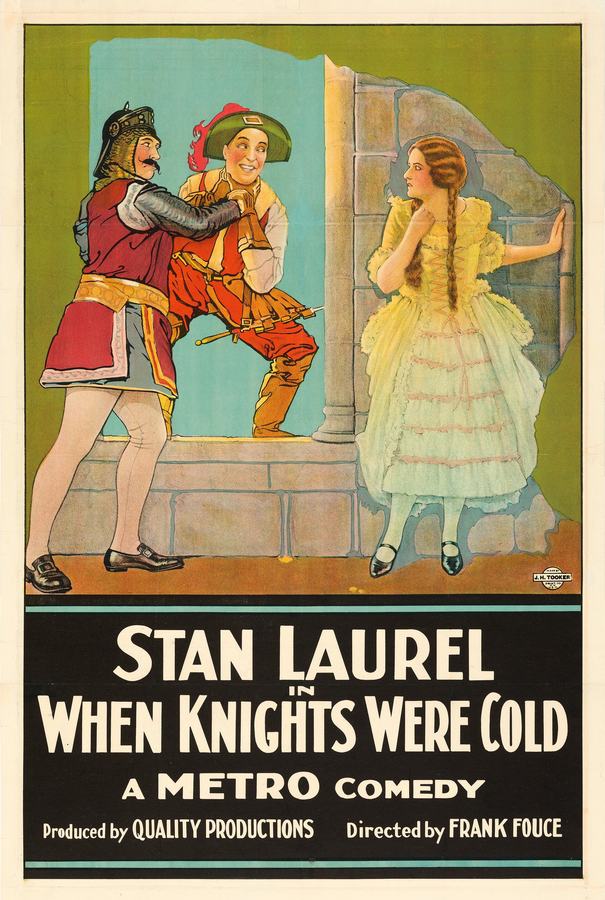
A definitive 6/10 rating for a film that redefined the boundaries of cult cinema. When Knights Were Cold remains a cornerstone of transgressive art.
Before the iconic pairing with Oliver Hardy solidified his place in the Hollywood firmament, Stan Laurel was a restless innovator of the solo slapstick form. In When Knights Were Cold (1923), Laurel takes aim at the burgeoning trend of the historical epic, specifically the grandiosity popularized by Douglas Fairbanks. While many silent comedies of the era relied on simplistic pratfalls, this film—even in its surviving fragment—demonstrates a sophisticated understanding of genre deconstruction. The 1920s were a crucible for cinematic growth, and Laurel’s work here stands as a testament to the era's willingness to bite the hand that fed the blockbuster machine.
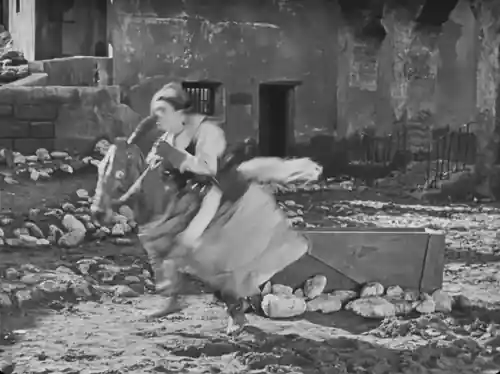
The film transports us to a medieval walled town, a set that feels surprisingly lived-in for a parody. Laurel’s character, a rogue whose lineage traces back to the legendary Robin Hood, is introduced not through noble deeds, but through the sheer velocity of his movement. Much like the physical intensity seen in The Grim Game, Laurel utilizes the environment as a playground for survival. However, where Houdini sought to inspire awe, Laurel seeks to provoke a sense of the ridiculous. The kinetic energy of the chase is the film's heartbeat, a relentless pulse that drives the narrative forward despite the missing first reel.
The most enduring image of When Knights Were Cold is undoubtedly the use of music-hall half-horse costumes. In an era where films like The High Horse were exploring more traditional equine comedy, Laurel’s decision to use pantomime horses is a stroke of genius. It strips away the artifice of the "epic" and forces the audience to confront the staged nature of the medium. The knights, supposed paragons of virtue and power, are reduced to men in felt and wire, bobbing across the screen in a rhythmic, clattering dance. This choice isn't merely a budget-saving measure; it is a direct critique of the self-seriousness of the 1922 Robin Hood.
This visual gag serves as a bridge between Laurel’s vaudevillian roots and his cinematic future. The way he handles the "horse"—treating it with both the reverence of a knight and the frustration of a man stuck in a costume—prefigures the delicate balance of pathos and comedy he would later perfect. The absurdity of the pursuit, with a phalanx of these fabric beasts charging through the cobblestone streets, creates a surrealist atmosphere that feels closer to modern experimental film than the standard fare of 1923.
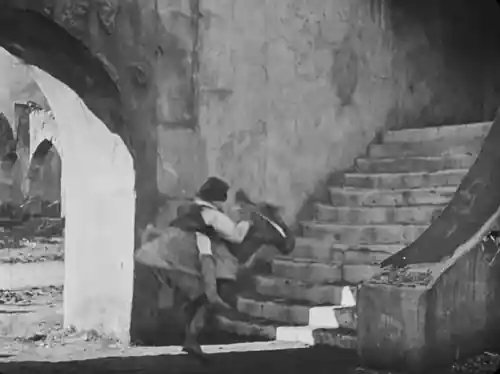
When the chase inevitably leads to confrontation, the film pivots into a masterful parody of Fairbanks’ athleticism. Laurel’s swordplay is a dizzying array of parries and thrusts, but they are executed with a limp-wristed elegance that mocks the hyper-masculinity of the genre. He takes on dozens of swordsmen simultaneously, a feat that would be impressive if it weren't so clearly choreographed as a ballet of blunders. Unlike the gritty realism found in Rounding Up the Law, the violence here is bloodless and rhythmic, emphasizing the art of the gag over the stakes of the conflict.
Tom Miranda’s writing shines in these moments. The scenarios are constructed to escalate tension only to deflate it with a well-timed visual pun. The rival, played with a delightful pomposity, acts as the perfect foil to Stan’s erratic energy. Their one-on-one duel is the centerpiece of the surviving footage, a sequence that utilizes the verticality of the set—balconies, stairs, and crenellations—to keep the audience’s eyes in constant motion. It is a masterclass in spatial awareness, ensuring that the geography of the fight is always clear, even as the action becomes increasingly chaotic.
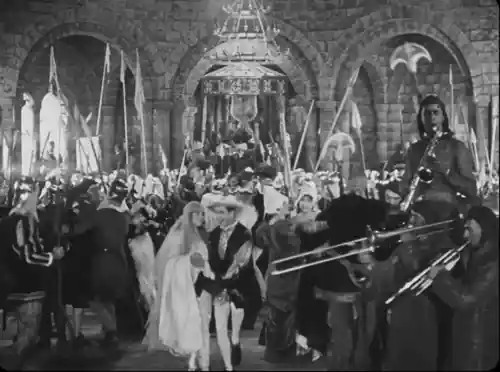
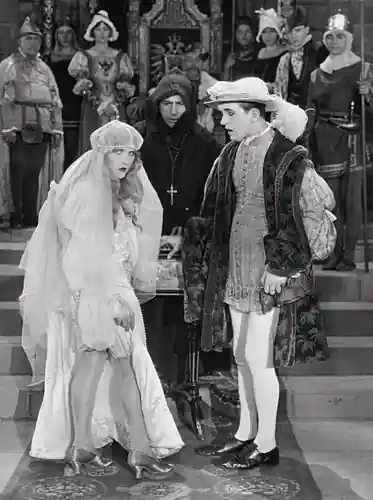
The romantic subplot, involving Catherine Bennett as the princess, follows the familiar tropes of the damsel in distress but treats the eventual union with a cynical eye. The state ceremony that concludes the film is a fascinating look at how silent comedy handled institutional power. The marriage is not just a romantic resolution; it is a bureaucratic necessity. This theme of marriage as a contract or a social maneuver is a recurring motif in films like A Wife by Proxy or By Proxy, and Laurel’s take is characteristically irreverent. The princess herself is less a character and more a trophy, a fact that the film seems to acknowledge through its exaggerated pageantry.
The presence of Dot Farley and Mae Laurel adds layers to the ensemble, providing a comedic weight that balances Stan’s lighter-than-air persona. The interaction between these characters suggests a world that exists beyond the frame, a medieval society governed by the same absurd rules as the 20th-century audience. This temporal dissonance is what makes the film feel so modern; it doesn't try to recreate the past so much as it uses the past as a mirror for the present's follies.
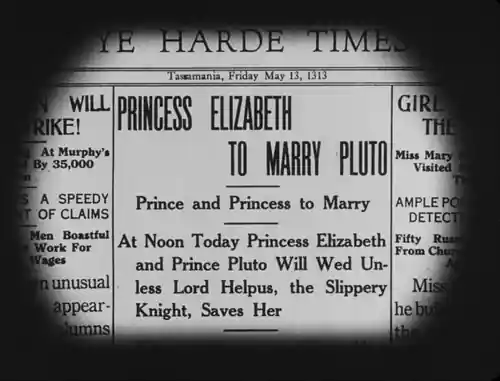
It is a cinematic tragedy that only the second half of When Knights Were Cold survives. Much like the lost potential found in the fragments of Agit-Train of the Central Committee, we are left to piece together the narrative from the wreckage of time. Yet, what remains is remarkably polished. The lighting, particularly in the interior scenes of the walled town, shows a sophistication that many comedies lacked. The shadows are long and dramatic, mimicking the German Expressionist style seen in Umirayushchiy lebed, but used here to highlight the ridiculousness of the characters rather than their despair.
The pacing is relentless. There is no "breathing room" in the surviving reels, which may be a result of the editing required to save what was left of the film, but it works in the film's favor. It creates a fever-dream quality, where one absurdity follows another without the need for logical connective tissue. In this way, it mirrors the disjointed nature of memory and history, fitting for a film that parodies the very idea of a "historical record."
When placed alongside other 1923 releases, When Knights Were Cold feels like an outlier. While Cecil B. DeMille was exploring the moral complexities of For Better, for Worse, Laurel was busy tearing down the walls of cinematic tradition. The film lacks the whimsical fairy-tale quality of The Pied Piper of Hamelin, opting instead for a gritty, sweat-stained version of the Middle Ages that feels more honest in its dishonesty. It shares a certain DNA with Skruebrkkeren in its mechanical approach to comedy, where every movement is a gear in a larger laugh-machine.
Even compared to Laurel’s other early works like School Days, this film shows a significant leap in ambition. He isn't just playing a character; he is satirizing a culture. The 1920s audience, well-versed in the tropes of the western (like A Western Adventurer) and the melodrama (like Mortal Clay), would have found the subversion of the knight-errant particularly biting. It was a period of "broadcasting" new ideas (as seen in the literal Broadcasting of the same year), and Laurel was at the forefront of this comedic revolution.
Ultimately, When Knights Were Cold is more than a mere curiosity for Laurel and Hardy completists. It is a vibrant, breathing piece of film history that captures a master at work before he found his perfect partner. The film’s reliance on physical comedy, its sharp satirical edge, and its sheer visual audacity make it a landmark of the silent era. It reminds us that comedy is often most effective when it is dismantling the things we hold most sacred—in this case, the myth of the noble knight and the sanctity of the historical epic.
While we may never see the full vision that Tom Miranda and Stan Laurel intended, the surviving fragment is enough to confirm its brilliance. It is a dance around love and luck, much like Der Tanz um Liebe und Glück, but performed on the back of a pantomime horse with a wooden sword in hand. For anyone interested in the evolution of screen comedy, this film is essential viewing—a cold knight that still burns bright with the fire of comedic genius.
IMDb 7.3
1931
Community
Log in to comment.