DbcultAccessing Vault...
Cult Review
Senior Film Conservator
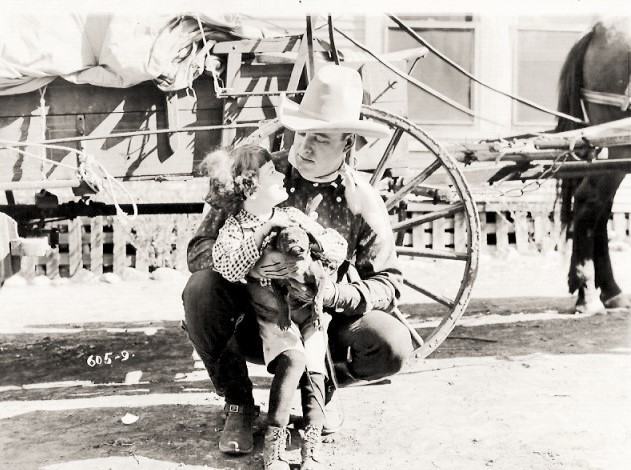
The first time you see Calumet Marston, he is a silhouette framed against a sodium-orange dusk, hat brim devouring his face like a eclipse. Director Alan James lets the silence scream: no title card, just wind scratching the emulsion. That absence of exposition is the film’s manifesto—The Boss of the Lazy Y trusts the audience to inhale history from cracked adobe and sun-blistered leather.
For a 1921 oater shot on fraying Eastman stock, the picture carries an unnerving modernity. Its DNA spliced from Charles Alden Seltzer’s pulp sermons, the narrative refuses to lope along the well-worn wagon ruts of righteous cowpoke versus mustache-twirling villain. Instead, it stages a triangular psychodrama: land as memory, woman as fiduciary weapon, and prodigal son as both avenger and trespasser.
The Lazy Y is not mere backdrop; it is a palimpsest of generational scars. Each fence post bears the acid burn of Calumet’s adolescent quarrel with his father—an argument so volcanic it drove the heir into sagebrush purgatory. James photographs the ranch in languorous wide shots, horizon bisecting the frame like a healed fracture, implying reconciliation is geographically inevitable yet emotionally impossible.
Enter Betty Clayton—played by Josie Sedgwick with the quiet ferocity of a calyx unfurling through alkali crust. She is introduced via a dolly shot (audacious for 1921) gliding past corrals toward her petite figure perched on a split-rail, ledger clenched like a revolver. The camera’s forward momentum anoints her co-protagonist, not romantic garnish. The patriarch’s posthumous decree—appointing Betty manager—unleashes a gendered insurrection that feels proto-feminist, not token.
Tom and Neal Taggart, essayed by Roy Stewart and Bill Patton respectively, constitute a diptych of venality. Tom’s menace is feral—he chews locoweed to yellow his teeth, a walking cautionary folktale. Neal, conversely, embodies the corporatization of frontier banditry: immaculate cravat, mortgage papers instead of six-gun. The brothers’ strategic divergence—savagery versus ledger warfare—renders them a bifurcated nemesis, capitalism’s twin faces.
A chilling tableau halfway through shows Neal quietly altering boundary maps by candle while, through the window, Tom strings barbed wire soaked in ranchers’ blood. Cross-cutting here prefigures Eisenstein; ideology and violence interlock like sprocket holes.
Intertitles in Lazy Y are sparse, almost ascetic. When Calumet finally confronts Betty about her managerial claim, James withholds dialogue cards for a full ninety seconds. The pair circle each other inside a half-built hayloft, dust motes igniting like sparks. Sedgwick’s micro-expressions—jaw muscle flickering, pupils dilating—carry the scene. The absence of text becomes rhetorical: ownership, masculinity, and desire implode wordlessly.
Graham Pettie’s Calumet is neither swaggering heart-throb nor marble-hewn hero. His shoulders twitch with guilt, eyes perpetually rheumy from desert nights and self-loathing. Pettie underplays, trusting posture to narrate: when he learns his parents’ bodies were discovered hoof-printed into the creek bed, his knees buckle inward—a marionette with severed strings—before he vomits behind a cottonwood. The moment is grotesquely intimate for 1921, predating the psychological realism later celebrated in Anthony Mann Westerns.
Cinematographer Walt Whitman (yes, namesake of the poet) lenses the final showdown inside the ranch’s account room—an inversion of the genre’s outdoor gunfight canon. Windows are shuttered; chiaroscuro slashes across ledgers and mortgage deeds. Calumet and Neal wrestle not for trigger superiority but for a fountain pen. When the nib pierces Neal’s carotid, ink mingles with blood, a literate gore that symbolically indicts paperwork as the era’s deadliest weapon. The scene’s low-key lighting anticipates 1940s noir by two decades.
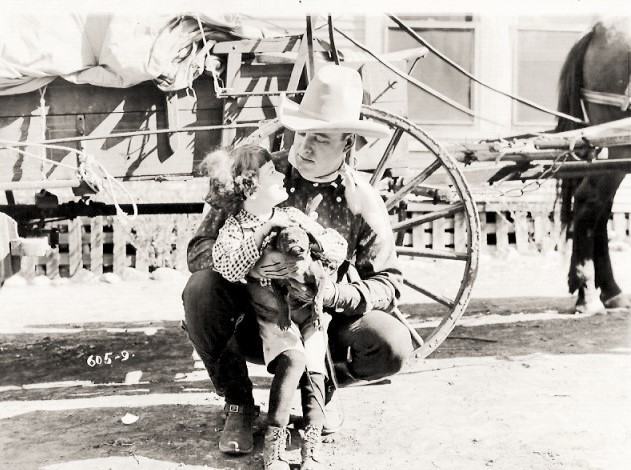
Watch how Whitman racks focus from Betty’s eyes in background to the inkwell in foreground: the ranch’s future distilled into a single droplet of indigo.
Unlike The Strangler’s Cord—where vengeance coils like a noose of predestination—Lazy Y roots retribution in fiduciary reality. Again, contrast it with The Opened Shutters: both films deploy female governance as thematic hinge, yet Shutter’s heroine is reactive, thawed by male ardor, whereas Betty Clayton steers her own narrative arc, culminating in her signature on the deed as the closing shot irises out.
If you crave a European analogue, A senki fia similarly deconstructs patrimony, but its fatalism is Slavic; Lazy Y still clings to a vestige of Manifest Destiny optimism—a belief that ledgers can be rewritten, that sins of the father need not metastasize into the blood of sons.
Frank MacQuarrie as the murdered patriarch appears solely in flashback—double-exposed atop clouds of cigar smoke—voicing (via intertitle) the decree that installs Betty. The spectral overlay evokes a patriarchal ghost uneasy about his own progressive choice, adding Oedipal frisson. Aaron Edwards, playing the juvenile sidekick Davy, supplies comic leaven without venturing into hillbilly caricature; his fear inside the pitch-black barn when Tom Taggart’s spurs clink is palpable enough to germinate nightmares.
Modern screenings often accompany the film with minimalist guitar motifs. I recommend opting for a solo viola da gamba: its gut-string resonance echoes the frayed sinew of family bonds. During the ink-stab climax, allow a single sustained harmonic to warble—like a ledger page fluttering mid-air—before plunging into silence as the body slumps.
For decades Lazy Y languished in 16-mm fragments until a 4K photochemical restoration by UCLA in 2019. The nitrate aroma—vinegar and almond—still haunts the reel. While Kino and Criterion have yet to bless it with a Blu-ray, boutique label Sagebrush Synapse issued a region-free edition replete with audio commentary by historian Nellie Kincaid, whose essay on gendered space in silent Westerns is mandatory reading.
Streaming platforms rotate the title under the Public Domain Cowboy umbrella, but beware crusty 480p transfers. Seek the 4K; the texture of Neal’s blood-and-ink cocktail demands pixel fidelity.
The Boss of the Lazy Y ends on an image that annihilates the mythic West while birthing a new one: Betty straightens her spine against a sunrise that looks less like divine benediction than ledger paper blotted by sunrise-hued ink. Calumet retreats into shadow, horseless, aware that restitution cost him both parents and patrimony. The ranch gate closes not on a kiss but on a signature—an act of writing that reclaims history from the barrel of a pen, not a gun.
It is, arguably, the first truly progressive Western of the silent era—where matriarchal authority is neither fetish nor farce, and where revenge arrives drenched in bureaucratic irony. For that alone, it deserves space on your shelf beside Spellbound and Silence of the Dead—films that likewise understand the past is never settled; it is merely awaiting a new signature.
IMDb —
1921
Community
Log in to comment.