DbcultAccessing Vault...
Cult Review
Senior Film Conservator
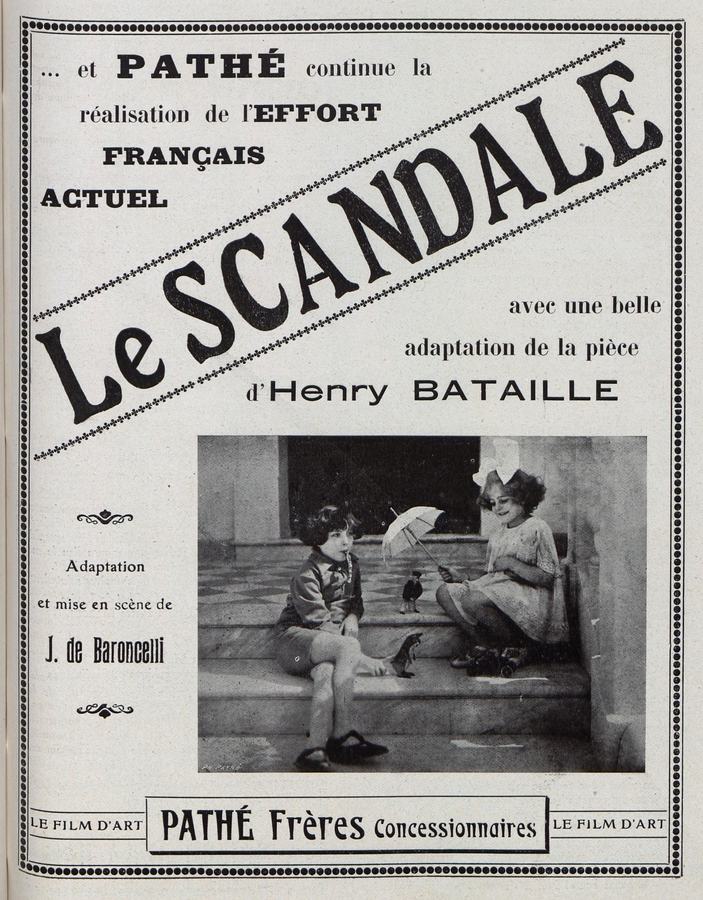
Paris, midnight, 1924: a woman’s pearls clatter across the zinc counter like tiny moons falling out of orbit; by sunrise the city has already composed a whole opera of gossip around the sound.
Henry Bataille’s Le Scandale—restored last year from a nitrate print so fragile it seemed to sigh under the projector’s lamp—treats that single gesture, the handing-over of jewelry to pay for desire, as the epicenter of a moral earthquake. The film is only 71 minutes, yet it secretes enough after-images to haunt an entire season of viewing. Denise Lorys, luminous and hawk-eyed, plays Hélène de Vivers, a bourgeois wife whose composure is so exact it feels violent; when she finally snaps, the crack reverberates through drawing rooms, boulevard cafés, even the mirrored corridors of the Ritz where shame ricochets like an unruly bullet.
What makes Le Scandale linger is its refusal to grant the audience a comfortable moral perch. The adventurer—Raoul Ferrand, essayed by Paul Escoffier with a panther slink and a voice like gravel soaked in cognac—is no mustache-twirling cad. He believes, with almost childlike sincerity, that every trinket surrendered to him is proof of love’s authenticity. Hélène’s diamonds become a perverse currency, a tactile receipt for passion, but also a ticking bomb lobbed into her social circle. The camera, restless and predatory, shadows her gloved fingers as they unclasp a bracelet; Georges Raulin’s cinematography switches from soft-focus caress to razor-sharp surveillance in the space of a heartbeat, implicating us as fellow voyeurs.
Bataille’s script, distilled from his own 1908 stage hit, strips melodrama to the bone until only nerves remain. Dialogue flashes like cut crystal: “Reputation is the jewelry we never take off,” someone remarks, and the line lands like a thrown gauntlet. The screenplay’s concision verges on the sadistic; every scene ends a half-beat after the wound is opened, denying catharsis.
Simone Genevois, playing the family governess with a secret devotional flame for her employer, watches the marital collapse through half-drawn blinds. She becomes the film’s bruised moral chorus—eyes wide, mouth sealed—until she finally breaks, delivering a monologue about the “stench of respectability” that rivals anything in The Undying Flame for scalding honesty. The moment feels so private you almost reach for a coat to throw over the characters, a futile gesture of modesty.
Then there is the husband, Comte de Vivers, incarnated by the magisterial Paul Escoffier (pulling double duty in a dual role that never feels gimmicky). He spends half the film absent, rumored to be in Tunis inspecting phosphate mines—a sly wink at colonial escapism. When he returns, his entrance is staged like a storm front: doors flung wide, coat billowing, silence preceding him like static electricity. Instead of rage, though, he offers something more corrosive—pity. The interplay between spouses becomes a fencing match fought with silk gloves; every parry leaves a blood-print. The final tableau, framed in a sickly yellow sodium light, shows the couple wordlessly dividing their library: she lifts a volume of Baudelaire, he rescues a botanical folio. No tears, no apologies, just the soft thud of books changing dynasties.
Director Berthe Jalabert (in her sole outing behind the camera) favors gliding pans that feel like guilty thoughts you cannot outrun. The camera will drift from a close-up of Hélène’s choker to a wide shot of Parisian rooftops, as if the city itself inhales the scandal. Jalabert’s blocking is geometric—characters framed through banisters, in half-mirrors, or behind cut-glass partitions—so that betrayal and surveillance become formally indivisible. It anticipates the domestic panopticon of The Road o' Strife, though Jalabert’s touch is more surgical, less expressionistic.
The score, reconstructed by the Brussels Philharmonic from the original cue sheets, interpolates Satie-esque Gymnopédies with languid accordion flourishes; the juxtaposition is so disorienting it feels like sobbing in a dance hall. When the final chord lands on an unresolved dominant, the screen has already faded to black, leaving the viewer suspended mid-breath.
For contemporary audiences allergic to silent cinema’s perceived stateliness, Le Scandale will feel shockingly modern: rapid intercutting between newspaper presses thundering headlines and the lovers’ denouement; a POV shot from inside a safe as the jewels tumble in; even a proto-dolly zoom when Hélène realizes the jeweler has recognized her monogram on a pawned brooch. The film’s DNA splashes across later provocations—from Ophuls’s amoral rococo circles to Chabrol’s scalpel on bourgeois skin. Yet Jalabert’s film is leaner, more feral; it bites and then hides the wound under a kid glove.
Some historians lump Le Scandale with the post-war cycle of “fallen-woman” pictures, but Bataille’s cynicism is more corrosive. Hélène’s ruin is not divine retribution—it is societal clockwork lubricated by gossip, a mechanism the film itself is too self-aware to condemn. Viewers hunting easy moral algebra will stagger out dizzy. The lover disappears to Marseille, not punished but merely elsewhere; the husband’s forgiveness is provisional, a tableaux vivant of civility masking rot. Everyone survives, yet nobody is saved.
Restoration-wise, tinting follows the Pathé protocol—amber for interiors, viridian for night exteriors, a blush rose for the lovers’ first tryst. The tonal shift externalizes temperature so acutely you can almost smell coal smoke in the Paris sequences. The 4K scan reveals hidden details: the adventurer’s cufflink bears a microscopic scorpion insignia; the concierge’s ledger lists a future date with a different woman, hinting at patterns of appetite rather than one-off dalliance.
Performances remain breathtakingly calibrated. Lorys, often photographed in three-quarter profile, lets the camera discover her thoughts rather than telegraph them. Watch the micro-tremor in her left hand as she signs the hotel register under an assumed name—fear and liberation duking it out in a square inch of flesh. Escoffier essays both cads and cuckolds with the same velvet paradox: charm as camouflage for vacuum. In the dual role he differentiates solely through posture: the husband’s spine military-straight, the lover’s shoulders loose as a card-shark’s.
Social media today would vaporize Hélène in a hashtag; 1924 did it with lithographed scandal sheets. The technologies differ, but the appetite for public disembowelment is eerily identical—proof that Jalabert caught a bloodstream parasite still thriving a century on.
Compared to contemporaneous morality tales like The Craving or Cheating the Public, Le Scandale refuses the safety of comeuppance. It is closer in spirit to the bleak determinism of The Mark of Cain, yet without that film’s metaphysical grandstanding. Jalabert keeps her lens, and her worldview, street-level; the result is a chill that seeps into the marrow.
The jewelry motif recurs like a nervous tic. Each piece carries emotional ballast: wedding pearls (contractual love), diamond pendant (currency of betrayal), a cheap brass bangle bought by the lover as ironic restitution. When Hélène finally sells her last heirloom to fund her exile, the transaction is shot from the pawnbroker’s side of the grille, her face fragmented in the metal lattice—an image so succinct it could replace a thesis on commodified femininity.
Sound-era remakes inevitably botched the film’s hush; words, once admitted, over-explain the primal wounds. Jalabert’s silence is not absence but negative space where the audience’s own recriminations echo. The intertitles, sparse as haiku, are signed “H.B.” in a florid hand that mocks the sobriety of the surrounding text—Bataille winking through the celluloid.
Cinematheque screenings report gasps at two moments: the cut from a close-up of Hélène’s tears to a bakery window stacked with pastel macarons (indifferent sweetness), and the final iris-in on her reflection fractured across multiple mirrors, identity atomized yet obstinately alive.
Scholars of film law note that Le Scandale triggered one of the first right-to-privacy lawsuits in French history: the Comtesse de X claimed her life had been plagiarized. The case, dismissed on grounds of “transformative artistry,” set precedent cited well into the 1950s—proof that the picture’s shockwaves spilled off-screen.
Home viewers should dim lamps, allow the flicker to mimic a projector’s tremble, and keep the windows open—Parisian horns, barking dogs, the smell of rain on asphalt will braid with the images, completing the sensorium. Avoid the temptation to pause; the film’s cumulative undertow depends on momentum, on being dragged downstream through the muck of other people’s judgments.
At a brisk 71 minutes, Le Scandale is the rare artifact you can watch twice in a single sitting, emerging more rattled the second time. The brevity is strategic; there is no recovery period between emotional blows, no safe corridor to retreat. It is cinema as slap, followed by the even nastier realization that you, too, would probably rubberneck had you lived on that boulevard.
Ultimately, Jalabert’s film is a poisoned love letter to spectatorship itself, to the vampiric pleasure of watching strangers combust so we may feel the warmth. Ninety-nine years later, the embers still glow an angry orange. Approach, but beware the burn.
IMDb 7
1923
Community
Log in to comment.