DbcultAccessing Vault...
Cult Review
Senior Film Conservator
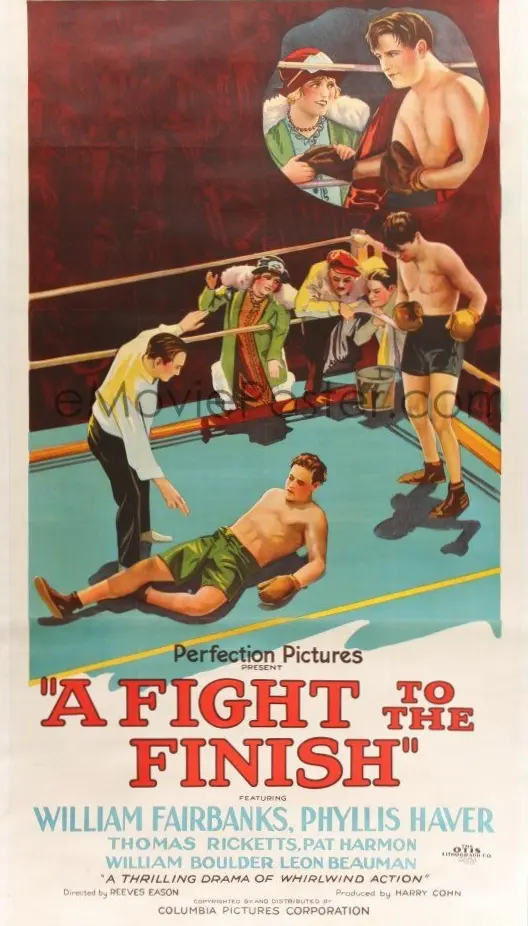
Short answer: yes, A Fight to the Finish is worth watching today, especially for those with an appreciation for silent cinema, early sports dramas, and the fascinating evolution of narrative storytelling on screen. This isn't a film for everyone, though; if you demand fast-paced, dialogue-driven modern entertainment, its charms might be lost on you. Instead, it offers a revealing glimpse into the tropes and techniques that defined a nascent art form, wrapped in a surprisingly engaging tale of class, redemption, and pugilistic justice.
It's a film for cinephiles, historians, and those curious about the roots of Hollywood storytelling, particularly how silent features managed to convey complex emotions and action without a single spoken word. It might not convert a skeptic of the silent era, but for the initiated, it provides a solid example of early 20th-century popular entertainment.
The narrative core of A Fight to the Finish is a classic rags-to-riches, or rather, riches-to-self-reliance, tale. Millionaire Cyrus J. Davis, exasperated by his son Jim's hedonistic lifestyle, concocts a drastic scheme. He feigns financial ruin, a dramatic gesture intended to jolt Jim into maturity. This premise, while simple, immediately sets up a fascinating dynamic between father and son, exploring themes of responsibility and the corrupting influence of unearned wealth.
Jim's subsequent struggle to find honest work, a stark contrast to his pampered existence, introduces a layer of social commentary, however light. It's a journey from entitlement to empathy, punctuated by a chance encounter with Mary Corbett. Mary, a spirited and observant woman, witnesses Jim's raw strength when he instinctively defends her against a local bully, who turns out to be none other than Battling Wilson, the state boxing champion.
This serendipitous brawl propels Jim into the world of professional boxing, with Mary taking on the unconventional role of his trainer. The film builds towards a climactic fight against Wilson, only for Jim to be sabotaged by foul play – a common, yet effective, melodramatic device of the era. The true 'fight to the finish' isn't just in the ring, but in Jim's subsequent dressing room confrontation, where he reclaims his honor, leading to a reconciliation with his father and a promise of a future with Mary. It's a neat, satisfying arc that hits all the expected beats of a feel-good drama of its time.
In silent cinema, performances are an art of exaggerated gesture and expressive facial work, and the cast of A Fight to the Finish largely delivers. William Fairbanks, as the initially feckless Jim, carries the weight of the film's transformation arc. Fairbanks, known for his athleticism and often cast in adventure roles, brings a believable physicality to Jim's journey from pampered idler to determined pugilist. His initial scenes convey a charming, if somewhat shallow, arrogance, evident in his languid postures and dismissive hand gestures towards his father's concerns.
However, it is in his moments of struggle and eventual resolve that Fairbanks truly shines. The subtle shift in his eyes, the tightening of his jaw after the rigged fight, communicates a depth of character that transcends mere pantomime. While his portrayal might seem broad by today's standards, it was perfectly calibrated for the back rows of a bustling picture palace, and it holds up remarkably well under scrutiny, particularly when compared to contemporaries in similar sports dramas like The Price of Pleasure.
The true standout, in my estimation, is Phyllis Haver as Mary Corbett. Haver, a captivating presence often typecast as a vamp or flapper, infuses Mary with an unexpected intelligence and agency. Her portrayal is far from a damsel in distress; she is observant, quick-witted, and takes decisive action, training Jim herself. There's a particular scene where she assesses Jim's raw fighting form, her head tilted, a thoughtful frown on her brow, that speaks volumes about her character's shrewdness. It’s a performance that subtly challenges gender norms of the era, presenting a woman who is not just a romantic interest but a catalyst for the hero's growth. Her expressive eyes and confident demeanor elevate Mary beyond a simple plot device.
Even Pat Harmon, as the villainous Battling Wilson, leaves an impression. Harmon, a character actor frequently cast as heavies, embodies the brutishness of the champion with an almost primal force. His scowls and menacing physicality are effective, making him a formidable, if somewhat one-dimensional, antagonist. The supporting cast, including Tom Ricketts and Leon Beaumon, fulfill their roles adequately, providing solid foundations for the central drama. The collective effort ensures that despite the lack of spoken dialogue, the characters' intentions and emotions are always clear, a testament to the actors' skill and the director's guidance.
While the director is uncredited in the provided context, the filmmaking choices made in A Fight to the Finish are nonetheless notable for their era. The direction, whoever was at the helm, demonstrates a clear understanding of silent film conventions, effectively using intertitles to convey dialogue and crucial plot points without disrupting the visual flow. There's a particular sequence detailing Jim's failed attempts to find work that uses a montage of quick cuts and comedic situations, illustrating his ineptitude with surprising efficiency and humor.
The cinematography, while not groundbreaking by today's standards, is functional and effective. It adheres to the established visual language of the 1920s, employing a relatively static camera but utilizing close-ups for dramatic effect, particularly during emotional exchanges and the boxing sequences. The lighting, often high-key, ensures clarity, allowing the audience to easily read the actors' expressions and the details of the sets. The boxing scenes themselves are shot with a dynamic energy, employing quick cuts and varied angles to convey the intensity of the fight, a precursor to the more sophisticated sports cinematography that would emerge later. The use of shadows and stark contrasts in the dressing room confrontation, for example, adds a layer of raw realism to Jim's bare-fisted revenge, making it feel more visceral than the staged ring bout.
One observation that might be unconventional but is quite compelling is the film's subtle use of environment to reflect character. Cyrus J. Davis's opulent mansion, with its grand staircase and richly appointed rooms, initially emphasizes Jim's privileged detachment. Later, the grimy, bustling streets where Jim searches for work, and the stark, functional boxing gym, visually underscore his descent into a more grounded, challenging reality. This visual storytelling, though perhaps not overtly revolutionary, adds a layer of depth that many simpler melodramas of the time neglected. It’s a testament to the filmmakers' understanding that setting isn't just a backdrop, but an active participant in the narrative, a technique that would be refined in films like Pettigrew's Girl, which also explored class distinctions through visual cues.
The pacing of A Fight to the Finish is surprisingly brisk for a silent film, particularly in its first act. The initial setup of Jim's playboy lifestyle and his father's scheme moves quickly, establishing the central conflict without lingering. This momentum is crucial in maintaining audience engagement, especially when relying solely on visual storytelling. The narrative never feels bogged down, even during Jim's period of unemployment, which could easily have dragged.
The film maintains a consistent melodramatic tone, blending elements of family drama, romance, and sports action. There are moments of lighthearted comedy, particularly in Jim's early attempts at manual labor, which serve to humanize him before his eventual transformation. This tonal balance prevents the film from becoming overly saccharine or preachy. The tension builds effectively towards the main boxing match, and the subsequent betrayal adds a layer of injustice that fuels Jim's final, satisfying act of retribution.
This film works because it understands the power of a clear, resonant narrative arc, even without dialogue. It taps into universal themes of redemption and self-worth, making its silent gestures surprisingly impactful. The performances, particularly from Phyllis Haver, are committed and expressive, carrying the emotional weight of the story with remarkable clarity. Furthermore, its ability to blend social commentary with thrilling sports action and a heartwarming romance ensures a broad appeal that transcended the simple genre categorizations of its era.
However, the film isn't without its anachronisms and minor flaws. The 'drugging' plot point, while a classic melodramatic trope, feels a little too convenient, serving primarily to create artificial stakes rather than organic character development. It’s a plot device that, while effective in its time, now highlights the somewhat formulaic nature of certain silent era narratives. This reliance on external forces to drive conflict, rather than internal struggle, is a common trait of many films from the period, including those with more ambitious scope like Adventures of Tarzan.
This film fails because its reliance on certain melodramatic conveniences, such as the sudden drugging of the protagonist, can feel a little contrived to modern viewers. The villain, while effectively portrayed by Pat Harmon, is largely one-dimensional, serving more as an obstacle than a fully fleshed-out character. Also, some of the broader comedic strokes in Jim's early job-seeking montage, while historically accurate for the era, might not land with contemporary audiences who prefer more nuanced humor.
At its heart, A Fight to the Finish explores timeless themes: the corrupting influence of wealth, the importance of hard work, personal redemption, and the transformative power of love. Jim's journey from a spoiled rich kid to a man who earns his place in the world resonates even today. The film also touches upon early feminist undertones through Mary Corbett's character, who is not merely a love interest but an active agent in Jim's success, a manager and trainer in an era when such roles for women were highly unusual, especially in a male-dominated sport like boxing. This makes Mary a surprisingly modern figure for her time, adding an unexpected layer of depth to the narrative.
The legacy of films like A Fight to the Finish lies in their contribution to the evolving language of cinema. It showcases how silent films tackled genre conventions – in this case, the sports drama – and laid the groundwork for future cinematic explorations of similar themes. While it may not be as widely celebrated as some of its contemporaries, it’s a robust example of popular entertainment from the period, demonstrating the industry's burgeoning ability to tell compelling stories with increasing sophistication.
Absolutely, but with caveats. If you approach A Fight to the Finish with an open mind and an appreciation for cinematic history, you'll find a charming, well-executed silent drama. It’s a perfect entry point for those curious about the silent era, as its straightforward narrative and engaging performances make it accessible. However, if you're not accustomed to silent film conventions – the reliance on intertitles, the broader acting styles, the absence of synchronized sound – it might require a slight adjustment of expectations.
You should watch it if you are a film historian, a silent film enthusiast, or someone interested in the early days of sports cinema. It’s also a good choice if you appreciate character-driven melodramas with clear moral arcs and a satisfying resolution. Furthermore, if you want to see an early example of a strong, independent female character in cinema, Phyllis Haver’s performance as Mary Corbett alone makes it worth seeking out.
A Fight to the Finish stands as a commendable example of early silent cinema, blending melodrama, sports action, and a moralistic tale of personal growth. It might not redefine the genre, but it executes its premise with conviction and charm. The film’s strengths lie in its clear storytelling, the robust performances of its lead actors, particularly Phyllis Haver, and its ability to maintain engagement despite the inherent limitations of the silent medium. It's a film that earns its title, not just in the literal sense of a boxing match, but in the internal struggle of its protagonist to become a better man. It's a satisfying watch for those who appreciate the historical context and the unique artistry of the silent era.

IMDb 4.8
1928
Community
Log in to comment.