DbcultAccessing Vault...
Cult Review
Senior Film Conservator
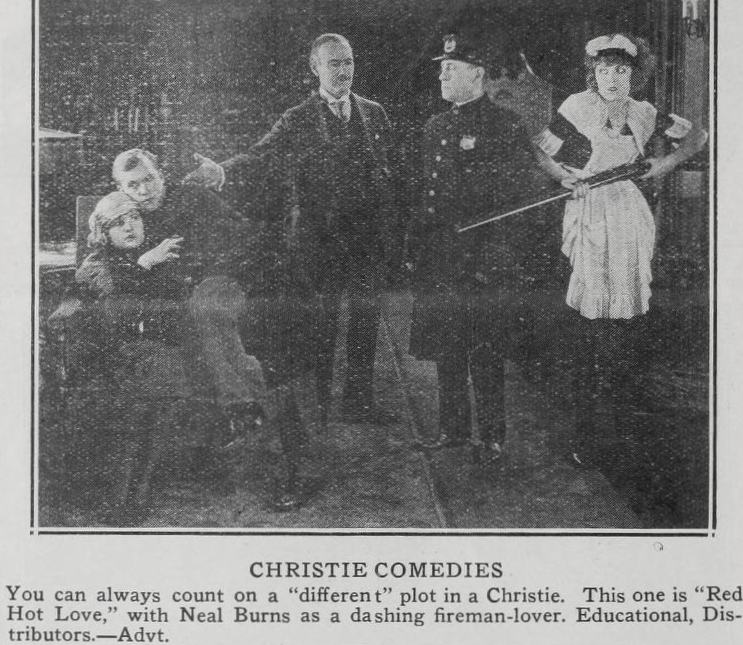
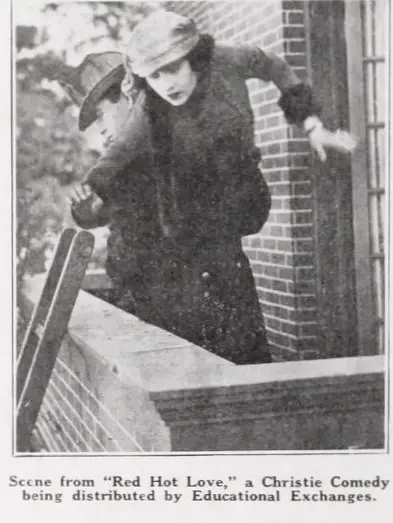
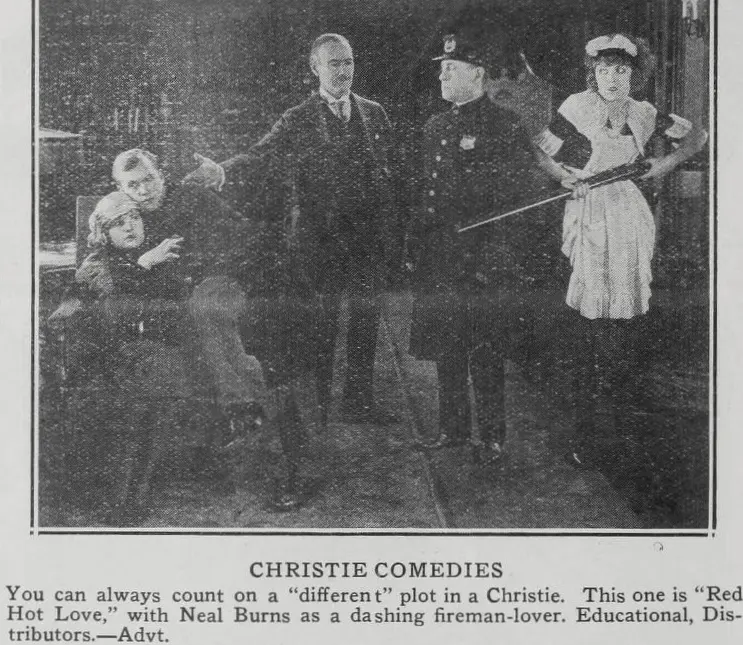
To witness Red Hot Love in its native, celluloid habitat is to engage with a relic of American comedic evolution. Released in 1917, a year defined by global upheaval and the burgeoning maturity of the Hollywood studio system, this Robert Hall-directed piece serves as a fascinating specimen of the 'light comedy' subgenre. Unlike the visceral, bone-crunching slapstick of the Keystone era, this film leans into the situational nuances of the middle class, a territory Neal Burns inhabited with an effortless, idiosyncratic charm.
The Christie Film Company, under whose banner this work was produced, carved a niche for itself by offering an alternative to the chaotic vulgarity that critics of the time often attributed to Mack Sennett. In Red Hot Love, we see the refinement of the two-reeler format. The pacing is not merely fast; it is rhythmic. Robert Hall, collaborating with the prolific Scott Darling, constructs a narrative that feels less like a series of gags and more like a clockwork mechanism being slowly overwound until the inevitable spring snaps.
Interrogating the frame, one notices the economy of movement. Every gesture by Neal Burns is a calculated semiotic signal. His face, a canvas of bewildered optimism, perfectly mirrors the anxieties of a generation navigating the transition from Victorian rigidity to the pre-Jazz Age looseness. While Her American Husband explored cross-cultural friction through a more melodramatic lens, Red Hot Love utilizes the domestic sphere as a battlefield of wit and timing. The spatial dynamics of the sets—typical of the period’s interior photography—create a sense of claustrophobia that fuels the comedic tension.
Marion Mackay’s presence is indispensable. In many contemporary shorts, the female lead was often relegated to the role of a static prize or a scolding moralist. Mackay, however, injects a level of spirited unpredictability into her performance. She is not merely the object of the 'red hot' affection; she is an active participant in the chaos. Her interactions with Ward Caulfield and Vera Steadman create a quartet of conflicting motivations that elevate the film above its peers.
When compared to the more somber, atmospheric depths of Notte, verità degli uomini, the lightness of Mackay’s touch is even more apparent. She embodies a specific type of early 20th-century femininity that was beginning to assert its own comedic power. This isn’t the tragic weight of Golgofa zhenshchiny; it is the effervescent rebellion of the domestic sprite. Her chemistry with Burns is grounded in a mutual understanding of the absurd, a quality often missing in the more formulaic 'boy-meets-girl' scenarios of the late teens.
To understand Red Hot Love, one must place it within the broader cinematic tapestry of its time. If Manhatta represents the avant-garde’s fascination with the urban monolith, then this film represents the populist’s obsession with the people living within those shadows. There is a curious through-line between the frantic job-seeking energy of Help Wanted - Male and the romantic desperation seen here. Both films utilize the protagonist’s vulnerability as the primary engine for audience empathy.
Furthermore, the structural integrity of the script by Darling and Hall invites comparison to The Rough Diamond. While the latter leans into a more rugged, perhaps less polished comedic style, Red Hot Love is obsessed with the veneer of respectability. The humor arises from the cracks in that veneer. It is the same thematic preoccupation found in The Naked Truth, albeit stripped of that film’s more didactic moralizing. Here, the 'truth' is simply that love is a messy, uncontainable force that renders even the most dignified man a fool.
Technically, the film is a masterclass in the 'long take' gag. Before the rapid-fire editing of the 1920s became standard, directors like Robert Hall relied on the actor's ability to sustain a comedic beat within a single wide shot. The blocking in Red Hot Love is almost theatrical, yet it utilizes the depth of field in a way that feels uniquely cinematic. Notice the background action—the way Vera Steadman’s movements in the periphery often foreshadow the central conflict. This layering of action was a sophisticated touch for 1917, suggesting a world that exists beyond the immediate frame.
This complexity is mirrored in the lighting. While silent shorts are often dismissed as having 'flat' illumination, there are moments in the second act where the shadows underscore the protagonist’s mounting dread. It is a subtle use of chiaroscuro that hints at the darker undertones of the narrative—the fear of social ostracization. This thematic weight is what separates a Christie comedy from a disposable gag-reel. It shares a certain 'tempered' quality with Tempered Steel, where the resilience of the character is tested by external pressures, though here the stakes are matrimonial rather than existential.
One cannot overstate the importance of the Robert Hall and Scott Darling partnership. Darling, who would go on to have a legendary career in both silents and talkies, had an innate sense of the 'reversal.' Just when the audience believes Neal Burns has found a moment of respite, the script introduces a new complication—a misplaced letter, a sudden arrival, a misinterpreted glance. This relentless escalation is reminiscent of the narrative tension in The Unveiling Hand, though redirected toward laughter rather than suspense.
Their work here also predates the cynical bite of later comedies like Pay Day. There is a fundamental sweetness to Red Hot Love that feels distinctly pre-Prohibition. It is a film about the joy of the chase and the hilarity of the hurdle. The dialogue cards, while sparse, are punchy and avoid the flowery prose that bogged down many contemporary dramas like Hawthorne of the U.S.A.. The writers understood that in silent comedy, the image must always lead, and the text must only punctuate.
Red Hot Love is also a fascinating document of its era’s material culture. The costumes, the decor, and the social etiquette on display provide a window into a world on the brink of radical change. The film deals with the 'new' problems of the early 20th century—modern romance, the fast pace of urban life, and the blurring of traditional class lines. In this sense, it shares a DNA with A Change of Heart and A Fresh Start, both of which grapple with the protagonist's attempt to reinvent themselves within a rigid social structure.
The 'Secret Seven' style of clandestine plotting that occasionally crops up in the film’s second act—where characters are whispering in corners and hiding behind curtains—hints at a societal obsession with secrets and surveillance. While not as literal as The Secret Seven, the film plays with the idea that everyone has something to hide, and the comedy arises when those secrets are prematurely 'unveiled.' It is this universal human fallibility that keeps the film relevant over a century later.
In the final analysis, Red Hot Love stands as a testament to the durability of the well-crafted farce. It lacks the racial complexities of a work like Tar Baby, focusing instead on the universal follies of the heart. Neal Burns remains one of the great underappreciated talents of the silent era, a performer who could convey a world of emotion with a single, wide-eyed stare.
As the film reaches its crescendo, the disparate narrative threads are pulled together with a satisfying, if predictable, snap. It is the cinematic equivalent of a perfectly executed card trick—you see the mechanics, you know the outcome, but the execution is so flawless that you cannot help but be charmed. For the modern viewer, stripped of the context of 1917, the film remains a vibrant, pulsing piece of entertainment. It reminds us that while the technology of storytelling has changed—moving from the hand-cranked camera to the digital sensor—the fundamental nature of the 'red hot' pursuit of love, and the comedy of its failure, remains an immutable part of the human experience.
Ultimately, Robert Hall’s vision is one of celebratory chaos. Red Hot Love isn’t just a title; it’s a temperature reading of a burgeoning medium finding its voice through the laughter of its audience.
IMDb 6.4
1934
Community
Log in to comment.